Flexible Solar Panel Installation for RVs, Boats, and Off-Grid Systems
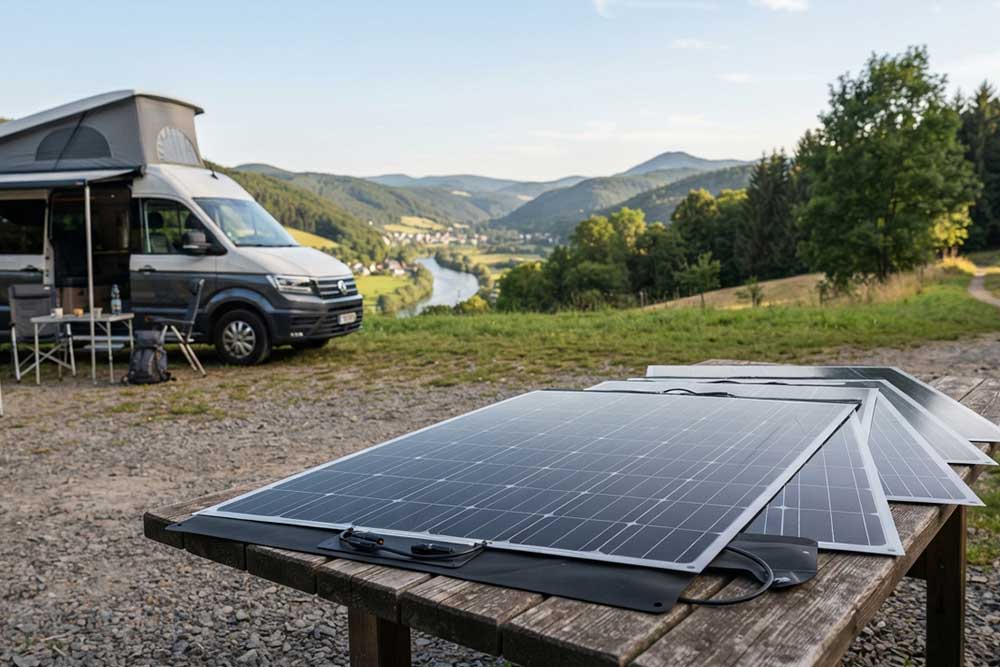
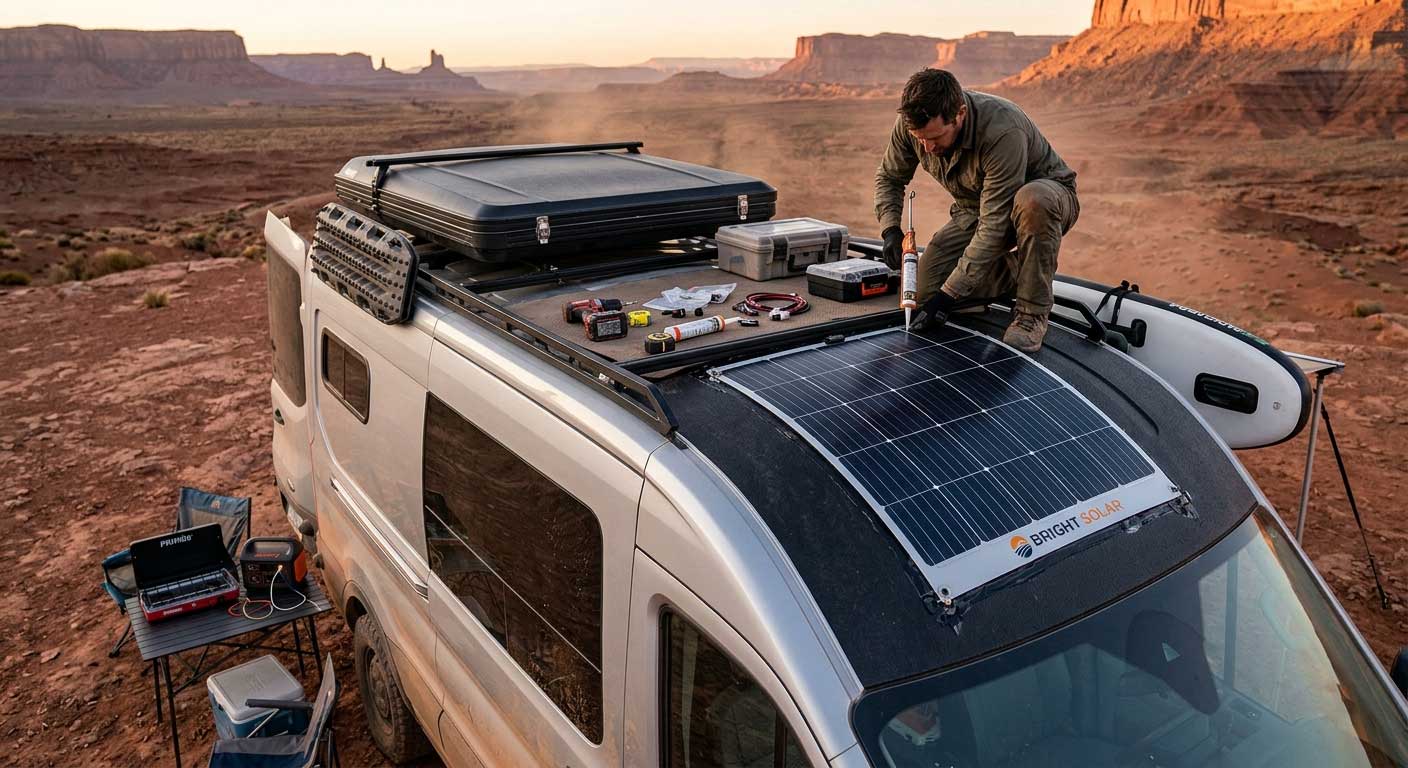
Flexible solar panel installation is one of the most practical ways to add lightweight off-grid power to RVs, boats, camper vans, and portable energy systems because flexible panels reduce roof weight, simplify mounting, and improve aerodynamics compared with traditional rigid solar setups.
The first flexible solar panel installation I helped with was not elegant.
We were parked outside Zion National Park, crouched beside an older fiberglass camper roof under brutal afternoon heat. The owner had purchased a cheap online solar kit after watching a few short installation videos that made everything look effortless.
Reality looked different.
The adhesive softened faster than expected.
Roof curvature complicated alignment.
Cable routing became messy within minutes.
And after highway driving, one corner started lifting slightly from the roof surface.
That experience taught me something important.
Installing flexible solar panels is not difficult.
Installing them correctly for long-term outdoor survival is where the real difference appears.
A clean installation is not just about attaching a panel. It is about managing heat, vibration, waterproofing, airflow, and cable protection over years of travel.
That is the part most tutorials skip.
Why Flexible Solar Panel Installation Became So Popular
Mobile solar demand has changed dramatically over the last decade.
Remote work increased off-grid travel.
Van life became mainstream.
Portable lithium batteries improved rapidly.
RV owners started prioritizing quieter energy systems over generators.
According to the International Energy Agency (IEA), global solar photovoltaic deployment continues expanding as distributed and mobile power systems become more important worldwide.
Source: International Energy Agency
https://www.iea.org/reports/renewables-2024
At the same time, flexible monocrystalline solar technology improved significantly.
Modern flexible panels now offer:
- Higher efficiency
- Lower weight
- Better vibration resistance
- Curved surface compatibility
- Reduced aerodynamic drag
That combination made flexible solar especially attractive for:
- Camper vans
- RV roofs
- Sailboats
- Portable battery systems
- Lightweight expedition builds
And honestly, after driving several hundred highway miles with noisy aluminum roof racks vibrating overhead, many travelers stop caring about “showroom appearance” and start valuing quiet engineering instead.
What You Need Before Flexible Solar Panel Installation
Most installation problems begin long before the panel touches the roof.
Preparation matters more than speed.
Essential Installation Components
A proper flexible solar panel installation usually includes:
| Component | Purpose |
|---|---|
| Flexible solar panel | Power generation |
| MPPT charge controller | Charging efficiency |
| Waterproof MC4 connectors | Weather protection |
| UV-resistant cable | Long-term durability |
| Fuse protection | Electrical safety |
| Adhesive or mounting tape | Secure attachment |
| Battery system | Energy storage |
Cheap installation kits often fail because one overlooked component becomes the weak point.
Usually connectors.
Sometimes wiring.
Occasionally adhesive.
Rarely the solar cells themselves.
Surface Preparation Matters More Than People Expect
This part gets underestimated constantly.
A dirty roof destroys adhesive performance.
Before installation:
- Clean the roof thoroughly
- Remove wax residue
- Eliminate dust and oils
- Dry the surface completely
One RV owner near Sedona installed flexible panels directly onto a recently waxed fiberglass roof.
Three weeks later, one panel corner began lifting during highway driving.
The adhesive was not defective.
The preparation was.
Best Mounting Methods for Flexible Solar Panel Installation
There is no perfect installation method for every vehicle.
Roof material changes everything.
Adhesive Mounting
This is the most common flexible solar panel installation method.
Benefits include:
- Low-profile appearance
- Reduced wind resistance
- Minimal roof penetrations
- Cleaner aerodynamics
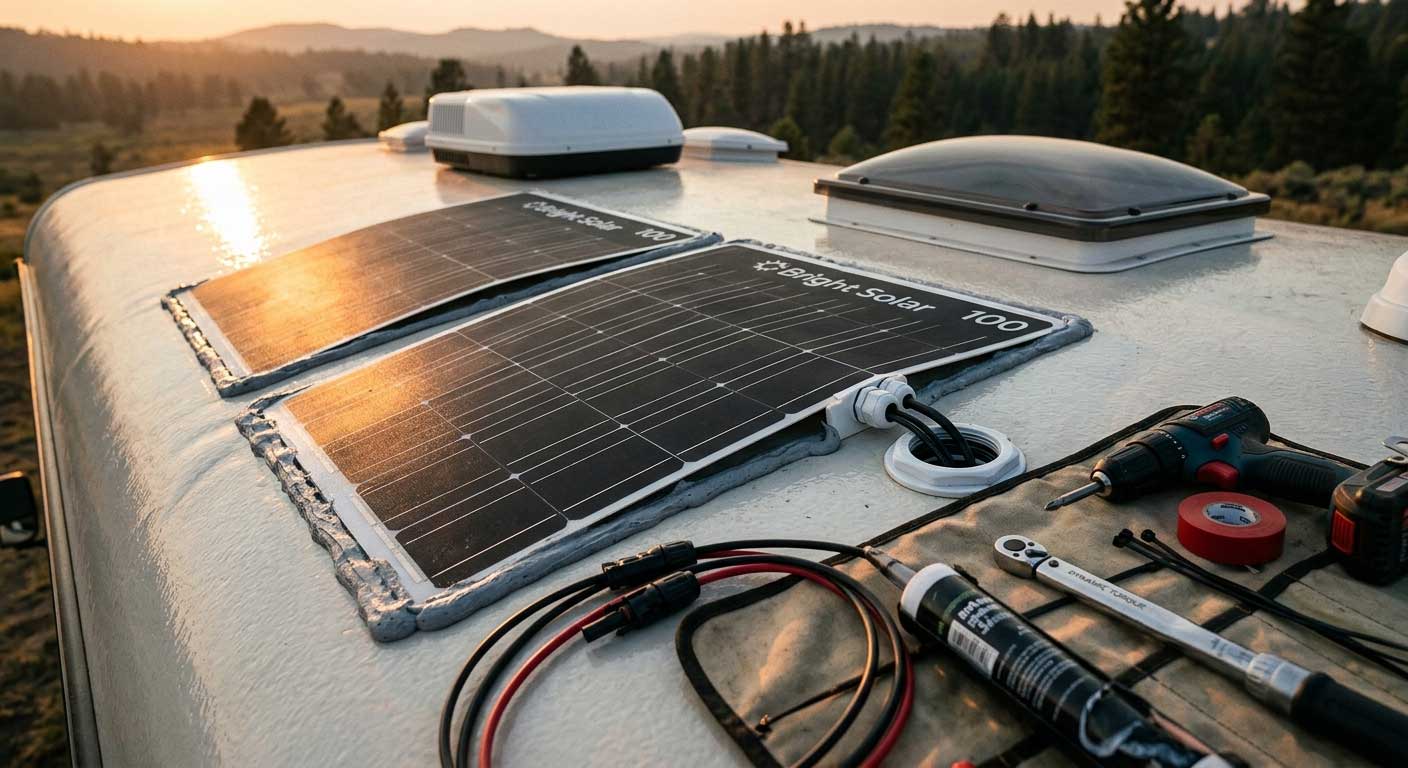
Marine-grade polyurethane adhesives are commonly used because they tolerate vibration and weather exposure better than basic construction adhesives.
But adhesive installation creates another challenge:
Heat.
Flexible panels mounted directly against dark roofs can trap significant temperatures underneath.
The U.S. Department of Energy notes that elevated temperatures reduce photovoltaic efficiency measurably.
Source: U.S. Department of Energy
https://www.energy.gov/eere/solar
In Arizona summer heat, rooftop temperatures can exceed 80°C surprisingly quickly.
That affects both performance and long-term material durability.
Partial Air-Gap Mounting
Some installers leave slight ventilation gaps beneath the panel edges.
This improves:
- Airflow
- Cooling
- Moisture evaporation
Especially important in humid marine climates.
I noticed this difference clearly on two nearly identical van builds parked side by side outside Lake Havasu.
The ventilated installation consistently ran cooler during afternoon charging.
Not dramatically cooler.
But enough to matter.
Common Flexible Solar Panel Installation Mistakes
Most failures follow predictable patterns.
And almost all are preventable.
1. Blocking Roof Airflow Completely
Panels installed too tightly against hot roof surfaces accumulate extreme heat.
Excessive temperatures accelerate:
- Efficiency loss
- Adhesive fatigue
- Surface warping
- Cell degradation
Heat remains one of the biggest engineering challenges for flexible solar systems.
2. Poor Cable Routing
Loose rooftop cables fail surprisingly fast under UV exposure and highway vibration.
Quality installations protect wiring using:
- UV-resistant conduit
- Waterproof entry glands
- Proper cable clamps
Marine environments are especially unforgiving.
Salt air destroys exposed connectors quickly.
3. Ignoring Roof Curvature Limits
Flexible panels bend slightly.
Not infinitely.
Over-flexing creates stress on solar cells and internal conductors.
Manufacturers typically specify safe bending tolerances for a reason.
Ignoring them shortens panel lifespan dramatically.
Flexible Solar Panel Installation for RVs
RV installations remain one of the best applications for flexible solar.
Especially for:
- Fiberglass roofs
- Pop-top campers
- Lightweight travel trailers
- Curved rooftop surfaces
Compared with rigid panels, flexible systems reduce:
- Roof stress
- Wind drag
- Highway vibration
- Installation complexity
One Bright Solar customer tracked fuel consumption after replacing raised aluminum-framed panels with low-profile flexible rooftop solar.
Fuel efficiency improved roughly 3–5% across long-distance travel.
Not huge on a single trip.
Noticeable after thousands of highway miles.
RV Installation Tips
- Avoid shading from rooftop AC units
- Keep panels away from roof edges
- Use waterproof cable entry points
- Inspect adhesive annually
- Leave room for maintenance access
Simple details prevent expensive problems later.
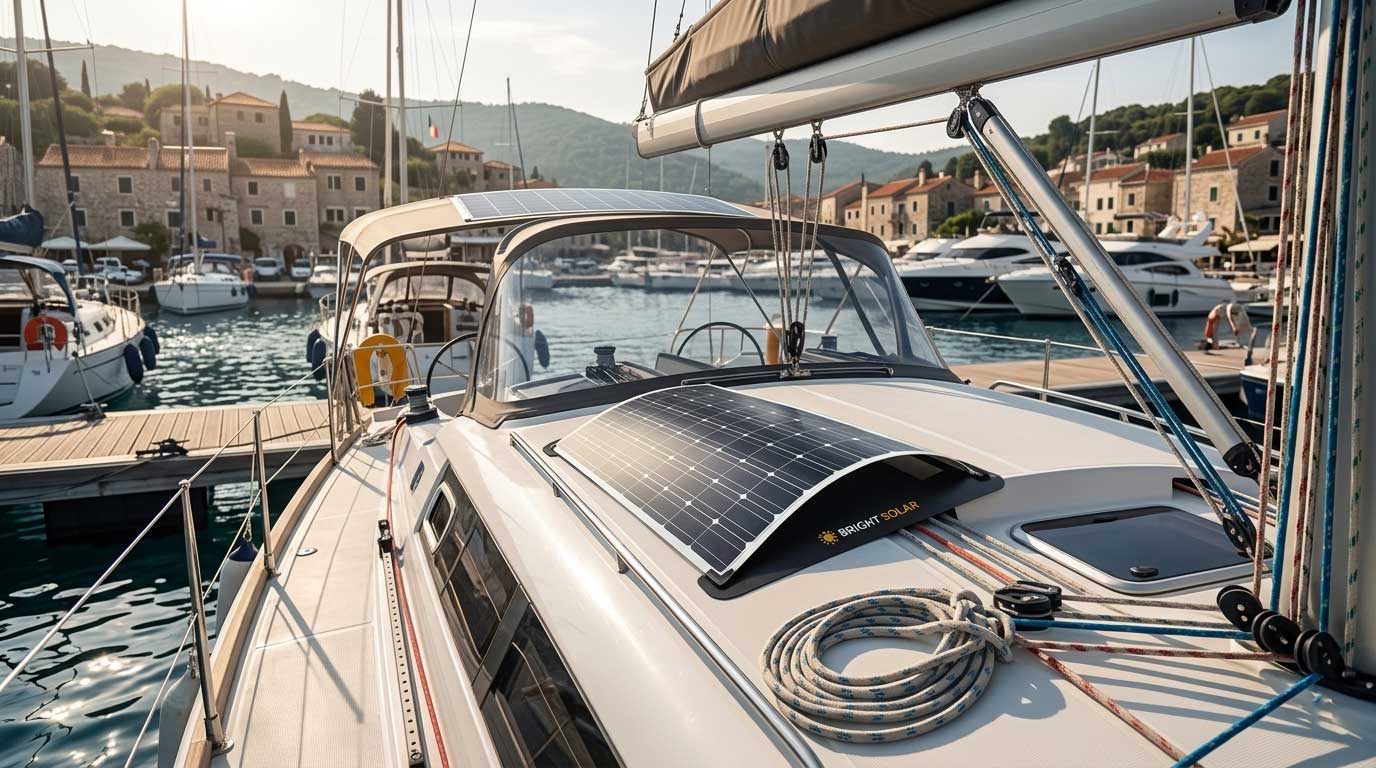
Flexible Solar Panel Installation for Boats
Marine environments expose weak installations quickly.
Salt air.
Humidity.
Constant vibration.
UV exposure.
That combination destroys cheap hardware surprisingly fast.
The best marine installations prioritize:
- Waterproof connectors
- Corrosion-resistant wiring
- ETFE panel surfaces
- Secure cable routing
According to DuPont material testing, ETFE surfaces provide strong UV and environmental resistance compared with many traditional outdoor polymers.
Source: DuPont
https://www.dupont.com
That matters enormously in coastal environments.
How Long Does a Flexible Solar Panel Installation Last?
That depends heavily on:
- Installation quality
- Heat exposure
- Roof movement
- Weather conditions
- Material quality
Premium flexible solar systems commonly last:
- 5–15 years
But poor installations fail much sooner.
Usually because of:
- Weak adhesives
- Connector corrosion
- Heat damage
- Improper cable routing
The panel itself is often not the first thing to fail.
The installation is.
FAQ: Flexible Solar Panel Installation
Can flexible solar panels be glued directly to the roof?
Yes. Many flexible solar panel installations use marine-grade adhesives for low-profile mounting on RVs, boats, and camper vans.
Do flexible solar panels need airflow underneath?
Small airflow gaps can improve cooling and help reduce heat buildup, especially in hot climates.
Are flexible solar panels waterproof?
High-quality flexible solar panels typically include waterproof junction boxes and ETFE weather-resistant surfaces suitable for outdoor environments.
Can flexible solar panels be installed on curved surfaces?
Yes. Flexible solar panels are specifically designed for slightly curved roofs and marine surfaces.
How long does flexible solar panel installation take?
Most installations require several hours depending on roof preparation, wiring complexity, and adhesive curing time.
Final Thoughts
Flexible solar panel installation is not complicated because of the solar technology itself.
The difficult part is building something that survives years of:
- Heat
- Highway vibration
- Salt air
- UV exposure
- Weather cycles
After enough time around off-grid systems, flashy specifications matter less than clean installation work.
Because in mobile solar, reliability is usually hidden in the details nobody notices at first glance.
Related recommendations
-

Foldable 400W Solar Panel: Output, Uses and Buying Guide
26A foldable 400W solar panel provides portable solar power for RVs, camping, and off-grid applications. Actual energy production depends on sunlight, panel po...
View details -
400W Solar Panel: High Power Solar Solution for Residential and Off-Grid Energy
247Explore the 400W solar panel from Bright Solar for RV, home backup, and off-grid applications. Learn output, efficiency, installation, and real-world solar performance.
View details -
450 Watt Solar Panel Performance and Applications Guide
243Discover how a 450 watt solar panel delivers reliable power for RVs, homes, marine and off-grid systems. Learn output, efficiency and installation tips.
View details -
Cost of Flexible Solar Panels: Prices, Factors and Buying Guide
188The cost of flexible solar panels varies by power, technology, materials, dimensions, customization, quantity, and installation requirements.
View details