How to Install Flexible Solar Panels?
How to Install Flexible Solar Panels?
Flexible solar panels should be installed on a clean, stable, low-heat surface using marine-grade adhesive, screws, or hybrid mounting methods. Correct cable routing, ventilation spacing, and waterproof sealing are critical. A poor installation usually shortens panel lifespan faster than weather exposure itself.
I learned that lesson the hard way on a camper van project in Arizona. The panel itself survived the heat. The adhesive underneath did not. After 11 months, corners started lifting because the roof surface had never been fully degreased before mounting. The panel was fine. The installation was not.
That difference matters more than most buyers realize.Learn more about “Flexible Solar Panel Installation Guide“
Why Flexible Solar Panels Need Different Installation Methods
Rigid solar panels are supported by aluminum frames. Flexible models are not. They expand more under heat, bend under movement, and transfer stress directly into the mounting surface.
That changes everything.
A flexible solar panel installed on a yacht deck behaves differently from one mounted on a delivery van crossing Nevada in summer. The mounting surface flexes. Heat accumulates underneath. Adhesives age faster.
According to the U.S. Department of Energy, rooftop solar surfaces can exceed 149°F (65°C) during peak summer exposure.
Source:
https://www.energy.gov/
That temperature range becomes even higher on dark RV roofs.
From field installations I’ve worked on, excessive trapped heat is one of the biggest reasons flexible panels lose efficiency early.
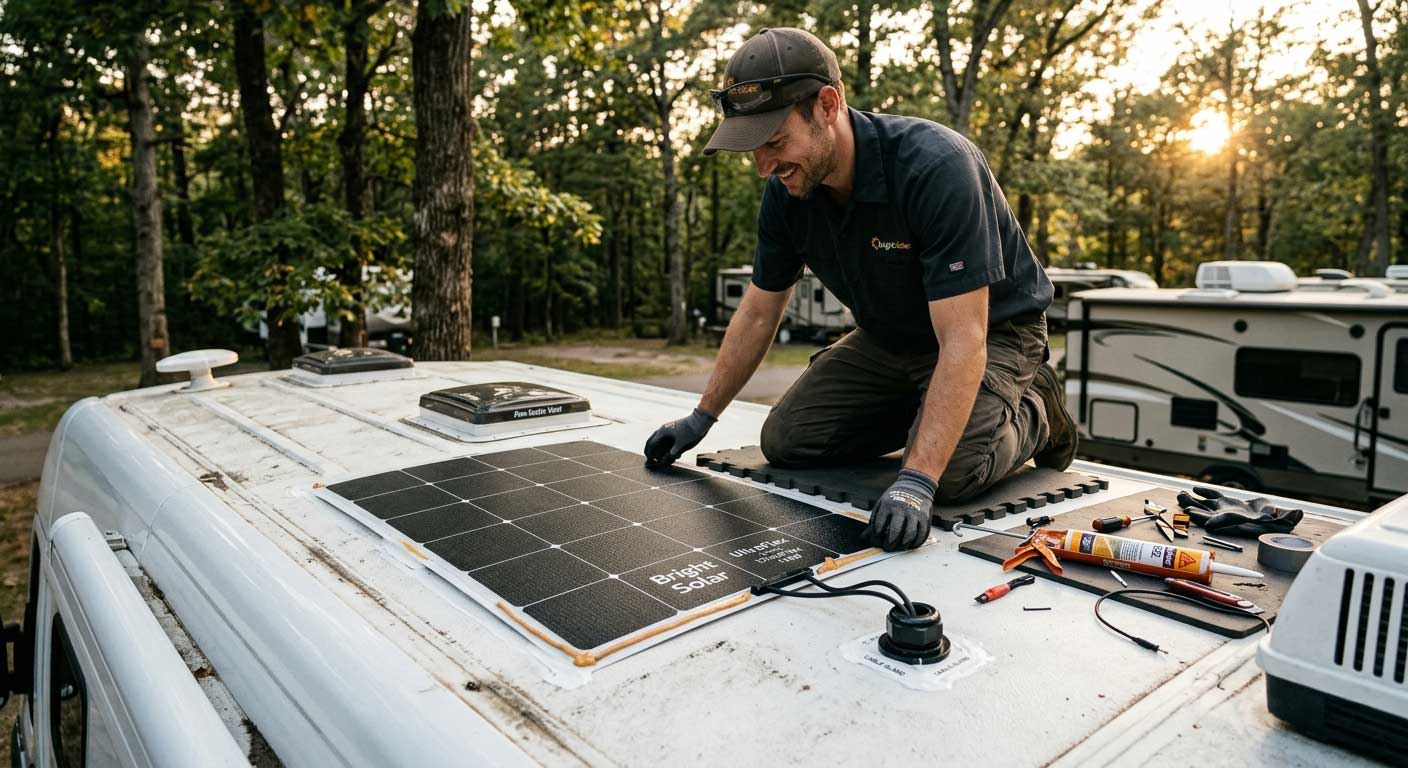
Surface Preparation Matters More Than the Panel
Most installation failures begin before the panel even touches the roof.
I’ve seen people install flexible panels directly onto dusty fiberglass surfaces because the adhesive “felt strong enough.” Six months later, water intrusion started around the edges.
Before installation:
- Remove wax
- Remove silicone residue
- Degrease using isopropyl alcohol
- Ensure the surface is fully dry
- Avoid textured surfaces when possible
A clean mounting surface directly affects adhesive bonding strength.
Best Surfaces for Flexible Solar Panels
| Surface Type | Recommended | Notes |
|---|---|---|
| Aluminum RV Roof | Yes | Excellent heat dissipation |
| Fiberglass Boat Deck | Yes | Common marine application |
| Curved Van Roof | Yes | Ideal for lightweight panels |
| Textured Plastic Roof | Limited | Weak adhesive bonding |
| Soft Fabric Surfaces | No | Unsafe mounting stability |
Adhesive vs Screw Mounting
This is where online advice becomes messy.
Some installers insist screws are mandatory. Others avoid roof penetrations completely.
In practice, both methods work — if done correctly.
Adhesive Mounting
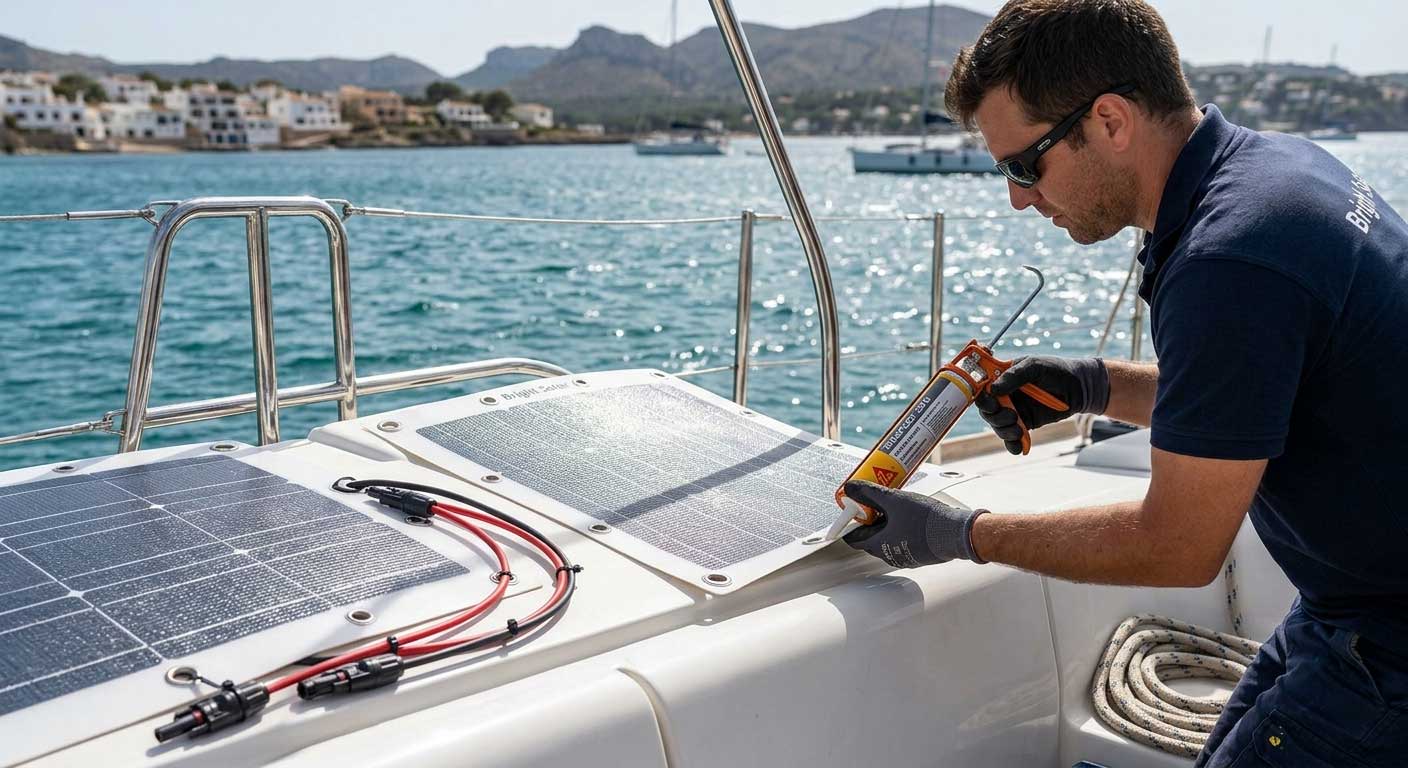
Marine-grade polyurethane adhesives are common for flexible solar panels.
Popular options include:
- Sikaflex 252
- 3M 5200
- Dekasyl MS-5
Advantages:
- No roof drilling
- Cleaner appearance
- Lower corrosion risk
- Better for marine applications
Disadvantages:
- Difficult removal later
- Sensitive to poor surface prep
- Heat buildup possible
For lightweight portable systems, adhesive mounting is usually enough.
Screw Mounting
Mechanical fasteners are still common for off-road vehicles and commercial fleets.
Advantages:
- Strong long-term fixation
- Better wind resistance
- Easier replacement
Disadvantages:
- Roof penetration risk
- Requires waterproof sealing
- Possible corrosion issues
Personally, I prefer hybrid mounting for mobile applications:
- Adhesive underneath
- Limited perimeter screws
- Waterproof edge sealing
That combination handles vibration better over time.
Ventilation Is the Most Ignored Part of Installation
Flexible solar panels hate trapped heat.
This is where many “cheap panel failures” are actually installation failures.
According to the National Renewable Energy Laboratory (NREL), solar panel efficiency decreases as temperature rises above standard test conditions.
Source:
https://www.nrel.gov/
When a flexible panel is glued completely flat against a hot roof with zero airflow, temperatures rise dramatically.
On several van conversions I inspected, panel surface temperatures exceeded 176°F (80°C) during summer afternoons.
That accelerates:
- EVA aging
- Adhesive breakdown
- Cell microcracking
- Output degradation
How to Improve Airflow
Good installers usually:
- Leave slight edge spacing
- Avoid full-surface glue coverage
- Use mounting spacers when possible
- Keep cable junctions elevated
Even 5–10 mm of airflow helps reduce thermal stress.
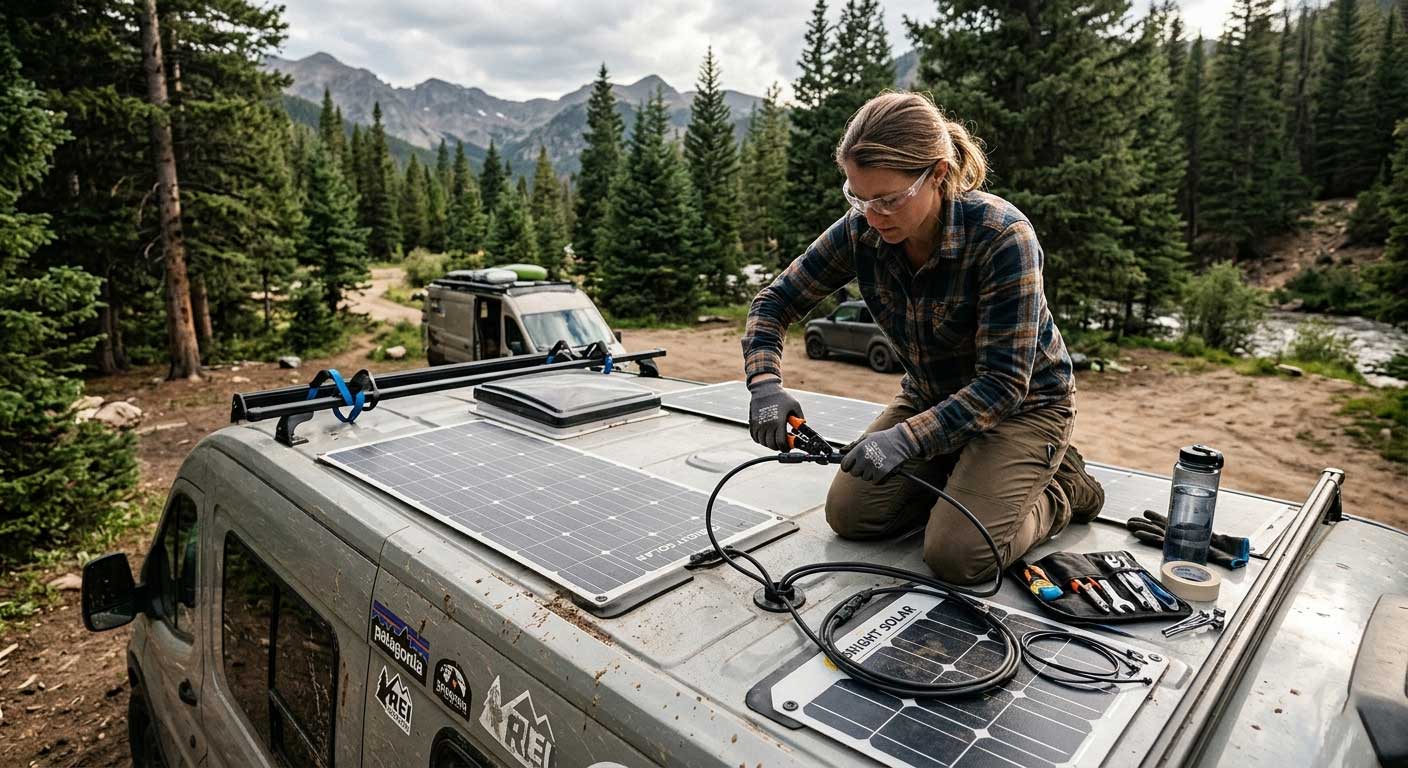
Wiring Flexible Solar Panels Correctly
Electrical mistakes destroy more portable systems than weather does.
I once saw a camper owner use indoor extension cable for rooftop solar wiring. After one rainy season, oxidation had already started inside the connectors.
Outdoor solar installations need:
- UV-resistant solar cable
- MC4 connectors
- Waterproof junction boxes
- Correct fuse sizing
- Proper strain relief
Skipping these details creates long-term reliability problems.
Common Flexible Solar Panel Installation Mistakes
After inspecting dozens of failed systems, patterns become obvious.
Mistake #1 — Installing Directly Over Uneven Surfaces
Sharp surface edges create stress points under the cells.
Over time, microcracks form.
Mistake #2 — Using Cheap Silicone Adhesive
Standard household silicone is not designed for thermal cycling.
Marine-grade adhesive performs much better.
Mistake #3 — Ignoring Water Drainage
Water trapped around panel edges accelerates adhesive deterioration.
Drainage paths matter.
Mistake #4 — Overtightening Flexible Panels
Flexible does not mean indestructible.
Excessive bending pressure damages internal conductive paths.
How Long Does a Proper Installation Last?
A well-installed flexible solar panel can realistically operate for 8–15 years depending on:
- UV exposure
- Roof temperature
- Installation quality
- Mechanical vibration
- Maintenance frequency
Premium ETFE-coated panels usually outlast PET-coated entry-level products.
From practical field experience, installation quality often matters more than brand marketing claims.
Best Applications for Flexible Solar Panels
Flexible panels are not perfect for every situation.
But in certain applications, they outperform rigid systems.
Ideal Use Cases
- RV rooftops
- Marine decks
- Camper vans
- Curved surfaces
- Portable camping systems
- Lightweight off-grid setups
Less Ideal Applications
- Large industrial arrays
- High-wind exposed commercial roofs
- Permanent utility-scale systems
FAQ:How to Install Flexible Solar Panels?
Can flexible solar panels be glued directly to a roof?
Yes, but only with proper surface preparation and marine-grade adhesive. Full-surface glue coverage without airflow may reduce lifespan due to heat buildup.
Do flexible solar panels need an air gap?
Ideally yes. Small airflow spacing helps reduce operating temperature and slows material aging.
Can I walk on flexible solar panels?
Some marine-grade models support light foot traffic, but repeated pressure increases risk of cell cracking. Always check manufacturer specifications.
Are flexible solar panels waterproof?
Most quality flexible panels are weather-resistant and designed for outdoor use, but connectors and cable entry points must also be waterproofed properly.
What is the best adhesive for flexible solar panels?
Sikaflex 252 and 3M 5200 are commonly used in RV and marine installations because they tolerate vibration, UV exposure, and moisture.
Final Thoughts
Learning how to install flexible solar panels properly is less about sticking a panel onto a roof and more about managing heat, vibration, moisture, and long-term stress.
The panel itself is only half the system.
At Bright Solar, we’ve seen installations survive brutal coastal salt exposure for years — and others fail within one summer because shortcuts were taken during mounting. Good installation work rarely looks dramatic. Usually it’s the quiet details: clean surfaces, proper airflow, careful sealing, disciplined cable routing.
Those details are what keep flexible solar systems producing reliable power long after the first trip ends.
The prev: How to Clean Flexible Solar Panels?The next: How to Attach Flexible Solar Panels?
Related recommendations
-

What a Solar Panel Is Made Of?
173A solar panel combines silicon cells, protective layers, encapsulants, structural materials, and electrical components to generate and protect solar power.
View details -
How Much To Install Solar Panels On House?
201How much to install solar panels on house? Learn residential solar installation costs, pricing factors, equipment details, and savings insights from Bright Solar.
View details -
How Much Energy Does a Solar Panel Create?
207A solar panel’s energy output depends on its rated power, sunlight, location, temperature, shading, orientation, and system losses. A 400W panel typically pr...
View details -
How do solar panels work simple explanation?
43Solar panels use photovoltaic cells to convert sunlight into DC electricity, which can be used directly, converted to AC, or stored in batteries.
View details