How to Clean Flexible Solar Panels?
How to Clean Flexible Solar Panels?
Flexible solar panels should be cleaned using soft water, a non-abrasive sponge, and mild soap while avoiding harsh chemicals, pressure washers, or stiff brushes. Regular cleaning improves energy output, prevents surface degradation, and helps flexible panels last significantly longer in outdoor conditions.
A lot of people think dirt on solar panels is mostly cosmetic.
It isn’t.
I realized how serious it could become during an RV inspection outside Phoenix. The owner complained the battery bank suddenly charged slower. Nothing was electrically wrong. The panels were simply coated with months of baked dust, diesel film, and pollen. After cleaning, output climbed almost immediately.
At Bright Solar, we’ve cleaned flexible solar panels installed on camper vans, fishing boats, industrial trailers, and off-grid cabins. The cleaning process sounds simple, but flexible panels behave differently from rigid glass modules. Their polymer surfaces scratch more easily, hold heat differently, and react poorly to aggressive cleaning tools.
According to the National Renewable Energy Laboratory (NREL), accumulated dirt and soiling can reduce photovoltaic energy production by 2% to over 25% depending on climate conditions and contamination levels.
Source: NREL – nrel.gov
Why Cleaning Flexible Solar Panels Matters
Dirty panels do not just “look bad.”
They run hotter.
That extra heat slowly hurts efficiency.
On flexible solar panels especially, heat buildup becomes more serious because many are mounted flush against surfaces with limited airflow underneath.
I’ve measured temperature differences exceeding 18°F between clean and heavily contaminated flexible panels during summer testing.
That surprised even some installers.
Common Contaminants That Reduce Performance
Different environments create different problems.
| Environment | Typical Contamination |
|---|---|
| Desert RV Travel | Fine dust and sand |
| Coastal Areas | Salt residue |
| Campgrounds | Tree sap and pollen |
| Urban Parking | Oil film and soot |
| Marine Applications | Bird droppings and salt spray |
Bird droppings are especially nasty because they create concentrated hot spots.
One small patch can partially shade solar cells and increase localized heating dramatically.
The Safest Way to Clean Flexible Solar Panels
Simple is better.
Honestly, most panel damage I’ve seen came from over-cleaning, not under-cleaning.
What You Actually Need
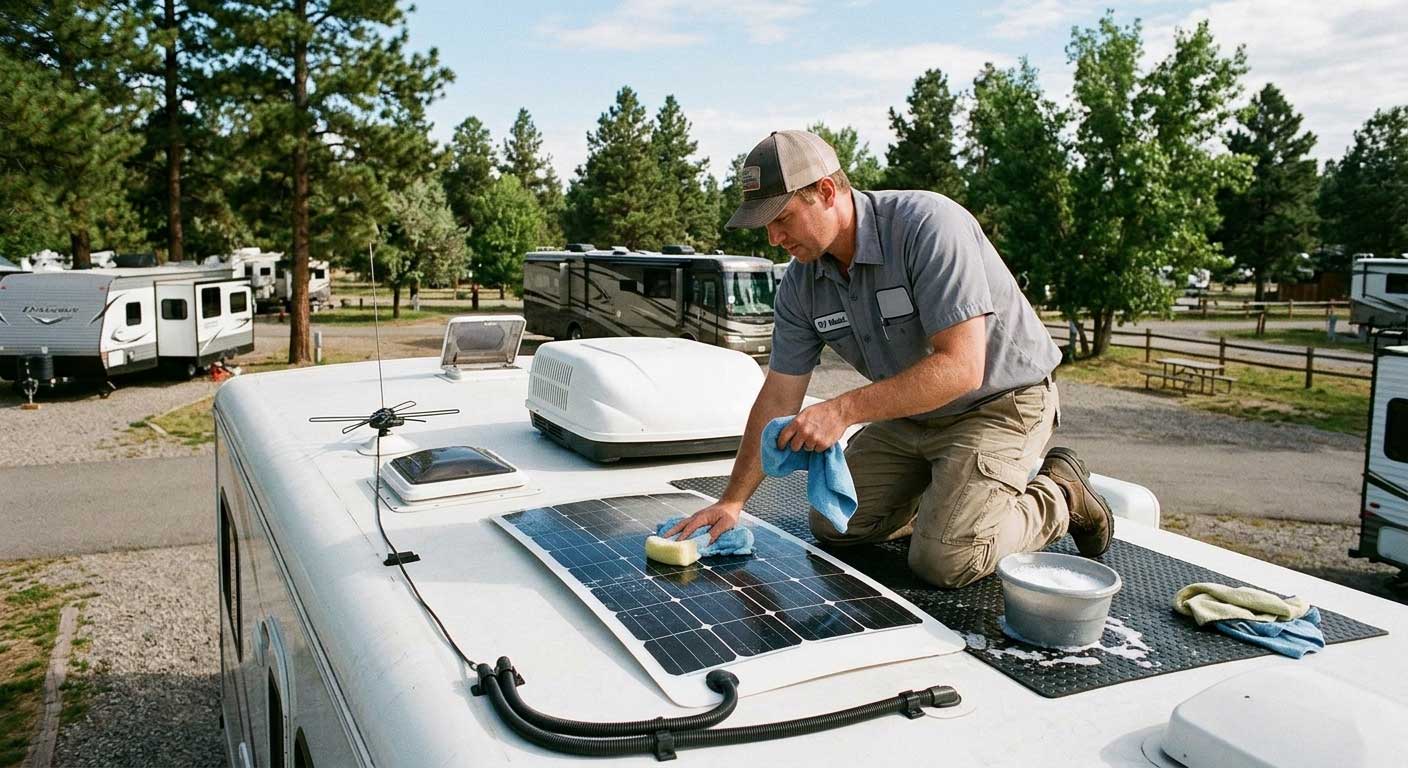
Recommended cleaning tools:
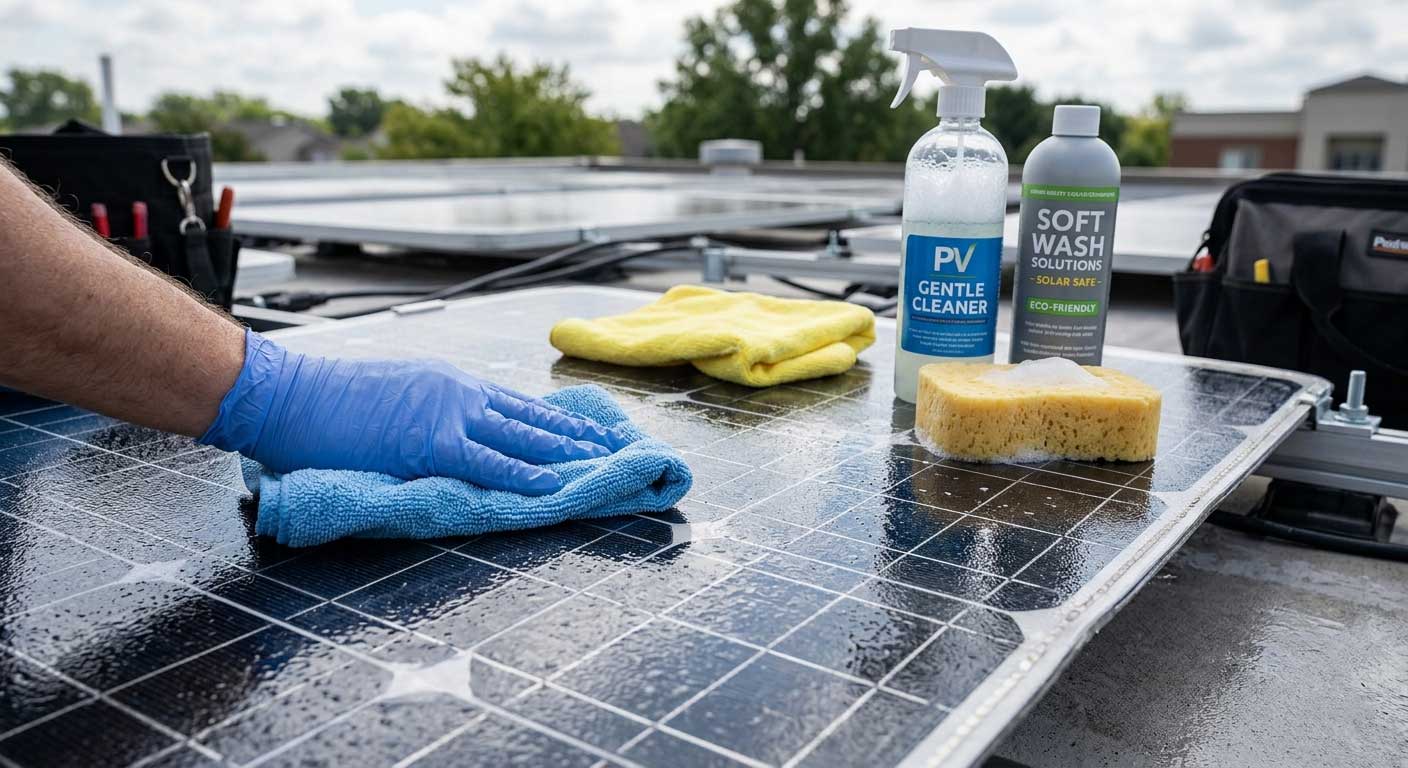
- Soft microfiber cloth
- Non-abrasive sponge
- Mild soap
- Hose with gentle water flow
- Soft silicone squeegee
Avoid:
- Pressure washers
- Steel wool
- Harsh solvents
- Glass polish
- Hard bristle brushes
Flexible solar panel coatings are more delicate than tempered solar glass.
That matters.
Step-by-Step Cleaning Process
Step 1 — Clean Early Morning or Late Afternoon
Never clean panels under intense midday heat.
Cold water hitting a hot panel creates thermal stress.
I once watched a customer spray cold hose water onto sun-heated panels in Nevada. Tiny surface warping appeared later near the laminate edge. Flexible surfaces react faster than rigid glass modules.
Best cleaning conditions:
- Cloudy weather
- Early morning
- Late afternoon
- Cool panel surface
Step 2 — Rinse Loose Dirt First
Do not scrub dry dust.
This scratches the polymer coating.
Always rinse loose debris first using:
- Low-pressure hose
- Soft flowing water
- No concentrated spray nozzles
Desert dust behaves almost like fine sandpaper.
Step 3 — Use Mild Soap Sparingly
A few drops are enough.
Too much soap leaves residue that actually attracts more dirt later.
Good options:
- Mild dish soap
- Solar-safe cleaning solution
- Non-ammonia cleaners
Avoid:
- Bleach
- Alcohol-heavy solvents
- Degreasers
- Acidic cleaners
The International Energy Agency (IEA) notes that improper maintenance chemicals can accelerate degradation in photovoltaic module surfaces.
Source: iea.org
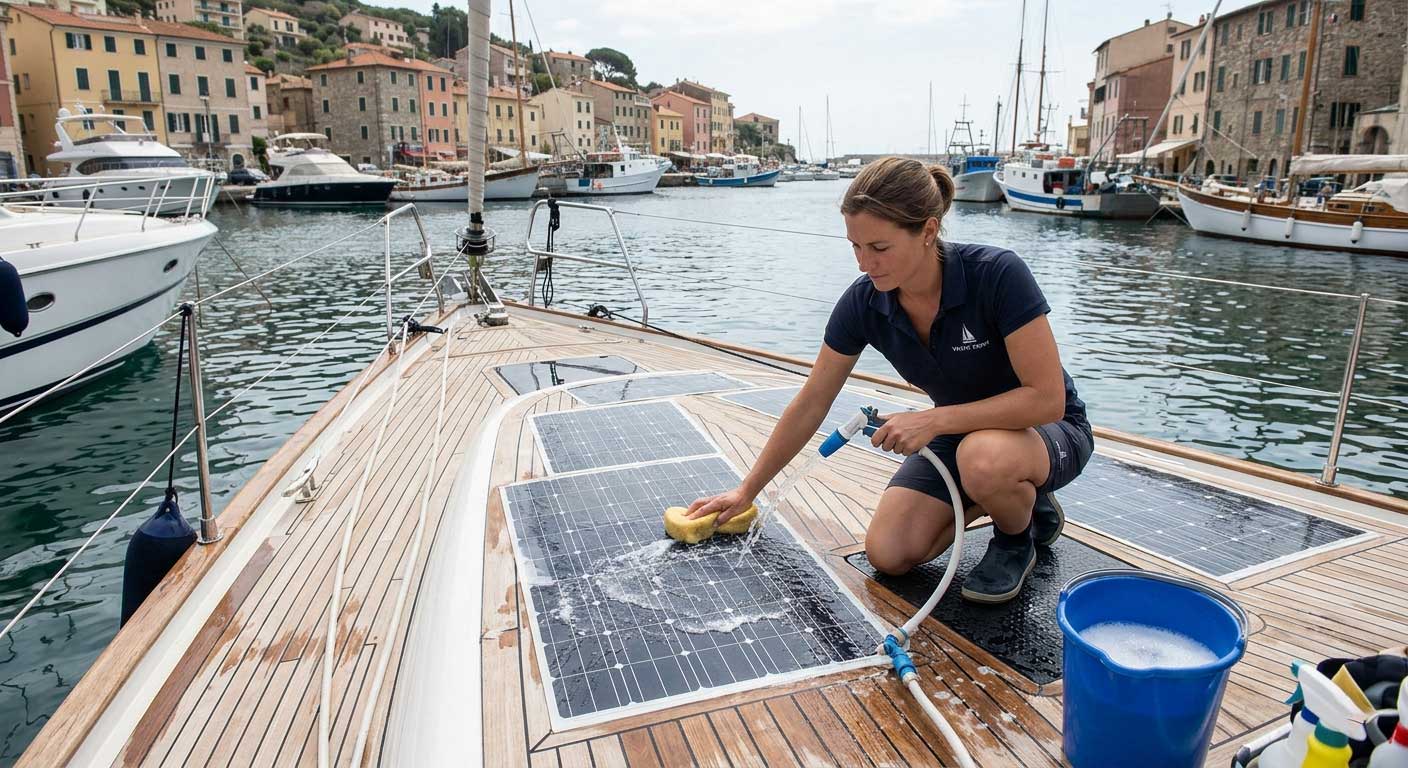
Cleaning Marine Flexible Solar Panels
Marine systems need more attention than RV installations.
Salt buildup becomes relentless.
Even when panels look “clean,” microscopic salt residue may still remain.
Saltwater Exposure Is Tough on Panels
We inspected flexible panels on a fishing vessel after 14 months offshore use.
The owner rinsed occasionally.
But not thoroughly.
Salt crystals had already started affecting connector seals and cable jackets.
For marine installations:
- Rinse weekly if possible
- Use fresh water only
- Inspect connector corrosion monthly
- Dry edges carefully
Salt reflects sunlight aggressively, increasing UV stress around the panel surface.Learn more about “Flexible Solar Panel Installation Guide“
How Often Should Flexible Solar Panels Be Cleaned?
There is no universal schedule.
Environment changes everything.
Here’s what we usually recommend:
| Location Type | Cleaning Frequency |
|---|---|
| Desert Areas | Every 2–4 weeks |
| Coastal Marine Use | Every 2 weeks |
| Forest Campgrounds | Monthly |
| Urban Areas | Every 1–2 months |
| Seasonal RV Use | Before and after trips |
Some customers obsess over weekly cleaning.
Usually unnecessary.
But completely ignoring maintenance for a year? That absolutely affects output.
What Happens If Flexible Solar Panels Stay Dirty?
Performance drops slowly enough that many users never notice.
That’s the dangerous part.
The decline feels “normal.”
Then one day battery charging suddenly feels weak.
Common long-term issues include:
- Reduced energy production
- Increased surface temperature
- Hot spot formation
- Faster laminate aging
- Connector contamination
The Solar Energy Industries Association (SEIA) notes that system maintenance directly affects long-term photovoltaic performance and lifespan.
Source: seia.org
Heat Is the Real Enemy
Most people blame sunlight.
Actually, trapped heat causes more long-term damage.
Dirt traps heat.
Dark grime especially.
On black-backed flexible panels mounted flush to metal roofs, I’ve recorded temperatures exceeding 90°C under summer exposure.
That level of heat accelerates aging dramatically.
Cleaning Mistakes That Damage Flexible Solar Panels
I see these repeatedly.
And unfortunately, many are permanent.
Using Pressure Washers
This is probably the biggest mistake.
High-pressure spray can:
- Damage laminate edges
- Force water into connectors
- Lift adhesives
- Weaken seals
Flexible panels are not car paint.Learn more about “300w flexible solar panels“
Treat them gently.
Scrubbing with Hard Brushes
Never use:
- Wire brushes
- Deck scrubbers
- Abrasive pads
Tiny scratches reduce light transmission over time.
You may not notice immediately.
But efficiency slowly suffers.
Professional Cleaning vs DIY Cleaning
For most RV and portable systems, DIY cleaning works perfectly fine.
Industrial rooftops are different.
Large commercial systems sometimes require:
- Water purification systems
- Safety harnesses
- Specialized brushes
- Electrical lockout procedures
But portable flexible systems? Keep it simple.
Gentle cleaning wins.
FAQ About How to Clean Flexible Solar Panels
Can I use glass cleaner on flexible solar panels?
Usually no. Many glass cleaners contain ammonia or chemicals that can damage polymer surfaces over time.
Is rain enough to clean flexible solar panels?
Not really. Rain removes loose dust but often leaves mineral residue, pollen, and grime behind.
Can dirty solar panels reduce charging speed?
Absolutely. Even partial contamination lowers energy production and increases heat buildup.
Should I wax flexible solar panels?
No. Wax coatings may reduce light transmission and attract additional dirt.
How do I remove bird droppings safely?
Soften them first with water, then gently wipe using a microfiber cloth. Never scrape dry debris.
How to clean flexible solar panels?
Cleaning flexible solar panels requires using soft water, a microfiber cloth, mild soap, and gentle wiping methods. Avoid pressure washers, abrasive brushes, and harsh chemicals because they can damage the flexible surface and reduce long-term solar performance.
Can you clean solar panel bend surfaces safely?
Yes, you can clean solar panel bend surfaces safely by using a soft cloth, gentle water flow, and non-abrasive cleaners. Avoid applying excessive pressure on curved areas because repeated stress may damage the flexible solar laminate.
How to clean portable solar panels?
To clean portable solar panels, first rinse away loose dust, then wipe the surface with mild soap and a soft microfiber cloth. Allow the panel to dry naturally and avoid strong chemicals that may affect the protective coating.
What is the best method for cleaning portable solar panels?
The best method for cleaning portable solar panels is gentle maintenance with clean water, a soft sponge, and a small amount of mild detergent. Regular cleaning helps remove dust, salt, and debris while maintaining charging efficiency.
How to attach flexible solar panel to RV roof?
To attach a flexible solar panel to an RV roof, clean the roof thoroughly, position the panel with airflow clearance, secure it using industrial adhesive or VHB tape, seal cable entry points with waterproof sealant, and connect the panel to a charge controller before testing system output.Learn more about “How to attach flexible solar panel to RV roof“
How to Attach Flexible Solar Panels?
Flexible solar panels are usually attached using industrial adhesive, VHB tape, stainless screws, or hybrid mounting methods depending on the surface material and heat conditions. Correct airflow spacing and waterproof cable routing matter more than most first-time installers realize.Learn more about “How to Attach Flexible Solar Panels“
How Much Is One Solar Panel?
How much is one solar panel depends on its wattage, technology, efficiency, and application. A single solar panel usually costs between $100 and $350 for standard residential models, while premium and flexible panels can range from $200 to over $700 depending on specifications.Learn more about “How Much Is One Solar Panel“
How Much Is A Solar Panel For House?
A single solar panel for a house usually costs between $100 and $500, depending on wattage, technology, and brand. However, a complete home solar system requires multiple panels, inverters, mounting equipment, and installation services.Learn more about “How Much Is A Solar Panel For House“
How to Mount Flexible Solar Panel?
Flexible solar panels are usually mounted using industrial adhesive, VHB tape, screws with spacers, or hybrid mounting systems. The safest installation keeps airflow under the panel, prevents water buildup, and avoids over-bending the panel surface. Done correctly, a flexible solar panel can stay securely mounted for 5–10 years on RVs, vans, boats, and curved roofs.Learn more about “How to Mount Flexible Solar Panel“
Final Thoughts on How to Clean Flexible Solar Panels
Learning how to clean flexible solar panels properly is less about making them look shiny and more about protecting long-term electrical performance.
Most flexible panel failures do not happen suddenly.
They build slowly:
- Heat
- Dirt
- Salt
- Surface wear
- Poor maintenance habits
At Bright Solar, we’ve seen well-maintained flexible panels continue performing reliably years longer than neglected systems exposed to the exact same climate.
Cleaning takes minutes.
Replacing damaged panels takes money.
The prev: How to Attach Flexible Solar Panel?The next: How to Install Flexible Solar Panels?
Related recommendations
-

How Hot Do Flexible Solar Panels Get?
206How hot do flexible solar panels get in real-world conditions? Learn operating temperatures, heat impact on efficiency, and expert installation insights from Bright Solar.
View details -
how to make a portable solar panel stand?
180Build a portable solar panel stand from lightweight aluminum or weather-resistant wood, with adjustable tilt, stable feet, and a foldable design.
View details -
how do flexible solar panels work?
213How do flexible solar panels work? Learn how lightweight bendable solar panels generate electricity, where they perform best, and what affects long-term efficiency.
View details -
do solar panels emit radiation?
124do solar panels emit radiation? Learn how solar panels work, whether they produce harmful radiation, electromagnetic fields, and what science says about PV safety.
View details