How to Install Flexible Solar Panels on RV Roof?
How to Install Flexible Solar Panels on RV Roof?
Flexible solar panels are installed on RV roofs using industrial adhesive, proper surface preparation, safe cable routing, and airflow spacing. A well-installed flexible panel can power RV appliances for years without drilling large mounting brackets into the roof.
I learned this the hard way during a summer installation outside Flagstaff, Arizona. The temperature on the RV roof climbed above 140°F by midday, and one poorly bonded corner started lifting within three weeks because the installer skipped surface prep. Flexible solar panels look simple, but RV roof installation is one of those jobs where tiny mistakes become expensive leaks later.
At Bright Solar, we’ve worked with van builders, RV owners, and mobile off-grid setups where lightweight flexible panels were the only realistic option because rigid frames added too much wind resistance or roof weight. The difference between a five-year installation and a failed one usually comes down to heat management, adhesive choice, and cable routing discipline.Learn more about “Flexible Solar Panel Installation Guide“
Why RV Owners Choose Flexible Solar Panels
Rigid panels still dominate residential rooftops. RV roofs are different.
Flexible solar panels are popular because they:
- Add very little weight
- Sit low against the roof
- Reduce wind drag while driving
- Fit curved fiberglass surfaces
- Require fewer brackets
- Work well on camper vans and Class B RVs
According to the U.S. Department of Energy, solar adoption in mobile and off-grid applications continues growing because lightweight photovoltaic systems have become more efficient and affordable in recent years.
The first RV system I installed personally used two 100W flexible panels bonded directly onto a fiberglass roof. The owner crossed Nevada, Utah, and Colorado in one season without needing campground hookups except during cloudy weeks.
What You Need Before Installation
Essential Tools and Materials
Before attaching flexible solar panels, gather everything first. Half-finished roof jobs become risky when weather changes unexpectedly.
| Item | Purpose |
|---|---|
| Flexible solar panels | Main power source |
| MPPT charge controller | Regulates charging efficiency |
| Dicor sealant or Sikaflex adhesive | Roof-safe bonding |
| MC4 connectors | Solar wiring connections |
| Cable gland entry housing | Waterproof cable entry |
| Isopropyl alcohol | Surface cleaning |
| Soft roller | Pressing adhesive evenly |
| UV-resistant zip ties | Cable management |
| Fuse and breaker | Electrical protection |
A study published by the National Renewable Energy Laboratory (NREL) showed that heat buildup is one of the leading causes of reduced solar performance and accelerated degradation in rooftop solar systems. That matters even more on RV roofs where airflow is limited.
Source:
NREL — https://www.nrel.gov
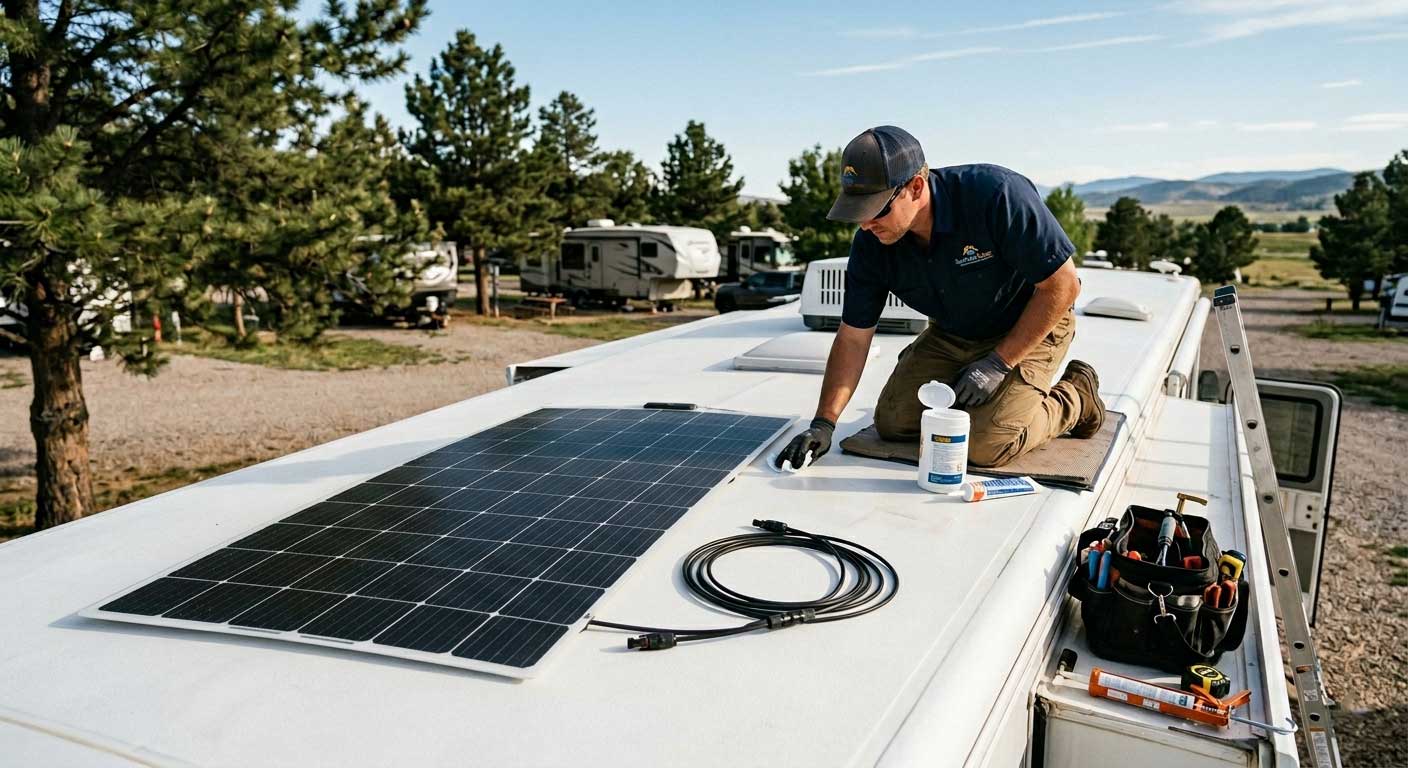
Step-by-Step Guide to Install Flexible Solar Panels on RV Roof
Step 1 — Choose the Correct Roof Area
This sounds obvious until you realize RV roofs are crowded.
Avoid placing panels near:
- Air conditioners
- Roof vents
- Satellite domes
- TV antennas
- Shade-producing accessories
Even partial shading dramatically reduces output. The U.S. Energy Information Administration notes that shading can reduce photovoltaic efficiency significantly depending on string configuration.
On one Sprinter van project, a tiny roof antenna shadow reduced morning charging by nearly 18%. We relocated the panel six inches and recovered the lost output immediately.
Step 2 — Clean the Roof Thoroughly
Do not rush cleaning.
Wash dirt first, then wipe the surface with isopropyl alcohol. Old wax residue destroys adhesive bonding strength.
The roof should feel almost squeaky when wiped clean.
Most installation failures I’ve inspected came from contaminated surfaces rather than bad solar panels.
Step 3 — Test Panel Placement Before Bonding
Never apply adhesive immediately.
Lay the panel down first and verify:
- Cable orientation
- Walking clearance
- Ventilation spacing
- Roof curvature compatibility
Flexible panels should never be bent tighter than manufacturer limits.
At Bright Solar, we recommend leaving slight airflow gaps whenever possible because trapped heat shortens lifespan.
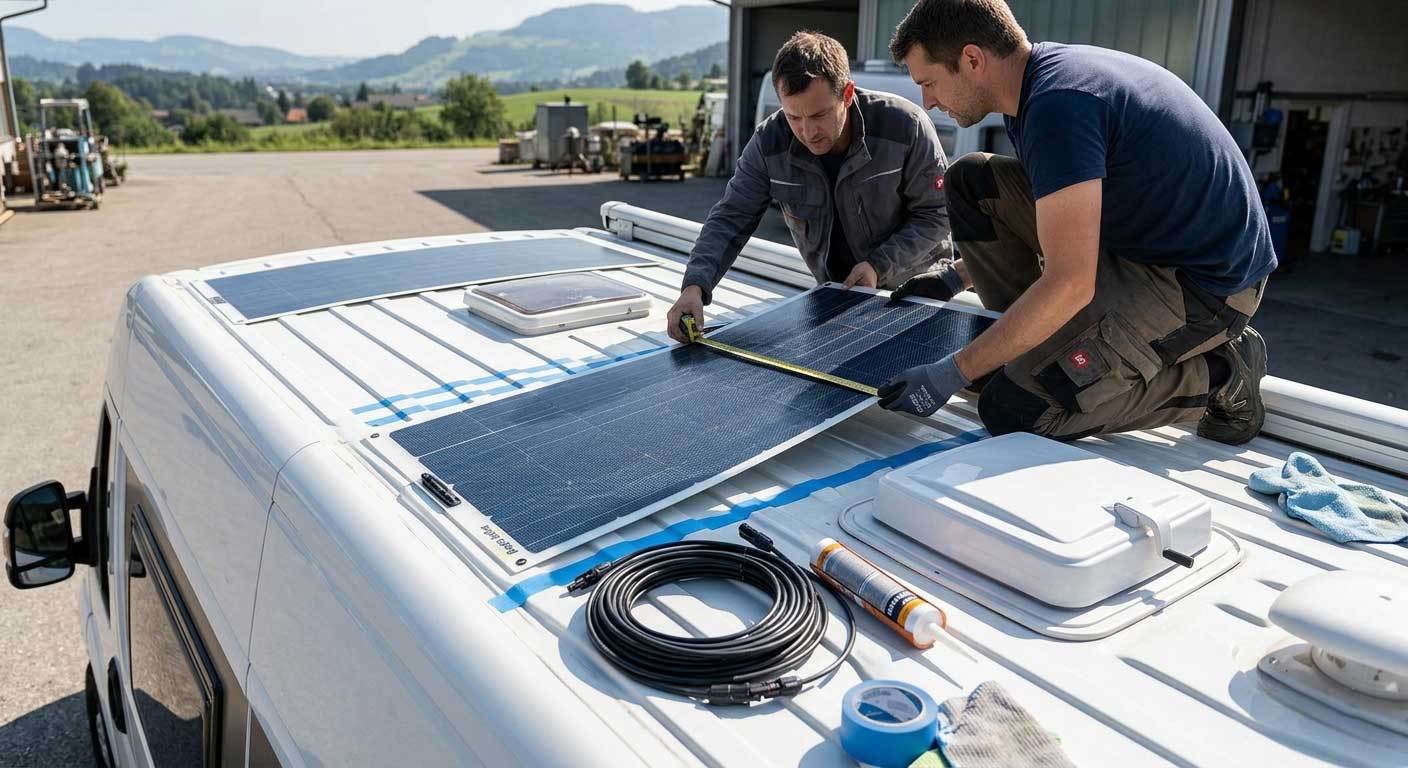
Best Adhesive for Flexible Solar Panels on RV Roof
Polyurethane Adhesives Work Best
Most professional installers use:
- Sikaflex 252
- Sikaflex 221
- Dicor non-sag sealant
- 3M VHB tape combined with sealant
Cheap silicone from hardware stores often fails after prolonged UV exposure.
One RV owner I met near Moab used generic construction glue to save money. By the second summer, two corners lifted while driving through desert crosswinds.
Industrial polyurethane adhesives tolerate:
- UV exposure
- Roof flexing
- Heat expansion
- Rain vibration
- Highway wind pressure
How to Route RV Solar Wiring Safely
Avoid Loose Roof Cables
Loose cables destroy installations over time.
Always use:
- Waterproof cable glands
- UV-resistant clips
- Fused battery connections
- Protected wire loom
According to the National Fire Protection Association (NFPA), improper electrical connections remain a significant source of RV electrical failures and fire incidents.
Source:
NFPA — https://www.nfpa.org
One overlooked detail: leave slight slack near roof transitions. Tight cables eventually pull against connectors while driving over rough roads.
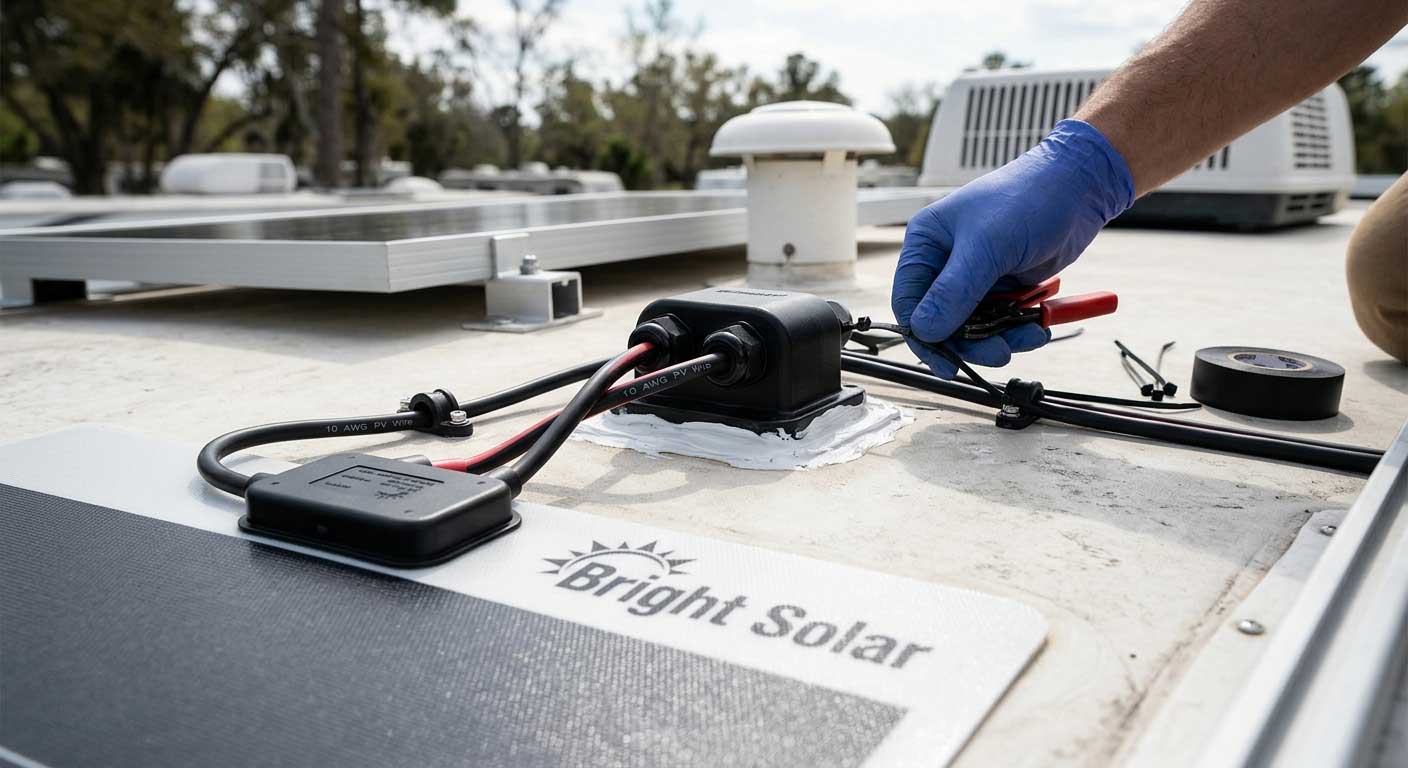
Common Mistakes That Shorten Flexible Solar Panel Life
Heat Is the Biggest Hidden Problem
Flexible panels fail early mostly because of excessive heat buildup.
Common installation mistakes include:
- Bonding directly without airflow
- Mounting over uneven surfaces
- Using weak adhesive
- Walking repeatedly on panels
- Routing cables under tension
Research from NREL shows that elevated operating temperatures reduce photovoltaic efficiency and accelerate degradation rates.
Flexible panels typically run hotter than rigid framed panels because they lack ventilation underneath.
That’s why careful spacing matters more than most RV owners realize.
How Long Will Flexible RV Solar Panels Last?
Most high-quality flexible solar panels last:
- 5–10 years under heavy RV use
- 10–15 years with moderate seasonal travel
Lower-cost panels may degrade faster under constant UV and heat exposure.
At Bright Solar, we’ve seen properly installed flexible systems continue operating efficiently after years of highway vibration and desert heat, especially when airflow management was prioritized during installation.
FAQ:How to Install Flexible Solar Panels on RV Roof?
Can flexible solar panels be glued directly to RV roofs?
Yes. Most flexible panels are bonded using polyurethane adhesive or industrial VHB tape systems designed for mobile applications.
Do flexible solar panels damage RV roofs?
Not when installed correctly. Problems usually come from poor sealing, trapped moisture, or improper adhesive removal.
Should I drill into my RV roof?
Most flexible panel installations avoid drilling except for cable entry glands or backup fasteners.
Are flexible solar panels waterproof?
Yes. Quality flexible panels are designed for outdoor exposure, rain, and UV conditions, though connectors and roof penetrations still require sealing.
Can flexible solar panels handle highway wind?
Properly bonded panels can withstand highway driving, but edge lifting from weak adhesive is a common failure point.
How To Mount Solar Panels On RV Roof?
Mounting solar panels on an RV roof requires proper planning, secure attachment methods, and waterproof installation. The process includes selecting the right mounting method, preparing the roof surface, fixing panels safely, and sealing all connection points to prevent leaks.Learn more about the How To Mount Solar Panels On RV Roof?
Final Thoughts
Installing flexible solar panels on RV roof systems is less about sticking panels down and more about managing heat, vibration, waterproofing, and long-term reliability. The lightweight design makes flexible panels attractive for mobile power setups, but careful installation determines whether they last two years or ten.
The best RV solar installations I’ve seen were never the fastest jobs. They were the ones where installers slowed down during surface prep, cable routing, and adhesive curing. That patience pays off every time the batteries stay full miles away from the nearest campground hookup.
Related recommendations
-

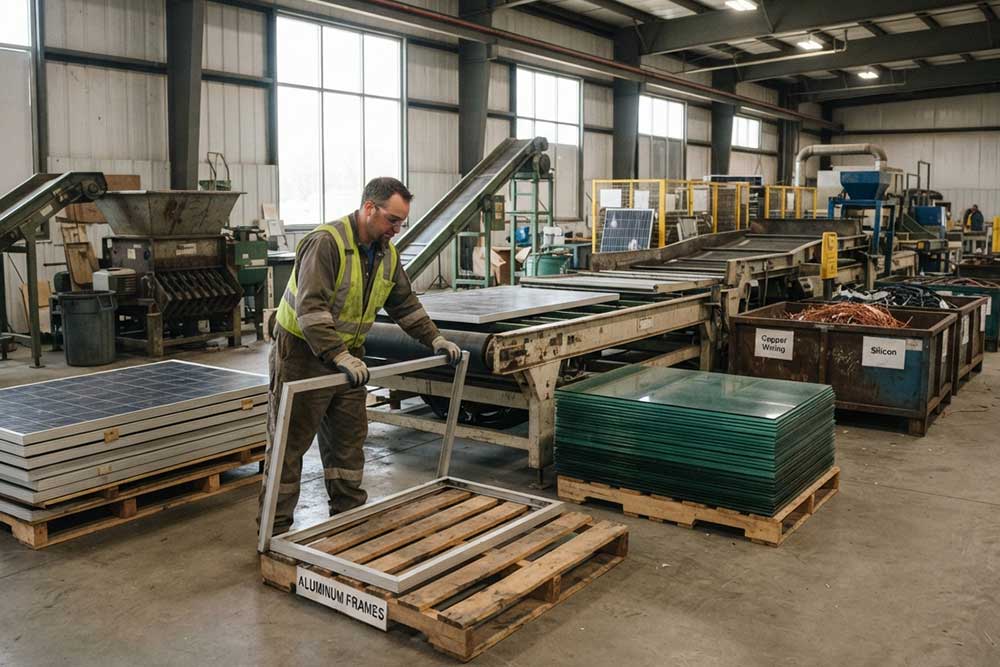
Can You Recycle Solar Panels?
119Yes. Solar panels can be recycled through specialist facilities that recover materials such as glass, aluminum, silicon, and metals.
View details -
How Does a Portable Solar Panel Work?
255How does a portable solar panel work? Learn how portable solar panels convert sunlight into usable electricity for camping, RVs, and backup power systems.
View details -
How Long Do Portable Solar Panels Last?
225How long do portable solar panels last? Learn the real lifespan of portable solar panels, what affects durability, and how to extend performance outdoors.
View details -
How effective are solar panels?
139How effective are solar panels? Discover solar energy benefits, power output, efficiency factors, and real-world performance insights from Bright Solar experts.
View details