Are Solar Panels Waterproof?
Yes, most modern solar panels are designed to withstand rain, snow, and outdoor moisture. Their sealed surfaces, protective encapsulation, and weather-resistant electrical components prevent water from reaching sensitive parts during normal outdoor operation.
However, waterproof does not mean that every solar panel can survive flooding, prolonged immersion, or damaged electrical connections. The actual protection depends on module construction, sealing quality, IP ratings, and installation conditions.
How Are Solar Panels Made Waterproof?
Solar panels are not simply pieces of glass placed over photovoltaic cells. Their weather resistance comes from several protective layers working together.
A conventional crystalline silicon solar module typically includes:
- Front glass: Tempered glass protects solar cells from rain, dust, and physical impacts.
- Encapsulant: EVA or POE materials surround the cells, providing electrical insulation and helping limit moisture penetration.
- Backsheet or rear glass: Provides additional environmental and electrical protection.
- Edge sealing: Helps prevent moisture from entering through the module perimeter.
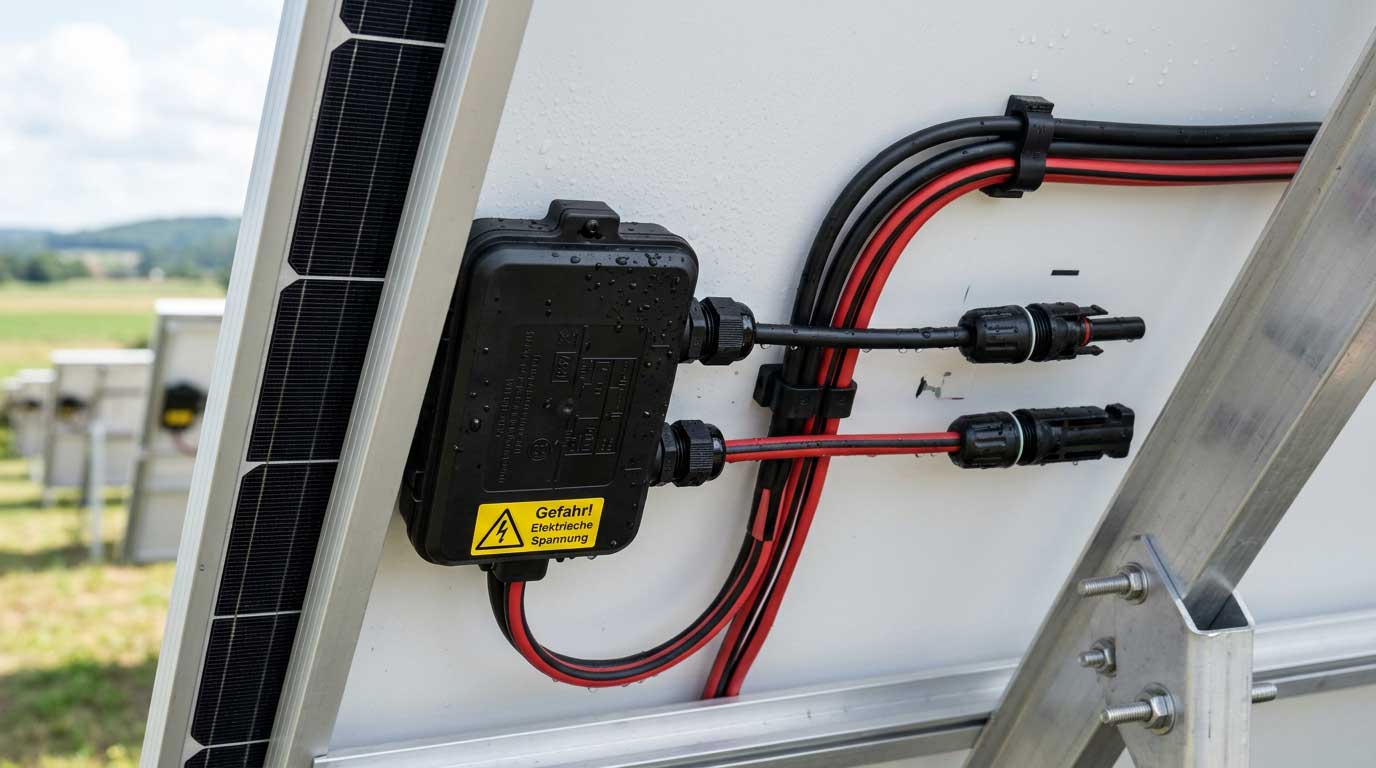
- Junction box: Protects electrical connections at the rear of the panel.
- Cables and connectors: Properly rated components help maintain electrical protection outdoors.
These components matter because water damage does not always begin on the visible glass surface. Moisture can gradually enter through damaged seals, cracks, or poorly protected electrical connections.
The U.S. Department of Energy has highlighted research into moisture penetration in photovoltaic modules, including how water can enter through small gaps around module edges and affect long-term reliability.
Source: https://www.energy.gov/cmei/systems/articles/keeping-solar-field-keeping-water-out
Can Solar Panels Get Wet in the Rain?
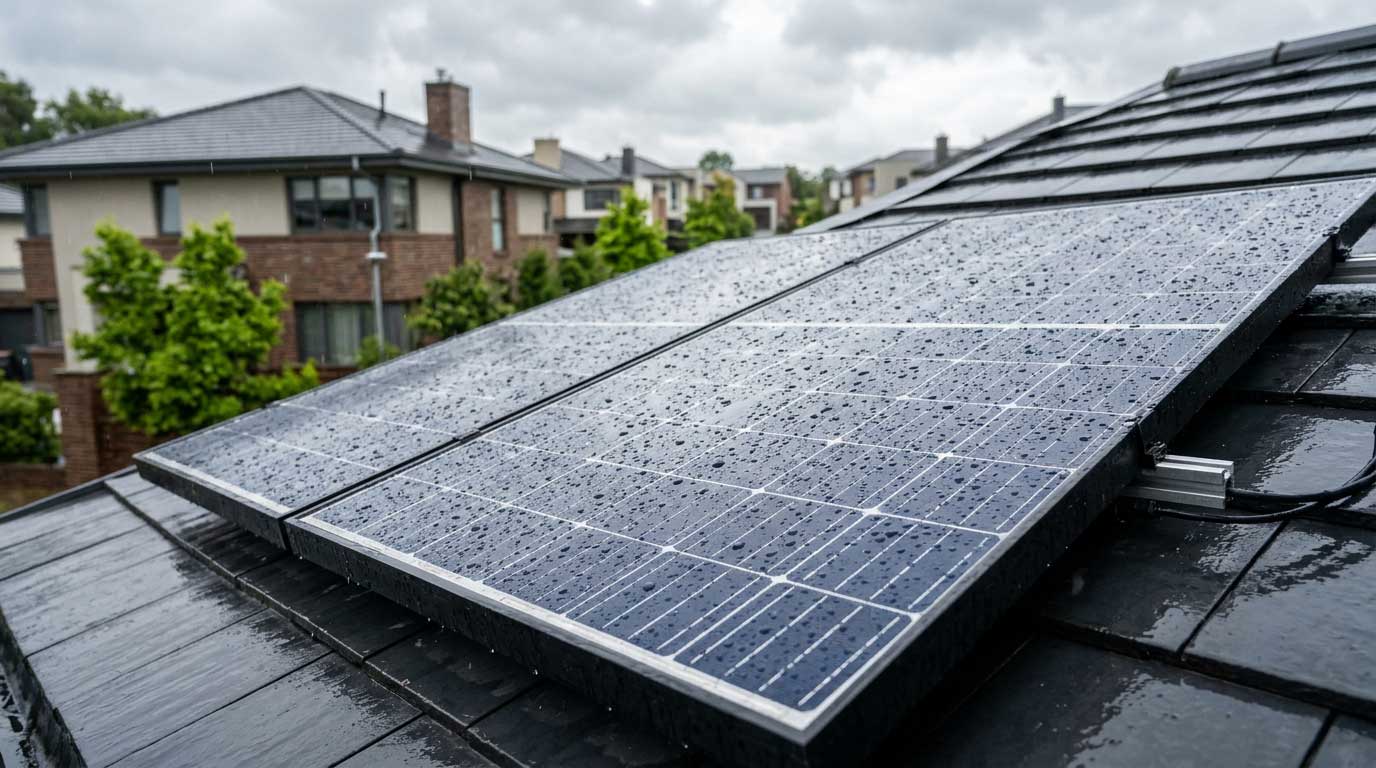
Yes. Rain is a normal operating condition for outdoor solar panels. Properly manufactured and installed modules are designed to remain outdoors through repeated exposure to rainfall and humidity.
In fact, rain can help wash away loose dust and some surface dirt, although it does not replace occasional cleaning.
However, there is an important difference between normal rainfall and prolonged water exposure.
| Water exposure | Expected performance |
|---|---|
| Normal rainfall | Suitable for properly rated outdoor modules |
| Light snow and melting snow | Generally acceptable |
| High humidity | Depends on module sealing and materials |
| Heavy wind-driven rain | Requires suitable installation and protection |
| Standing water | Should be avoided |
| Flooding or full immersion | Not covered by ordinary weather-resistance claims |
A practical detail installers sometimes overlook is the underside of the module. After heavy rainfall, check the areas around cable exits, junction boxes, mounting holes, and roof penetrations.
Water trapped beneath a panel can create problems even when the front surface looks perfectly normal.
What Is the Waterproof Rating of Solar Panels?
Solar panel waterproof ratings are commonly expressed using the IP (Ingress Protection) code.
The IP system classifies protection against solid particles and water under defined testing conditions. The first digit refers to solid-object protection, while the second refers to water protection.
| IP rating | Water protection | Typical interpretation |
|---|---|---|
| IP65 | Water jets | Protection against water jets from different directions |
| IP66 | Powerful water jets | Greater protection against powerful water jets |
| IP67 | Temporary immersion | Tested under specified temporary immersion conditions |
| IP68 | Continuous immersion conditions | Tested under conditions specified by the manufacturer |
An important distinction: an IP67-rated junction box does not automatically mean the entire solar panel is suitable for underwater operation.
Always check which component carries the rating. A junction box, connector, controller, and complete solar module can have different protection levels.
The IEC 61730-1:2023 standard addresses photovoltaic module construction and electrical and mechanical safety requirements, including environmental stresses. It should not be confused with a universal waterproof certification.
Official reference: https://webstore.iec.ch/en/publication/59803
Are Flexible Solar Panels Waterproof?
Most properly manufactured flexible solar panels are designed for outdoor exposure and can withstand rain when installed according to their specifications.
However, their construction differs from conventional rigid glass modules.
Flexible solar panels commonly use polymer front surfaces, encapsulation materials, and protective back layers instead of a rigid glass structure.
For example, Bright Solar‘s L Series uses ETFE surface material and is designed for applications including RVs, boats, and off-grid installations. Its construction supports outdoor use, but the waterproof performance of the complete module and its electrical connections must be confirmed against the specific model’s documentation.
Three details deserve particular attention:
- Surface protection: ETFE provides a protective exterior layer with UV resistance.
- Edge sealing: The perimeter must remain intact to reduce moisture penetration.
- Electrical connections: Junction boxes, cables, and connectors need appropriate weather protection.
For marine installations, saltwater exposure deserves additional consideration. Salt deposits can accelerate corrosion around terminals and exposed metal connections. A water-resistant panel alone cannot protect an incorrectly installed electrical system.
How to Protect Solar Panels from Water Damage
Even weather-resistant solar panels need proper installation and maintenance.
Here are practical measures for extending module service life:
- Inspect the front surface for cracks and visible damage.
- Check junction boxes and cable connections for loose seals.
- Use compatible outdoor-rated connectors.
- Avoid drilling additional holes through the module.
- Prevent water from collecting beneath the panel.
- Follow the manufacturer’s mounting and drainage requirements.
- Inspect roof penetrations and cable entry points after severe storms.
- Never assume that a waterproof panel makes the entire solar system waterproof.
The U.S. Department of Energy also emphasizes protecting inverters, switches, electrical cabinets, and other system components with appropriately rated enclosures. These components have different environmental protection requirements from solar modules.
FAQ About Are Solar Panels Waterproof?
Can I leave solar panels outside in the rain?
Yes. Outdoor-rated solar panels are designed to withstand normal rainfall. Ensure that connectors, junction boxes, and mounting points are properly protected.
Can water damage solar panels?
Yes. Although modules are weather-resistant, damaged encapsulation, cracked surfaces, deteriorated seals, and moisture penetration can cause corrosion, delamination, and electrical performance losses.
Can solar panels work during heavy rain?
Yes. Solar panels can generate electricity during rainfall, although output generally decreases because clouds reduce the sunlight reaching the cells.
Can solar panels be submerged in water?
No ordinary outdoor solar panel should be assumed safe for underwater use. An IP rating on an individual component does not establish that the complete module is suitable for immersion.
Are portable solar panels waterproof?
Some portable solar panels are designed to resist rain and outdoor moisture, but protection varies by model. Check the manufacturer’s specifications before leaving a portable panel outdoors unattended.
Are solar panel connectors waterproof?
Compatible outdoor-rated connectors can provide strong protection against moisture. However, incorrect connections, damaged seals, and mismatched connector types can compromise that protection.
Does Bright Solar manufacture waterproof flexible solar panels?
Bright Solar manufactures flexible and semi-flexible solar panels for RV, marine, and off-grid applications. Waterproof performance depends on the specific model and its tested construction, junction box, and connector specifications.
Conclusion
Are solar panels waterproof? Most modern outdoor solar panels are engineered to withstand rain and normal weather exposure, but waterproof protection has limits. Module construction, IP-rated components, installation quality, and maintenance all influence long-term reliability.
For distributors, installers, and OEM buyers, Bright Solar provides flexible solar panel solutions for different outdoor applications. Always confirm the required environmental protection level before selecting a module for your project.
Author Information: Prepared by Bright Solar’s solar-module technical content team, focusing on flexible photovoltaic module construction, ETFE surface materials, encapsulation, and outdoor application requirements. Technical claims should be verified against the relevant product datasheet and certification documents.
Related recommendations
-

how big are solar pv panels?
271how big are solar pv panels? Learn standard solar panel dimensions, sizes, weights, and how to choose the right PV panel size for homes, RVs, and off-grid systems.
View details -
How Are Solar Panels Produced?
212Discover how are solar panels produced, from silicon cells to final assembly. Learn the manufacturing process, materials, technology, and quality checks.
View details -
How Much Does It Cost for One Solar Panel?
289How much does it cost for one solar panel? Discover real 2026 solar panel prices, watt-based costs, installation factors, and expert buying insights from Bright Solar.
View details -
How Many Watts Are Solar Panels?
304How many watts are solar panels? Learn common solar panel wattages, output differences, and how to choose the right solar power size with Bright Solar.
View details