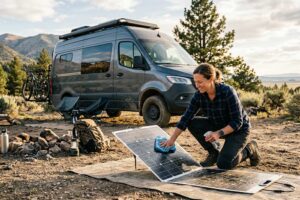
How to Install Flexible Solar Panels on RV?
How to Install Flexible Solar Panels on RV?
Flexible solar panels on an RV are usually installed using industrial adhesive, VHB tape, or low-profile mounting hardware combined with waterproof cable routing and proper roof preparation. The key is controlling heat buildup and ensuring the roof remains watertight during years of travel.
I’ve installed RV solar systems in parking lots, campgrounds, dusty storage yards, and once in the middle of a thunderstorm outside Flagstaff. The flexible panels themselves were rarely the problem. Heat, trapped moisture, and rushed roof sealing caused almost every long-term failure I’ve seen.
That’s the part most online guides skip.Learn more about “Flexible Solar Panel Installation Guide“
According to the U.S. Department of Energy, solar panel performance decreases as operating temperatures rise, which is especially important for low-profile flexible modules mounted directly to RV roofs.
Source:
https://www.energy.gov/eere/solar/solar-photovoltaic-cell-basics
So if you’re searching for how to install flexible solar panels on RV roofs properly, the answer is not just “stick them down.” A durable installation depends on airflow, wiring protection, adhesive quality, and realistic expectations about mobile solar conditions.
Why RV Owners Choose Flexible Solar Panels
Weight matters on an RV.
A framed rigid panel may weigh 20–30 lbs. A flexible panel of similar wattage can weigh under 7 lbs, which makes installation easier and reduces roof load.
That difference becomes important on:
- Class B camper vans
- fiberglass RV roofs
- pop-up campers
- curved motorhome roofs
- older trailers with lightweight roof structures
Advantages of Flexible Solar Panels on RVs
| Feature | Benefit |
|---|---|
| Lightweight | Easier roof installation |
| Low profile | Less wind resistance |
| Flexible surface | Fits curved roofs |
| No aluminum frame | Cleaner appearance |
| Easier storage | Good for portable setups |
I’ve also noticed RV owners like the stealth factor. Flexible panels sit closer to the roof and attract less attention in urban camping areas.
But there’s a compromise.
Flexible panels usually run hotter than rigid framed panels because airflow underneath is limited.
That extra heat shortens lifespan if the installation is poor.
Planning the RV Solar Layout Before Installation
Most installation mistakes happen before the panel even touches the roof.
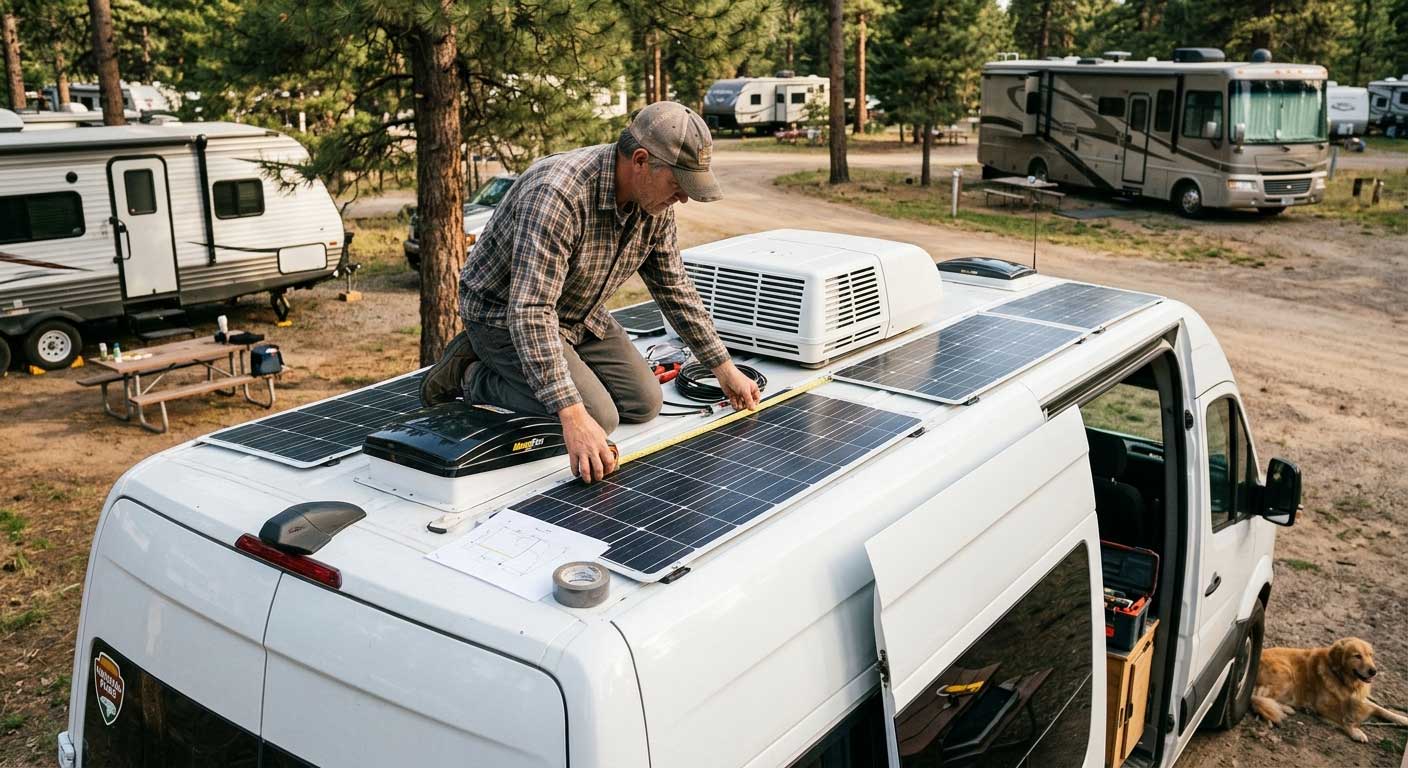
I always dry-fit the entire layout first.
RV roofs are crowded. Air conditioners, vents, antennas, skylights, and roof seams all affect solar placement.
Things to Avoid During Layout
- Roof shadows from AC units
- Walking paths near ladder access
- Low drainage areas where water pools
- Roof edges exposed to high wind lift
- Tight cable bends
A small shadow can seriously reduce solar output.
The National Renewable Energy Laboratory (NREL) notes that partial shading significantly impacts photovoltaic system efficiency.
Source:
https://www.nrel.gov
Cleaning and Preparing the RV Roof Surface
This step feels boring.
It also determines whether the installation survives summer heat.
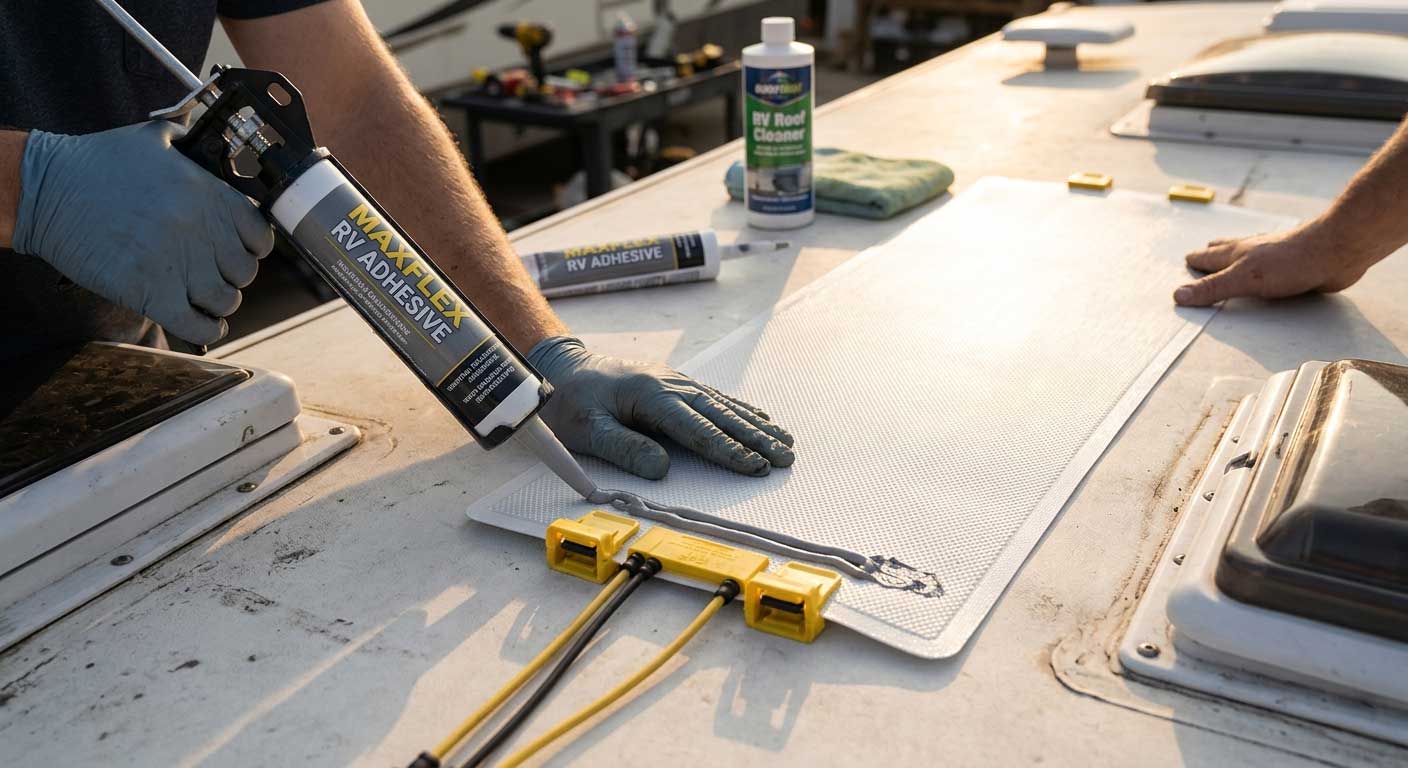
Flexible solar panels rely heavily on adhesive bonding. Any wax, dirt, oxidation, or moisture weakens the connection.
Proper Roof Preparation Steps
- Wash the roof thoroughly
- Remove oxidation or old sealant residue
- Degrease using isopropyl alcohol
- Allow the roof to fully dry
- Mark final panel placement
I typically wait 30–60 minutes after cleaning before applying adhesive, especially in humid weather.
Fiberglass roofs need extra attention because chalking residue often remains invisible until you wipe the surface.
Best Ways to Mount Flexible Solar Panels on RV
There are three common installation methods.
| Mounting Method | Recommended? | Notes |
|---|---|---|
| VHB Tape | Yes | Fast and clean |
| Polyurethane Adhesive | Yes | Strong long-term bond |
| Screws & Brackets | Sometimes | Higher leak risk |
Personally, I avoid drilling whenever possible.
Every roof penetration creates another future maintenance point.
My Preferred RV Installation Method
For most RV builds, I use:
- 3M VHB tape for initial hold
- Sikaflex marine adhesive for permanent bonding
- Dicor lap sealant for waterproof edges
This combination handles vibration better during long-distance driving.
RV roofs flex constantly while moving. Cheap silicone often fails after repeated thermal expansion.
Why Airflow Matters More Than Most People Think
This is where many RV solar installations quietly fail.
Flexible panels mounted completely flush against the roof trap heat underneath.
In Arizona last summer, I measured roof surface temperatures above 75°C (167°F) on a dark camper roof.
That heat affects:
- solar efficiency
- adhesive lifespan
- laminate durability
- cable insulation
Creating a Ventilation Gap
A small airflow space improves cooling dramatically.
Some installers use:
- spacer strips
- marine mounting pads
- corrugated backing sheets
- aluminum composite boards
Even a small air channel helps reduce thermal stress.
I’ve seen flexible panels last several years longer simply because airflow was considered during installation.
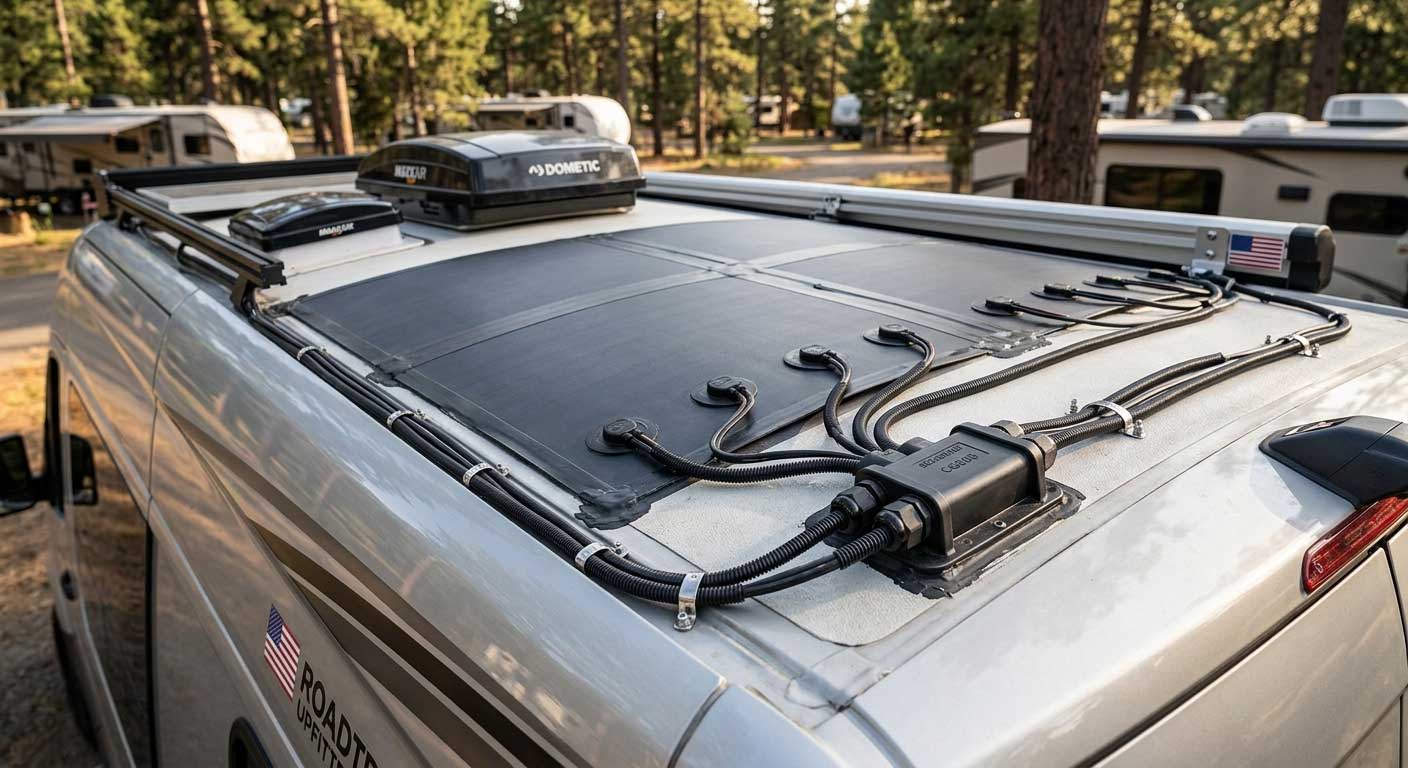
Wiring Flexible Solar Panels on an RV
The wiring deserves more attention than the panel itself.
I’ve repaired systems where the panel was perfect, but water entered through badly sealed cable holes.
Recommended RV Solar Wiring Basics
| System Size | Recommended Wire |
|---|---|
| 100W | 10 AWG |
| 200W | 10 AWG |
| 300W+ | 8 AWG |
Essential Wiring Components
- Waterproof roof gland
- Inline fuse protection
- UV-resistant cable
- MPPT charge controller
- Proper strain relief
The Solar Energy Industries Association (SEIA) recommends outdoor-rated wiring and proper overcurrent protection for solar systems exposed to environmental conditions.
Source:
https://www.seia.org
How Long Do Flexible Solar Panels Last on an RV?
Real-world lifespan depends heavily on heat management.
Most quality flexible RV solar panels last:
- 5–10 years under regular travel use
- longer with proper airflow and maintenance
Premium ETFE-coated models generally outperform cheaper PET-laminated panels.
What Reduces Lifespan Fastest
- Constant overheating
- Poor adhesive installation
- Roof flex vibration
- Standing water exposure
- Cheap laminate materials
Rigid panels still last longer overall, often exceeding 20 years. But for curved RV roofs where weight and aerodynamics matter, flexible panels remain popular.
Real Experience From RV Solar Installations
After working on RV systems across different climates, one thing stands out:
Weather changes everything.
In humid Florida conditions, trapped moisture becomes the enemy.
In Nevada or Arizona, thermal expansion destroys weak adhesive installations.
One RV owner I worked with near Moab had glued flexible panels directly onto black roofing membrane with cheap hardware-store silicone. Within a year, the center sections warped from heat buildup.
We rebuilt the system with airflow spacing and marine adhesive. Two summers later, the panels were still operating normally.
That kind of detail rarely appears in generic solar articles, but it matters in real RV life.
FAQ:How to Install Flexible Solar Panels on RV?
Can I install flexible solar panels on RV without drilling?
Yes. Many RV owners use adhesive-only mounting methods successfully.
Are flexible solar panels waterproof?
Most are weather-resistant, but roof cable entries must still be sealed correctly.
What is the best adhesive for RV solar panels?
Polyurethane marine adhesives like Sikaflex are commonly preferred.
Do flexible solar panels overheat on RV roofs?
They can if mounted flush without ventilation.
Can flexible solar panels power an RV air conditioner?
Usually not alone. Air conditioners require very large battery and inverter systems.
Final Thoughts on How to Install Flexible Solar Panels on RV
The best RV solar installations are usually the least rushed.
Careful roof preparation, proper airflow, reliable wiring, and quality sealing materials matter far more than simply buying expensive panels.
Flexible solar panels are not perfect. They run hotter and generally age faster than rigid framed systems.
But for RV owners who want lightweight, aerodynamic solar power without bulky racks, they remain one of the most practical solutions available today.
And after seeing dozens of real-world RV builds survive heat, rain, vibration, and thousands of highway miles, I’d say this:
A flexible solar panel system installed carefully can absolutely become a dependable long-term RV power source.
Related recommendations
-

How Are Solar Panels Produced?
111Discover how are solar panels produced, from silicon cells to final assembly. Learn the manufacturing process, materials, technology, and quality checks.
View details -
How to Connect Portable Solar Panel to RV Battery?
98Connect a portable solar panel to an RV battery through a compatible charge controller, with correct polarity, fuse protection, and battery settings.
View details -
How Much Solar Panel Generate Electricity?
226How much solar panel generate electricity? Learn daily solar power output, calculation methods, and real-world factors affecting energy production.
View details -
How to Mount Flexible Solar Panels?
223How to mount flexible solar panels safely on RVs, vans, boats, and curved roofs. Learn adhesive methods, airflow tips, wiring practices, and installation mistakes to avoid.
View details