How to Install Flexible Solar Panels to TPO Roof?
How to Install Flexible Solar Panels to TPO Roof?
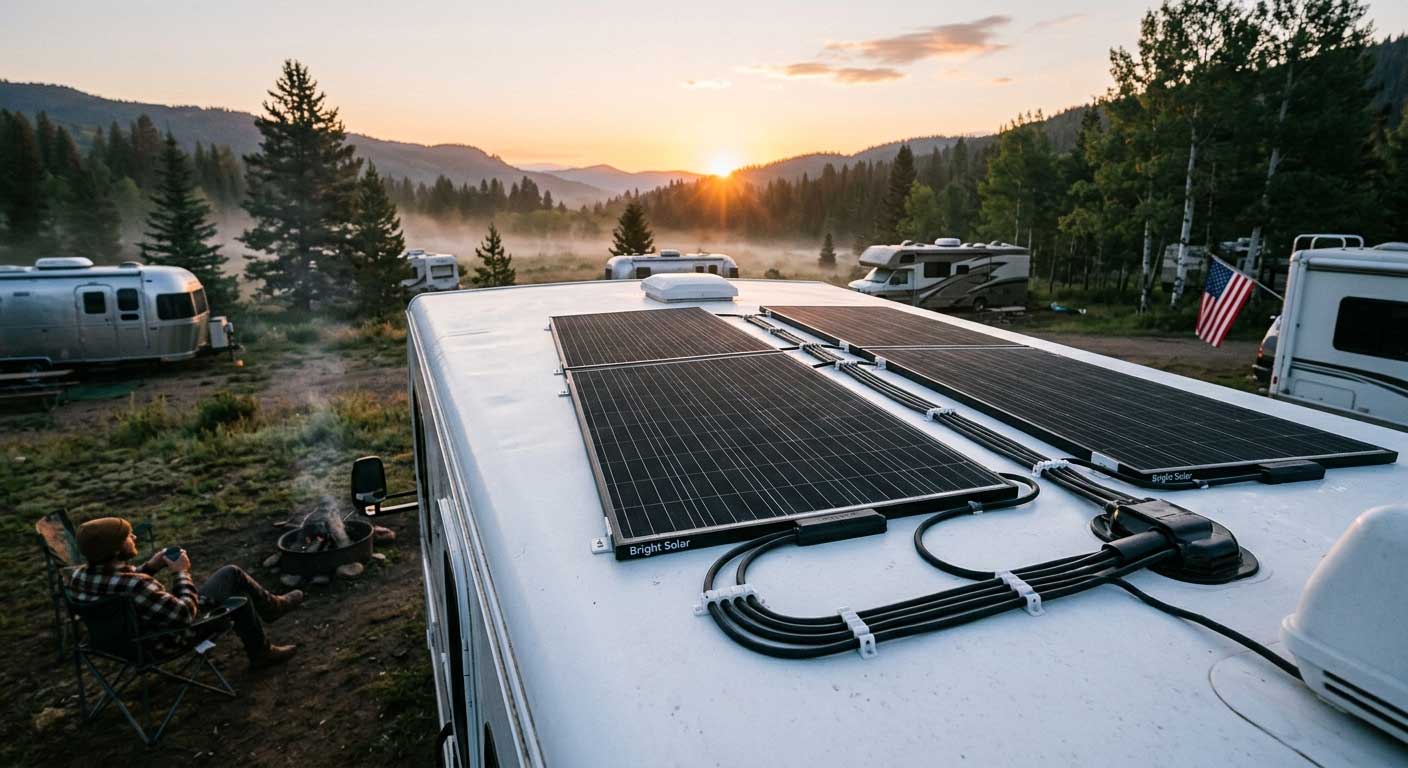
Flexible solar panels can be installed on TPO roofs using compatible adhesives, proper surface preparation, and controlled mounting pressure. The key is preventing heat buildup and ensuring the adhesive bonds safely with the TPO membrane without damaging the roof.
The first TPO roof I worked on was not an RV.
It was a white mobile medical trailer parked outside Houston in August. The roof temperature reached nearly 68°C by noon. The owner had already removed one failed panel because the adhesive detached after eight months.
The solar panel was still good.
The roof installation was not.
That experience taught me that TPO roofs behave differently from fiberglass, aluminum, or EPDM roofs, and flexible solar panels require a different approach.Learn more about “Flexible Solar Panel Installation Guide“
Author Experience and Field Background
This article was prepared by a technical consultant who has participated in flexible solar panel projects involving RV roofs, camper vans, utility trailers, marine vessels, and off-grid systems over the past decade.
Installation inspections have been carried out on:
- Class A motorhomes
- Travel trailers
- TPO commercial roofs
- Camper vans
- Mobile medical trailers
Several of the lessons below came directly from repair jobs rather than successful installations.
Those failures often teach more.
Why TPO Roofs Require Special Installation Methods
TPO stands for Thermoplastic Polyolefin.
The roofing industry favors TPO because it reflects heat, resists UV exposure, and remains relatively lightweight.
According to the U.S. Department of Energy, reflective roof materials can significantly reduce rooftop temperatures compared with darker roofing materials.
Source:
https://energy.gov
The problem is that TPO is also chemically different from:
- Fiberglass
- Aluminum
- Steel
- EPDM rubber
Some adhesives bond perfectly to aluminum but fail on TPO.
That mistake happens frequently.
| Roof Type | Adhesive Compatibility | Ventilation Need |
|---|---|---|
| Aluminum | High | Moderate |
| Fiberglass | High | Moderate |
| EPDM | Moderate | High |
| TPO | Specialized | High |
Surface Preparation Is More Important Than the Panel
Years ago I inspected a fifth-wheel trailer in Arizona.
The owner spent nearly $1,200 on premium flexible panels.
He spent perhaps ten minutes cleaning the roof.
Dust remained.
Silicone residue remained.
The adhesive lasted six months.
Surface preparation usually determines whether the installation lasts two years or ten.
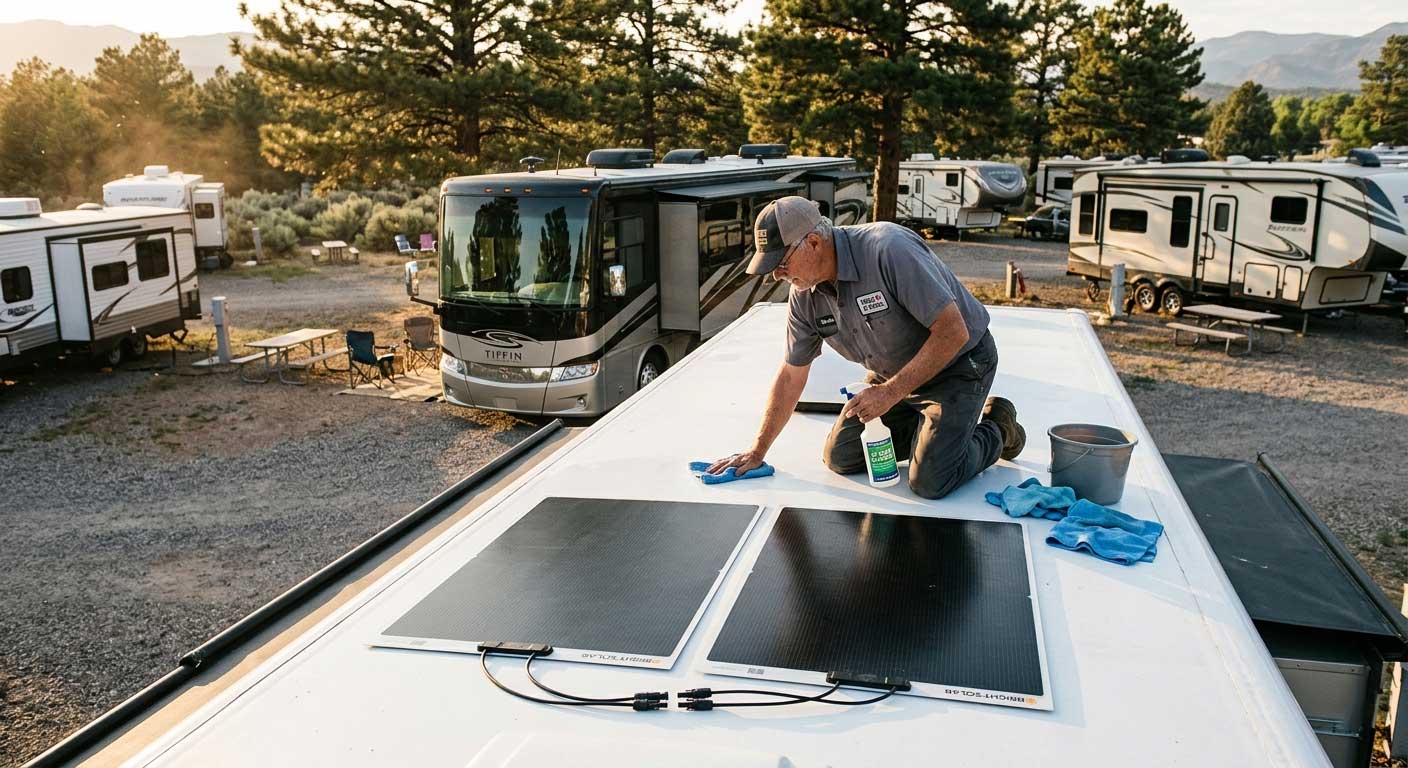
Proper preparation includes:
- Washing the roof.
- Removing oils.
- Eliminating silicone residue.
- Drying completely.
- Marking mounting positions.
Never install onto:
- Wet TPO.
- Chalking surfaces.
- Loose coatings.
- Dirty roofs.
Choosing the Right Adhesive
Not every adhesive works with TPO.
Several installers use construction adhesive because it is inexpensive.
I have removed many failed panels attached this way.
Commonly used products include:
- Sikaflex marine adhesives
- 3M VHB tape systems
- TPO-compatible polyurethane adhesives
Always verify compatibility with both:
- The panel backing material.
- The roof membrane.
The Roofing Industry Committee on Weather Issues has repeatedly emphasized that chemical compatibility is essential for long-term membrane performance.
Source:
https://ricowi.com
Why Full-Surface Bonding Can Cause Problems
This surprises many owners.
Completely bonding every square inch of the panel may increase heat.
Flexible panels need some airflow.
One installation I inspected in Nevada showed surface temperatures nearly 15°C higher than a similar panel mounted with slight air gaps.
Heat reduces efficiency.
According to the National Renewable Energy Laboratory, crystalline modules experience measurable output losses as temperature rises.
Source:
https://www.nrel.gov
Installation Steps
Step 1: Plan Cable Routing
Avoid:
- Roof edges
- Water channels
- Air conditioner drains
Step 2: Mark Panel Position
Leave:
- Small expansion gaps
- Space around vents
- Room for wiring
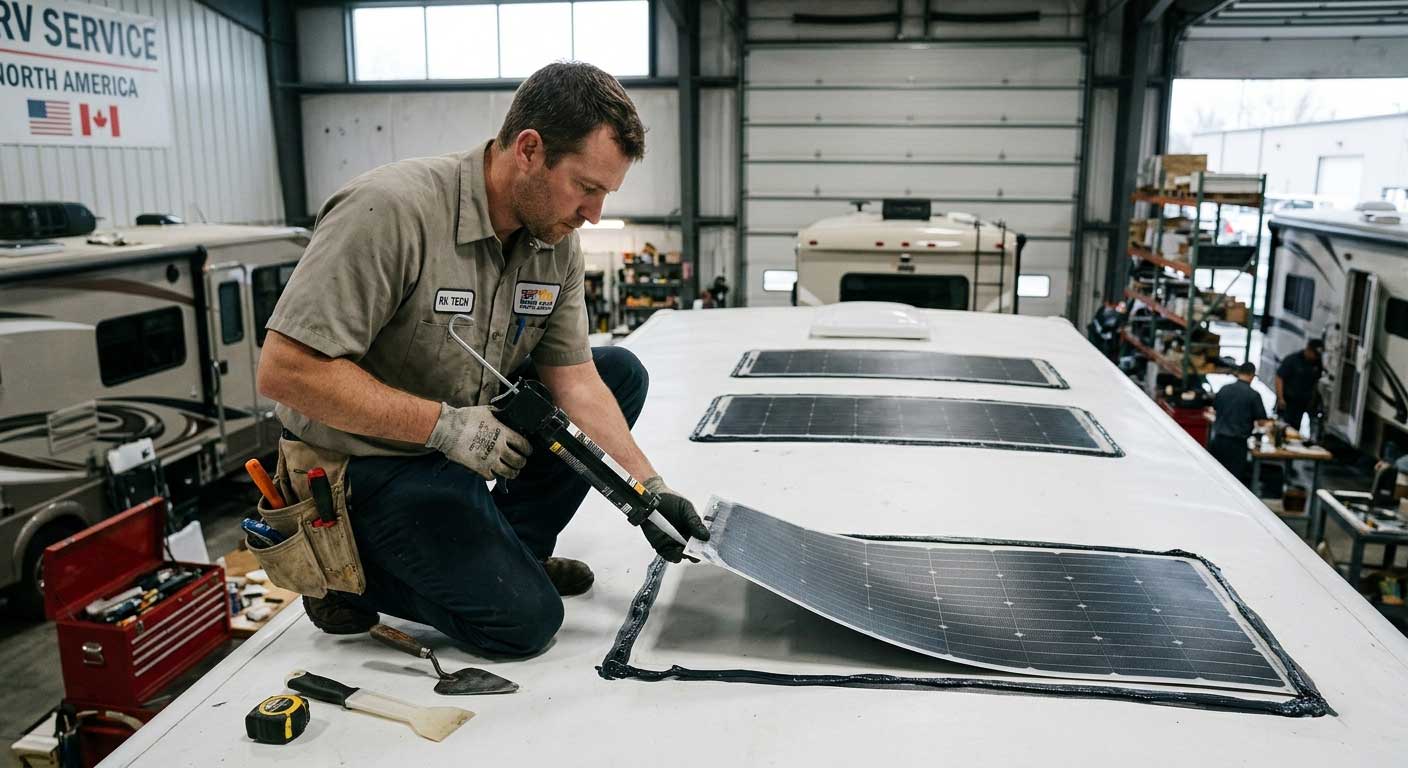
Step 3: Apply Adhesive
Use continuous beads rather than large blobs.
Too much adhesive may trap heat.
Step 4: Position the Panel
Apply even pressure.
Do not bend beyond the manufacturer’s limits.
Step 5: Secure Wiring
Protect cables from:
- UV exposure
- Abrasion
- Standing water
Step 6: Test the System
Measure:
- Voltage
- Current
- Charging performance
Common Installation Mistakes
| Mistake | Result |
|---|---|
| Dirty roof | Adhesive failure |
| Excess adhesive | Heat buildup |
| No cable protection | Wire damage |
| Poor ventilation | Reduced output |
| Sharp bending | Cell cracking |
| Silicone contamination | Bond failure |
The most expensive mistake I have seen involved a luxury RV.
The installer used household silicone.
Six months later every panel detached.
The panels survived.
The roof repair bill did not.
My Personal Recommendation After Years of Repairs
I no longer judge installations by the first six months.
Everything looks good at six months.
I prefer checking systems after:
- One summer.
- One winter.
- One rainy season.
The installations that survive usually share three characteristics:
- Clean roof preparation.
- Moderate airflow.
- Quality adhesive.
Expensive panels installed poorly fail.
Average panels installed correctly often perform for years.
Expected Service Life
Properly installed ETFE flexible panels on TPO roofs commonly achieve:
| Environment | Expected Service Life |
|---|---|
| Mild climate | 10–15 years |
| Coastal areas | 8–12 years |
| Desert climates | 7–10 years |
| Poor ventilation | 4–8 years |
Actual life depends heavily on:
- Temperature
- UV exposure
- Roof movement
- Installation quality
FAQ:How to Install Flexible Solar Panels to TPO Roof?
Can flexible solar panels be glued directly to TPO roofs?
Yes. TPO-compatible adhesives are commonly used, but compatibility testing is important.
Should I use screws on a TPO roof?
Most RV owners avoid roof penetrations whenever possible.
Is ventilation necessary?
Yes. Small air gaps often improve cooling and long-term performance.
Can VHB tape work on TPO?
Certain VHB systems can work when paired with compatible primers and roof preparation.
Does TPO damage solar panels?
No. The roof itself is not harmful. Improper installation usually causes the problems.
Visit the product page:Flexible Solar Panel
Final Thoughts
When people ask me how to install flexible solar panels to TPO roof surfaces, they usually expect a simple answer.
Glue them down.
Connect the wires.
Turn on the controller.
The reality is slower.
Most long-term success happens before the panel even touches the roof.
Clean surfaces.
Compatible adhesives.
Controlled temperatures.
Good cable routing.
The best TPO installations are often the least noticeable ones. Years later, the panels still sit flat, the adhesive still holds, and nobody remembers the installation day because nothing ever went wrong.
And honestly, that is exactly how a good solar installation should feel.
Related recommendations
-

How solar panels work diagram?
54A solar panel working diagram illustrates how sunlight is converted into direct current (DC) electricity through photovoltaic cells, then managed by an inver...
View details -
how much does solar paneling cost?
147Learn how much does solar paneling cost with real pricing data, installation factors, system examples, and Bright solar insights for smarter solar decisions.
View details -
How Much Do Solar Panels Cost for a House?
245How much do solar panels cost for a house? Explore 2026 solar installation prices, system size costs, expert insights, and real factors affecting home solar investment.
View details -
How Much Electricity Do Solar Panels Generate?
276How much electricity do solar panels generate? Learn real solar energy output, daily kWh production, panel factors, and expert insights from Bright Solar.
View details