Flexible solar panel boat: Lightweight Marine Solar Solution for Modern Vessels
A flexible solar panel boat system provides lightweight renewable energy for yachts, sailboats, fishing boats, and marine applications where traditional solar panels are difficult to install. Flexible panels adapt to curved surfaces, reduce weight, and provide reliable battery charging for onboard systems.
When a boat owner asks Bright Solar about marine solar solutions, the first concern is rarely just wattage.
The real questions usually sound like this:
“Can it survive the marine environment?”
“Will it fit on my curved roof?”
“Can I install solar without adding unnecessary weight?”
These questions come from real installation challenges.
Unlike residential rooftops, boats have limited space, constant movement, and strict weight considerations.
A solar panel that works perfectly on a house roof may not be the right choice for a vessel.
This is why a flexible solar panel boat solution has become increasingly popular among yacht owners, RV-style boat users, and off-grid marine operators.
At Bright Solar, we have worked with distributors and marine customers who needed solar power systems for environments where traditional glass panels were impractical.
From small sailing boats in Europe to recreational vessels in Australia, we have seen the same pattern:
Marine solar success depends less on installing the biggest panel.
It depends on choosing technology that fits the vessel.
What is a flexible solar panel boat system?
A flexible solar panel boat system is a marine solar solution using lightweight photovoltaic modules designed to generate electricity while adapting to curved and space-limited boat surfaces.
Traditional marine solar installations often use rigid panels with:
- Glass surfaces
- Aluminum frames
- Heavy mounting brackets
These components work well on large flat areas.
However, boats create different challenges:
- Curved cabin roofs
- Limited deck space
- Weight restrictions
- Wind resistance
- Saltwater exposure
Flexible solar panels replace much of the rigid structure with lightweight materials.
A typical marine flexible solar panel includes:
| Component | Purpose |
|---|---|
| Monocrystalline solar cells | Convert sunlight into electricity |
| ETFE protective coating | Improves UV and weather resistance |
| Flexible backing layer | Allows installation on curved surfaces |
| Waterproof junction box | Protects electrical connections |
| Marine-grade cables | Supports outdoor operation |
The goal is not simply reducing weight.
The goal is making solar installation possible in locations where traditional panels cannot be used efficiently.
Why choose flexible solar panels for boats?
Boat owners choose flexible solar panels because marine environments require different solutions from land-based solar systems.
The main advantages include:
Lightweight design for marine applications
Weight matters on boats.
Every additional kilogram affects:
- Fuel consumption
- Sailing performance
- Balance
- Installation complexity
A traditional glass solar panel can add significant weight because of its frame and mounting structure.
Flexible solar panels reduce unnecessary load.
For smaller boats, this difference can be important.
A sailing boat owner in Greece contacted Bright Solar because he wanted additional battery charging capacity without modifying the vessel structure.
The original plan required:
- Aluminum mounting brackets
- Additional reinforcement
- More installation work
After changing to flexible solar modules:
- Installation points were reduced
- Roof modification was avoided
- The solar system blended better with the boat design
The customer’s priority was not maximum solar capacity.
It was maintaining the original sailing performance.
Flexible installation on curved boat surfaces
Boats rarely have perfectly flat surfaces.
Common installation areas include:
- Cabin roofs
- Bimini tops
- Deck areas
- Rear platforms
Flexible solar panels can follow these shapes better than rigid modules.
This creates more usable solar area.
For example:
A yacht may have enough total surface area for solar generation, but the available surfaces are curved or uneven.
A flexible panel can use these areas instead of leaving them unused.
Reduced installation complexity
Traditional solar panels often require:
- Rails
- Brackets
- Drilling
- Structural modifications
Flexible marine solar panels can simplify installation.
Depending on the vessel design, installation may involve:
- Measuring available surface
- Preparing the mounting area
- Installing the panel
- Connecting the charge controller
- Testing battery charging
However, marine electrical systems should still be designed carefully because moisture and salt exposure create additional challenges.
How much power can a flexible solar panel boat system produce?
Marine solar output depends on:
- Panel wattage
- Boat location
- Sunlight hours
- Installation angle
- Shading from equipment
The basic calculation is:
Daily Energy Output = Solar Panel Wattage × Peak Sun Hours × System Efficiency
Example:
| Solar Panel Size | Typical Marine Use |
|---|---|
| 100W | Small electronics and basic charging |
| 200W | Small boats and battery maintenance |
| 300W | Medium recreational boats |
| 400W–550W | Larger vessels and higher energy demand |
According to the National Renewable Energy Laboratory (NREL), solar energy production varies significantly based on geographic solar resources.
Source:
National Renewable Energy Laboratory Solar Resource Maps
https://www.nrel.gov/gis/solar-resource-maps.html
A properly installed flexible marine solar system can support:
- Navigation equipment
- GPS devices
- Communication systems
- Lighting
- Battery charging
- Small onboard appliances
It is important to understand that solar panels are usually designed to support onboard energy needs, not replace the vessel’s entire electrical system.
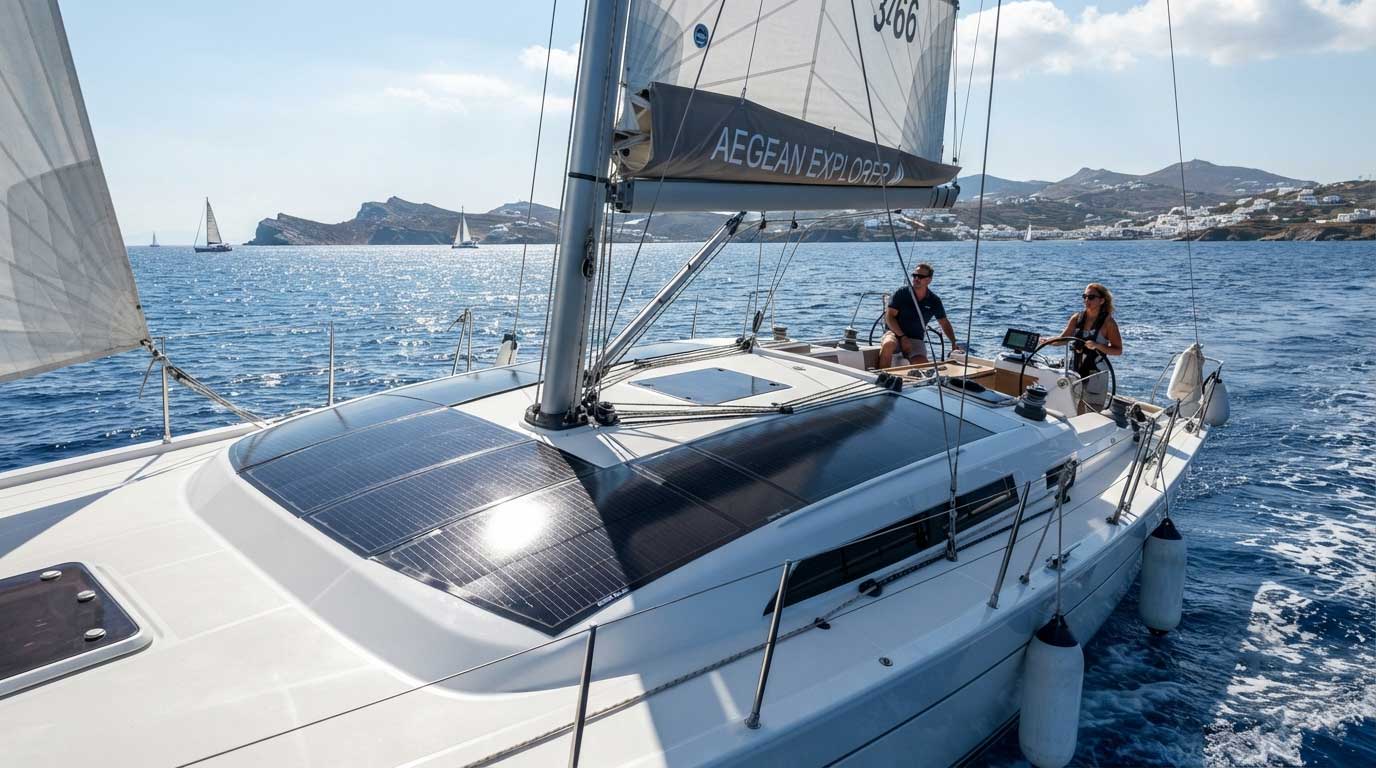
Flexible solar panel boat vs traditional rigid marine solar panels
Choosing between flexible and rigid solar panels depends on vessel requirements.
| Feature | Flexible Solar Panel Boat | Traditional Marine Solar Panel |
|---|---|---|
| Weight | Lower | Higher |
| Curved surface installation | Excellent | Limited |
| Mounting structure | Minimal | More hardware required |
| Mobility | High | Lower |
| Best application | Boats, yachts, special surfaces | Large flat areas |
Rigid panels remain useful for large vessels with enough installation space.
However, for many recreational boats, flexibility creates more practical advantages.
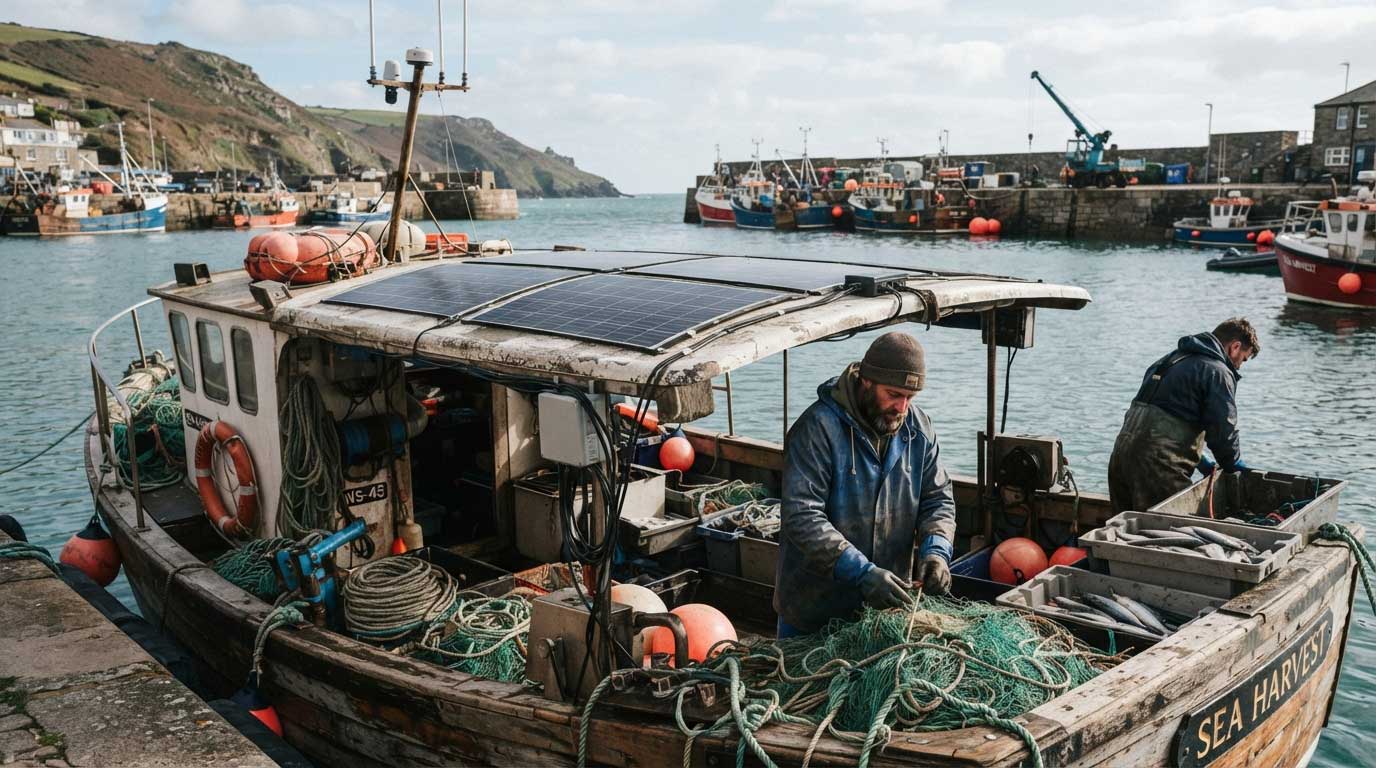
How to install a flexible solar panel boat system
Installing a flexible solar panel boat system is usually easier than installing traditional framed marine solar panels, but marine conditions require careful preparation.
A boat is constantly exposed to:
- Saltwater spray
- Wind pressure
- Vibration
- Temperature changes
- Humidity
At Bright Solar, we have learned from marine projects that installation quality often determines long-term performance more than the solar panel itself.
A reliable installation process usually includes the following steps.
Step 1: Select the right installation location
The first step is finding the area with the best sunlight exposure.
Common locations include:
- Cabin roofs
- Bimini tops
- Deck surfaces
- Rear platforms
Before installation, check:
| Inspection Item | Why It Matters |
|---|---|
| Sun exposure | Determines energy production |
| Available area | Determines panel size |
| Surface condition | Affects attachment reliability |
| Cable route | Reduces electrical losses |
One mistake we often see is installing solar panels in the easiest location rather than the most productive location.
A boat owner in Spain planned to install a flexible solar panel on the rear deck because the area was convenient.
During evaluation, we found the boom and antenna equipment created several hours of shading.
After moving the panel forward:
- Solar exposure improved
- Charging became more consistent
- The owner avoided adding extra panels
Good marine solar design starts with observation.
Step 2: Prepare the boat surface
Marine surfaces require careful preparation because salt and moisture can affect adhesion.
Recommended preparation:
- Remove salt residue
- Clean dust and oil
- Dry the surface completely
- Confirm mounting compatibility
Common installation surfaces:
- Fiberglass
- Aluminum
- Composite materials
- Marine-grade structures
For adhesive-mounted systems, surface preparation is especially important.
A flexible panel may be lightweight, but it still needs a secure connection to withstand years of outdoor exposure.
Step 3: Connect the marine solar electrical system
A complete boat solar system normally includes:
| Component | Function |
|---|---|
| Flexible solar panel | Generates electricity |
| MPPT controller | Controls charging efficiency |
| Marine battery | Stores energy |
| Inverter | Provides AC power if required |
| Monitoring system | Tracks performance |
Many boat owners use lithium battery systems because they offer:
- Higher energy density
- Longer cycle life
- Lower weight
The solar system should always match the vessel’s energy requirements.
For example:
A small sailing boat may only need:
- Navigation equipment
- Lights
- Phone charging
A larger yacht may require:
- Refrigeration
- Communication equipment
- Entertainment systems
Step 4: Test marine solar performance
After installation, check:
- Voltage output
- Charging current
- Battery charging status
- Connector protection
- Cable routing
Initial performance data is useful because it creates a reference point.
If output decreases later, the owner can identify whether the issue comes from:
- Weather changes
- Shading
- Dirt buildup
- Electrical connections
Marine durability: Can flexible solar panels handle boat environments?
Marine applications are among the most demanding environments for solar products.
A boat solar panel must handle:
- Direct sunlight
- Rain
- Saltwater exposure
- High humidity
- Temperature fluctuations
A quality flexible solar panel boat solution requires more than flexible materials.
It requires protection.
UV and weather resistance
Solar panels operate under continuous sunlight.
The protective surface layer helps reduce damage from:
- UV radiation
- Heat exposure
- Outdoor aging
Bright Solar flexible panels use protective materials designed for outdoor applications where long-term exposure is expected.
Waterproof electrical protection
Electrical connections are one of the most important parts of marine solar systems.
Important areas include:
- Junction boxes
- Cable connectors
- Controller connections
Poor electrical protection can create performance issues even when the solar panel itself is working correctly.
Resistance to vibration and movement
Unlike rooftop systems, boats constantly move.
Solar equipment experiences:
- Engine vibration
- Wave movement
- Mechanical stress
Flexible solar panels reduce some installation challenges because they have a lower profile compared with traditional framed panels.
Bright Solar marine application experience
At Bright Solar, we have worked with customers looking for solar solutions in environments where standard panels were difficult to use.
One representative project involved a European sailing equipment supplier.
Their customers wanted solar power for medium-sized sailing boats.
The original design used traditional rigid panels.
However, feedback showed several problems:
- The panels affected boat appearance
- Mounting structures increased complexity
- Available installation areas were limited
The redesigned system used flexible solar modules.
The result:
| Improvement | Result |
|---|---|
| Installation structure | Reduced |
| Roof appearance | Cleaner |
| Weight impact | Lower |
| Available solar area | Increased |
The project showed an important point:
Marine solar is not only about generating electricity.
It is also about respecting the design and function of the vessel.
How much does a flexible solar panel boat system cost?
The cost depends on:
- Solar panel wattage
- Materials
- Battery capacity
- Charge controller type
- Installation method
Typical price ranges:
| System Type | Estimated Cost |
|---|---|
| Small 100W–200W marine solar system | $200–$600 |
| 300W flexible boat solar system | $400–$900 |
| 500W+ marine solar system | $800–$2,000+ |
A complete system price depends heavily on battery storage.
The solar panel is only the energy source.
The battery determines how much energy can be used later.
For professional marine users, important purchasing factors include:
- Reliability
- Waterproof design
- Product support
- Long-term durability
The cheapest solar panel is not always the lowest-cost solution over the lifetime of a boat.
Maintenance tips for flexible solar panel boat systems
Marine solar panels require regular inspection because ocean environments are harsh.
Recommended maintenance:
Clean salt and dirt regularly
Salt deposits can reduce sunlight reaching solar cells.
Clean the surface when necessary, especially after:
- Long-distance sailing
- Coastal operation
- Storm exposure
Inspect cables and connectors
Check:
- Cable cracks
- Connector sealing
- Junction box condition
Electrical problems often appear first at connection points.
Monitor energy production
Track:
- Daily charging performance
- Battery condition
- Unexpected output changes
A monitoring system helps identify problems before they become expensive repairs.
FAQ About Flexible Solar Panel Boat Systems
Are flexible solar panels good for boats?
Yes. Flexible solar panels are especially suitable for boats because they are lightweight, adaptable, and easier to install on curved marine surfaces.
Can a flexible solar panel charge a boat battery?
Yes. When connected with a suitable solar charge controller, flexible solar panels can charge marine battery systems for onboard equipment.
What size flexible solar panel is best for a boat?
The best size depends on energy demand and available space. Small boats may use 100W–200W panels, while larger vessels often require 300W or higher systems.
Can flexible solar panels be installed on curved boat roofs?
Yes. Their flexible structure allows installation on many curved surfaces where rigid solar modules are difficult to mount.
Are flexible solar panels waterproof for marine use?
Quality marine flexible solar panels are designed for outdoor environments, but waterproof electrical installation is still essential for reliable operation.
How long do flexible solar panels last on boats?
Lifespan depends on materials, maintenance, and environmental exposure. Proper installation and regular inspection help extend operating life.
Can solar panels replace a boat generator?
Solar panels can reduce generator usage and support onboard energy needs, but most boats require a complete energy strategy based on consumption.
Final Thoughts: Choosing the Right Flexible Solar Panel Boat Solution
A flexible solar panel boat system provides a practical way to add renewable energy without redesigning the vessel.
For boat owners, the biggest advantages are:
- Lightweight installation
- Better space utilization
- Reduced structural requirements
- Independent energy generation
At Bright Solar, our experience with marine solar applications shows that successful projects start with understanding the vessel first.
The ocean environment is different from a rooftop.
The best solar solution is the one that fits the boat’s shape, weight requirements, and energy habits.
Flexible solar technology is helping more boats become energy independent, from weekend sailing vessels to professional marine applications.
Related recommendations
-

Solar Panel Pergola: Combining Outdoor Living and Renewable Energy
242Explore solar panel pergola solutions that combine outdoor shade and renewable energy. Learn design options, costs, benefits, and installation tips from Bright Solar.
View details -
400 Watt Solar Panel: Real Performance, Efficiency, and Buying Guide
373400 watt solar panel systems deliver reliable off-grid and residential power. Learn efficiency, output, installation tips, and real-world performance.
View details -
Solar Panels for Mobile Homes: A Practical Guide Based on Real Installations
234Discover how solar panels for mobile homes reduce electricity costs, improve energy independence, and deliver long-term savings. Learn sizing, costs, installation tips, and real project insights.
View details -
12V Folding Solar Panels: Output, Battery Charging and Uses
1712V folding solar panels provide portable solar power for camping, RVs, and compatible off-grid battery systems. Their actual energy output depends on panel ...
View details