How to Install Flexible Solar Panels on Van Roof?
How to Install Flexible Solar Panels on Van Roof?
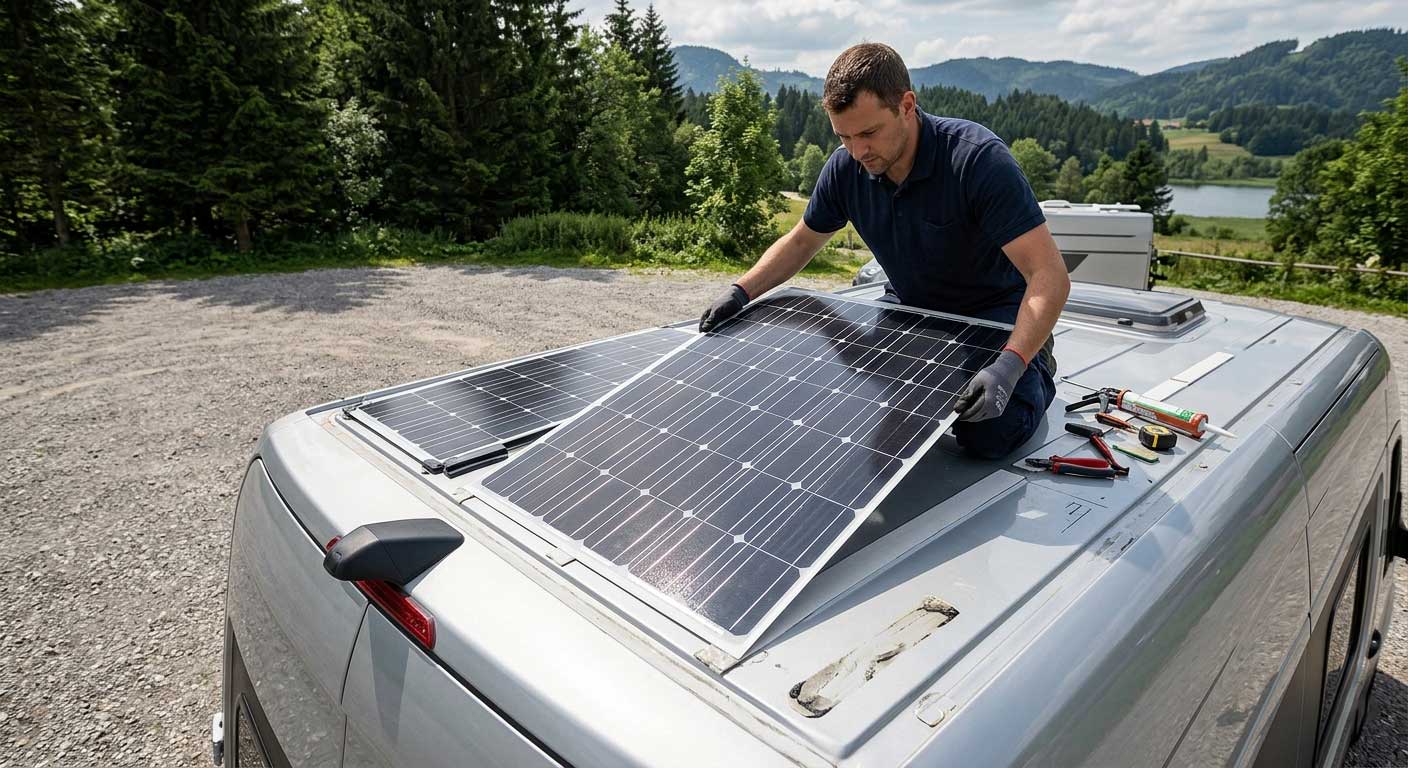
To install flexible solar panels on a van roof, clean the roof thoroughly, position panels away from shadows and roof accessories, bond them using a suitable adhesive, route cables through a waterproof entry gland, and connect them to a charge controller and battery system. Proper surface preparation and cable management are just as important as the solar panels themselves.
A few years ago, I was helping a customer finish a Mercedes Sprinter conversion. The van looked fantastic inside—custom cabinets, lithium batteries, induction cooktop. Then I climbed onto the roof.
The solar installation worried me immediately.
The panels were mounted directly beside a roof fan, partially shaded for several hours every day. On paper, the system was rated for 400W. In reality, it rarely produced anything close to that.
The owner thought he had bought the wrong panels.
The problem wasn’t the panels.
It was the installation.
That project reinforced something I’ve learned repeatedly over the years: solar performance starts long before the first wire is connected.Learn more about “Flexible Solar Panel Installation Guide“
Why Flexible Solar Panels Are Popular for Van Conversions
Van builders often face a unique challenge.
Every pound matters.
Every inch matters too.
Flexible solar panels have become increasingly popular because they solve both problems.
Compared with traditional framed modules, flexible panels offer:
- Lower weight
- Reduced wind resistance
- Slim roof profile
- Easier installation on curved surfaces
- Less visual impact
According to the U.S. Department of Energy, solar technology continues improving through advances in cell efficiency and lightweight module design, making solar more practical for mobile applications.
Source:
https://www.energy.gov
For many camper van owners, preserving roof space is almost as important as generating power.
Planning the Installation Before Touching Any Tools
This part rarely appears in YouTube tutorials.
Yet it’s where most mistakes happen.
Before mounting anything, spend time studying the roof.
Identify Potential Shade Sources
Look carefully for:
- Roof vents
- Air conditioners
- Roof racks
- Satellite antennas
- Cargo boxes
Even small shadows can significantly reduce energy production.
According to research from the National Renewable Energy Laboratory (NREL), partial shading can dramatically affect photovoltaic system output depending on electrical configuration and shading patterns.
Source:
https://www.nrel.gov
A roof vent casting a shadow across one corner of a panel may seem harmless.
Sometimes it isn’t.
Consider Daily Sun Angles
One thing I’ve noticed while working on camper vans across the western United States:
Owners often think about noon sunlight.
They forget morning and afternoon sunlight.
That’s where many real-world losses occur.
Walk around the van.
Observe shadows.
Think beyond peak sunshine hours.
Tools and Materials I Normally Use
Every installer develops a preferred toolkit.
Mine hasn’t changed much over the last few years.
| Item | Purpose |
|---|---|
| Flexible Solar Panels | Energy generation |
| MPPT Charge Controller | Charging efficiency |
| MC4 Connectors | Weatherproof electrical connections |
| UV-Resistant Cable | Outdoor wiring protection |
| Roof Entry Gland | Waterproof cable routing |
| Structural Adhesive | Panel mounting |
| Multimeter | System testing |
| Isopropyl Alcohol | Surface preparation |
The least exciting item on that list is often the most important.
Cleaning supplies.
Poor surface preparation causes more installation failures than defective solar panels.
How to Install Flexible Solar Panels on Van Roof Step by Step
Step 1: Clean the Roof Thoroughly
Not quickly.
Thoroughly.
Wash away:
- Dust
- Oil residue
- Wax
- Road grime
Then wipe the installation area with isopropyl alcohol.
Allow it to dry completely.
Skipping this step often creates bonding problems later.
Step 2: Test Panel Positioning
Place the panels exactly where you plan to install them.
Don’t rush.
Walk around the van.
Open doors.
Check roof access.
Verify cable routes.
I’ve repositioned panels dozens of times before final installation.
The first idea isn’t always the best one.
Step 3: Bond the Panels
Most flexible solar panels designed for vans are installed using adhesive rather than mechanical fasteners.
Advantages include:
- No drilling through the roof
- Reduced leak risk
- Cleaner appearance
- Lower installation complexity
Apply adhesive according to manufacturer recommendations.
Avoid creating large trapped air pockets beneath the panel.
Step 4: Route Electrical Cables
This is where neat installations separate themselves from amateur ones.
Cables should:
- Remain protected from UV exposure
- Avoid sharp edges
- Avoid standing water
- Enter through waterproof glands
Every roof penetration must be properly sealed.
A solar system can survive many mistakes.
Water intrusion isn’t usually one of them.
Common Mistakes I See on Van Solar Projects
Mounting Panels Too Close Together
Heat matters.
Flexible panels naturally run warmer than traditional framed modules because airflow beneath them is limited.
Packing panels tightly together often makes the situation worse.
Ignoring Roof Curvature
Flexible doesn’t mean unlimited flexibility.
Manufacturers specify maximum bending limits.
Exceeding those limits places stress on solar cells.
Choosing the Cheapest Adhesive Available
This is surprisingly common.
I’ve inspected vans where perfectly good solar panels detached because bargain adhesives degraded after repeated heat cycles.
Solar equipment often lasts years.
The adhesive should too.

Understanding Heat and Ventilation
Many van owners ask me:
“Will flexible solar panels overheat on my roof?”
The answer is nuanced.
Solar panels naturally become hot during operation.
According to NREL research, photovoltaic module efficiency declines as operating temperatures increase.
Source:
https://www.nrel.gov
I’ve measured flexible panels exceeding 150°F (65°C) during summer testing in Arizona.
That’s not unusual.
What matters is managing heat rather than eliminating it.
Practical strategies include:
- Leaving recommended installation gaps
- Avoiding blocked airflow areas
- Using quality ETFE-coated panels
- Monitoring performance during extreme heat
Real-World Power Expectations
A typical van conversion using 200W–400W of flexible solar panels may support:
- Refrigerator
- Vent fan
- LED lighting
- Phones and laptops
- Water pump
- Starlink or internet equipment
Actual production depends on:
- Season
- Weather
- Geographic location
- Battery condition
- Roof shading
Solar ratings describe ideal laboratory conditions.
Life on the road rarely resembles a laboratory.
What I Learned from Long-Term Van Installations
The best solar systems I’ve seen weren’t necessarily the most expensive.
They were the most carefully planned.
The owners thought about:
- Future maintenance
- Cable access
- Shade patterns
- Roof expansion
- Ventilation
Good installation decisions continue paying dividends years later.
Bad ones tend to become obvious within a few months.
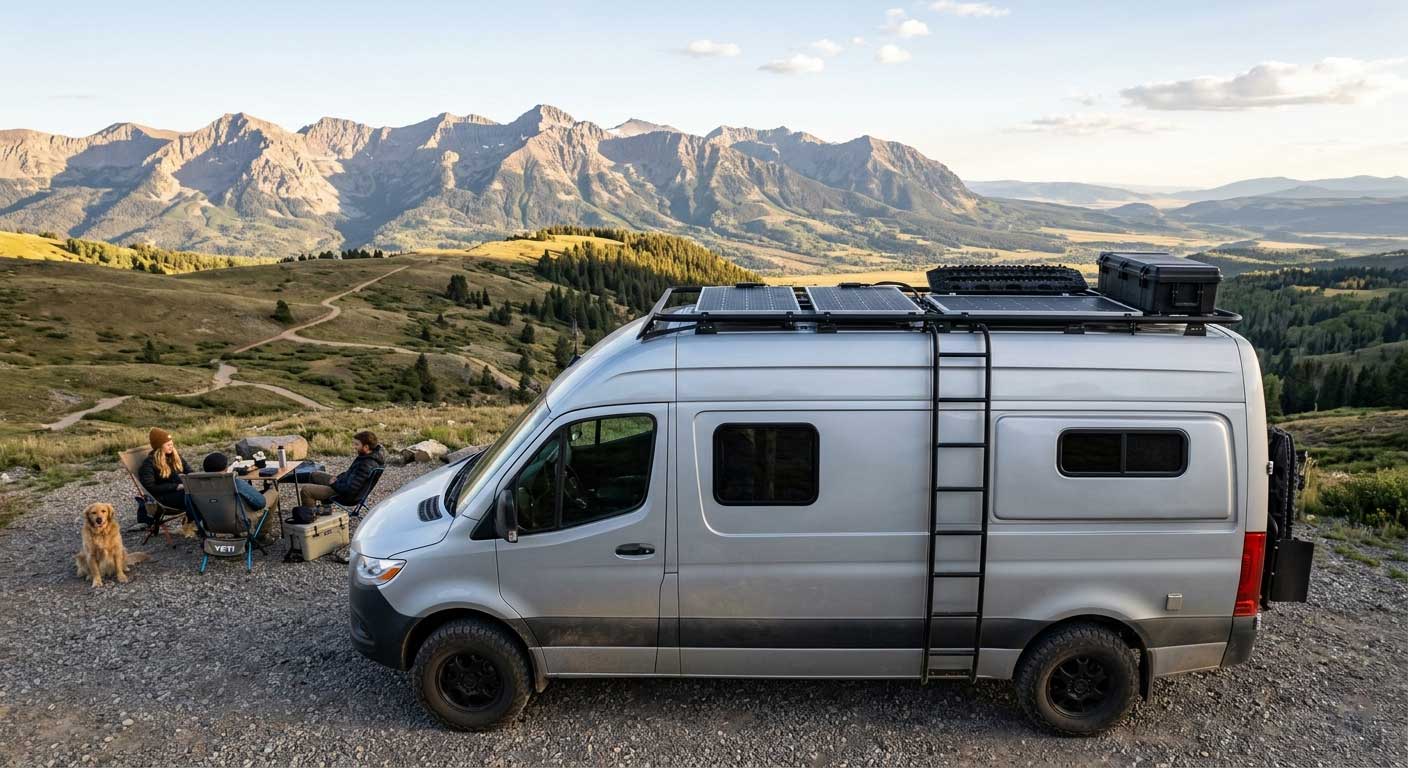
FAQ:How to Install Flexible Solar Panels on Van Roof?
Can flexible solar panels be glued directly to a van roof?
Yes. Most flexible solar panels intended for van conversions are designed for adhesive mounting, provided the roof surface is properly prepared.
Do I need to drill holes in my van roof?
Usually only for cable entry. Waterproof roof glands are commonly used to route solar cables safely into the vehicle.
Are flexible solar panels good for camper vans?
Yes. Their lightweight construction and low-profile design make them popular for camper van conversions and mobile applications.
How many solar panels do I need for a van?
The answer depends on daily energy consumption. Most camper van systems range from 200W to 600W.
How long do flexible solar panels last on a van roof?
Quality ETFE-coated flexible panels often provide years of service when properly installed and maintained, though lifespan varies by climate and usage.
Visit the product page:Flexible Solar Panel
Final Thoughts
Anyone researching how to install flexible solar panels on van roof should focus less on the installation day itself and more on the years that follow. A well-planned solar system survives highway vibrations, summer heat, winter storms, and thousands of miles of travel. In my experience, successful van solar projects rarely come down to luck. They come down to thoughtful placement, careful wiring, proper sealing, and attention to details that most people never see once the panels are installed.
Related recommendations
-

Why Are Solar Panels Good for the Environment?
136Solar panels generate electricity without fuel combustion during operation, helping reduce greenhouse-gas emissions and air pollution.
View details -
How Is Solar Energy Made Into Electricity?
145How is solar energy made into electricity? Learn how sunlight becomes usable power through solar cells, inverters, and real photovoltaic systems.
View details -
how do you hook up solar panels?
213Learn how do you hook up solar panels safely, including series and parallel wiring, charge controllers, inverters, batteries, and key checks for home solar systems.
View details -
How to Make Your Own Flexible Solar Panel?
289Discover how to make your own flexible solar panel through real workshop experience, practical mistakes, material selection, and proven engineering methods.
View details