How to test solar panel output?
To test solar panel output, measure voltage, current, and wattage under direct sunlight using a multimeter or monitoring device. Compare the results with the panel rating to confirm actual performance.
How to test solar panel output correctly
Understanding how to test solar panel output helps solar owners identify whether their panels are generating expected electricity. A panel can appear clean and normal while producing less energy because of shading, wiring problems, temperature effects, or connection losses.
At Bright Solar, we test flexible solar panels for RV, marine, portable, and off-grid applications where real-world conditions are different from laboratory environments. During field evaluations, our engineers do not rely on appearance alone. A panel installed on an RV roof, boat deck, or curved surface may experience different sunlight angles and operating temperatures compared with a controlled test environment.
A complete solar output test normally checks:
- Open-circuit voltage (Voc)
- Operating voltage (Vmp)
- Short-circuit current (Isc)
- Operating current (Imp)
- Actual power output (Watts)
The basic calculation is:
Solar Output (W) = Voltage (V) × Current (A)
For example:
A panel producing 20V and 5A generates approximately:
20 × 5 = 100W
under those specific operating conditions.
According to the U.S. Department of Energy, photovoltaic electricity production depends on sunlight intensity, temperature, system design, and other environmental factors. A solar panel rarely produces its rated power continuously because real outdoor conditions constantly change.
Tools needed to test solar panel output
Digital multimeter
A digital multimeter is the most common tool for basic solar testing.
It can measure:
| Measurement | Purpose |
|---|---|
| Voltage | Confirms electrical potential |
| Current | Measures electricity flow |
| Resistance | Checks wiring conditions |
A multimeter helps identify whether a panel is producing electricity, but accurate power measurement requires measuring voltage and current together.
Solar charge controller or monitoring system
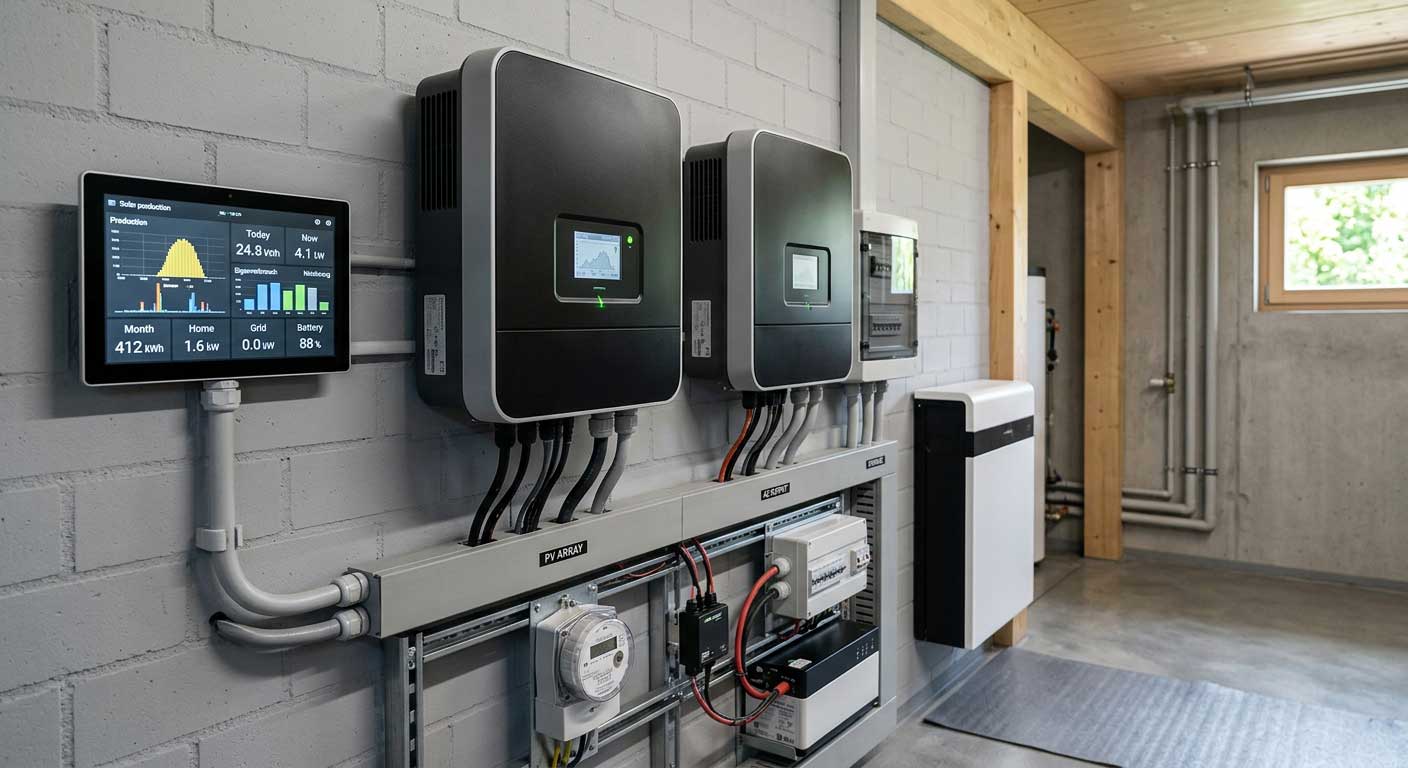
For installed solar systems, monitoring equipment provides more practical information.
Many controllers display:
- Solar input voltage
- Charging current
- Battery charging status
- Daily energy production
This is especially useful for RV and off-grid systems because the owner can observe performance over multiple days instead of one moment.
Step-by-step guide on how to test solar panel output
Step 1: Check the solar panel conditions
Before measuring output, inspect the environment.
Confirm:
- The panel receives direct sunlight
- No objects create shadows
- The surface is clean
- Connections are secure
Testing a panel under shade will create inaccurate results.
A cloudy afternoon reading cannot be compared directly with a sunny midday measurement.
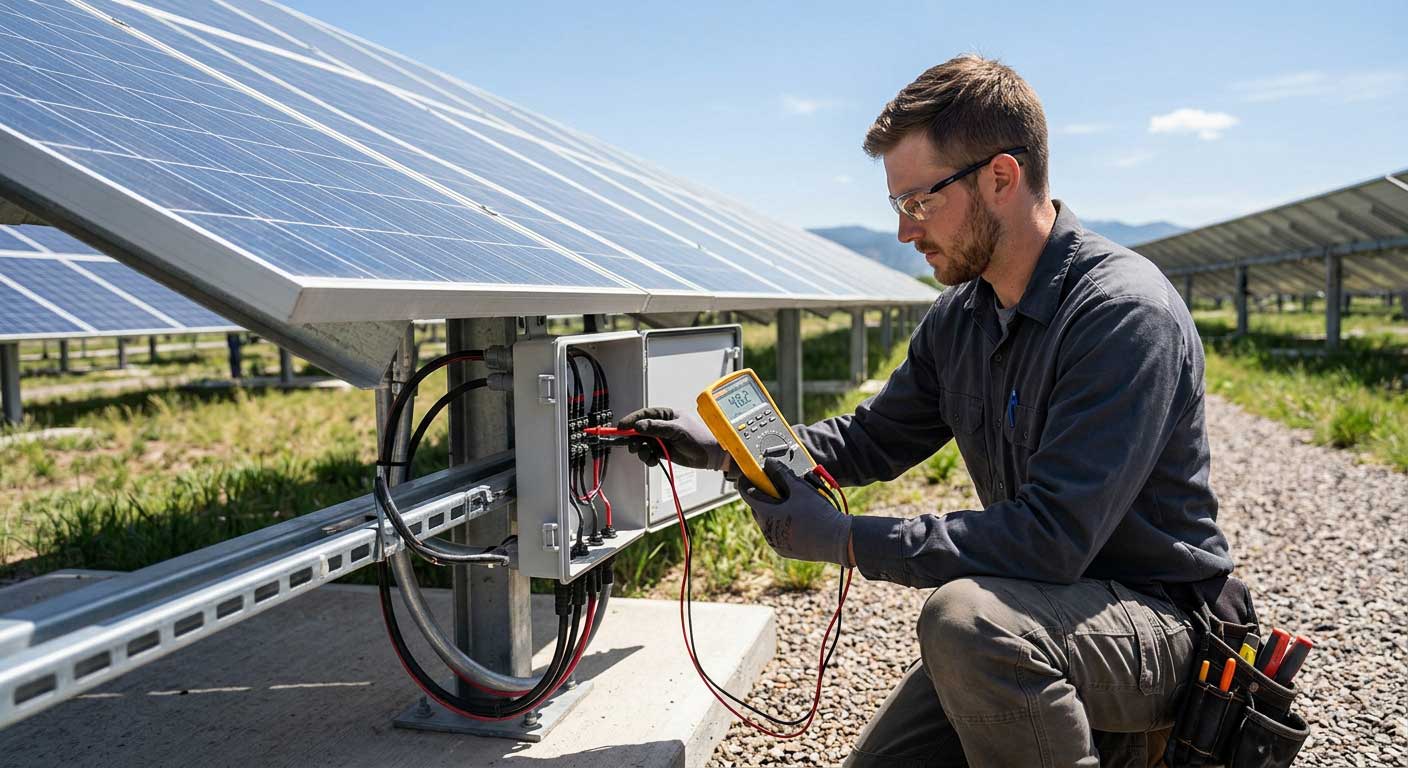
Step 2: Measure open-circuit voltage
Open-circuit voltage measures the maximum voltage a solar panel can produce without a connected load.
Testing steps:
- Place the panel under sunlight
- Disconnect the panel from controllers or batteries
- Set the multimeter to DC voltage
- Connect probes to positive and negative terminals
- Record the voltage reading
Compare the measurement with the panel specification.
For example, a Bright Solar 100W flexible solar panel specification includes rated electrical parameters such as Voc and Vmp, which are used as reference values during testing.
Step 3: Measure operating current
Current testing shows how much electricity the panel can actually deliver.
Current depends on:
- Sun intensity
- Panel angle
- Temperature
- Load conditions
A panel may show correct voltage but still have low current due to:
- Damaged cells
- Loose wiring
- Internal connection issues
- Partial shading
Step 4: Calculate actual watt output
After measuring voltage and current:
Watts = Volts × Amps
Example:
| Voltage | Current | Output |
|---|---|---|
| 18V | 2A | 36W |
| 20V | 5A | 100W |
| 30V | 10A | 300W |
The result should always be evaluated based on sunlight conditions and the panel’s rated power.
Common reasons solar panel output is lower than expected
Temperature effects
Many people expect solar panels to produce maximum power on the hottest days, but high temperatures can actually reduce photovoltaic efficiency.
Solar modules generally perform better in cooler conditions with strong sunlight.
Shading and dirt buildup
Even small shaded areas can affect output.
Common causes include:
- Tree branches
- Building shadows
- Dust
- Bird droppings
For flexible solar panels used outdoors, regular inspection helps maintain reliable performance.
Cable and connection losses
Electrical losses can occur because of:
- Long cable distances
- Poor connectors
- Corrosion
- Incorrect wiring
Marine applications require additional attention because saltwater environments can accelerate connector deterioration.
How to compare test results with solar panel ratings
Understand STC ratings
Solar panels are normally rated under Standard Test Conditions (STC).
STC includes:
- Solar irradiance: 1000 W/m²
- Cell temperature: 25°C
- Specific testing conditions
These conditions are defined by photovoltaic testing standards and are not identical to everyday outdoor operation.
A 100W solar panel may produce less than 100W on a cloudy day or when installed at an unfavorable angle.
Use performance trends instead of one reading
A single measurement provides limited information.
Better evaluation includes:
- Morning output
- Midday output
- Seasonal changes
- Daily energy production
At Bright Solar, field performance is often evaluated through repeated measurements because outdoor environments are constantly changing.
FAQ About Testing Solar Panel Output
Can I test solar panel output with a multimeter?
Yes. A multimeter can measure voltage and current to help calculate solar panel power output.
What voltage should a solar panel show?
The expected voltage depends on the panel specifications, including Voc and operating voltage ratings.
Why is my solar panel showing voltage but no power?
Possible causes include wiring problems, low current flow, controller issues, or damaged cells.
Should I test solar panels in direct sunlight?
Yes. Direct sunlight provides more accurate performance measurements.
How often should solar panel output be tested?
Regular monitoring is useful, especially after installation, storms, or noticeable production decreases.
Can a dirty solar panel reduce output?
Yes. Dust and debris can reduce sunlight reaching photovoltaic cells.
Why does my solar panel produce less than its rated watts?
Rated power is measured under laboratory STC conditions. Outdoor temperature, sunlight, angle, and system losses affect real output.
Final Answer: How to test solar panel output?
Knowing how to test solar panel output allows solar users to verify real performance instead of guessing. Measuring voltage, current, and wattage provides a clear picture of whether a photovoltaic system is operating correctly.
Bright Solar develops flexible solar panel solutions for RV, marine, portable, and off-grid applications where accurate performance and dependable energy production are essential.
The prev: How to tell if solar panels are working?The next: How to wire a solar panel?
Related recommendations
-

How Much Is One Solar Panel Cost?
262How much is one solar panel cost? Learn solar panel prices, wattage factors, technology differences, and expert buying advice from Bright Solar.
View details -
How much energy does solar panels produce?
66Solar panels can generate from a fraction of a kilowatt-hour to hundreds of kWh daily, depending on system capacity, sunlight, location, panel efficiency, an...
View details -
How to Wire Solar Panels?
159Learn how to wire solar panels correctly with series and parallel connections. Explore professional wiring methods, safety tips, and expert insights from Bright Solar.
View details -
How to Mount Solar Panels on Roof?
278Learn how to mount solar panels on roof safely with proper solar panel roof mounts, rails, and installation methods for reliable home solar power systems.
View details