Parallel vs Series Solar Panels: Which Wiring Method Actually Performs Better?
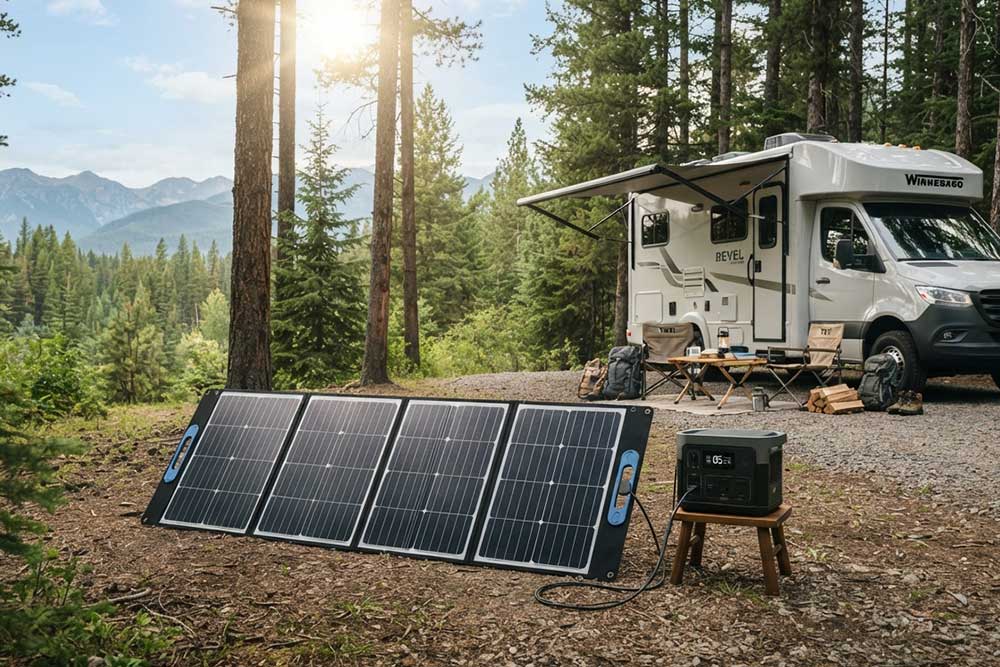
Parallel vs series solar panels is not simply an electrical choice. In most solar installations, series wiring improves efficiency and reduces cable losses, while parallel wiring often delivers better results in partially shaded environments. The best option depends on sunlight conditions, system voltage, cable distance, battery configuration, and future expansion plans.
A few years ago, I climbed onto the roof of a customer’s fifth-wheel trailer outside Flagstaff, Arizona.
The owner was frustrated.
He had already replaced his batteries. He upgraded his inverter. He even added another Flexible solar panel after reading several online forums.
Nothing worked.
Every afternoon, battery levels dropped faster than expected.
The panels looked clean. The batteries tested fine. The charge controller showed no errors.
The problem wasn’t the equipment.
It was the wiring.
One corner of a panel received shade from a nearby pine tree for less than two hours each day. That small patch of shade was enough to significantly reduce the performance of the entire series-connected array.
After rewiring the system and adjusting the charge controller settings, daily energy harvest improved noticeably.
That project became a reminder of something I have seen repeatedly throughout my career with Bright Solar.
The internet often treats solar wiring like a simple math equation.
Real installations rarely behave that way.
Weather changes.
Shade moves.
Temperatures fluctuate.
Customer expectations evolve.
The best wiring method is usually the one that matches actual operating conditions rather than theoretical perfection.
Why This Question Matters More Than Most Buyers Realize
Most solar buyers focus on panel wattage.
They compare:
- 100W panels
- 200W panels
- 400W panels
- 550W panels
What often gets overlooked is how those panels are connected.
The wiring configuration influences:
- System voltage
- Charging efficiency
- Cable size
- Voltage drop
- Shading tolerance
- Future expandability
Two solar systems using identical panels can produce different real-world results simply because of how the panels are wired.
According to the U.S. Department of Energy, balance-of-system design plays a critical role in overall photovoltaic system performance.
Source:
https://www.energy.gov
This becomes especially important for:
- RV solar systems
- Marine solar systems
- Off-grid cabins
- Residential rooftop arrays
- Agricultural installations
Understanding Series Solar Panel Wiring
Series wiring is the configuration most people encounter first.
The concept is straightforward.
When panels are connected in series:
- Voltage increases
- Current remains constant
Example:
Two 200W panels:
Panel A:
20V / 10A
Panel B:
20V / 10A
Connected in series:
40V / 10A
Total Power:
400W
The power remains the same, but voltage doubles.
A simple way to visualize this is to imagine water moving through a pipe.
Voltage is pressure.
Current is flow.
Series wiring increases pressure.
The amount of flow stays the same.
Why Professional Installers Often Prefer Series Wiring
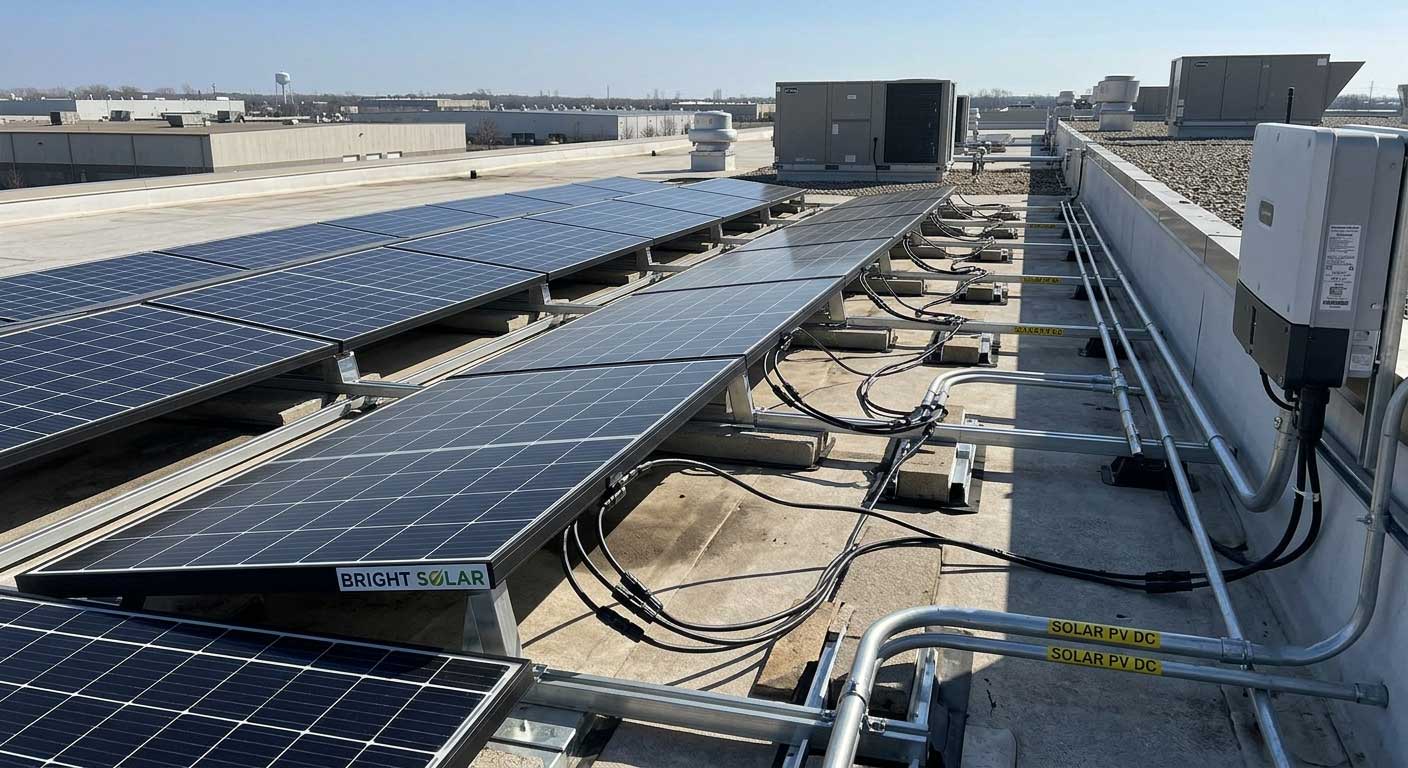
Most commercial rooftop projects rely heavily on series strings.
There are good reasons for this.
Higher voltage allows:
- Lower cable losses
- Smaller wire sizes
- Longer cable runs
- Improved MPPT efficiency
- Lower installation costs
The National Renewable Energy Laboratory (NREL) notes that conductor losses increase as current increases. Raising voltage while lowering current helps reduce these losses.
Source:
https://www.nrel.gov
On one commercial warehouse project in Texas, our team installed more than 180 solar modules.
The longest cable run exceeded 130 feet.
A lower-voltage parallel design would have required significantly larger conductors.
That would have increased both material and labor costs.
In that environment, series wiring was the obvious choice.
Understanding Parallel Solar Panel Wiring
Parallel wiring works differently.
Instead of increasing voltage, it increases current.
Using the same two panels:
Panel A:
20V / 10A
Panel B:
20V / 10A
Connected in parallel:
20V / 20A
Total Power:
400W
Voltage remains unchanged.
Current doubles.
At first glance, this may seem like a disadvantage.
In some situations, it absolutely is.
In others, it becomes the better choice.
Where Parallel Wiring Excels
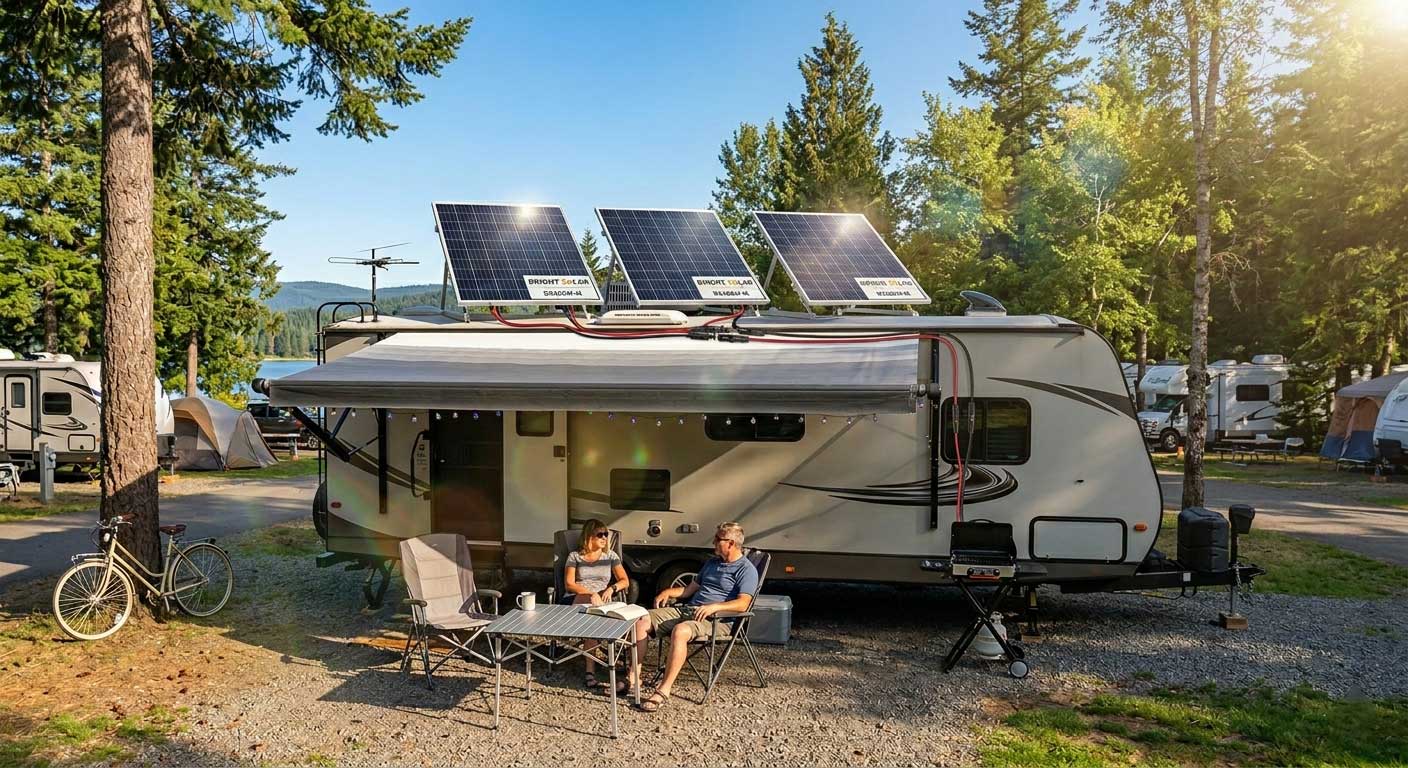
I see parallel wiring perform particularly well in mobile solar applications.
For example:
- RVs
- Boats
- Camper vans
- Portable solar kits
The reason is simple.
These environments rarely enjoy perfect sunlight.
Air conditioners create shade.
Satellite antennas create shade.
Tree branches create shade.
Masts and rigging create shade.
Parallel wiring often handles these interruptions more effectively.
A Florida marina project from several years ago highlighted this perfectly.
Three similar sailboats were monitored throughout a summer season.
The boats used nearly identical solar equipment.
The major difference was wiring configuration.
Under perfect sunlight, production differences were relatively small.
Under mixed shading conditions created by masts and rigging, the parallel systems consistently produced more usable charging current.
Not dramatically more.
But enough to matter.
Especially for owners relying on solar power during extended trips.
The Biggest Misunderstanding About Shading
Most online articles simplify shading discussions.
They often suggest:
Series = Bad Shade Performance
Parallel = Good Shade Performance
Reality is more nuanced.
Modern solar panels include bypass diodes.
Modern MPPT controllers are also significantly smarter than older designs.
That said, shading still matters.
A lot.
According to NREL studies, even minor shading can have a disproportionate impact on photovoltaic output depending on module design and string configuration.
Source:
https://www.nrel.gov
In practical installations, I typically ask one question first:
“Will these panels receive uninterrupted sunlight for most of the day?”
If the answer is yes, series wiring often becomes attractive.
If the answer is no, parallel deserves serious consideration.
Real Project Example: Off-Grid Cabin in Montana
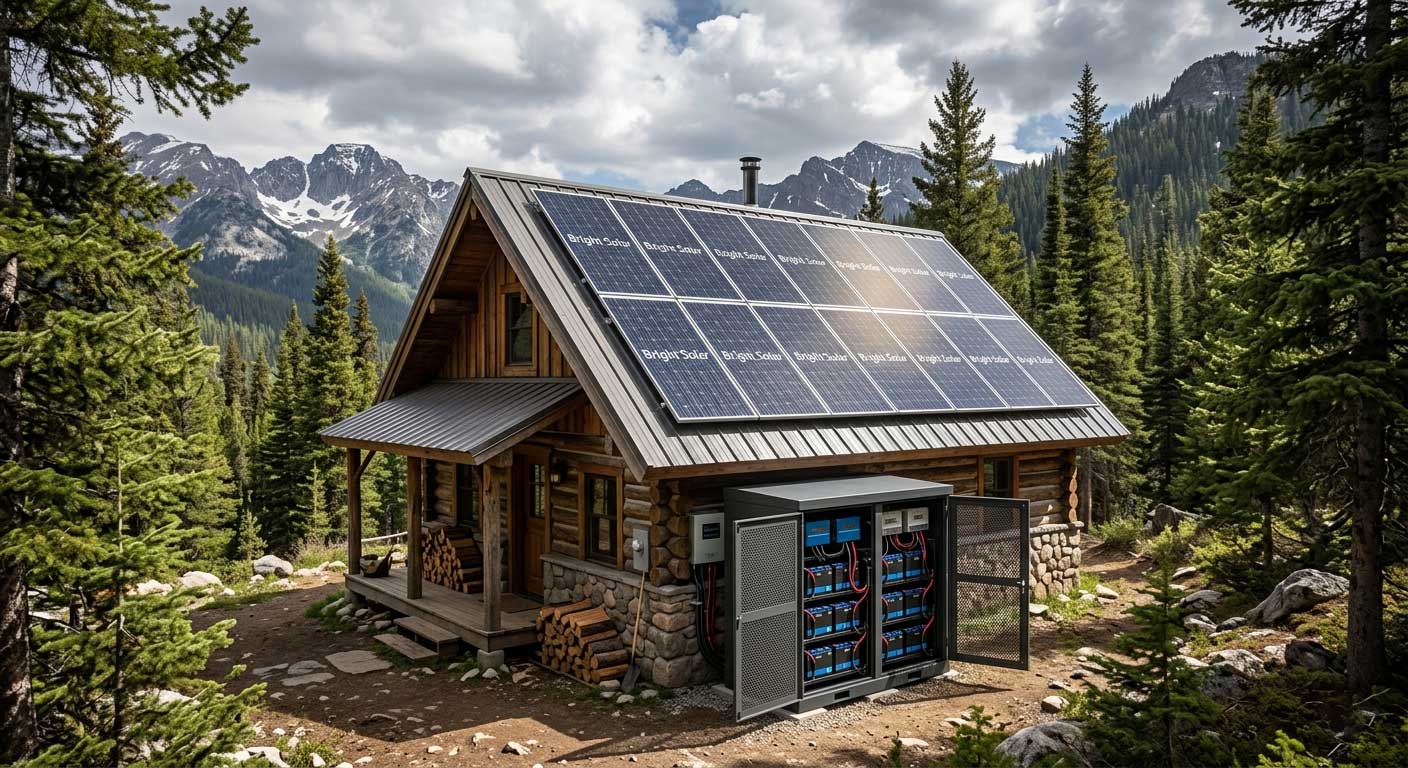
One customer built an off-grid hunting cabin in western Montana.
The site seemed perfect.
Until winter arrived.
Tall pine trees created shifting shadows throughout the day.
The original design used:
- Four 200W panels
- Series wiring
- MPPT controller
On paper, everything looked ideal.
In practice, morning production suffered.
After evaluating shade patterns over several weeks, we redesigned the array into a series-parallel configuration.
The outcome:
- Improved charging consistency
- Better winter performance
- Reduced battery cycling depth
The customer wasn’t interested in electrical theory.
He simply wanted enough energy to run lights, refrigeration, and communication equipment.
The redesign delivered exactly that.
Voltage Drop: The Hidden Efficiency Killer
One topic rarely discussed outside professional installations is voltage drop.
Voltage drop occurs when electricity travels through conductors.
Longer cable runs increase losses.
Higher current increases losses.
This is one reason series wiring remains popular.
Consider two identical systems.
System A:
20V
System B:
80V
The higher-voltage system typically experiences lower conductor losses when properly designed.
For larger installations, that difference can become significant over time.
Especially when electricity prices continue rising.
Why MPPT Controllers Changed Solar Design
Twenty years ago, solar system design was much more restrictive.
Modern MPPT charge controllers changed everything.
MPPT technology continuously searches for the optimal operating point between voltage and current.
Benefits include:
- Higher energy harvest
- Better cold-weather performance
- Improved efficiency
- Greater wiring flexibility
According to the U.S. Department of Energy, MPPT technology significantly improves energy capture compared to traditional PWM charging systems.
Source:
https://www.energy.gov
Today, many installers who prefer series wiring do so because MPPT controllers can efficiently utilize higher voltage inputs.
Without MPPT, that advantage becomes less compelling.
Series vs Parallel for Different Applications
| Application | Recommended Configuration |
|---|---|
| Residential Roof | Series |
| Commercial Roof | Series |
| Solar Farm | Series |
| RV Roof | Parallel or Hybrid |
| Sailboat | Parallel |
| Motorhome | Parallel or Hybrid |
| Off-Grid Cabin | Depends on Shade |
| Portable Solar Kit | Parallel |
Notice something interesting.
There is no universal answer.
The installation environment matters more than the internet often suggests.
A Perspective Most Articles Ignore
After inspecting hundreds of systems, I’ve stopped treating series wiring as the automatic answer.
Many articles do.
Most are written from an engineering perspective.
Customers don’t live inside engineering diagrams.
They live in real environments.
A homeowner in Arizona faces different conditions than a sailor in Florida.
An RV owner in Oregon faces different conditions than a warehouse owner in Nevada.
The “best” wiring method changes accordingly.
That reality gets lost in many online guides.
FAQ About Parallel vs Series Solar Panels
Which is more efficient, series or parallel solar panels?
Under ideal sunlight conditions, series wiring often achieves slightly higher overall efficiency because conductor losses are lower. In partially shaded environments, parallel wiring may produce better real-world results.
Do solar panels charge batteries faster in series?
Not necessarily. Battery charging depends on controller design, system voltage, available sunlight, and battery condition. Higher voltage alone does not guarantee faster charging.
Can I mix series and parallel wiring?
Yes. Many professional solar installations use series-parallel configurations to balance voltage and current requirements.
Is series wiring better for MPPT controllers?
In many situations, yes. MPPT controllers are designed to efficiently utilize higher-voltage solar inputs.
Are parallel solar panels safer?
Both methods are safe when installed correctly. Parallel systems typically operate at lower voltages, while series systems operate at higher voltages but lower current.
What is best for RV solar systems?
Many RV owners benefit from parallel or hybrid configurations because campground environments frequently introduce partial shading.
What is best for residential rooftops?
Most residential rooftop systems use series-connected strings because roofs typically provide more consistent sunlight exposure.
Final Thoughts on Parallel vs Series Solar Panels
The debate around parallel vs series solar panels usually starts with electrical specifications.
In my experience, the better starting point is the installation site itself.
Look at the trees.
Look at the roof equipment.
Look at the cable distance.
Look at how the system will actually be used.
At Bright Solar, we’ve designed systems for sailboats, RVs, cabins, homes, farms, and commercial buildings. The projects that perform best are rarely the ones with the most panels. They’re the ones where the wiring strategy matches the environment.
If I were wiring a perfectly clear rooftop in Arizona tomorrow, I would likely choose a series-based design.
If I were wiring a shaded RV parked beneath tall pines in Oregon, I would make a very different decision.
That’s the real answer behind parallel vs series solar panels.
The right configuration isn’t determined by theory alone.
It’s determined by where the sunlight actually falls.
Related recommendations
-

Folding Solar Panels for Camping: A Practical Guide to Portable Power
91Folding solar panels provide portable camping power and can be repositioned to capture better sunlight when campsites become shaded.
View details -
flexible solar panels 100w: Lightweight Solar Solution for Portable Energy Applications
224Discover flexible solar panels 100w from Bright Solar with lightweight design, high efficiency, and durable ETFE protection for RV, marine, camping, and off-grid energy.
View details -
Small Flexible Solar Panels: Lightweight Solar Power for Compact Spaces
144Discover how small flexible solar panels deliver lightweight, efficient power for RVs, boats, camping, and off-grid devices. Explore real-world applications.
View details -
12 Volt Solar Panels for Reliable Off-Grid and Mobile Power
218Discover how 12 volt solar panels power RVs, boats, cabins, and off-grid systems. Learn sizing, performance, installation tips, and expert insights from Bright Solar.
View details