160w foldable solar panel: Power Output, Camping and Battery Charging
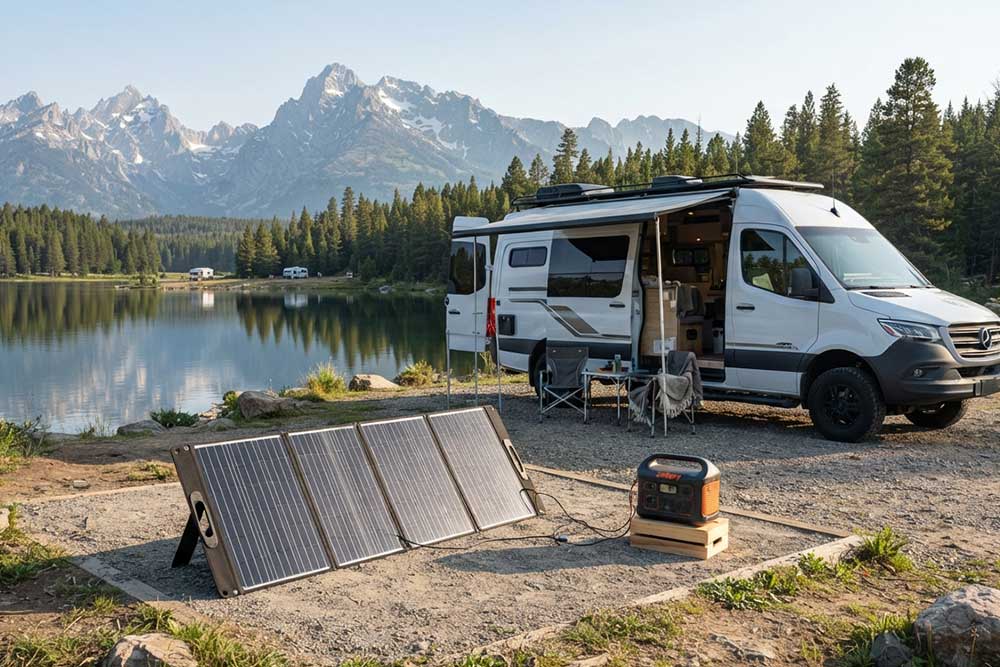
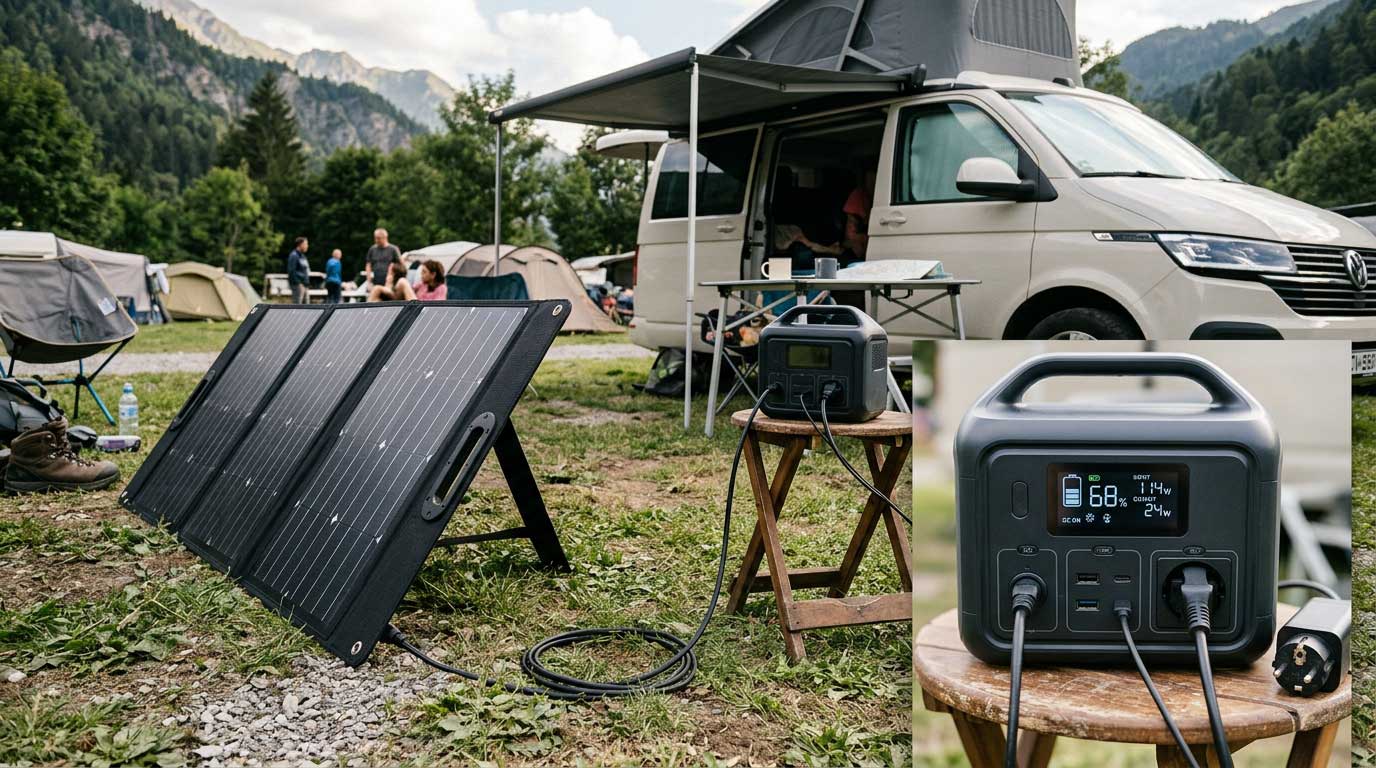
A 160w foldable solar panel provides portable solar power for camping, RV trips, and off-grid charging without permanent roof installation. Under four peak sun hours, a 160W panel could produce around 480–544Wh per day after illustrative system losses, depending on sunlight, orientation, temperature, and equipment.
The number printed on the panel is a starting point, not a daily energy guarantee. A folding panel placed in direct sunlight and adjusted during the day can perform very differently from one left flat beside a vehicle, partly shaded by a tree, or pointed away from the sun. For buyers comparing Portable Solar Panel equipment, the useful questions are how much energy it can realistically deliver, what it can charge, and how easily it fits into an actual outdoor setup.
What Is a 160w Foldable Solar Panel?
A 160w foldable solar panel is a portable photovoltaic module designed to unfold for sunlight exposure and fold into a more compact package for transport or storage. Its rated output is 160 watts under specified test conditions, rather than a promise that it will continuously deliver 160W outdoors.
Compared with a rigid rooftop panel, a folding unit is generally easier to reposition and store. It is useful where the vehicle is parked in shade but a nearby sunny area is available, or where the power system must be packed away between trips.
Common applications include:
- Camping: Charging a portable power station, phones, cameras, lights, and other compatible devices.
- RV and camper travel: Supplementing battery charging when the vehicle is parked.
- Van life: Providing deployable solar power without dedicating the entire roof to permanent panels.
- Remote work: Supporting a compatible power station for laptops, routers, and small electronics.
- Emergency backup: Helping replenish a battery during daylight when grid power is unavailable.
The foldable format does not automatically mean the panel is waterproof, suitable for walking on, or designed to remain outdoors in every weather condition. Check the manufacturer’s specifications for weather resistance, connector type, operating limits, and care instructions before using it in demanding environments.
How Much Power Can a 160W Foldable Solar Panel Produce?
A 160W panel can theoretically deliver 160 watts at its rated test conditions. Real-world output changes throughout the day as sunlight intensity, panel temperature, angle, and shading change.
Daily energy can be estimated using:
Daily energy (Wh) = Panel rating (W) × Peak sun hours × Estimated system efficiency
The following examples use an illustrative system efficiency of 75–85%. This is a planning assumption that allows for conversion and operating losses; it is not a measured specification or a guarantee for every 160W panel.
| Equivalent peak sun hours | Estimated daily energy |
|---|---|
| 2 hours | 240–272Wh |
| 3 hours | 360–408Wh |
| 4 hours | 480–544Wh |
| 5 hours | 600–680Wh |
| 6 hours | 720–816Wh |
These estimates assume usable sunlight equivalent to the stated number of peak sun hours. They do not mean that the panel will produce its rated output for the same number of clock hours.
For a reliable estimate at a particular location, use the National Renewable Energy Laboratory’s PVWatts Calculator as a reference for solar-resource and system-performance modelling. PVWatts is designed for photovoltaic systems, so a portable panel’s actual results still depend on its placement, controller, and operating conditions.
Why the Same Panel Produces Different Results
Several details can make a noticeable difference in the field:
- Sun angle: A panel facing the sun directly will generally collect more energy than one lying flat when the sun is low.
- Partial shading: A shadow crossing even part of a panel can reduce output. The effect depends on cell layout and electrical design.
- Panel temperature: Solar modules commonly deliver less voltage as cell temperature rises.
- Controller and battery: Energy conversion, battery acceptance limits, and charging settings affect how much harvested power reaches storage.
- Clouds and season: A bright summer afternoon and a short winter day are not equivalent solar conditions.
The U.S. Department of Energy explains the fundamentals of PV system design and the importance of system components in its Solar Photovoltaic System Design Basics guide.
What Can a 160W Foldable Solar Panel Charge?
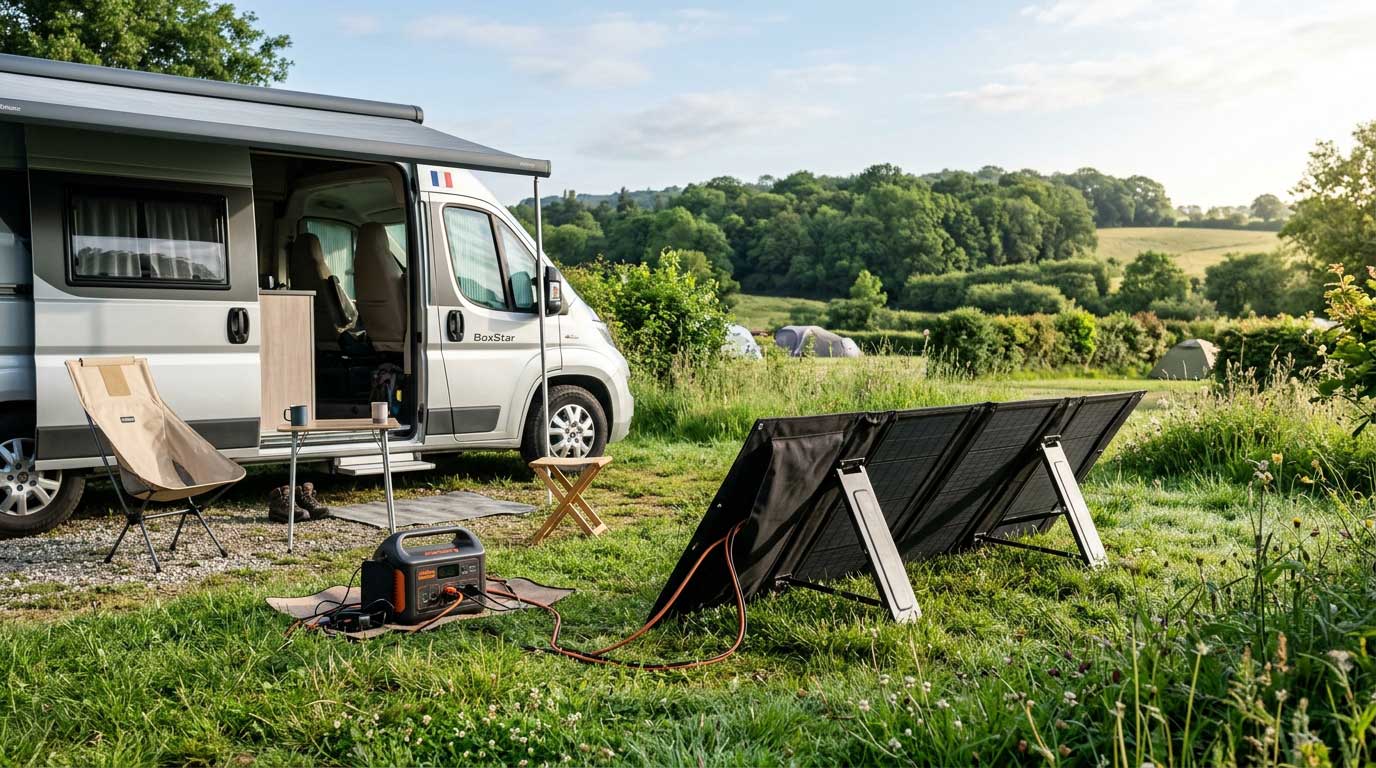
A 160W foldable solar panel is best understood as a source of energy for a compatible battery or power station, rather than a universal plug-in power supply. Most portable solar panels need an appropriate charge controller or a power station with a compatible solar input.
What you can run depends on both the panel’s energy production and the device’s power demand. A device that draws 60W does not necessarily use 60Wh per day; energy consumption depends on how long it operates.
Practical Energy Examples
The examples below use a hypothetical 500Wh daily solar harvest to illustrate how energy might be allocated. Actual output may be lower or higher, and the examples are not guarantees of charging time.
| Device or use | Illustrative energy use | What 500Wh could mean |
|---|---|---|
| Smartphone charging | 10–15Wh per charge | Roughly 30–50 phone-charge equivalents before conversion losses and other loads |
| LED camping light | 5W for 5 hours = 25Wh | Around 20 such lighting sessions in energy terms |
| Laptop | 50Wh per recharge | Around 10 recharge equivalents before system losses |
| Portable fridge | 300–600Wh per day, depending on conditions | May cover part or much of a day’s consumption |
| Wi-Fi router | 10W for 8 hours = 80Wh | About six equivalent operating periods |
These are simplified energy comparisons, not device-specific test results. Actual battery capacity, charging efficiency, power draw, compressor cycling, and ambient temperature can change the outcome. A portable refrigerator, for example, may use considerably more energy in hot weather than it does in a cool environment.
For a more dependable plan, write down each device’s wattage and expected hours of use. Multiply watts by hours to estimate watt-hours, then add the daily totals. If the combined demand is 700Wh but your estimated solar harvest is only 500Wh, the system will need additional energy from a larger panel, another charging source, or a battery charged earlier.
Can It Charge a 12V Battery?
Potentially, yes—but the panel’s output voltage and connector must match the charging equipment. A panel described as “160W” is not automatically a direct 12V battery charger. Many panels have a maximum-power voltage above a nominal 12V battery’s operating voltage and require a charge controller to regulate the charging process.
Before connecting a panel to a battery, check:
- The panel’s maximum-power voltage (Vmp) and open-circuit voltage (Voc).
- The charge controller’s supported PV input voltage and current.
- The battery chemistry and recommended charging profile.
- The connector polarity, cable rating, and any required adapters.
- The portable power station’s maximum solar input and accepted connector type.
Never assume that two products are compatible just because both are described as “12V.” Follow the battery and controller manufacturers’ wiring and safety instructions.
How to Set Up a 160W Foldable Solar Panel Outdoors
The best setup is usually the one that balances sunlight, stability, and convenience. A panel that is perfectly angled but difficult to secure may be less practical than one placed safely in an open, sunny area.
Step 1 — Find a Clear, Stable Location
Choose a firm, dry surface with as little shading as possible. Check for shadows from branches, awnings, roof racks, chairs, and people. A campsite can look sunny while a narrow shadow moves across the panel as the sun shifts.
Keep the panel away from vehicle traffic, walking paths, standing water, and locations where wind could catch the unfolded sections. If the manufacturer provides a support stand, use it as directed.
Step 2 — Position the Panel Toward the Sun
Aim the active surface toward the sun rather than relying on the position of the vehicle. In the Northern Hemisphere, a southerly orientation is often a useful starting point, but the best direction varies with season, location, and the time of day.
Adjust the angle when practical. If you’re staying at a campsite for several hours, checking the panel again around midday can be worthwhile. Do not sacrifice stability to chase a small improvement in sunlight.
Step 3 — Connect the Correct Charging Equipment
Read the panel and power-station manuals before connecting cables. Verify the permitted voltage range and connector compatibility first. Connect and disconnect components in the order specified by their manufacturers; controller designs differ, so one universal sequence should not be assumed.
Keep connectors clean and dry, and avoid pulling the panel by its cable. If an extension cable is needed, use a suitable cable with the correct polarity and current rating.
Step 4 — Check the Actual Input
If your power station displays solar input in watts, observe the reading after the panel has been in direct sunlight for a short period. The reading may fluctuate with clouds and changes in sun angle. Compare results at different safe positions rather than assuming the rated 160W will appear continuously.
If the reading is unexpectedly low, check for shade, loose connections, incompatible input limits, and incorrect panel orientation. Consult the equipment manuals before testing or changing the wiring.
Step 5 — Pack It Away Properly
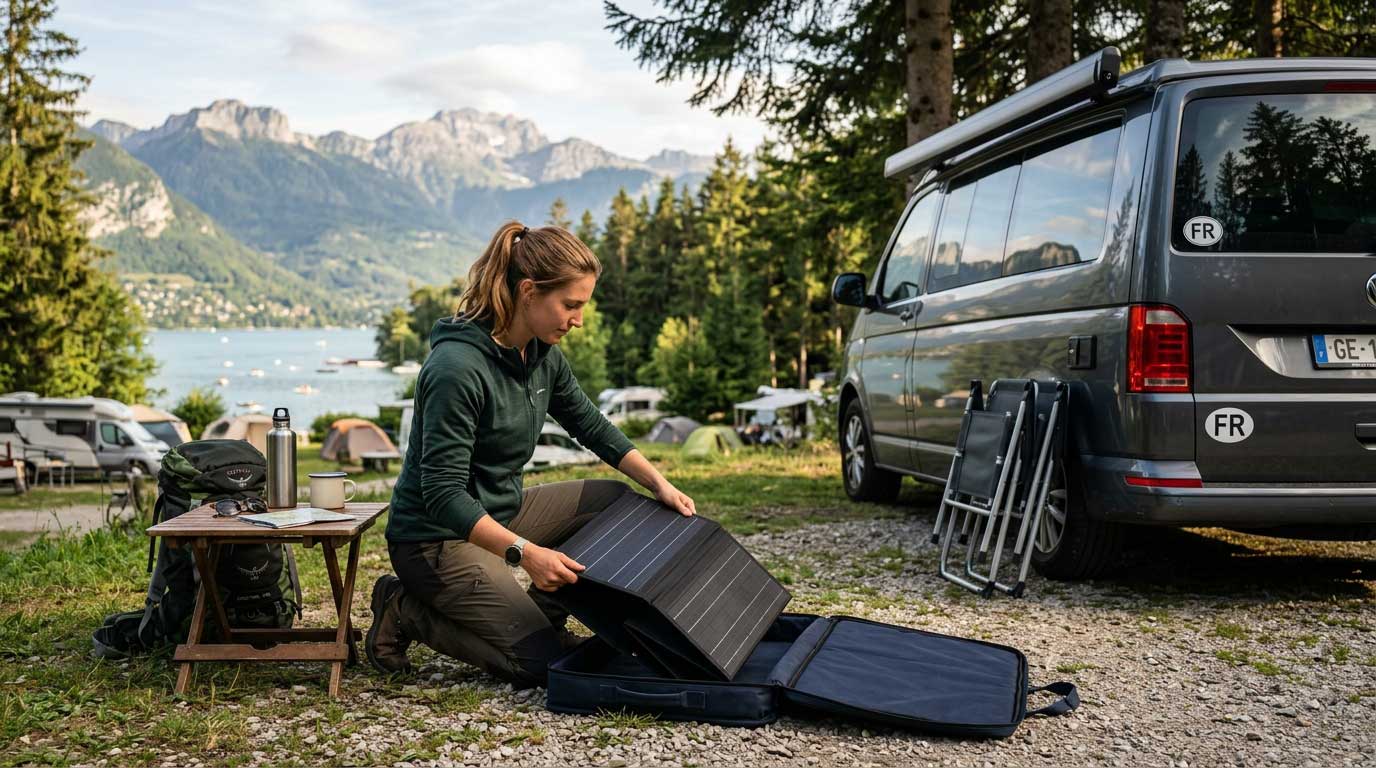
Disconnect the equipment according to its instructions, allow the panel to cool if necessary, and fold it along its intended hinges or sections. Do not fold a Rigid Solar Panel or force a foldable panel beyond its designed structure. Store the unit dry and protected from sharp objects, excessive pressure, and abrasion.
Choosing the Right 160W Foldable Solar Panel
Not every folding solar panel with a 160W rating offers the same user experience. Two products with the same nominal wattage may differ in folded dimensions, weight, cell technology, protective materials, connector design, and weather resistance.
For individual campers, storage size and setup time may matter as much as headline wattage. For distributors, outdoor-equipment brands, and solar-system integrators, electrical consistency, documentation, quality control, and supply arrangements also deserve attention.
Use this checklist when comparing products:
| Feature | What to verify | Why it matters |
|---|---|---|
| Rated power | Confirm the 160W rating and its test conditions | Makes comparisons more meaningful |
| Vmp and Voc | Review the actual electrical specifications | Helps establish compatibility with a controller or power station |
| Folded dimensions | Compare packed size with your storage space | Determines whether the panel fits a vehicle or equipment case |
| Weight | Check the complete packed weight, not only the panel material | Affects carrying and transport |
| Connectors | Confirm plug type, polarity, and included cables | Helps avoid incompatible accessories |
| Weather resistance | Read the specified protection rating and usage limits | Determines how the panel should be handled outdoors |
| Warranty | Review coverage, exclusions, and service terms | Clarifies support after purchase |
| Accessories | Check whether a stand, cable, or controller is included | Affects the complete system cost |
Foldable, Flexible, and Rigid Panels Are Different
These terms describe different product formats. A foldable solar panel is designed to fold at designated sections or hinges. A flexible solar panel is designed to bend within the manufacturer’s stated limits. A rigid solar panel uses a fixed frame and module structure.
A foldable panel should not be bent like a flexible module, and a flexible module should not be repeatedly folded unless its design specifically allows it. The distinction matters when selecting panels for camping kits, curved surfaces, vehicle installations, and OEM product ranges.
Questions for B2B Buyers and OEM Projects
If you’re sourcing a 160W foldable solar panel for resale or integration, request the product datasheet and confirm the specifications that affect your system design. Ask about electrical tolerances, approved connectors, cable length, packaging, production consistency, testing documents, warranty conditions, and customization options.
Bright Solar supports buyers evaluating solar panel solutions for different applications. Product availability and customization depend on the selected product design and project requirements, so confirm the final configuration directly with the supplier rather than assuming every feature is standard.
A Realistic Camping Energy Planning Example
Consider a hypothetical two-night campervan trip. The user brings a 160W foldable panel and a portable power station, and estimates the following daily electricity needs:
| Daily load | Example calculation | Estimated energy |
|---|---|---|
| LED lighting | 8W × 4 hours | 32Wh |
| Phone charging | 12Wh × 2 phones | 24Wh |
| Laptop use | 60W × 2 hours | 120Wh |
| Router | 10W × 5 hours | 50Wh |
| Small accessories | Estimated allowance | 30Wh |
| Total | 256Wh/day |
In this example, daily use is approximately 256Wh. If the panel harvests 480Wh on a day with four equivalent peak sun hours and the illustrative 75% system-efficiency assumption, there could be an energy surplus of roughly 224Wh before accounting for additional loads or battery-related limitations.
That result is a planning scenario, not a field test. If cloud cover reduces the usable solar resource to two peak sun hours, the same simplified calculation at 75% efficiency gives about 240Wh—slightly less than the listed daily demand. The user would need to reduce consumption, start with a fuller battery, or recharge from another source.
The lesson is practical: size a portable solar setup around the daily energy budget and local solar conditions, not just the panel’s wattage. A small spreadsheet or notes app with each device’s watts and operating hours can reveal whether a 160W panel is sufficient before a trip begins.
FAQ About a 160w Foldable Solar Panel
Is a 160w foldable solar panel enough for camping?
It can be enough for light to moderate camping loads, such as phones, LED lights, and some laptop charging, when sunlight and battery capacity are adequate. Refrigerators, electric cooking appliances, heaters, and other high-energy loads may require a larger system or additional charging sources.
How many watt-hours can a 160W foldable solar panel produce per day?
Daily energy depends on peak sun hours and system losses. Using an illustrative efficiency of 75–85%, four peak sun hours would produce approximately 480–544Wh. Shading, weather, panel angle, temperature, and controller performance can change the actual result.
Can I connect a 160W foldable solar panel directly to a battery?
Do not assume direct connection is safe or suitable. Check the panel voltage and current against the battery’s charging requirements. A compatible charge controller is generally needed for battery charging unless the panel or charging system has an appropriate integrated regulation design.
Can a 160W foldable solar panel charge a portable power station?
Yes, if the power station supports the panel’s voltage and current range and the connectors are compatible. Check the station’s maximum solar input, accepted connector type, and any recommended wiring procedure before connecting the panel.
Is a foldable solar panel waterproof?
Not necessarily. Water resistance varies by model and component, and the panel, connectors, junction areas, and power station may have different protection levels. Check the manufacturer’s documented rating and avoid exposing equipment to rain or standing water unless its instructions permit it.
Is a 160W foldable solar panel better than a 200W panel?
A 200W panel has a higher rated output under the same standard test conditions, but it may be heavier or larger when packed. A 160W model may suit buyers who prioritize portability and have modest energy needs. Compare actual output requirements, dimensions, weight, and system compatibility before choosing.
What should B2B buyers check before ordering 160W foldable solar panels?
Confirm the electrical datasheet, product dimensions, weight, connectors, cable specifications, quality documentation, warranty, packaging, and any required customization. For OEM or bulk orders, agree on the final configuration and acceptance criteria before production.
Conclusion
A 160w foldable solar panel can be a practical source of portable electricity for camping, campervans, and selected off-grid applications. Its real value depends on daily energy demand, sunlight, charging compatibility, and how easily it can be deployed and stored.
Estimate watt-hours before selecting equipment, verify the electrical specifications, and use realistic solar-production assumptions rather than treating 160W as a constant output. For buyers sourcing portable solar products, Bright Solar can help evaluate panel solutions according to application and project requirements.
Related recommendations
-

Installing Solar Panels on RV: Complete Step-by-Step Guide for Reliable Off-Grid Power
401Learn installing solar panels on rv with expert steps, wiring tips, battery setup, and real RV solar experience from Bright Solar for reliable off-grid power.
View details -
highest watt flexible solar panel: Powerful Flexible Solar Solution for High Energy Demand
370Discover the highest watt flexible solar panel for RVs, marine, and off-grid applications. Learn power output, technology, installation, and benefits from Bright Solar.
View details -
Camping Folding Solar Panels: How to Choose and Use Them
174Camping folding solar panels provide portable electricity for outdoor devices and power stations. Choose based on daily energy needs, sunlight, carrying weig...
View details -
Lightweight Solar Panels for Mobile Homes
356Discover how lightweight solar panels for mobile homes reduce roof load while delivering reliable off-grid energy. Learn sizing, costs, installation tips, and real-world performance.
View details