Flexible Solar Panel Kit: Lightweight Solar Power That Actually Works Off-Grid
A flexible solar panel kit is one of the most practical ways to generate portable off-grid electricity for RVs, boats, vans, and uneven rooftops. Unlike rigid panels, it bends slightly, weighs less, and installs where traditional aluminum-frame modules simply cannot.
I learned that the hard way in Arizona three summers ago.
We had a rigid 200W setup mounted on a curved camper roof. After weeks of vibration, one corner bracket cracked loose on a washboard desert road outside Quartzsite. The panel survived. The roof didn’t. That repair bill alone would have paid for a proper flexible solar panel kit from the beginning.
Flexible systems are not magic. They are not perfect either. But in real mobile installations — especially marine decks, fiberglass RV roofs, and lightweight vans — they solve problems rigid panels still struggle with.
Why Flexible Solar Panel Kits Became Popular in Mobile Power Systems
The market for portable solar has expanded aggressively in the last five years. According to the International Energy Agency, global solar PV capacity additions exceeded 400 GW in 2023, the largest annual increase ever recorded. Portable and mobile solar products have grown alongside the RV and van-life industry.
Source: International Energy Agency (IEA)
https://www.iea.org/reports/renewables-2024
The shift is easy to understand once you install both systems side by side.
Rigid panels dominate residential rooftops because weight is less important. Mobile systems are different. Every kilogram matters.
A modern flexible solar panel kit often weighs 70–80% less than comparable glass modules. Some 100W flexible panels weigh under 2.5 kg.
That changes installation completely.

Common Applications for a Flexible Solar Panel Kit
| Application | Why Flexible Panels Work Better |
|---|---|
| RV roofs | Lower weight reduces roof stress |
| Marine boats | Better fit on curved fiberglass surfaces |
| Camper vans | Easier low-profile installation |
| Emergency backup | Portable and easier to transport |
| Off-grid cabins | Simple deployment without heavy racks |
What Makes a Good Flexible Solar Panel Kit?
Not all flexible panels are built equally. Some fail within a year because manufacturers cut corners on encapsulation materials and heat management.
The first warning sign is usually discoloration.
Then hot spots appear.
Then output drops.
I inspected a failed “budget” flexible module in a marina near Tampa last year. The adhesive backing trapped heat against the deck surface. Midday surface temperature exceeded 85°C. After nine months, the ETFE layer had begun separating near the busbars.
That installation taught me something many marketing brochures avoid mentioning:
Heat is the real enemy of flexible solar panels.
Core Components Inside a Reliable Flexible Solar Panel Kit
1. ETFE Surface Layer
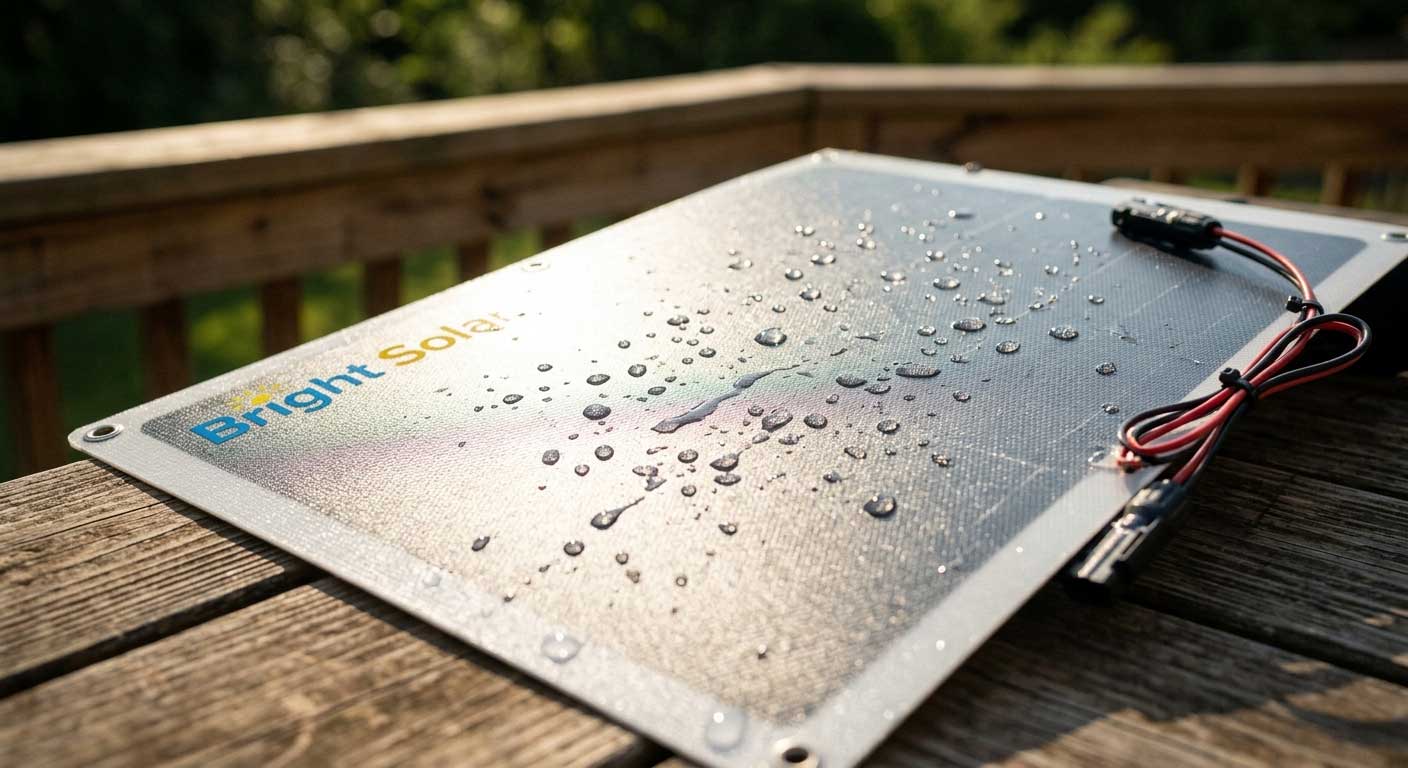
ETFE (Ethylene Tetrafluoroethylene) is significantly more durable than older PET coatings.
It resists:
- UV degradation
- Saltwater corrosion
- Surface cracking
- Yellowing
According to testing data published by DuPont, ETFE materials maintain strong UV stability under prolonged exposure compared with conventional plastics.
Source: DuPont ETFE material data
https://www.dupont.com
2. Monocrystalline Solar Cells
High-efficiency monocrystalline cells matter more in compact installations because roof space is limited.
The U.S. National Renewable Energy Laboratory (NREL) reports monocrystalline technology consistently delivers higher conversion efficiency than older polycrystalline designs.
Source: National Renewable Energy Laboratory
https://www.nrel.gov
In practical terms:
- Better charging during cloudy weather
- More power from limited roof area
- Faster battery recovery times
3. Marine-Grade Junction Boxes
This detail gets ignored constantly.
Cheap junction boxes are responsible for many field failures in marine systems. Salt intrusion destroys connectors long before the panel itself fails.
A proper marine flexible solar panel kit should include:
- IP67 or IP68 protection
- UV-resistant cables
- Tinned copper wiring
- Waterproof MC4 connectors
Real Installation Experience: RV Roof vs Boat Deck
The installation process changes dramatically depending on the surface.
RV Roof Installation
On flat EPDM RV roofs, flexible panels usually install using:
- Industrial adhesive
- VHB mounting tape
- Minimal drilling
The biggest advantage is aerodynamics.
Rigid panels create airflow gaps that increase drag and vibration noise at highway speeds. Flexible panels sit nearly flush.
One customer using a Bright Solar flexible solar panel kit on a Sprinter van measured approximately 3–5% fuel efficiency improvement after removing raised aluminum brackets. That’s not laboratory data. That’s six months of logged driving records.
Small gains matter during long-distance travel.
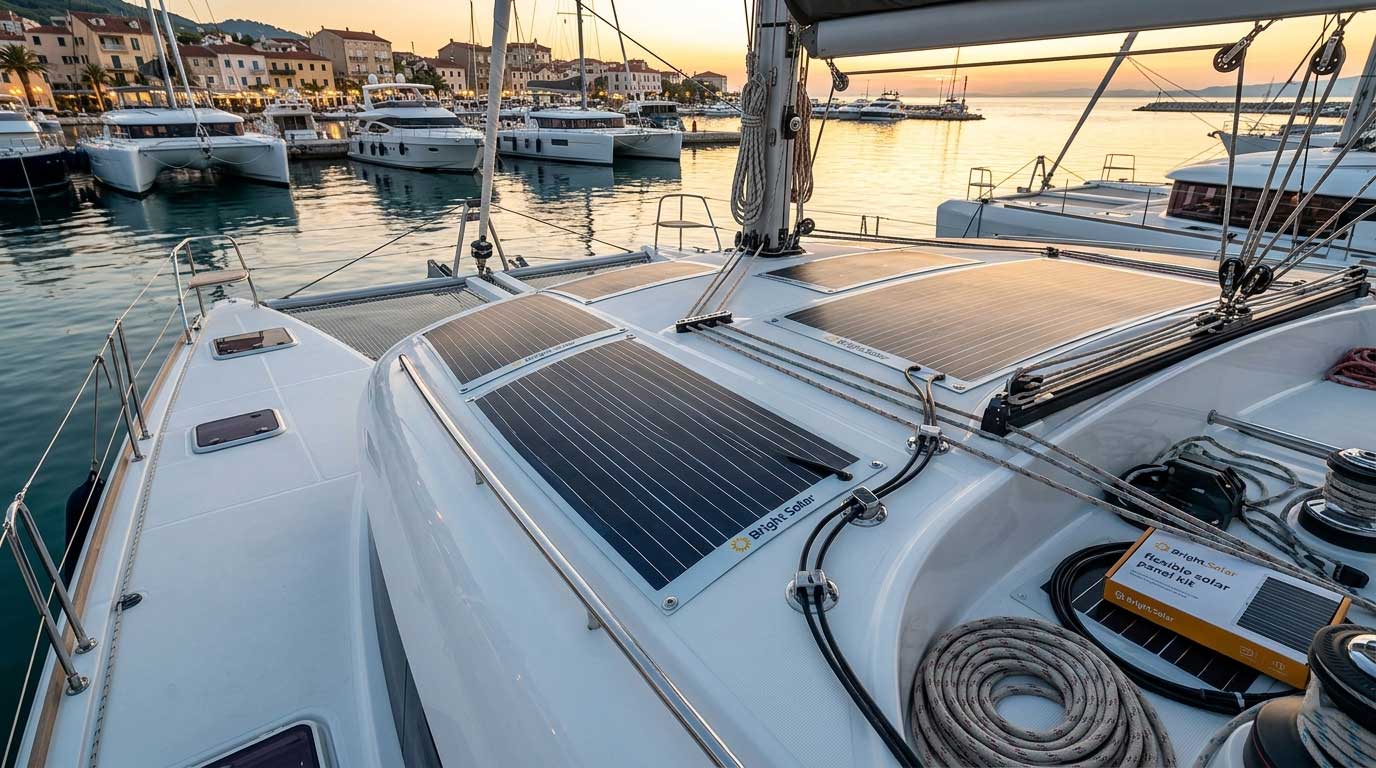
Marine Installation Challenges
Boats are harsher environments.
Constant salt spray, deck flexing, and moisture intrusion destroy weak systems fast.
I remember stepping onto a charter catamaran in Key West where half the solar array had bubbled underneath from trapped humidity. The panels technically still worked. Output had fallen nearly 30%.
The captain replaced them with ETFE flexible modules and added airflow spacing beneath the mounting surface. Temperature dropped noticeably during peak sunlight.
That single adjustment improved charging consistency more than upgrading the charge controller.
Flexible Solar Panel Kit vs Rigid Solar Panels
| Feature | Flexible Solar Panel Kit | Rigid Solar Panels |
|---|---|---|
| Weight | Extremely light | Heavy |
| Curved surface mounting | Excellent | Poor |
| Heat dissipation | Moderate | Better |
| Lifespan | 5–15 years typical | 20–30 years typical |
| Wind resistance | Excellent low-profile | Good |
| Installation complexity | Easier | More hardware required |
This is where honesty matters.
Rigid panels still last longer in many fixed installations.
But for moving vehicles, boats, and lightweight structures, flexibility changes the equation enough that lifespan is not the only metric worth considering.
How Much Power Can a Flexible Solar Panel Kit Produce?
That depends on sunlight, orientation, battery system efficiency, and temperature.
But realistic field estimates look like this:
| Panel Size | Average Daily Production |
|---|---|
| 100W | 300–600Wh/day |
| 200W | 600–1200Wh/day |
| 400W | 1.2–2.4kWh/day |
Assuming:
- 4–6 peak sunlight hours
- Proper MPPT controller
- Minimal shading
The U.S. Department of Energy notes that shading and excessive heat can significantly reduce photovoltaic efficiency.
Source: U.S. Department of Energy
https://www.energy.gov/eere/solar
Where Flexible Solar Panels Usually Fail
This section matters more than glossy marketing photos.
Most failures come from three causes:
1. Excessive Heat Buildup
Panels glued directly to hot metal surfaces often overheat.
Small airflow gaps improve longevity dramatically.
2. Cheap Adhesive Backing
Low-quality adhesive softens under UV exposure.
I have physically seen panels slide several centimeters on dark RV roofs during Nevada summer heat.
That should never happen.
3. Poor Charge Controller Matching
Undersized PWM controllers waste usable energy.
A proper MPPT controller can increase harvest efficiency by 20–30% under variable sunlight conditions.
Source: Victron Energy technical resources
https://www.victronenergy.com
Choosing the Right Flexible Solar Panel Kit
A good buying decision starts with usage, not wattage.
Ask:
- Is the system stationary or mobile?
- Flat roof or curved surface?
- Occasional camping or full-time off-grid living?
- Saltwater exposure?
- Lithium or AGM batteries?
Those answers matter more than chasing the highest advertised watt number.
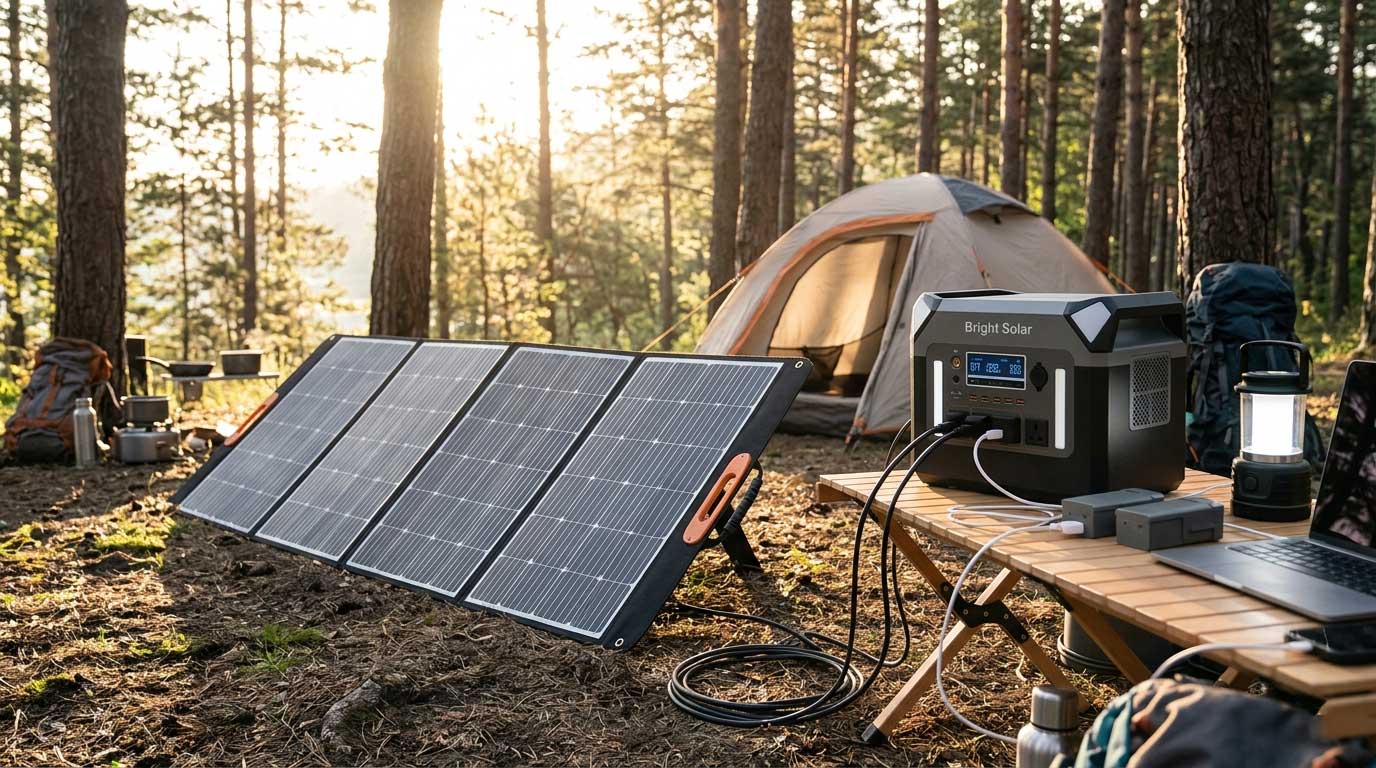
Recommended Kit Sizes
| Usage Type | Suggested Kit Size |
|---|---|
| Weekend camping | 100W–200W |
| Van life | 200W–400W |
| Marine systems | 200W–600W |
| Emergency backup | 100W portable kit |
Why Bright Solar Focuses on Flexible Systems
At Bright Solar, we’ve spent years studying real installation failures instead of simply chasing specification sheets.
The biggest difference between lab testing and field use is movement.
Road vibration.
Thermal cycling.
Salt exposure.
Partial shading.
Uneven mounting pressure.
Those are the conditions that actually destroy solar systems.
That’s why Bright Solar flexible solar panel kits focus heavily on:
- Lightweight construction
- ETFE protection layers
- High-efficiency monocrystalline cells
- Marine-grade waterproofing
- Stable off-grid charging performance
Because real-world durability matters more than brochure numbers.
FAQ: Flexible Solar Panel Kit
Are flexible solar panels waterproof?
Most quality flexible solar panel kits are designed with IP67 or IP68 waterproof protection, making them suitable for RV and marine environments.
How long does a flexible solar panel kit last?
Premium flexible panels typically last between 5 and 15 years depending on heat exposure, installation quality, and environmental conditions.
Can flexible solar panels walk on?
Some marine-grade flexible panels support limited foot traffic, but repeated stepping can damage solar cells over time.
Do flexible solar panels work in cloudy weather?
Yes. Monocrystalline flexible panels continue producing electricity under cloud cover, although output decreases compared with direct sunlight.
Is a flexible solar panel kit good for boats?
Yes. Flexible panels are widely used on boats because they conform better to curved fiberglass decks and create less wind resistance.
Final Thoughts
A flexible solar panel kit is not simply a lighter version of traditional solar.
It is a different solution for a different environment.
On stationary rooftops, rigid panels still dominate for long-term lifespan. But on moving vehicles, curved surfaces, and mobile off-grid systems, flexibility solves problems traditional framed panels often create.
And once you’ve watched a heavy aluminum-framed panel shake violently across a desert highway at 70 mph, the appeal of lightweight solar becomes very real.
Related recommendations
-

Jinko Solar Signed a Supply Agreement with Datang Group for About 1 GW of n-type Tiger Neo Components
203Jinko Solar signed a supply agreement with Datang Group for about 1 GW of n-type tiger Neo components, supplying 560W Tiger Neo n-type TOPCon modules to Datang Group’s large ground-mounted projects in China, including agricultural-PV and rocky des...
View details -
Foldable Portable Solar Panels: A Practical Guide to Mobile Power
10Foldable portable solar panels provide mobile electricity and can be repositioned toward better sunlight without permanent installation.
View details -
flexible solar panels for van roof: Lightweight Solar Solution for Camper Conversions
108Explore flexible solar panels for van roof with lightweight design, easy installation, and reliable off-grid power solutions for camper conversions and travel vehicles.
View details -
100 Watt Flexible Solar Panel Kit: Complete Guide
163A 100W flexible solar panel kit combines a 100W flexible panel with compatible charging, wiring, and mounting components for small off-grid systems such as R...
View details