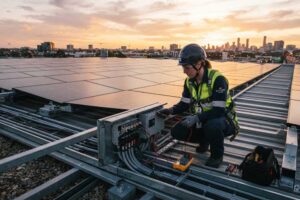
Thin Film Flexible Solar Panel: Lightweight Solar Solutions for Modern Applications
A thin film flexible solar panel uses lightweight photovoltaic materials to create adaptable solar power solutions for curved surfaces, mobile applications, and special installations where traditional rigid panels are difficult to use.
When people ask us whether thin film technology is still relevant in today’s solar market, my answer usually depends on the installation environment.
A high-efficiency rigid panel may be ideal for a large rooftop.
But when the surface is curved, weight is limited, or mobility matters, thin film flexible solar panel technology offers advantages that conventional modules cannot easily provide.
At Bright Solar, we have worked with flexible photovoltaic solutions for RV manufacturers, marine suppliers, and off-grid energy projects. Through years of product evaluation and application testing, we found that the best solar solution is not always the one with the highest laboratory efficiency number.
It is the one that fits the real environment.
What Is a Thin Film Flexible Solar Panel?
A thin film flexible solar panel is a photovoltaic module manufactured using thin layers of semiconductor materials deposited onto flexible substrates.
Unlike traditional crystalline silicon panels that rely on thick glass and aluminum frames, thin film solar technology uses extremely thin active layers.
Common thin film materials include:
| Technology | Material | Main Characteristics |
|---|---|---|
| Amorphous Silicon (a-Si) | Silicon thin layers | Lightweight, flexible, lower efficiency |
| Cadmium Telluride (CdTe) | Semiconductor compound | Strong performance in utility-scale projects |
| Copper Indium Gallium Selenide (CIGS) | Advanced thin film material | High flexibility and better efficiency potential |
According to the U.S. Department of Energy, thin film photovoltaic technologies represent an important category of solar development because they can reduce material usage and enable applications beyond conventional panels.
Source:
https://www.energy.gov/eere/solar/solar-photovoltaic-technology-basics
How Thin Film Flexible Solar Panels Work
Photovoltaic conversion process
The working principle is similar to other solar technologies.
The process includes:
- Sunlight reaches the photovoltaic layer.
- Semiconductor materials absorb photons.
- Electrons are released and create electrical current.
- Conductive layers transfer electricity to external circuits.
The difference is not the basic photovoltaic principle.
The difference is the construction method.
Traditional solar modules usually require:
- thick glass protection
- aluminum frames
- rigid mounting structures
Thin film flexible modules can be manufactured with:
- polymer substrates
- lightweight protective coatings
- flexible back layers
This makes them suitable for surfaces where weight and shape are important factors.
Why Choose a Thin Film Flexible Solar Panel?
1. Lightweight construction
One of the biggest advantages is reduced weight.
For mobile applications, every kilogram matters.
An RV roof, boat deck, or portable structure has limited load capacity.
A lighter solar system can simplify:
- transportation
- installation
- structural requirements
For example, when we evaluated a camper installation project, the customer originally planned to install framed solar modules.
The problem was not electricity production.
The problem was roof weight.
The final flexible solution reduced additional mounting hardware and created a cleaner installation.
2. Better adaptability for curved surfaces
Many real-world surfaces are not perfectly flat.
Examples include:
- RV roofs
- boat cabins
- trailers
- curved industrial equipment
A rigid solar panel often requires brackets or additional structures.
A flexible solar panel can follow surface contours more naturally.
This is especially useful when appearance and aerodynamics matter.
3. Easier transportation and installation
Thin film flexible panels are easier to handle compared with heavy glass modules.
Advantages include:
- easier carrying
- reduced installation labor
- fewer mounting components
- lower structural stress
For remote projects, these differences become more obvious.
A solar installer working several miles away from vehicle access may value lightweight equipment more than maximum rated efficiency.
Thin Film Flexible Solar Panel vs Traditional Solar Panels
Choosing between technologies depends on the project.
The following comparison shows typical differences:
| Feature | Thin Film Flexible Solar Panel | Traditional Rigid Solar Panel |
|---|---|---|
| Weight | Lower | Higher |
| Flexibility | Excellent | Limited |
| Installation surface | Curved and irregular surfaces | Flat surfaces |
| Mounting structure | Often simplified | Usually required |
| Durability requirements | Depends on protective layer | Strong glass protection |
| Best applications | RV, marine, portable systems | Homes, commercial roofs |
A common mistake is comparing only efficiency numbers.
Efficiency matters, but application suitability matters more.
A panel producing slightly less energy but fitting perfectly may outperform a higher-efficiency panel installed in the wrong location.

Applications of Thin Film Flexible Solar Panels
RV and camper solar systems
RV owners often face three limitations:
- limited roof space
- weight restrictions
- irregular roof designs
A lightweight flexible solar solution can help create additional energy capacity without significantly modifying the vehicle.
Typical applications include:
- battery charging
- lighting systems
- communication equipment
- portable appliances
Marine solar applications
Boat owners often need solar systems that tolerate:
- vibration
- changing weather
- limited installation areas
Thin film flexible solar panels can be installed on:
- cabin roofs
- deck surfaces
- curved marine structures
However, marine projects require careful consideration of:
- waterproofing
- connector protection
- corrosion resistance
Off-grid and portable power systems
Remote users often prioritize:
- easy transportation
- simple installation
- reliable energy supply
Thin film flexible solar technology can support:
- camping systems
- emergency power solutions
- remote monitoring equipment

Installation Considerations Before Choosing Thin Film Flexible Solar Panels
Before installation, Bright Solar recommends evaluating several practical factors.
Surface condition
Check:
- surface cleanliness
- curvature
- available area
- possible shading
Even a high-quality panel cannot perform well if installed under constant shadow.
Energy requirement
Calculate:
| Device | Approximate Daily Usage |
|---|---|
| LED lighting | Low |
| Mobile devices | Low |
| Refrigerator | Medium |
| Air conditioning | High |
The solar system should be designed according to actual consumption.
Environmental exposure
Different environments create different challenges.
| Environment | Main Concern |
|---|---|
| RV | vibration and temperature changes |
| Marine | moisture and salt exposure |
| Desert | heat and dust |
| Remote areas | maintenance difficulty |
Real Project Experience: Thin Film Flexible Solar Panel Applications in the Field
A solar panel specification sheet can explain voltage, power output, and material structure.
But field experience reveals another side of solar technology.
At Bright Solar, we have learned that flexible solar projects are rarely limited by photovoltaic theory. The difficult part is usually the environment:
- the roof is curved
- available space is restricted
- the customer cannot add heavy structures
- installation conditions change after delivery
This is where thin film flexible solar panel solutions demonstrate their practical value.
Case Study 1: Thin Film Flexible Solar Panel System for an RV Manufacturer
Project background
A European RV manufacturer approached Bright Solar for a lightweight solar solution for compact travel vehicles.
The vehicle design included:
- fiberglass curved roofs
- limited roof loading capacity
- multiple ventilation openings
- strict appearance requirements
The original design considered conventional framed solar modules.
However, during the prototype stage, engineers identified several issues:
| Challenge | Impact |
|---|---|
| Heavy glass modules | Increased roof load |
| Mounting brackets | Added installation complexity |
| Uneven roof shape | Reduced usable installation area |
| Wind resistance | Required additional structural design |
The customer needed a solar system that followed the vehicle design instead of forcing the vehicle to adapt to the solar panel.
Bright Solar solution approach
The engineering team reviewed:
- daily energy consumption
- available roof dimensions
- travel environment
- expected operating conditions
The final solution used lightweight flexible solar modules combined with:
- MPPT charge controller
- lithium battery storage
- protected wiring system
The goal was not simply installing the largest solar capacity.
The goal was achieving reliable energy production without compromising vehicle design.
Project results
After installation testing:
| Category | Result |
|---|---|
| Application | Compact RV solar system |
| Installation area | Curved fiberglass roof |
| Main loads | Lighting, charging devices, communication equipment |
| System advantage | Reduced roof modification |
| User feedback | Cleaner appearance and easier installation |
One important observation from this project:
The customer initially focused on wattage.
After using the vehicle for several months, the feedback changed.
The biggest benefit was not only electricity generation.
It was the freedom to install solar where traditional panels could not fit.
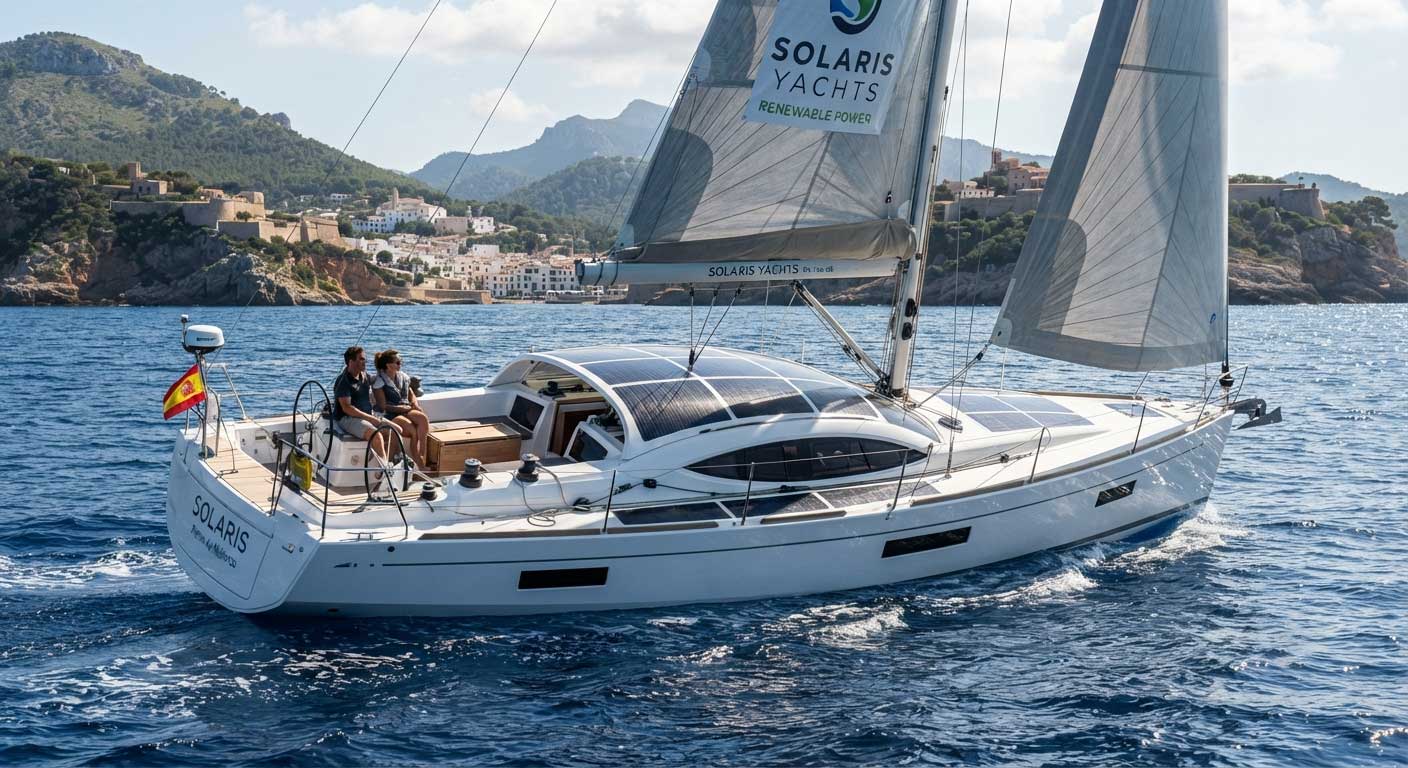
Case Study 2: Thin Film Flexible Solar Panel for Marine Applications
Project background
Another application involved a small coastal boat owner looking for independent battery charging.
The boat had limited flat deck space.
The owner needed power support for:
- navigation equipment
- communication devices
- battery maintenance
- emergency electronics
The installation location created several challenges:
- curved surfaces
- constant movement
- exposure to humidity
- saltwater environment
Installation experience
The installation team focused on details that are often overlooked.
Surface preparation
The deck surface was inspected carefully.
Marine environments are less forgiving than normal outdoor installations.
Small installation mistakes can become long-term problems.
Cable protection
The system used:
- sealed cable routes
- waterproof connectors
- corrosion-resistant components
Performance monitoring
The system was monitored during different weather conditions.
Typical observations:
| Condition | Performance |
|---|---|
| Sunny days | Strong energy production |
| Cloudy weather | Reduced but continuous generation |
| Long-term exposure | Required regular inspection |
Engineering Experience Behind Flexible Solar Solutions
Our practical understanding of flexible solar applications
At Bright Solar, we approach flexible solar panels from an application perspective.
The question we ask is not:
“Which panel has the highest number on the datasheet?”
The better question is:
“Which solar solution will continue performing after installation?”
Through working with different applications, we have identified several important factors.
1. Material selection matters
Flexible solar panels are exposed to outdoor conditions for years.
Important considerations include:
- protective surface materials
- resistance to moisture
- temperature stability
- mechanical durability
For example, a panel installed on an RV may experience:
- highway vibration
- direct sunlight
- temperature changes between day and night
A marine installation faces even harsher conditions.
2. Installation quality influences performance
A common misconception is that flexible solar panels are simple because they are lightweight.
In reality, installation quality directly affects:
- energy output
- lifespan
- reliability
Important installation steps include:
- Cleaning the surface properly
- Checking panel positioning
- Avoiding unnecessary shading
- Protecting electrical connections
- Testing system output after installation
3. System design is more important than panel selection alone
A complete solar system includes:
| Component | Function |
|---|---|
| Solar panel | Converts sunlight into electricity |
| Charge controller | Controls charging process |
| Battery | Stores energy |
| Inverter | Converts electrical output |
A high-quality panel connected to a poorly designed system will not deliver expected results.
Common Mistakes When Choosing Thin Film Flexible Solar Panels
Mistake 1: Choosing based only on price
The lowest price product may not always provide the best value.
Consider:
- material quality
- warranty support
- production experience
- application suitability
Mistake 2: Ignoring installation environment
A panel designed for portable use may not be suitable for permanent marine installation.
Before purchasing, consider:
- temperature range
- moisture exposure
- mechanical stress
- mounting method
Mistake 3: Overestimating solar output
Solar production depends on:
- geographic location
- sunlight hours
- installation angle
- weather conditions
The National Renewable Energy Laboratory (NREL) provides solar resource information showing that solar availability varies significantly by location.
Source:
https://www.nrel.gov/gis/solar-resource-maps.html
FAQ: Thin Film Flexible Solar Panel
What is a thin film flexible solar panel?
A thin film flexible solar panel is a lightweight photovoltaic module made using thin semiconductor layers deposited on flexible materials. It is designed for applications where traditional rigid panels may be difficult to install.
Are thin film flexible solar panels efficient?
Thin film efficiency depends on the technology used.
While some thin film technologies have lower efficiency compared with premium crystalline silicon panels, their advantages include flexibility, lightweight construction, and application adaptability.
Can thin film flexible solar panels be used on RVs?
Yes.
They are commonly considered for RV applications because they reduce weight and can fit curved roof designs.
They are suitable for:
- camper vans
- travel trailers
- mobile power systems
Are thin film flexible solar panels waterproof?
Many flexible solar panels are designed for outdoor environments, but waterproof performance depends on product construction, sealing methods, and installation quality.
Always check manufacturer specifications before installation.
How long do thin film flexible solar panels last?
The lifespan depends on:
- material quality
- environmental exposure
- installation method
- maintenance
Proper installation and protection can significantly improve long-term reliability.
Are thin film flexible solar panels better than rigid solar panels?
Neither technology is always better.
Thin film flexible solar panels are usually better for:
- curved surfaces
- lightweight applications
- mobile systems
Rigid panels are often preferred for:
- large rooftops
- permanent installations
- maximum efficiency requirements
Where are thin film flexible solar panels commonly used?</h3>
Common applications include:
- RV solar systems
- marine solar solutions
- portable energy systems
- off-grid equipment
- special architectural applications
Final Thoughts: Choosing the Right Thin Film Flexible Solar Panel
A thin film flexible solar panel is not simply a lighter version of a traditional solar module.
It represents a different approach to solar design.
For applications where weight, shape, and installation flexibility matter, thin film technology provides possibilities that conventional panels cannot easily achieve.
From RV projects to marine systems, Bright Solar’s experience shows that successful solar solutions begin with understanding the application first.
The best solar panel is not always the largest or the most powerful.
It is the one that fits the environment, performs reliably, and continues delivering value after installation.
Related recommendations
-

100 watt solar panel flexible: A Practical Guide for RV, Marine and Off-Grid Applications
193100 watt solar panel flexible solutions explained with real RV, marine, and off-grid applications, performance data, installation tips, and expert insights.
View details -
solar panel wiring guide (Field Installation Manual from Bright Solar)
166solar panel wiring guide explained with real installation steps, safety standards, wiring diagrams, and field-tested methods for off-grid and RV solar systems.
View details -
200W Flexible Solar Panels: Lightweight Off-Grid Power for RVs, Boats, and Van Life
165Explore how 200W flexible solar panels provide lightweight, reliable off-grid energy for RVs, boats, vans, and portable solar systems.
View details -
1000 Watt Solar Panel Kit: Complete Sizing and Setup Guide
273A 1000 watt solar panel kit provides about 1,000W of rated PV capacity, but actual energy production depends on sunlight, battery capacity, MPPT sizing, wiri...
View details