How a Simple 60W Flexible Solar Panel Solved Our Biggest Sailing Headache
I’ll be honest – when we bought “Aurora,” our 28-foot sailboat in Sardinia, the electrical system was a constant headache. The old battery would barely last through a night at anchor before the voltage alarm started beeping. After one too many anxious nights watching the power drain, we knew we needed a proper solar solution. That’s how Project Italy Marine 2015 began, and it all started with a single decision: choosing the Bright Solar 60W flexible solar panel as our workhorse.
The curved stern rail of our boat made traditional rigid panels impossible to mount properly. We actually tried a cheaper flexible panel first, but it started delaminating after just two months in the Mediterranean sun. When we switched to the Bright Solar 60W flexible solar panel, the difference was immediately apparent. The material felt more substantial, and the marine-grade sealant around the edges has held up perfectly against salt spray and UV exposure.
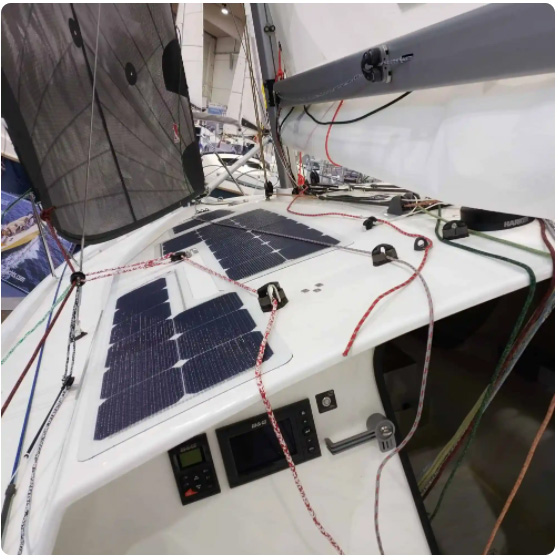
Here’s how we made it work: we mounted the 60W flexible solar panel on the stern rail using stainless steel straps with rubber padding – no drilling required. The smaller 35W panel found its home on the cabin top, secured with marine adhesive. This two-panel approach meant we could capture sunlight from different angles throughout the day. The installation took us most of a Saturday, mostly because we were being careful with the wiring and sealant application.
What surprised me most was how much power we actually gained from this modest setup. The 60W flexible solar panel consistently produces enough energy to keep our essential systems running – navigation lights, VHF radio, and the cabin lights. It’s not enough to power energy hogs like refrigeration, but it completely eliminated our battery anxiety during overnight trips.
During our summer cruise along the Costa Smeralda, we noticed something interesting. The 60W flexible solar panel would often continue producing useful power even when shadows from the sails fell across part of it. The smaller 35W panel picked up the slack during early morning and late afternoon hours. Together, they formed a reliable team that kept our battery consistently charged through two weeks of coastal hopping.
Three years later, both panels are still performing well. There’s some minor fading on the 35W unit’s surface, but the 60W flexible solar panel looks almost new. If I were to do it differently, I might spring for a second 60W panel instead of the 35W – the extra output would be welcome on cloudy days. But for anyone with a small to medium sailboat, this combination has proven to be a reliable and straightforward power solution that just works.
Still figuring out your boat’s power needs? The Bright Solar 60W flexible solar panel might be the simple solution you’re looking for.
Related recommendations
-

Customized Flexible Solar Panels for Special RV Roofs
119Client Needs: The client's RV roof installation was unique, requiring a perfectly compatible solar panel to meet the roof's usage requirements. Project Time: 2016Country: FranceClient Type: RV Flexible Solar Panel DistributorProduct: Custom Mono S...
View details -
Bright Solar Staff Party 2022
304Bright Solar Staff Party Everyone enjoy the moment in the party, smile in the face just like sunshine on the solar panel ! Happy work ,Happy life with Bright Solar !
View details -
When 1,200 Watts of Solar Power Transformed Our Catamaran
227Discover how Project France Marine 2016 utilized twelve 100W flexible solar panels from Bright Solar to create a robust 1.2kW marine power system for extended cruising.
View details -
Project Germany RV 2014: Engineering a High-Capacity Solar Roof for a German Motorhome
175See Project Germany RV 2014 in action. This case study details the custom 900W solar setup using Bright Solar 100W and 200W flexible panels for a German motorhome.
View details