Bifacial flexible solar panels for boat fences
In 2024, an off-grid solar brand in Germany asked us for a panel that could hang on yacht railings, come off in minutes and generate from both sides. The result: a 150 W bifacial mono flexible panel with a thin protective frame and a lanyard at each corner — no drilling, no adhesive, and nothing permanent left on the boat.
Customer Needs: The customer, a local market customer installing yacht solar panels, requires lightweight yet stable installations suitable for long-term use at sea. Ideally, the panels should be easily removable and installable from yacht railings, and be bifacial (generating electricity on both sides) and installable via lanyards.
Project Timeline: 2024
Country: Germany
Customer Type: Off-grid Solar Panel Brand
Product: Bifacial Mono Flexible Solar Panel
Power: 150W
Our Solution: Based on the customer’s needs and application scenario, we recommended using monocrystalline bifacial flexible solar panels. We designed a thin frame for the flexible panels, with a lanyard at each corner of the frame. This ensures both ultra-lightweight design and installation stability.
Highlights: The flexible solar panel with a thin frame design guarantees both lightweight construction and installation stability. The lanyard design ensures easy removal and installation.
Why a Thin Frame With Corner Lanyards
Most flexible panels are glued flat to a deck or coachroof. Railings are different: the panel hangs in the air, moves with the boat, and every edge is exposed to salt spray. A frame solves three problems at once. It stiffens the laminate so wind load never stresses the cells. It gives the four lanyards a reinforced anchor point, so removal never pulls on the cell area. And it shields the laminate edge — the part of a flexible panel most vulnerable to UV and salt water.
Because the panel is bifacial, light reflected from the water and deck also contributes to output. A railing mount is exactly the orientation where bifacial gain is easiest to capture: the rear side faces an open, reflective surface instead of a dark deck.
| Project | Yacht railing installation, Germany |
| Year | 2024 |
| Customer type | Off-grid solar panel brand |
| Product | Bifacial mono flexible solar panel |
| Power | 150 W |
| Mounting | Thin frame + lanyard at each corner, fully removable |
150W Bifacial Panel — Product Photos
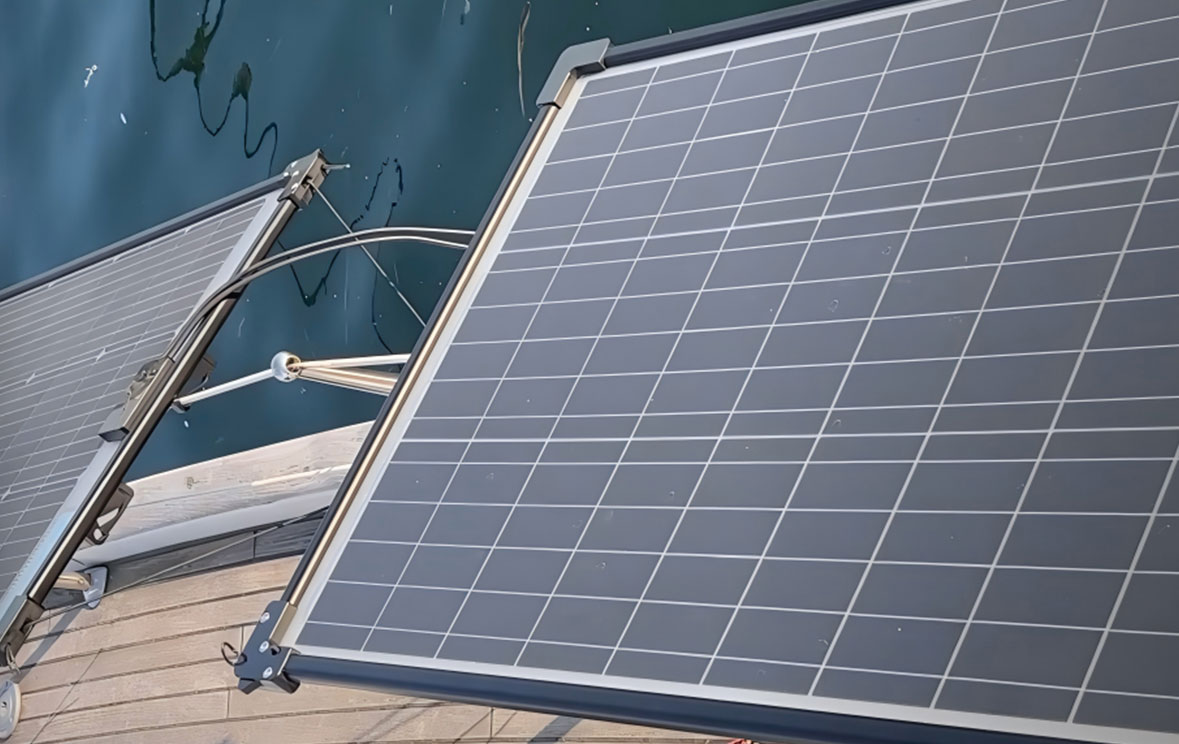
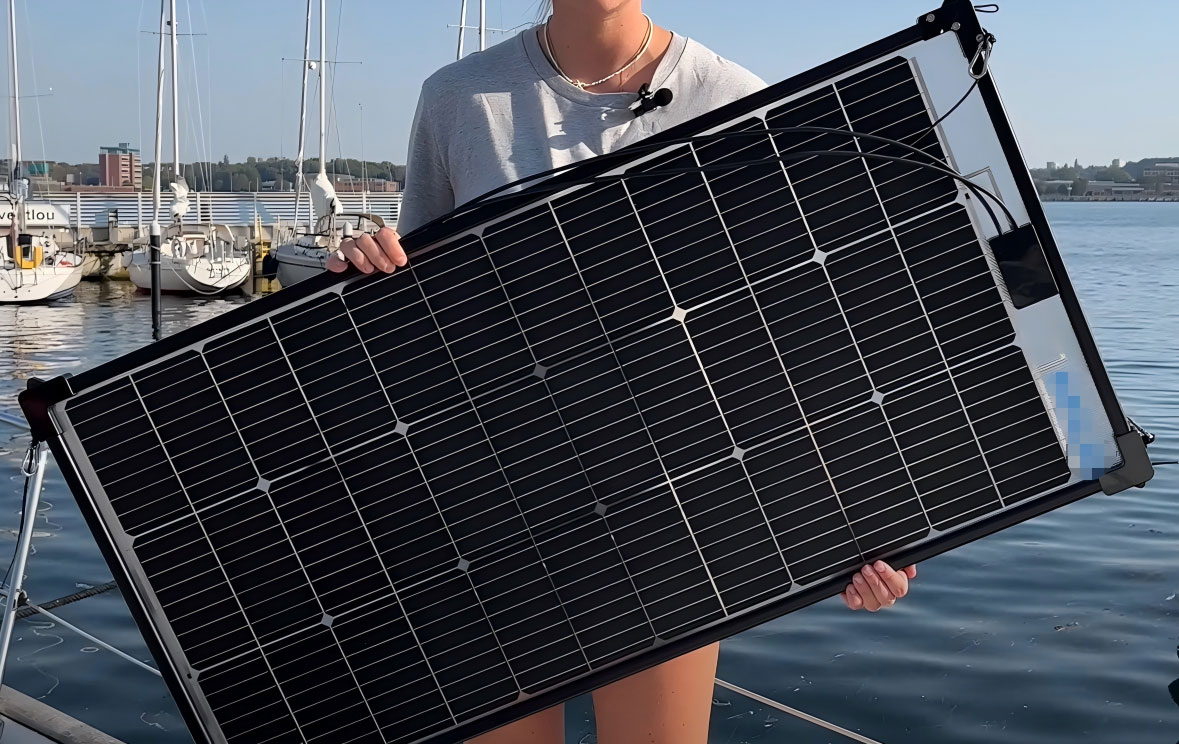
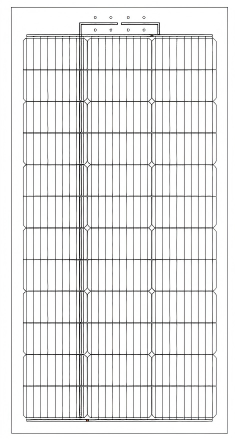
Design Drawing: Cell Layout and Frame
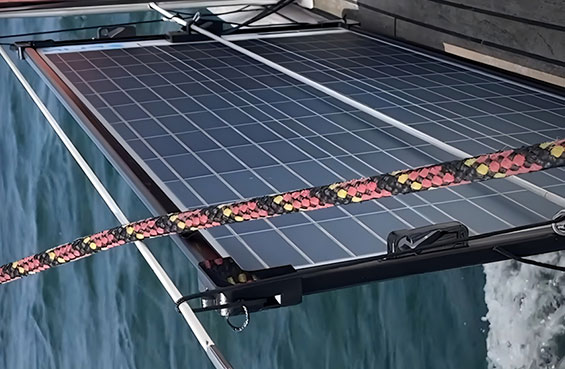
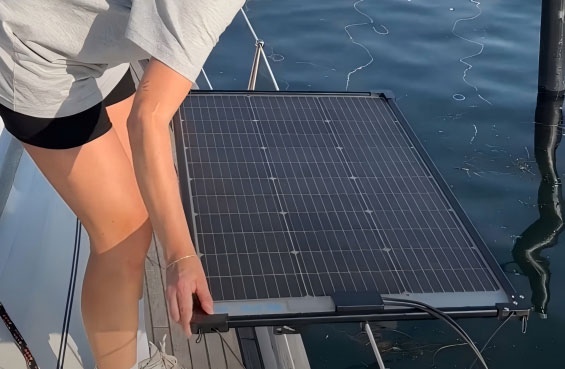
Installed on the Boat: Project Photos
Customer Feedback:

The photos above show the panel hanging on the customer’s rail; the email screenshot is shared with the customer’s permission. If your project needs removable, railing-mounted or dual-sided power, we can adapt the same frame-and-lanyard concept to your boat’s rail dimensions — see how we build custom flexible solar panels, or start from our complete guide to flexible solar panels for boats for sizing and mounting basics.
Can you hang flexible solar panels on boat railings?
Yes — if the panel is built for it. A thin frame gives the laminate the stiffness that a bare flexible panel lacks, and lanyards at the corners carry the load without stressing the cells. Glue-only panels are not suited to hanging mounts.
How much extra output does bifacial add on a boat?
It depends on what sits behind the panel. Over open water or a light-coloured deck the rear side captures real reflected light; over dark canvas the gain is small. That is why a railing mount, where the rear faces water, is the best marine use of bifacial cells.
Can the panel be removed for bad weather or marina rules?
Yes. That is the point of the lanyard design: the panel lifts off the rail in seconds and stows below — no adhesive to undo and no holes to re-seal.
Related recommendations
-

Glass Solar Panels for RVs
308Customer Needs: Are there solar panels that reduce wind resistance during RV operation?Project Time: 2024Country: AustraliaCustomer Type: Solar Panel Brand OwnerProduct: RV Solar PanelProduct Power: 100WOur Solution: Based on the customer's needs,...
View details -
What is EL Test and Why Bright Solar Uses It on Every Panel
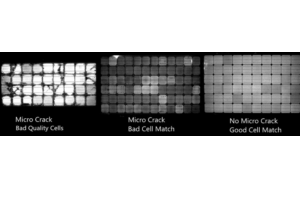
487What is EL Test and why does it matter for solar panels? Bright Solar uses 100% EL testing to detect micro-cracks, hidden defects and efficiency loss in every module, ensuring stable performance for homes, businesses, RVs and marine systems.
View details -
Off-Grid Solar Panels from Bright Solar – Power Where the Grid Stops
499Off-Grid Solar Panels from Bright Solar provide clean, reliable power for homes, RVs, boats and remote sites, helping reduce fossil fuel dependence while cutting energy costs and supporting a more sustainable future.
View details -
what is bifacial solar panel – Bright Solar explains in simple terms
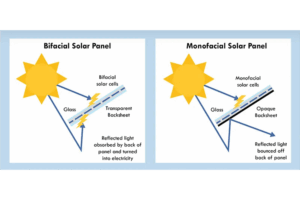
762what is bifacial solar panel and why does it generate more power than conventional modules? Bright Solar explains how bifacial design, installation angle and reflective surfaces boost energy yield for utility and commercial projects.
View details