Flexible Portable Solar Panels for Reliable Mobile Solar Power
Flexible portable solar panels provide lightweight, convenient solar energy solutions for outdoor, RV, marine, and off-grid applications. Bright Solar designs portable solar systems that combine flexibility, durability, and efficient power generation where traditional panels are difficult to install.
Portable solar power has changed significantly in recent years.
Ten years ago, most portable solar solutions were heavy, rigid, and inconvenient to transport.
Today, users expect something different.
A camper wants a solar panel that fits inside a vehicle storage compartment.
A boat owner wants a lightweight energy source without adding unnecessary weight.
An emergency preparedness user wants a reliable power solution that can be deployed within minutes.
This is where flexible portable solar panels become valuable.
Unlike traditional rigid modules, flexible portable panels are designed around mobility.
They focus on:
- lightweight transportation
- simple deployment
- adaptable installation
- efficient charging performance
- space-saving storage
At Bright Solar, we have worked with customers using portable solar solutions in different environments, including RV travel, outdoor camping, marine applications, and remote power systems.
Through these projects, one thing became clear:
The best portable solar panel is not always the largest one.
It is the one users can actually carry, install, and rely on when power is needed.
What Are Flexible Portable Solar Panels?
Flexible portable solar panels are photovoltaic modules designed with lightweight materials that allow easier transportation and installation compared with conventional rigid solar panels.
Traditional solar modules normally rely on:
- thick glass layers
- aluminum frames
- fixed mounting structures
These designs work well for houses and commercial buildings.
However, they are not always practical for mobile applications.
Flexible portable solar panels usually use:
| Component | Purpose |
|---|---|
| Flexible substrate | Allows bending and easier transportation |
| Solar cells | Convert sunlight into electricity |
| Protective coating | Provides outdoor protection |
| Lightweight structure | Reduces carrying weight |
| Portable connectors | Simplifies system setup |
The result is a solar product better suited for situations where mobility matters.
Why Choose Flexible Portable Solar Panels Instead of Traditional Panels?
The difference becomes obvious when looking at real-world usage.
Imagine two users preparing for a camping trip.
One carries a traditional rigid solar panel.
The other carries a flexible portable solar panel.
The first user needs:
- more storage space
- stronger mounting support
- careful transportation
The second user can:
- roll or fold the panel depending on design
- place it on different surfaces
- quickly move it when sunlight changes
This difference is especially important for:
- RV owners
- campers
- hikers
- boat owners
- emergency users
Key Advantages of Flexible Portable Solar Panels
1. Lightweight Design for Outdoor Mobility
Weight is one of the biggest considerations for portable energy systems.
Every additional kilogram matters when traveling.
For RV owners, reducing unnecessary roof and storage weight improves:
- fuel efficiency
- available storage
- installation flexibility
For backpacking and camping users, portability directly affects usability.
A solar panel that stays at home because it is too heavy provides zero energy.
2. Easy Installation Without Complex Mounting
Many portable solar applications do not have permanent mounting structures.
Users may install panels on:
- RV roofs
- camping tables
- boat surfaces
- temporary outdoor locations
Flexible designs allow users to adapt the panel position according to sunlight conditions.
3. Suitable for Limited Space Applications
Space is often the biggest challenge in mobile applications.
A camper van roof may have:
- air conditioners
- vents
- antennas
- storage equipment
Flexible portable solar panels can utilize areas where rigid panels cannot easily fit.
Common Applications of Flexible Portable Solar Panels
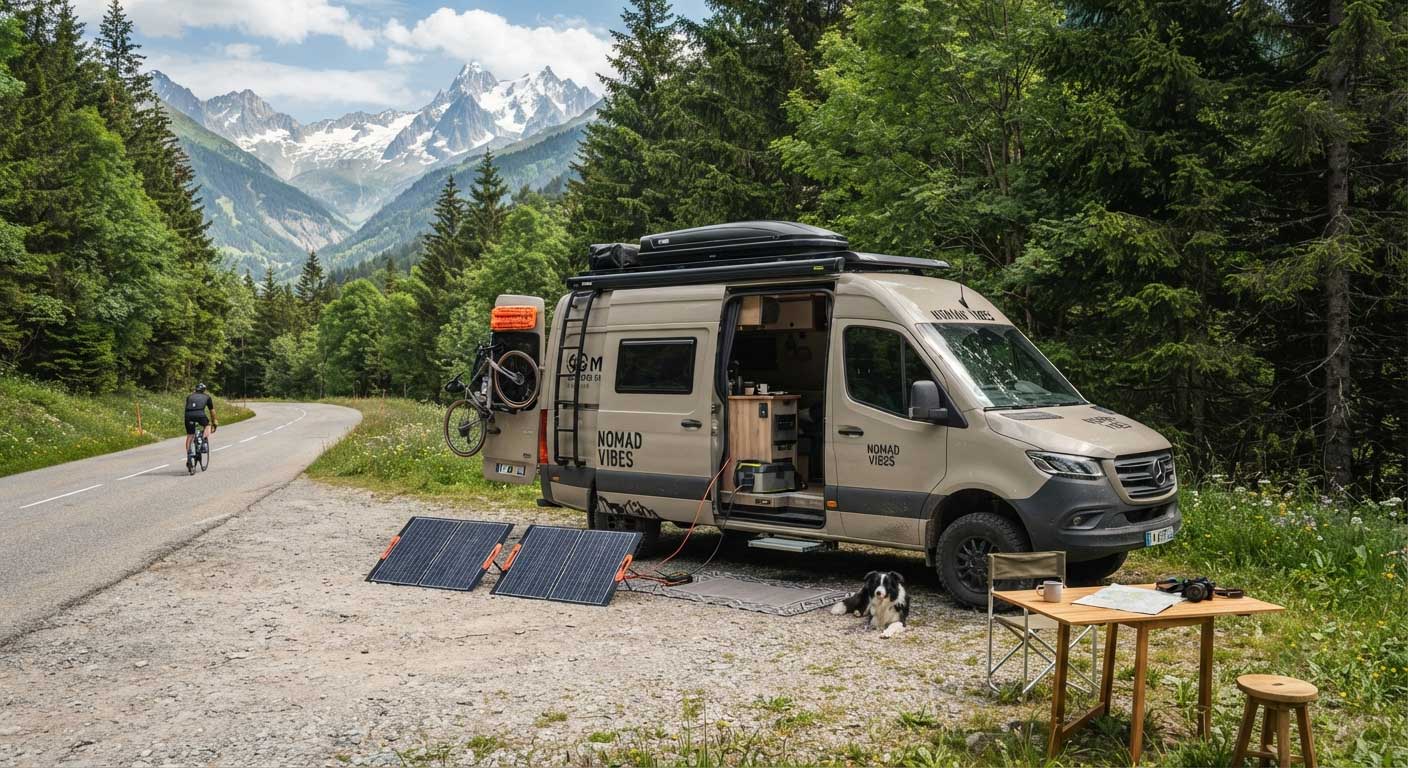
RV and Camper Solar Systems
RV travelers are one of the largest user groups for portable solar technology.
A typical RV solar setup may support:
- battery charging
- lighting systems
- mobile devices
- small appliances
The National Renewable Energy Laboratory (NREL) highlights that photovoltaic system performance depends on module characteristics, installation conditions, and environmental factors.
Source:
https://www.nrel.gov/pv/
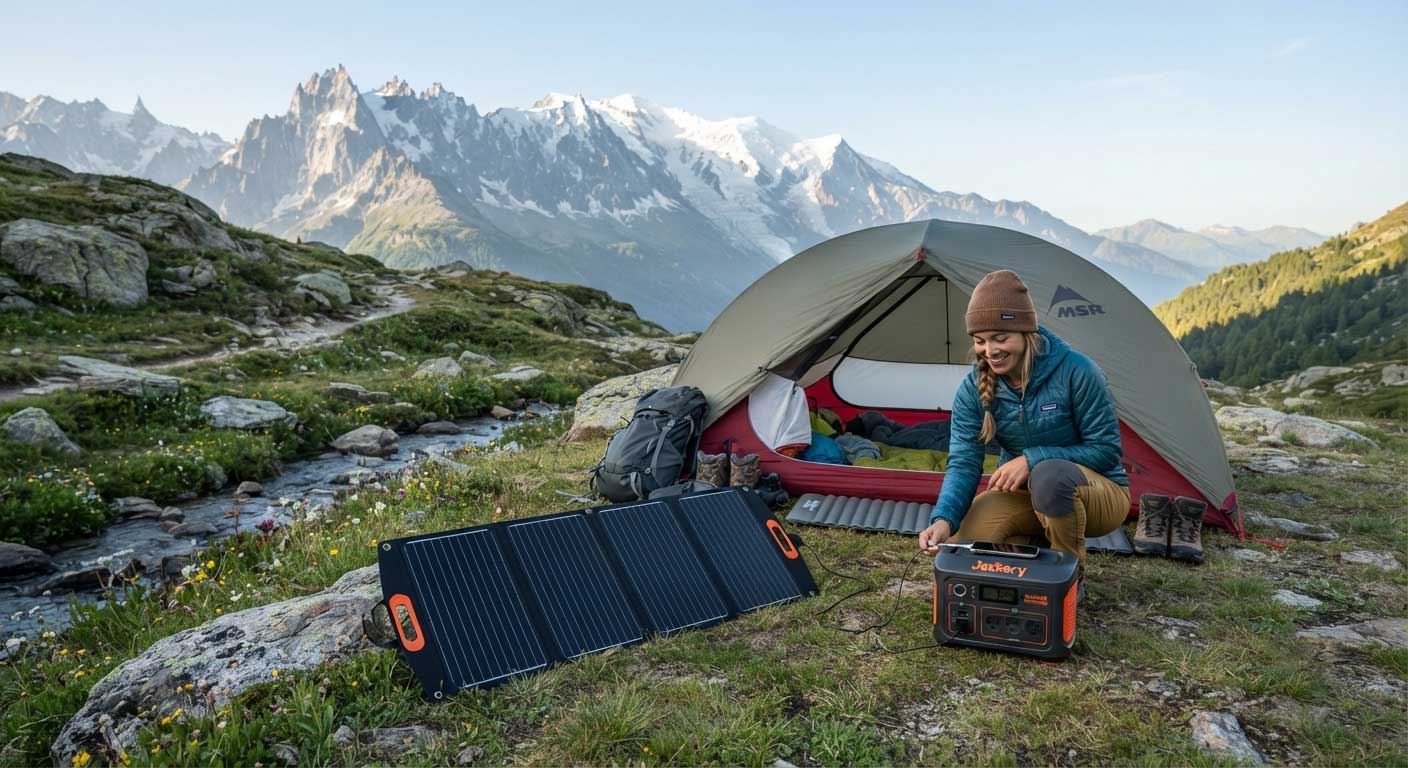
Camping and Outdoor Adventures
For outdoor users, energy independence is becoming increasingly important.
Common applications include:
- charging phones
- powering GPS devices
- running portable refrigerators
- maintaining battery banks
A flexible portable solar panel can be deployed without requiring permanent infrastructure.
Marine Applications
Boats often have limited available space.
Rigid panels may not fit curved surfaces or lightweight designs.
Flexible portable solar panels provide an alternative for:
- sailboats
- fishing boats
- small yachts
- marine emergency systems
How to Select the Right Flexible Portable Solar Panels
Choosing a portable solar panel requires more than checking wattage.
Many buyers only compare:
“100W or 200W?”
However, practical performance depends on several factors.
| Selection Factor | What to Check |
|---|---|
| Power output | Match energy needs |
| Weight | Important for transportation |
| Surface protection | Affects outdoor durability |
| Connector type | Ensures system compatibility |
| Foldability/Flexibility | Determines portability |
| Manufacturer experience | Indicates product reliability |
Power Requirement Calculation Example
Suppose a camper needs:
- smartphone charging: 15Wh/day
- LED lighting: 40Wh/day
- small fan: 80Wh/day
Total:
135Wh/day
Considering charging losses and weather variations, the user may need a higher capacity system.
A 100W–200W flexible portable solar panel system is often considered for small mobile applications depending on sunlight conditions and battery storage.
The exact requirement depends on:
- location
- season
- usage habits
- battery capacity
Real-World Experience: Flexible Portable Solar Panels in Practical Applications
Specifications can explain how a solar panel is designed.
Real usage shows whether the product actually solves problems.
During our experience developing and supplying flexible solar solutions at Bright Solar, we have seen many different customer requirements.
Some customers focus on weight.
Some focus on durability.
Others care most about installation speed.
The common point is simple:
Portable solar products must perform outside controlled environments.
A panel sitting in a warehouse does not create value.
A panel being used on a mountain campsite, RV roof, or remote work location does.
Case Study 1: RV Traveler Needing Lightweight Solar Power
One of our customers from California, USA, operated a Class B camper van for long-distance travel.
The owner originally installed traditional rigid solar panels but encountered several issues:
- limited roof space
- increased vehicle weight
- difficult installation around roof equipment
- complicated maintenance during travel
The camper was used across different regions, including California, Nevada, and Arizona.
The traveling conditions included:
| Condition | Real Situation |
|---|---|
| Summer temperature | Above 38°C (100°F) |
| Driving distance | More than 10,000 miles per year |
| Outdoor exposure | Continuous sunlight and dust |
| Energy needs | Lighting, communication devices, battery charging |
The customer selected a flexible portable solar solution because the priority was not maximum panel size.
The priority was:
“Having reliable power without changing the way the vehicle is used.”
After installation, the owner reported that the lightweight design made setup and adjustment easier during different travel conditions.
This case showed an important lesson:
For mobile users, convenience often determines whether a solar system is used consistently.
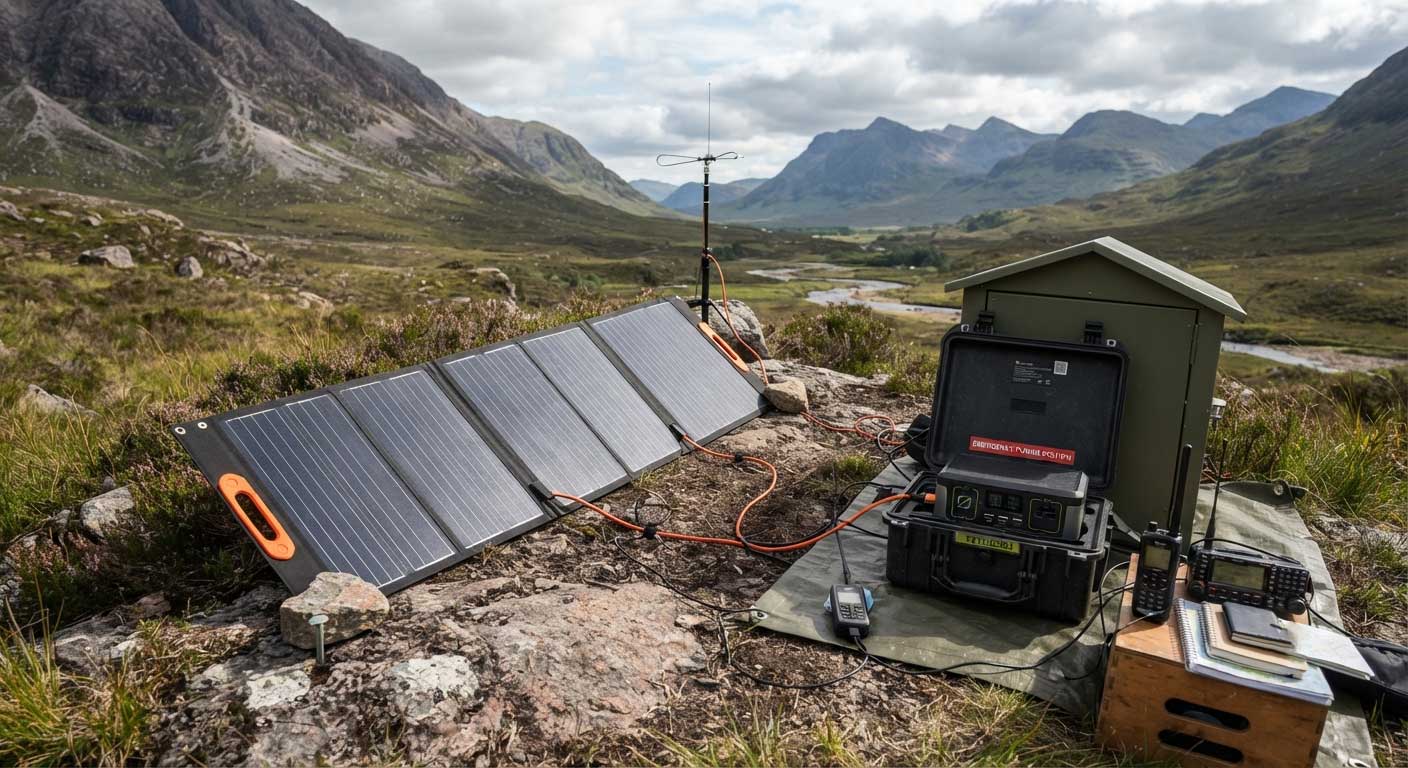
Case Study 2: Emergency Backup and Off-Grid Power
Another application came from an outdoor equipment supplier in Europe.
Their customers needed portable energy solutions for:
- emergency situations
- remote communication equipment
- temporary outdoor operations
The challenge was transportation.
Traditional solar modules were difficult to move because of:
- weight
- fragile glass surfaces
- storage requirements
Flexible portable solar panels provided advantages:
| Requirement | Flexible Solar Solution |
|---|---|
| Transportation | Easier handling |
| Storage | Less space required |
| Deployment | Faster setup |
| Application | Temporary power systems |
In emergency situations, setup time matters.
A product that can be carried easily and deployed quickly becomes much more valuable.
Bright Solar Product Development Experience
At Bright Solar, our understanding of flexible solar panels comes from working directly with product design, manufacturing, and customer applications.
Our team evaluates flexible solar products from several perspectives:
Not only:
“How much power can this panel produce?”
But also:
“How will customers actually use it?”
During product development, we pay attention to details including:
Material Selection
The outer surface must balance:
- flexibility
- protection
- weather resistance
- long-term outdoor performance
A portable solar panel may be exposed to:
- sunlight
- rain
- dust
- temperature changes
- frequent handling
Application Testing
Different markets require different priorities.
For example:
| Market | Main Requirement |
|---|---|
| RV | Lightweight and easy installation |
| Camping | Portable storage and quick setup |
| Marine | Moisture resistance |
| Off-grid | Reliability and low maintenance |
A camping user and a marine user may both need portable solar power, but their operating environments are completely different.
This is why application experience matters.
Maintenance Tips for Flexible Portable Solar Panels
Although flexible solar panels are designed for outdoor use, proper maintenance helps extend service life.
1. Keep the Surface Clean
Dust and dirt can reduce sunlight exposure.
Recommended practices:
- clean the surface with water and a soft cloth
- avoid aggressive cleaning chemicals
- remove heavy dirt buildup after outdoor trips
2. Check Connections Regularly
Portable systems are frequently moved.
Inspect:
- cables
- connectors
- junction boxes
- charging controllers
Small connection issues can affect overall system performance.
3. Store Properly When Not Used
When storing portable panels:
- avoid sharp bends
- protect connectors
- keep away from extreme heat sources
Proper storage helps maintain long-term reliability.
FAQ About Flexible Portable Solar Panels
What are flexible portable solar panels used for?
Flexible portable solar panels are commonly used for RV travel, camping, marine applications, emergency backup power, and off-grid energy systems where lightweight and easy transportation are important.
Are flexible portable solar panels powerful enough for RVs?
Yes. The suitable power level depends on energy requirements. Many RV users choose 100W, 200W, or higher-output flexible portable solar systems depending on battery capacity and daily electricity consumption.
How durable are flexible portable solar panels?
Durability depends on construction quality, protective materials, manufacturing processes, and usage conditions. High-quality flexible panels are designed for outdoor environments and mobile applications.
Can flexible portable solar panels work in cloudy weather?
Yes, they can still generate electricity under cloudy conditions, although output will usually decrease because sunlight intensity is lower.
Are flexible portable solar panels waterproof?
Many outdoor flexible solar panels are designed with weather-resistant protection, but users should check the specific product specifications before installation in wet environments.
How long do flexible portable solar panels last?
The service life depends on materials, environmental exposure, and maintenance. Proper installation and care can help maximize operational years.
Can I install flexible portable solar panels myself?
Many portable solar systems are designed for simple installation. However, users should follow manufacturer instructions, especially when connecting batteries, controllers, or electrical systems.
Final Thoughts: Choosing Flexible Portable Solar Panels for Mobile Energy
Flexible portable solar panels represent a different approach to solar power.
They are not designed to replace every traditional solar installation.
Instead, they solve problems where mobility, weight, and installation flexibility matter.
For RV owners traveling across different climates, campers exploring remote locations, and users preparing backup energy systems, portability becomes just as important as power output.
Bright Solar believes successful solar solutions begin with understanding real customer situations.
A portable solar panel should not become another piece of equipment that is difficult to carry or complicated to use.
It should be simple:
Carry it.
Deploy it.
Generate clean energy wherever sunlight is available.
That is the practical value of flexible portable solar technology.
Related recommendations
-

Flexible Adhesive Solar Panels: Uses, Mounting and Buying Guide
66Flexible adhesive solar panels suit selected low-profile installations when the panel, adhesive, and mounting surface are compatible.
View details -
Flexible Solar Panel Installation for RVs, Boats, and Off-Grid Systems
113Learn flexible solar panel installation for RVs, boats, vans, and off-grid systems. Discover lightweight mounting methods and real-world tips.
View details -
100w 12v Flexible Solar Panel: Output, Wiring and Installation Guide
250Learn how a 100w 12v flexible solar panel works, its output, battery sizing, wiring, installation, RV uses, and key selection factors for mobile power.
View details -
100w Flexible Solar Panel Kit: Lightweight Portable Solar Power Solution
145Explore the 100w flexible solar panel kit from Bright Solar. Learn how lightweight solar technology delivers reliable off-grid power for RVs, boats, camping, and portable energy applications.
View details