How to attach solar panels to rv roof?
How to attach solar panels to rv roof?
Attaching solar panels to an RV roof requires choosing the right mounting method, preparing the roof surface, and securing panels against wind, vibration, and weather exposure. A proper installation improves energy reliability while protecting the RV roof structure.
Installing solar panels on an RV is not only about sticking a panel on the roof and connecting wires. During my years working with flexible solar solutions at Bright Solar, I have seen many RV owners focus on panel wattage but overlook the mounting process. A poorly attached panel can create leaks, reduce airflow, or fail after thousands of miles on highways.
The best mounting method depends on the RV roof material, panel type, and travel conditions. Flexible solar panels are often preferred for curved RV roofs because they reduce weight and sit closer to the surface, while rigid panels usually require brackets and additional hardware.
According to the U.S. Department of Energy, solar photovoltaic systems work most efficiently when modules receive maximum sunlight exposure and maintain proper installation conditions. Roof placement, shading, and system design directly influence real-world energy production.
(Source: https://www.energy.gov/)
Choosing the Right Method to Attach Solar Panels to an RV Roof
Before mounting anything, inspect the RV roof carefully. Different materials require different attachment strategies.
Common RV roof types include:
| RV Roof Material | Recommended Mounting Method | Notes |
|---|---|---|
| Fiberglass | Adhesive mounting or brackets | Smooth surface, good bonding ability |
| Aluminum | Brackets with sealing protection | Requires corrosion prevention |
| Rubber membrane (EPDM/TPO) | Adhesive or specialized mounts | Avoid damaging waterproof layers |
| Curved roofs | Flexible solar panels | Better surface contact |
For many camper owners, flexible solar panels are easier to install because they are lightweight and can follow curved surfaces. Bright Solar flexible panels use ETFE surface coating, which improves durability against UV exposure, scratches, and outdoor conditions.
When I inspected RV solar installations in the field, one common mistake was applying adhesive without cleaning the roof properly. Dust, oxidation, and old sealant residue can reduce bonding strength significantly.
A simple preparation process usually includes:
- Washing the roof with mild detergent
- Removing grease and dust
- Drying the mounting area completely
- Checking for existing cracks or damaged sealant
- Planning cable routing before installation
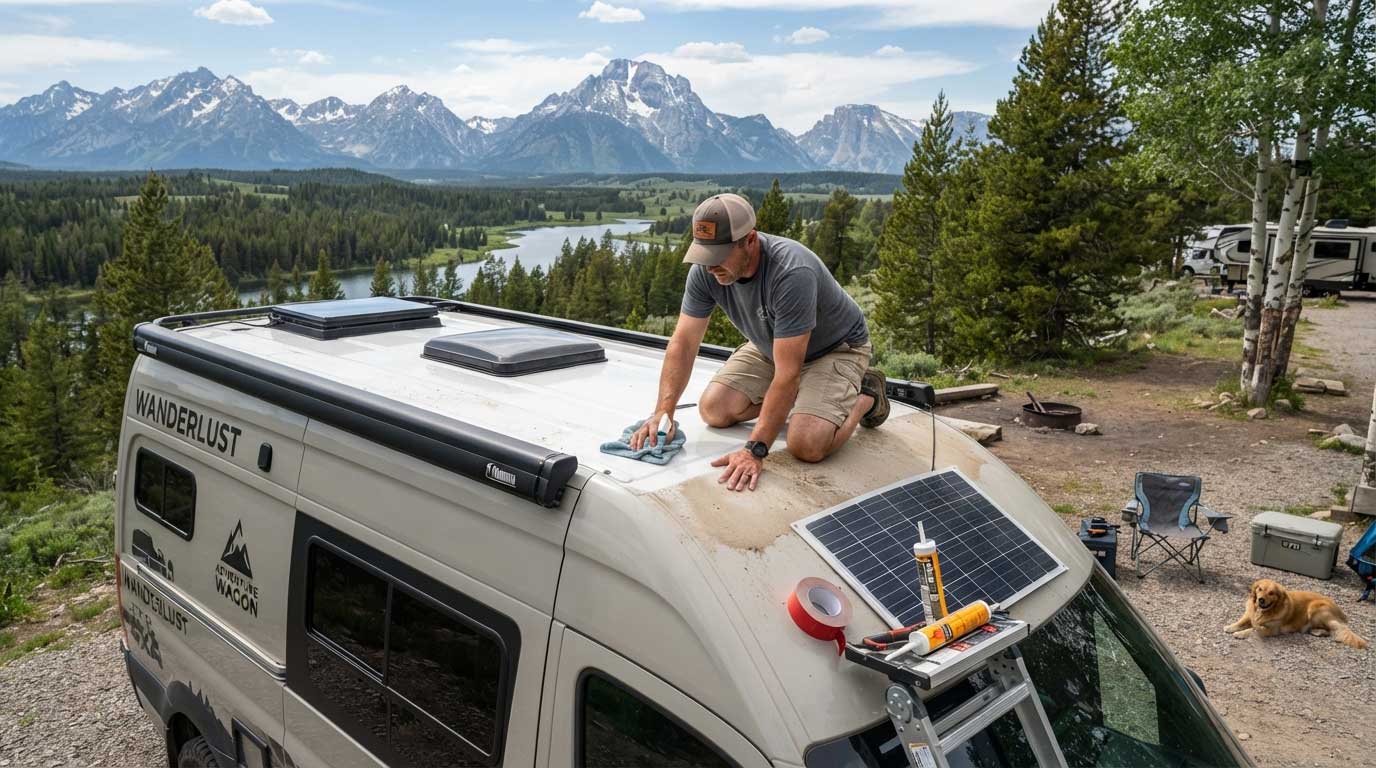
How to Mount Flexible Solar Panels on an RV Roof
Flexible solar panels have become popular among RV travelers because they solve several installation challenges.
Unlike traditional glass panels, flexible panels:
- Weigh significantly less
- Fit curved roof designs
- Create lower wind resistance
- Require fewer structural modifications
For adhesive installation, the panel is normally attached directly to the cleaned roof surface using high-quality outdoor adhesive. However, the adhesive must be compatible with both the panel backing material and the RV roof coating.
A mistake I often see is using household glue or unsuitable sealants. RV roofs experience temperature changes, vibration, and constant outdoor exposure. Materials that work indoors may fail quickly under highway conditions.
For long-distance travelers, a hybrid approach can also work well:
- Use adhesive for surface contact.
- Add mechanical protection where necessary.
- Seal cable entry points carefully.
- Test the system before finalizing installation.
The National Renewable Energy Laboratory (NREL) highlights that photovoltaic system performance depends not only on solar module quality but also on installation factors such as orientation, environmental exposure, and system reliability.
(Source: https://www.nrel.gov/)
Preparing the RV Roof Before Installation
Preparation determines whether an RV solar installation lasts for years or requires repairs after one season.
Before attaching solar panels:
1. Check roof condition
Do not install panels over damaged areas. Existing cracks or weak sealant should be repaired first.
2. Measure available space
Many RV owners underestimate roof obstacles, including:
- Air conditioners
- Roof vents
- Antennas
- Skylights
A 200W or 300W flexible solar panel may physically fit, but shading from roof equipment can reduce actual output.
3. Plan cable routes
The shortest cable route is not always the best choice. Avoid areas where water can collect, and always protect cable entry points with proper waterproof fittings.
Common Mistakes When Attaching Solar Panels to RV Roof
Even experienced RV owners can make installation mistakes. The most common issues include:
| Mistake | Possible Result |
|---|---|
| Installing on dirty surfaces | Weak bonding |
| Blocking roof vents | Reduced airflow and maintenance problems |
| Ignoring waterproof sealing | Possible roof leaks |
| Choosing incorrect adhesive | Panel detachment |
| Poor cable protection | Electrical damage |
A solar panel installation should survive not only sunlight but also highway vibration, rainstorms, temperature changes, and repeated travel cycles.
At Bright Solar, we recommend evaluating the complete environment before choosing a mounting method. The “strongest” attachment is not always the best solution; the correct solution balances security, roof protection, and future maintenance.
How to Keep Solar Panels Secure After Installing on an RV Roof
Knowing how to attach solar panels to rv roof is only the first step. Long-term reliability depends on regular inspection and maintenance, especially for RVs that travel through different climates.
An RV roof experiences conditions that a residential rooftop usually does not. A camper driving at highway speeds can face strong wind pressure, road vibration, dust, and sudden temperature changes. These factors slowly test every connection point.
During product evaluations with flexible solar applications, I noticed that installations in coastal areas required more attention than those in dry regions. Salt air can affect metal components, while frequent temperature swings can stress adhesive layers.
A practical maintenance schedule includes:
| Inspection Item | Recommended Frequency | What to Check |
|---|---|---|
| Panel surface | Every trip | Dirt, cracks, scratches |
| Adhesive edges | Every 3–6 months | Lifting corners or gaps |
| Cable entry points | Every 6 months | Water sealing condition |
| Electrical connections | Twice per year | Loose connectors or corrosion |
A few minutes of inspection can prevent expensive roof repairs later.
Flexible Solar Panels vs Rigid Solar Panels for RV Roof Installation
Many RV owners ask whether flexible or rigid panels are better for mounting. The answer depends on how the RV is used.
Flexible Solar Panels
Flexible panels are ideal for:
- Curved RV roofs
- Lightweight camper builds
- Off-grid travel
- Low-profile installations
Advantages:
- Lower weight
- Easier installation
- Better aerodynamic performance
- No large mounting brackets required
However, flexible panels generally require careful surface preparation because the adhesive layer becomes the primary attachment method.
Rigid Solar Panels
Rigid panels are commonly used on:
- Large motorhomes
- Flat RV roofs
- Permanent installations
Advantages:
- Strong mechanical protection
- Excellent ventilation underneath
- Easier replacement
The National Renewable Energy Laboratory (NREL) notes that photovoltaic performance depends on installation design, temperature conditions, shading, and system configuration rather than panel rating alone.
(Source: https://www.nrel.gov/)
For many modern camper conversions, a lightweight flexible solar solution provides a practical balance between power generation and installation simplicity.
Best Way to Mount Solar Panels on RV Roof Without Drilling
Many RV owners prefer avoiding roof drilling because every penetration creates another potential waterproofing point.
A no-drill installation usually involves:
- Cleaning and preparing the roof surface.
- Applying compatible outdoor adhesive.
- Securing the panel edges if required.
- Routing cables through existing access points.
- Sealing all openings carefully.
This approach is especially popular with flexible solar panels.
However, “no drilling” does not mean “no preparation.” The roof surface must provide enough bonding strength. Installing directly over dirt, old wax, or damaged sealant is one of the fastest ways to create future problems.
A useful field test is checking the adhesive area after the first few trips. If corners remain firmly attached after highway driving and temperature changes, the installation is usually performing well.
How Many Solar Panels Can Be Mounted on an RV Roof?
The number of panels depends on available roof space, electricity demand, and travel habits.
Typical RV solar setups include:
| RV Type | Common Solar Capacity | Typical Panel Setup |
|---|---|---|
| Small camper van | 100W–300W | 1–2 flexible panels |
| Travel trailer | 300W–600W | 2–4 panels |
| Large motorhome | 600W–1200W+ | Multiple panels |
The right system should match actual energy usage.
For example:
- LED lights consume relatively little power.
- Refrigerators require more consistent energy.
- Air conditioners usually need much larger systems and battery storage.
Many first-time RV solar buyers focus only on panel wattage. In practice, battery capacity, inverter size, and daily energy consumption are equally important.
FAQ About How to attach solar panels to rv roof?
Can I attach solar panels directly to an RV roof?
Yes. Flexible solar panels can often be attached directly to an RV roof using compatible outdoor adhesive. The roof must be clean, dry, and structurally sound before installation.
Do flexible solar panels damage RV roofs?
Properly installed flexible solar panels should not damage an RV roof. Problems usually occur when installers use unsuitable adhesives, block drainage areas, or ignore waterproofing requirements.
Is drilling holes necessary to install RV solar panels?
No. Many flexible RV solar installations use adhesive mounting methods without drilling. However, cable routing and waterproof protection still require careful planning.
How long do RV solar panel mounts last?
A quality installation can last many years when the correct adhesive, sealing materials, and maintenance procedures are used. Environmental exposure and travel frequency affect lifespan.
What is the best adhesive for RV solar panels?
The best adhesive depends on the solar panel backing material and RV roof surface. Outdoor-rated products designed for automotive or marine applications are generally preferred over household adhesives.
Can flexible solar panels be removed from an RV roof?
Yes, but removal requires care to avoid damaging the roof membrane. Planning the installation properly helps make future replacement easier.
How to attach flexible solar panel to RV roof?
To attach a flexible solar panel to an RV roof, clean the roof thoroughly, position the panel with airflow clearance, secure it using industrial adhesive or VHB tape, seal cable entry points with waterproof sealant, and connect the panel to a charge controller before testing system output.Learn more about “How to attach flexible solar panel to RV roof“
Final Thoughts: Choosing the Right Way to Attach Solar Panels to RV Roof
Learning how to attach solar panels to rv roof is not just about mounting hardware. A successful RV solar installation combines the right panel type, correct preparation, reliable sealing, and regular inspection.
From my experience working with solar applications, the installations that perform best are not always the most complicated ones. They are the ones designed around real travel conditions — highway vibration, changing weather, limited roof space, and everyday energy needs.
For RV owners looking for a lightweight and practical solution, flexible solar panels from Bright Solar provide an efficient option for creating reliable off-grid power while keeping installation simple.
The prev: How To Mount Solar Panels On RV Roof?The next: How much are residential solar panels?
Related recommendations
-

Can You Put Solar Panels on a Mobile Home?
105Yes. Solar panels can be installed on a mobile home if the structure, mounting method, electrical system, and applicable requirements support the installation.
View details -
How Do You Install Solar Panels?
58Solar panels are installed by assessing the site, planning the array, mounting the modules, connecting wiring and system equipment, then completing testing, ...
View details -
how to hook up solar panels?
194Learn how to hook up solar panels safely for home solar systems. Compare series and parallel wiring, inverter connections, voltage limits, and installation basics.
View details -
How Much Solar System Cost for Home?
155How much solar system cost for home? Learn real 2026 residential solar prices, system size costs, installation factors, and expert insights from Bright Solar.
View details