Mounting Solar Panels on RV: Real-World Installation Guide for Reliable Off-Grid Power
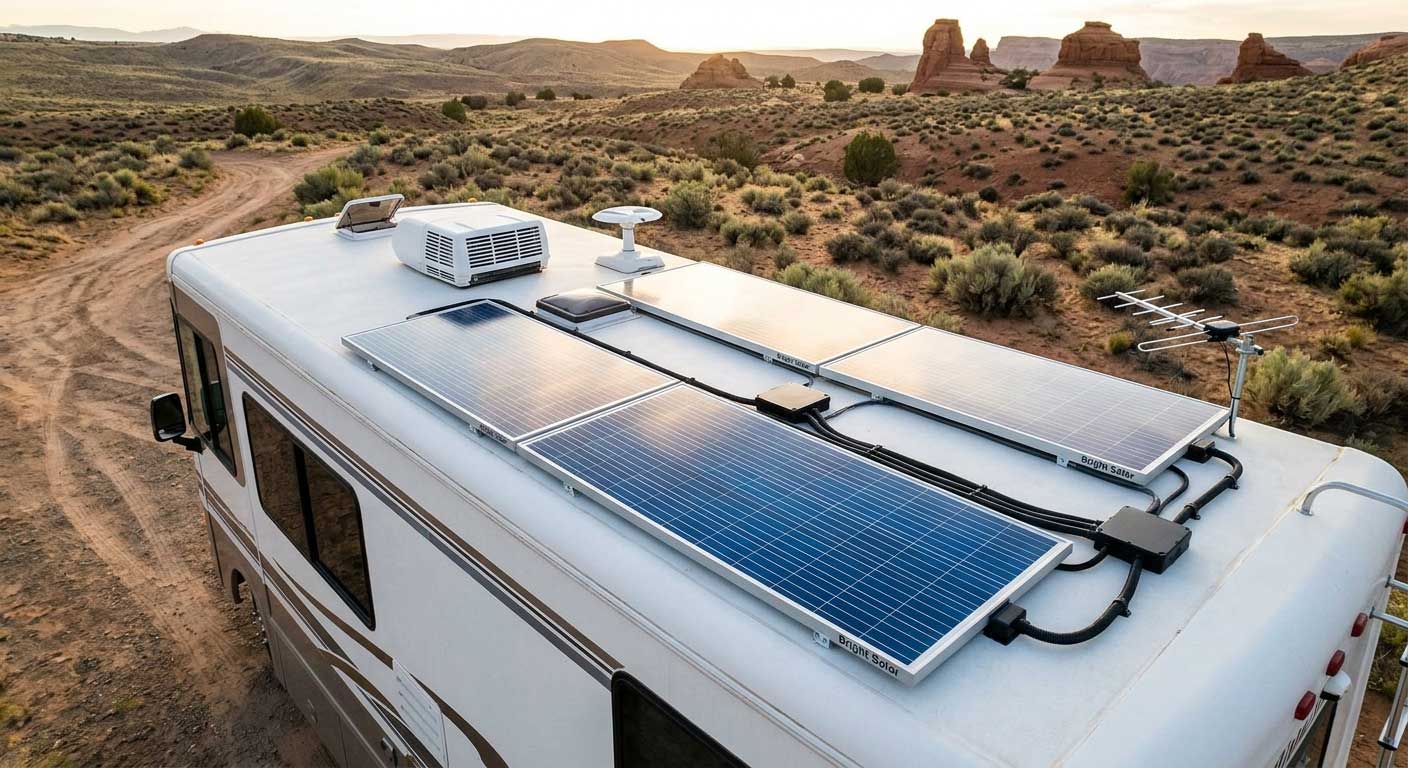
Mounting solar panels on RV roofs allows travelers to generate reliable off-grid electricity while reducing generator use and campground dependence. Proper mounting improves panel lifespan, charging efficiency, roof safety, and long-term system stability during highway travel and harsh outdoor conditions.
The first RV solar installation I ever inspected after a highway failure was sitting beside Interstate 40 in New Mexico.
One solar panel had partially lifted from the roof.
Not completely detached — which honestly surprised me.
But the mounting brackets had started pulling away from the fiberglass after several months of heat cycles, crosswinds, and road vibration. The owner had used generic hardware-store adhesive instead of proper RV-rated sealant and mounting hardware.
At 70 mph, the roof becomes a very unforgiving place.
People often focus on panel wattage:
- 200W
- 400W
- 800W systems
But after years around RV solar setups, I’ve noticed something else:
Poor mounting destroys systems long before solar cells fail.
A properly mounted solar system quietly survives:
- Desert heat
- Coastal humidity
- Thunderstorms
- Highway vibration
- Years of thermal expansion
A poorly mounted one eventually announces itself.
Usually with loose brackets, water leaks, or roof damage.
Why Mounting Solar Panels on RV Roofs Is Different from Residential Solar
Stationary home solar systems deal mostly with weather.
RV solar systems deal with movement.
Constant movement.
That changes everything.
An RV roof experiences:
- High-speed airflow
- Road vibration
- Twisting chassis movement
- Sudden temperature swings
- Tree branch impacts
- UV exposure
According to the National Renewable Energy Laboratory (NREL), temperature fluctuations and environmental stress significantly affect long-term solar installation durability.
Source: National Renewable Energy Laboratory
https://www.nrel.gov
Residential mounting systems are not automatically suitable for mobile applications.
And that mistake still happens surprisingly often in DIY builds.
Choosing the Right Solar Panels for RV Mounting
Not every solar panel belongs on an RV roof.
Weight matters.
Flexibility matters.
Wind resistance matters.
Rigid Solar Panels
Rigid panels remain the most common RV option.
Advantages:
- Higher efficiency
- Better airflow cooling
- Longer lifespan
- Stronger frame protection
Disadvantages:
- Heavier
- Taller roof profile
- More wind resistance
Best for:
- Large RVs
- Fifth wheels
- Long-term full-time travel
Flexible Solar Panels
Flexible solar panels have become increasingly popular for RV installations.
Especially on:
- Curved roofs
- Camper vans
- Lightweight trailers
Advantages:
- Lower weight
- Thin profile
- Easier installation
- Reduced wind drag
Disadvantages:
- Higher operating temperatures
- Shorter average lifespan if poorly ventilated
According to the U.S. Department of Energy, excessive heat reduces solar efficiency and accelerates material degradation over time.
Source: U.S. Department of Energy
https://www.energy.gov/eere/solar
That matters a lot on RV roofs exposed to direct summer sun.
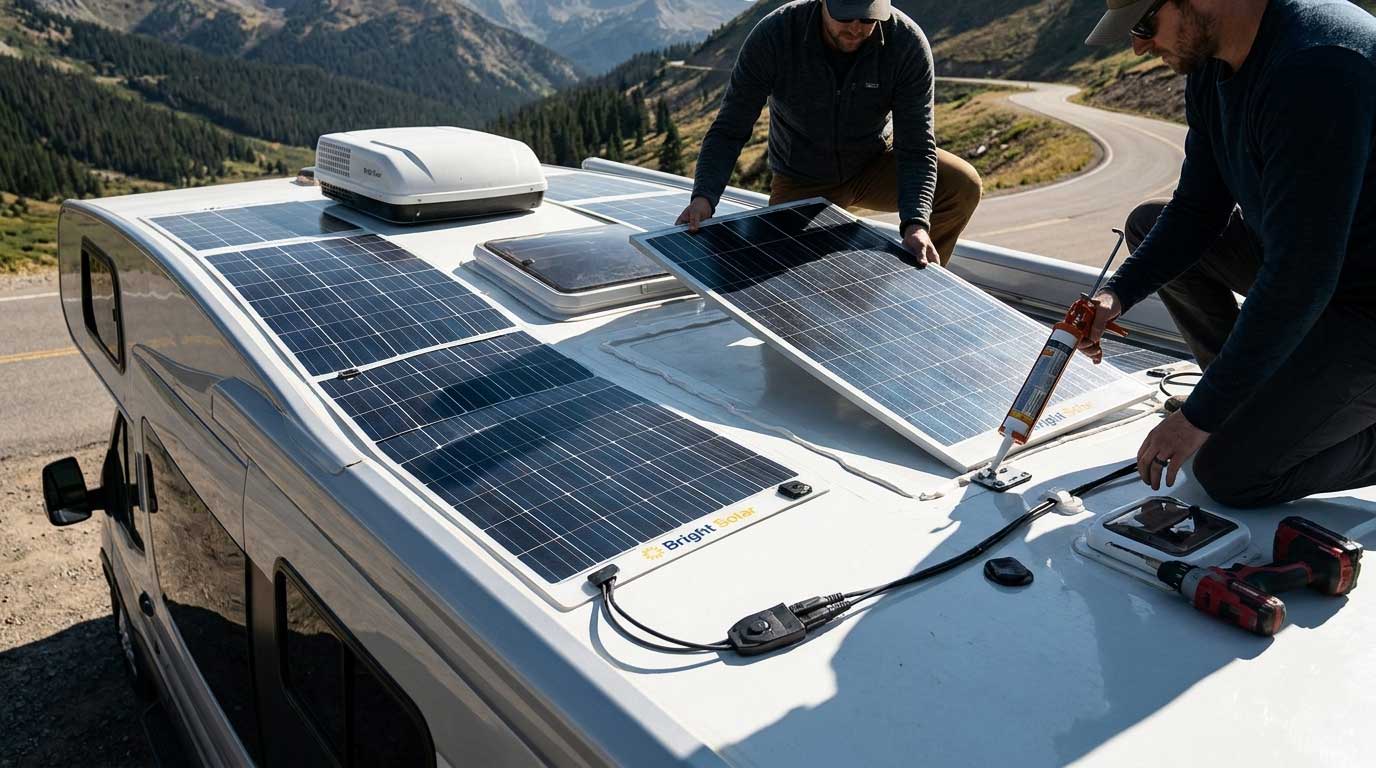
Best Mounting Methods for RV Solar Panels
There is no universal mounting solution.
Roof material changes everything.
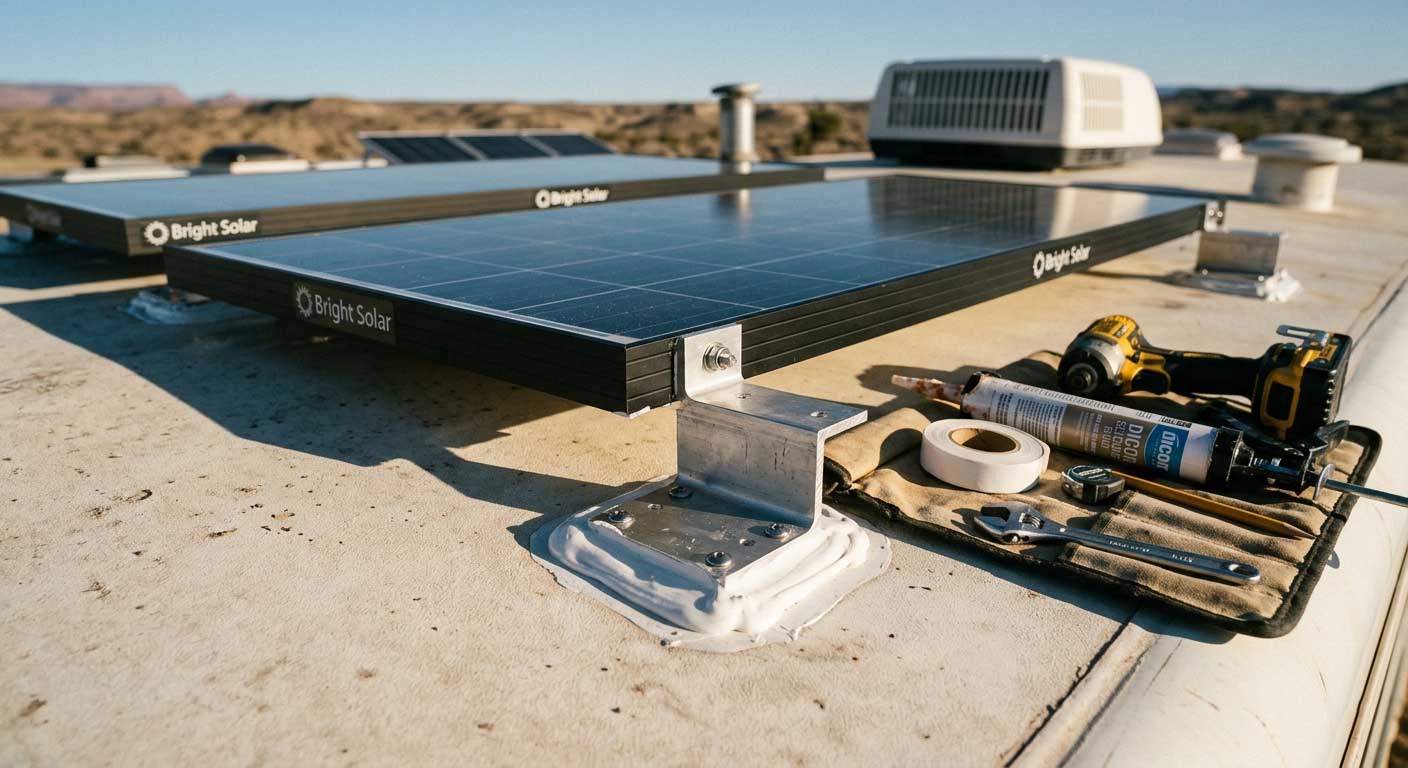
Z-Bracket Mounting
One of the most common rigid panel methods.
Advantages:
- Affordable
- Simple
- Durable
Disadvantages:
- Requires roof drilling
- Permanent installation
Best for:
- Aluminum frame panels
- Fiberglass RV roofs
Adhesive Mounting
Popular with flexible solar panels.
High-strength industrial adhesives reduce roof penetrations.
But surface preparation becomes critical.
I’ve seen adhesive installations survive years of travel.
I’ve also seen poorly cleaned roofs cause panel lift within months.
The difference usually comes down to prep work.
Not the adhesive itself.
Roof Rack Mounting
Common on:
- Overlanding rigs
- Sprinter vans
- Expedition campers
Advantages:
- Better airflow
- Easier maintenance
- Expandable layout
Disadvantages:
- Higher vehicle profile
- More wind resistance
Real RV Installation Case Study: Arizona Desert Travel
One Bright Solar customer installed:
- 600W flexible solar system
- Lithium battery bank
- Roof adhesive mounting
The system initially looked excellent.
Then summer arrived.
The RV spent weeks parked in Arizona heat exceeding 42°C (107°F).
After several months:
- One panel corner began lifting
- Adhesive softened slightly
- Dust entered beneath the edge
The issue wasn’t the panel quality.
It was heat buildup.
The installer had mounted the flexible panels completely flush against the roof without allowing any airflow gap.
During the repair:
- Thin ventilation spacers were added
- Roof surface temperatures dropped noticeably
- Charging efficiency improved during peak afternoon heat
That experience changed how I evaluate flush-mounted flexible solar systems.
Heat management matters more than many online guides admit.
How Roof Material Affects Solar Panel Mounting
RV roofs vary enormously.
And mounting strategy should match the surface.
Fiberglass Roofs
Common on premium RVs.
Generally strong and stable.
Requires:
- Proper sealing
- Careful drilling
- Compatible adhesives
TPO and EPDM Rubber Roofs
Very common in travel trailers.
Require specialized sealants compatible with flexible roofing materials.
Using the wrong sealant can damage the membrane over time.
Aluminum Roofs
Strong but prone to galvanic corrosion if incompatible metals contact moisture.
Marine-grade stainless hardware becomes important here.
Wind Resistance and Highway Safety
This gets underestimated constantly.
At highway speed, aerodynamic pressure increases dramatically across the RV roof surface.
Loose cable management alone can become dangerous.
I once inspected a Class C motorhome where improperly secured solar cables had rubbed against the roof edge for thousands of miles.
Eventually:
- Insulation failed
- Copper became exposed
- Water intrusion started near the cable gland
The owner only noticed after charging became intermittent during rainstorms.
A small mounting oversight became a larger electrical problem.
Highway Mounting Checklist
Before long-distance travel:
- Inspect brackets
- Check sealant integrity
- Secure cables
- Tighten mounting bolts
- Inspect panel corners
- Verify no roof flexing exists
Especially after rough-road travel.
Solar Panel Placement Strategy on RV Roofs
Panel location matters more than many beginners realize.
Roof accessories create shadows:
- Air conditioners
- Satellite domes
- Roof vents
- Storage pods
Even partial shading affects performance significantly.
According to the National Renewable Energy Laboratory, shading can substantially reduce photovoltaic output even when only small sections are affected.
Source: NREL
https://www.nrel.gov
Practical Layout Tips
Try to:
- Avoid AC shadow zones
- Leave walking paths
- Preserve roof maintenance access
- Allow airflow under rigid panels
- Keep cable routes short
Sometimes a slightly smaller solar array performs better simply because placement is smarter.
Common Mistakes When Mounting Solar Panels on RV
After enough inspections, certain problems repeat constantly.
Using Household Sealants
Residential silicone products often fail outdoors under RV vibration and UV exposure.
Ignoring Roof Curvature
Flexible panels tolerate curves better.
Rigid panels require careful leveling.
Overtightening Hardware
This can crack fiberglass roofs.
Blocking Roof Drainage
Poor placement traps water beneath panels.
Long term, that creates staining and potential roof deterioration.
Skipping Ventilation
Flush-mounted panels run hotter.
Heat lowers efficiency and accelerates aging.
FAQ: Mounting Solar Panels on RV
Can solar panels be mounted on any RV roof?
Most RV roofs can support solar panels, but mounting methods depend on roof material, structural strength, and panel type.
Is drilling required for RV solar installation?
Not always. Flexible solar panels can sometimes use adhesive mounting systems, though rigid panels often require brackets and mechanical fasteners.
Do flexible solar panels work well on RVs?
Yes. Flexible solar panels are lightweight and low-profile, making them ideal for curved roofs and camper vans.
How long do RV solar mounts last?
Properly installed RV solar mounting systems commonly last 10–20 years depending on weather exposure, vibration, and maintenance.
Can RV solar panels survive highway speeds?
Yes. Professionally mounted solar panels are designed to withstand highway travel, wind pressure, and outdoor environmental conditions.
Q: What is the best way to mounting solar panels on roof of rv?
Mounting solar panels on roof of RV requires choosing the right panel type, using RV-compatible mounting hardware, preparing the roof surface, and sealing all connection points. Flexible panels with adhesive mounting are popular for lightweight RVs, while rigid panels with brackets suit larger motorhomes.
What is RV solar panel mounting?
RV solar panel mounting is the process of securing solar panels to an RV roof using brackets, adhesives, or roof racks. A proper mounting system must handle vibration, wind pressure, temperature changes, and outdoor exposure during travel.
How does solar panel RV installation work?
Solar panel RV installation involves selecting panel locations, fixing panels to the roof, connecting wiring, installing a charge controller, and linking the system to batteries. Proper waterproofing and cable protection are essential for long-term reliability.
How do you mount solar panel to RV roof?
To mount solar panel to RV roof, first clean and prepare the roof surface, select a suitable mounting method, secure the panel, apply RV-rated sealant, and protect cable entry points. The method depends on roof material and panel type.
How to mount solar panels on RV?
To mount solar panels on RV, choose between adhesive mounting, Z-brackets, or roof rack systems. Flexible panels are easier for curved roofs, while rigid panels provide stronger durability for larger RV installations.
What are camper roof solar panels?
Camper roof solar panels are photovoltaic panels installed on camper roofs to provide off-grid electricity. They are commonly used for charging batteries, powering appliances, and supporting independent travel without relying on campground power.
How does mounting solar panels on roof of rv improve performance?
Mounting solar panels on roof of RV correctly improves energy output, prevents water leaks, reduces vibration damage, and extends system lifespan. Proper placement also helps avoid shadows from vents, air conditioners, and other roof equipment.
What should you know about installing solar panels on RV?
Installing solar panels on RV requires checking roof strength, selecting compatible mounting hardware, sealing all penetrations, and planning cable routes. A professional installation reduces risks from wind, vibration, and moisture damage.
What is the best way to mount solar panels on RV roof?
The best way to mount solar panels on RV roof depends on the RV design. Adhesive mounting works well for lightweight flexible panels, while mechanical brackets provide stronger support for rigid panels on larger RVs.
How to install solar panels on RV?
To install solar panels on RV, measure available roof space, position panels away from shadows, secure them with suitable mounts, seal openings, and connect the electrical system correctly. Testing after installation ensures stable charging performance.
What is involved in mounting solar panels on RV?
Mounting solar panels on RV involves selecting panel locations, attaching mounting hardware, protecting the roof surface, sealing against water, and securing cables. The installation must withstand highway speeds and changing weather conditions.
How to install solar panels on travel trailer roof?
Installing solar panels on travel trailer roof requires choosing panels that match roof structure, using compatible sealants, securing mounting points properly, and protecting wiring connections. Lightweight flexible panels are often suitable for trailers with limited roof capacity.
How To Mount Solar Panels To RV Roof?
Mounting solar panels to an RV roof requires selecting the right mounting method, preparing the roof surface, securing panels properly, and protecting electrical connections. Flexible or lightweight solar panels are often preferred because they reduce roof stress while providing reliable mobile power.Learn more about “How To Mount Solar Panels To RV Roof“
Final Thoughts
Mounting solar panels on RV roofs looks simple in online tutorials.
In reality, it sits at the intersection of:
- Electrical design
- Structural loading
- Waterproofing
- Aerodynamics
- Long-term environmental exposure
The strongest systems are rarely the flashiest.
Usually they are the installations where:
- Cable routing stays clean
- Sealants remain intact
- Panels stay cool
- Roof stress remains controlled
- Every bracket still feels solid years later
Because out on the road, reliability matters more than perfect-looking photos.
And once you spend enough time around real RV solar systems, you start noticing something:
Most solar failures begin long before the electrical system stops working.
They usually begin at the mounting points.
Related recommendations
-

220w flexible solar panel (Real Field Performance Guide from Bright Solar)
151220w flexible solar panel explained with real RV field data, installation behavior, energy output range, and off-grid performance insights from Bright Solar.
View details -
Series Parallel Solar Panels: Smarter Wiring for Higher Solar Efficiency
186Learn how series parallel solar panels improve voltage, current, and off-grid efficiency. Bright Solar explains real-world wiring setups and performance tips.
View details -
1000 Watt Flexible Solar Panel: Output, Sizing and Installation Guide
293A 1000 watt flexible solar panel system is suitable for large RVs, vans, boats, and cabins where roof shape and weight matter. Actual energy production depen...
View details -
Complete Solar Systems for Off Grid Living
260Design complete solar systems for off grid living with the right panels, batteries, inverter, and protection. Learn sizing, wiring, storage, and real-world system planning.
View details