How to Mount Flexible Solar Panels on a Fiberglass Roof?
How to Mount Flexible Solar Panels on a Fiberglass Roof?
To mount flexible solar panels on a fiberglass roof, thoroughly clean the fiberglass surface, use a compatible structural adhesive, avoid excessive bending, provide ventilation whenever possible, and secure cables properly. Correct installation prevents heat buildup, water intrusion, and long-term panel failure.
A fiberglass roof can appear ideal for flexible solar panels.
It is lightweight. It does not rust. It often has smooth curves.
Yet some of the worst panel failures I have examined occurred on fiberglass roofs.
Several years ago, I climbed onto a motorhome parked outside Phoenix. The owner had installed two flexible panels only eighteen months earlier. One panel still worked perfectly. The other had partially separated from the roof.
The difference was not the panel.
It was the adhesive.
The installer had cleaned one section with alcohol.
The other section had been installed directly over old wax residue.
That small shortcut eventually cost an entire solar system.
After years of inspecting RV roofs, marine cabins, and returned solar modules, I have learned that fiberglass roofs require their own installation approach.
Why Fiberglass Roofs Require Special Attention
Fiberglass behaves differently than aluminum.
It expands differently.
It retains heat differently.
It also flexes slightly while traveling.
Many RV roofs experience thousands of vibration cycles during a single long trip.
According to the U.S. Department of Energy, elevated operating temperatures reduce photovoltaic performance and can influence module longevity.
Source:
https://www.energy.gov/eere/solar
A flexible panel bonded directly onto a dark fiberglass roof may operate considerably hotter than expected.
Heat becomes part of the installation design.
Not simply an environmental condition.
Common Fiberglass Roof Applications
Flexible panels are frequently installed on:
- Motorhomes.
- Travel trailers.
- Camper vans.
- Marine cabins.
- Fiberglass boats.
- Tiny houses.
Several RV service centers now prefer flexible modules for curved fiberglass roofs because they reduce weight compared with framed glass panels.
One installer in Florida told me:
“Customers ask about watts. We ask about pounds.”
That distinction often determines the final product selection.
Preparing the Fiberglass Surface
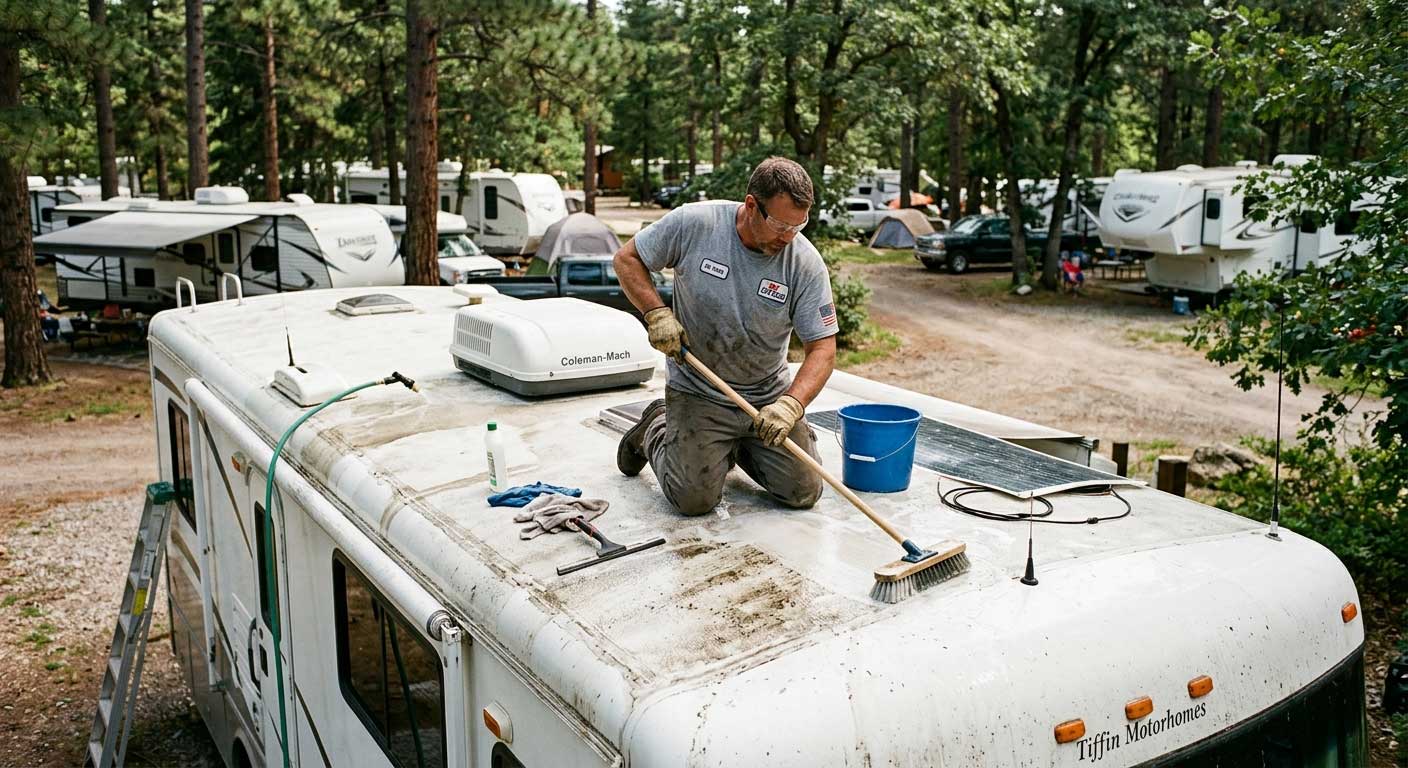
This step determines whether the installation survives five years or fifteen months.
The roof should be:
- Washed thoroughly.
- Free of wax.
- Dry.
- Structurally sound.
- Free from oxidation.
Isopropyl alcohol is commonly used before bonding.
I once removed a failed panel from an older fiberglass camper.
The adhesive itself had not failed.
The oxidation layer underneath had separated from the roof.
The panel was still attached.
The roof coating was not.
Surface preparation remains one of the least visible but most important steps.
Surface Preparation Checklist
| Step | Purpose |
|---|---|
| Wash roof | Remove dirt |
| Remove wax | Improve bonding |
| Alcohol cleaning | Remove oils |
| Dry completely | Prevent moisture |
| Inspect cracks | Avoid weak areas |
Skipping one step may not cause immediate failure.
The consequences often appear years later.
Choosing the Right Adhesive
Not all adhesives behave the same on fiberglass.
Common choices include:
- Polyurethane adhesive.
- Marine sealants.
- Hybrid polymer adhesives.
- Structural silicone.
Many marine applications use polyurethane because it maintains flexibility.
During a sailboat inspection in Maine, I found a ten-year-old flexible panel that remained securely bonded.
The installer had used marine-grade adhesive originally intended for deck fittings.
The lesson was obvious.
Sometimes the marine industry solves problems before the RV industry notices them.
Heat Is the Hidden Problem
Fiberglass roofs absorb and retain heat.
Dark-colored roofs become particularly challenging.
The National Renewable Energy Laboratory has documented how elevated temperatures reduce photovoltaic efficiency.
Source:
During a July inspection in Nevada, surface temperatures reached:
| Surface | Temperature |
|---|---|
| White fiberglass roof | 56°C |
| Black fiberglass roof | 68°C |
The panels installed on the darker surface consistently produced lower afternoon output.
Heat matters.
Sometimes more than sunlight.
Should You Leave an Air Gap?
This question appears constantly.
Direct bonding offers:
- Simpler installation.
- Lower profile.
- Reduced wind resistance.
Raised mounting provides:
- Better cooling.
- Improved airflow.
- Lower operating temperature.
Several RV owners I interviewed reported cooler panel temperatures when using small spacers.
The difference was not dramatic.
Usually 5–10°C.
But over years, heat reduction becomes meaningful.
Direct Bonding vs Air Gap
| Method | Advantages | Limitations |
|---|---|---|
| Direct bonding | Simpler | Higher temperatures |
| Air gap | Better cooling | More installation work |
No single answer fits every roof.
Travel habits matter.
Climate matters.
Parking conditions matter.
Cable Routing on Fiberglass Roofs
The panel is rarely the weakest component.
The wiring often is.
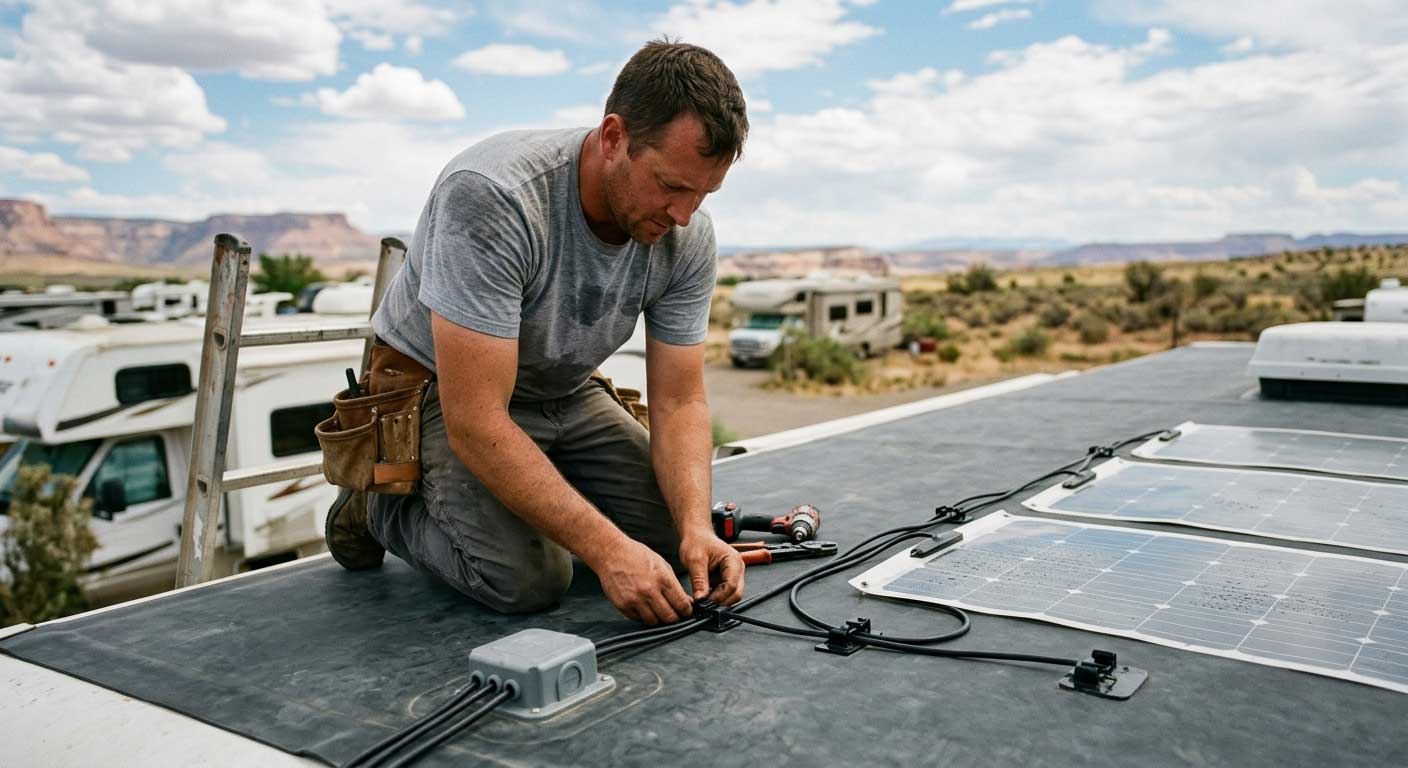
Recommended practices include:
- UV-resistant cable.
- Waterproof cable glands.
- Proper strain relief.
- Secure cable clips.
- Protected connectors.
One travel trailer arrived at a service center with intermittent charging.
The solar panel tested perfectly.
The roof cable had fractured internally after years of vibration.
The owner replaced the panel.
The cable was the actual problem.
Lessons From Real Installations
After examining failed installations, several patterns appear repeatedly.
Most problems involve:
- Inadequate cleaning.
- Cheap adhesive.
- Excessive roof curvature.
- Cable movement.
- Heat accumulation.
One camper traveled more than 90,000 miles with its original panels.
Another experienced adhesive failure after two summers.
The panels came from the same supplier.
The roofs looked nearly identical.
The installation quality made the difference.
Author Experience
Michael Turner has spent over twelve years working with flexible photovoltaic products, RV applications, marine solar systems, and product reliability testing.
Professional experience includes:
- Factory audits.
- Solar product testing.
- Warranty analysis.
- RV inspections.
- Marine installations.
Many examples in this article come directly from customer installations and field inspections rather than laboratory simulations.
FAQ About How to Mount Flexible Solar Panels on a Fiberglass Roof?
Can flexible solar panels be glued directly to fiberglass?
Yes. Most fiberglass roof installations use structural adhesives designed for outdoor applications.
What adhesive works best on fiberglass roofs?
Marine-grade polyurethane and hybrid adhesives are widely used because they remain flexible.
Do fiberglass roofs get too hot for solar panels?
Dark fiberglass roofs can become very hot, especially during summer. Proper ventilation can help reduce temperatures.
Should flexible panels have airflow?
Whenever possible, airflow helps reduce operating temperatures and improve long-term reliability.
Can fiberglass roofs crack from solar installation?
Improper drilling or concentrated loads may damage older fiberglass roofs. Flexible panels generally reduce these risks.
Visit the product page:Flexible Solar Panel
How to Mount Flexible Solar Panel?
Flexible solar panels are usually mounted using industrial adhesive, VHB tape, screws with spacers, or hybrid mounting systems. The safest installation keeps airflow under the panel, prevents water buildup, and avoids over-bending the panel surface. Done correctly, a flexible solar panel can stay securely mounted for 5–10 years on RVs, vans, boats, and curved roofs.Learn more about “How to Mount Flexible Solar Panel“
Final Thoughts
People searching how to mount flexible solar panels on a fiberglass roof usually expect a list of adhesives.
After years of standing on RV roofs, examining failed installations, and speaking with installers, I would answer differently.
Fiberglass roofs reward patience.
Cleaning matters.
Heat matters.
Cable routing matters.
The adhesive matters.
A flexible panel may weigh only a few kilograms, but once installed, it must survive years of heat, vibration, rain, and movement.
The panel generates electricity.
The fiberglass roof decides whether it keeps doing so.
The prev: How to Turn Off Solar Panels?The next: How Much Energy Can a Solar Panel Generate?
Related recommendations
-

Do Solar Panels Add Value to Your House?
149Solar panels can add value to a house, but the effect is not guaranteed. Ownership, system condition, documented performance, local electricity prices, and b...
View details -
How Much Is A Solar Panel For House?
189How much is a solar panel for house? Explore residential solar panel pricing, installation factors, equipment costs, and expert advice from Bright Solar.
View details -
How to Clean Solar Light Panels?
265Learn how to clean solar light panels properly, remove dirt from garden solar lights, improve charging performance, and extend solar lighting lifespan.
View details -
Can Solar Panels Store Energy?
142No. Solar panels generate electricity but do not store it. A separate battery system can store surplus solar energy for later use.
View details