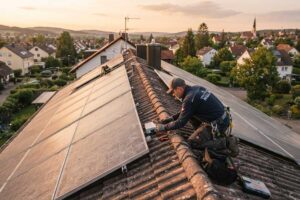
how to install flexible solar panel on car roof?
how to install flexible solar panel on car roof?
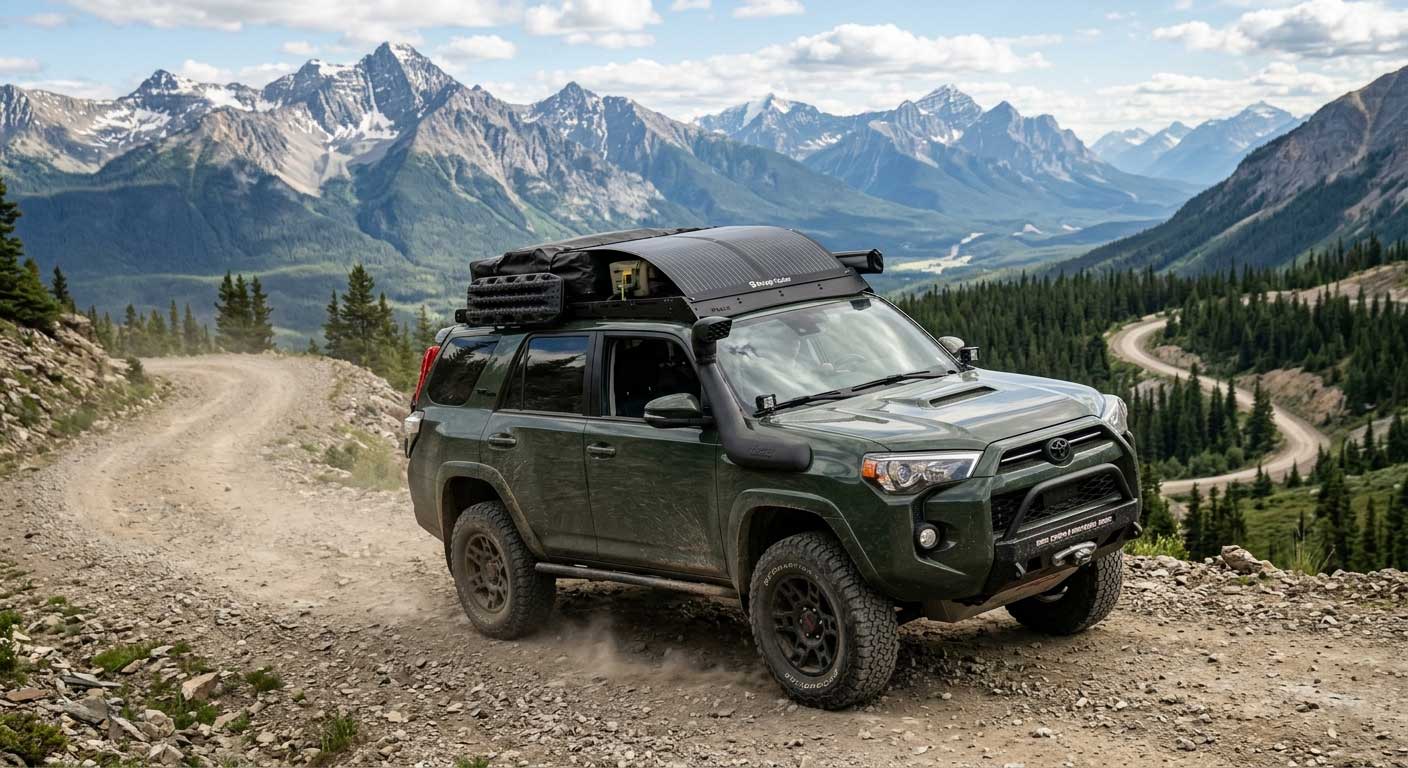
The most effective way to install a flexible solar panel on a car roof is to clean the surface thoroughly, use a UV-resistant structural adhesive designed for outdoor applications, route wiring through protected entry points, and verify the panel can withstand vibration, heat, and highway wind exposure.
I’ve installed flexible solar panels on camper vans, utility vehicles, overlanding trucks, and commercial fleet cars for more than a decade. Surprisingly, the biggest challenge is rarely generating power. It’s keeping the panel securely attached after thousands of miles of vibration, changing weather, and endless hours of direct sunlight.
A parked vehicle behaves one way.
A vehicle traveling at 70 mph behaves very differently.
That distinction changes everything.
According to the U.S. Department of Energy (energy.gov), solar systems operating outdoors must endure continuous exposure to ultraviolet radiation, temperature fluctuations, and environmental stress. For vehicle-mounted solar systems, those forces become even more demanding because movement introduces additional mechanical loads.
Understanding how to install flexible solar panel on car roof properly begins with understanding those real-world conditions.
Why Flexible Solar Panels Are Popular for Car Roof Installations
Traditional framed solar panels work well on stationary rooftops.
Cars are another story.
Weight matters.
Aerodynamics matter.
Roof curvature matters.
This is where flexible solar panels offer a significant advantage.
Unlike conventional glass modules, flexible panels can conform to slight curves while adding minimal weight. According to research published by the National Renewable Energy Laboratory (NREL.gov), lightweight photovoltaic technologies continue to expand into mobile applications where traditional modules may not be practical.
For vehicle owners, that often means:
- Lower weight load
- Reduced wind resistance
- Simpler installation
- Improved aesthetics
- Better compatibility with curved surfaces
The result is a cleaner integration that feels less like an aftermarket modification and more like part of the vehicle itself.
Before Installation: Evaluate Your Car Roof
Not every roof is suitable for direct solar mounting.
One mistake I frequently see is owners purchasing a panel before measuring available roof space.
Later they discover roof racks, antennas, shark-fin receivers, or sunroofs create unexpected obstacles.
Before installation, inspect:
Roof Surface Condition
- Paint quality
- Existing roof accessories
- Curvature
- Drainage channels
- Roof rack locations
Available Mounting Area
Measure carefully.
Then measure again.
A flexible solar panel that fits perfectly on paper may interfere with roof hardware once positioned physically.
Choosing the Best Mounting Method
For most passenger vehicles, adhesive mounting remains the preferred solution.
Drilling holes into modern vehicle roofs introduces unnecessary risks.
Water intrusion.
Corrosion.
Warranty concerns.
None of them are worth it if adhesive mounting is viable.
| Mounting Method | Typical Vehicle Application | Roof Penetration Required |
|---|---|---|
| Structural Adhesive | Cars, SUVs, Vans | No |
| Hybrid Mounting | Overlanding Vehicles | Minimal |
| Mechanical Fasteners | Specialty Applications | Yes |
| Roof Rack Mounting | Removable Systems | No |
In my experience, approximately 80% of vehicle-mounted flexible solar installations rely primarily on adhesive bonding.
Not because it’s easier.
Because it works.
When done correctly.
Step-by-Step Installation Process
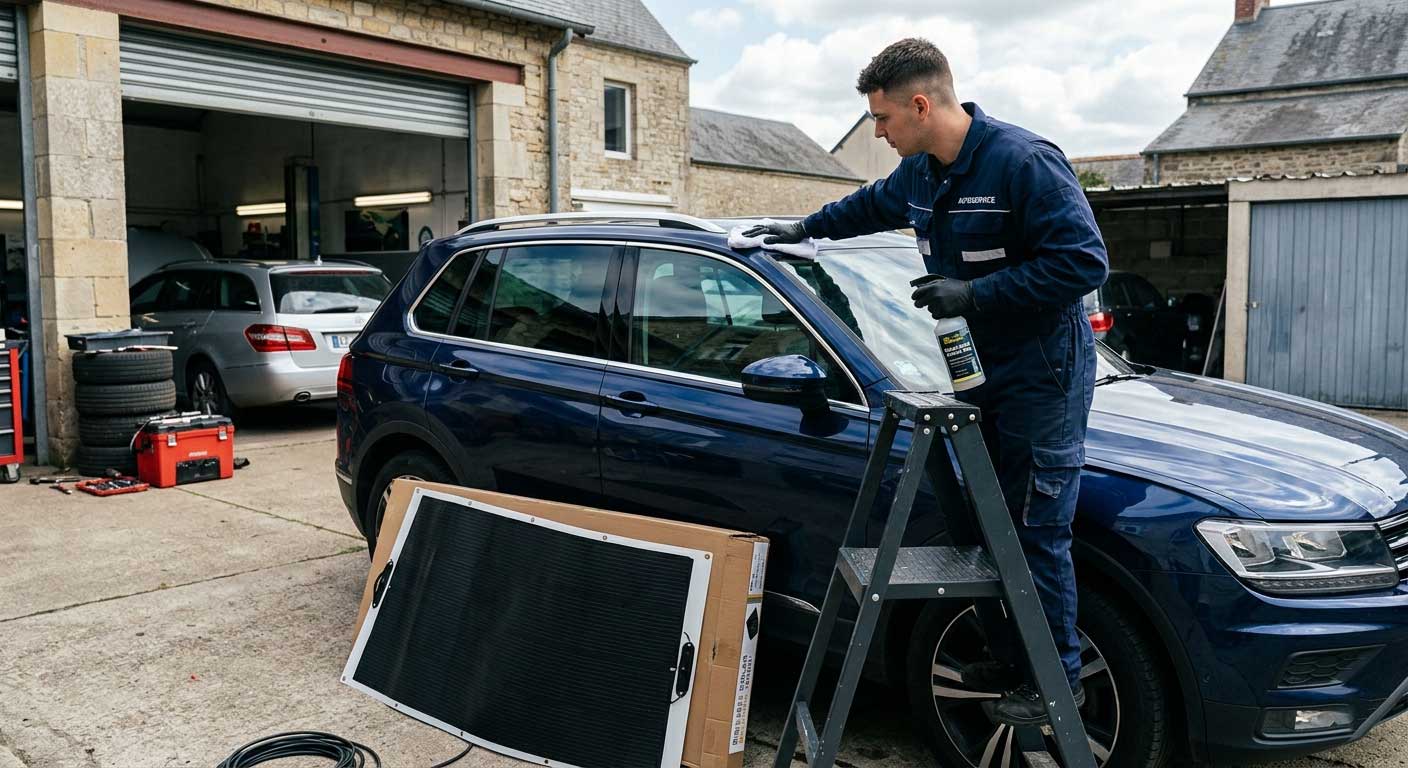
Step 1: Clean the Roof Thoroughly
Remove:
- Dust
- Wax residue
- Road contaminants
- Grease
- Oxidation
A clean roof isn’t necessarily a ready roof.
Many bonding failures occur because invisible contaminants remain on the surface.
Step 2: Position the Panel Before Applying Adhesive
Never guess placement.
Dry-fit the panel first.
Check:
- Roof rack clearance
- Antenna interference
- Cable routing
- Hatch opening clearance
I’ve watched installers apply adhesive only to realize the rear hatch could no longer fully open.
That’s an expensive lesson.
Step 3: Apply Structural Adhesive
Use an adhesive specifically rated for:
- UV exposure
- Outdoor environments
- Vibration resistance
- Automotive applications
Apply consistent beads according to manufacturer guidelines.
Avoid excessive adhesive buildup.
More adhesive doesn’t automatically create a stronger bond.
Step 4: Secure During Cure Time
Temporary weights or tape may be necessary while the adhesive cures.
Patience matters here.
A rushed installation often becomes a future repair project.
Managing Wiring on a Vehicle Roof
Solar panel installation is only half the job.
The wiring path determines long-term reliability.
Poor cable management causes more service calls than panel failures.
According to industry guidance from Solar Energy International (solarenergy.org), proper wire protection is essential for outdoor photovoltaic systems.
Best Cable Routing Practices
- Use UV-resistant cable protection
- Avoid sharp edges
- Secure loose wiring
- Seal all roof entry points
- Protect connectors from standing water
I prefer hidden cable routing whenever possible.
Not for aesthetics.
For longevity.
Sunlight is relentless.
Highway Speed and Wind Load Considerations
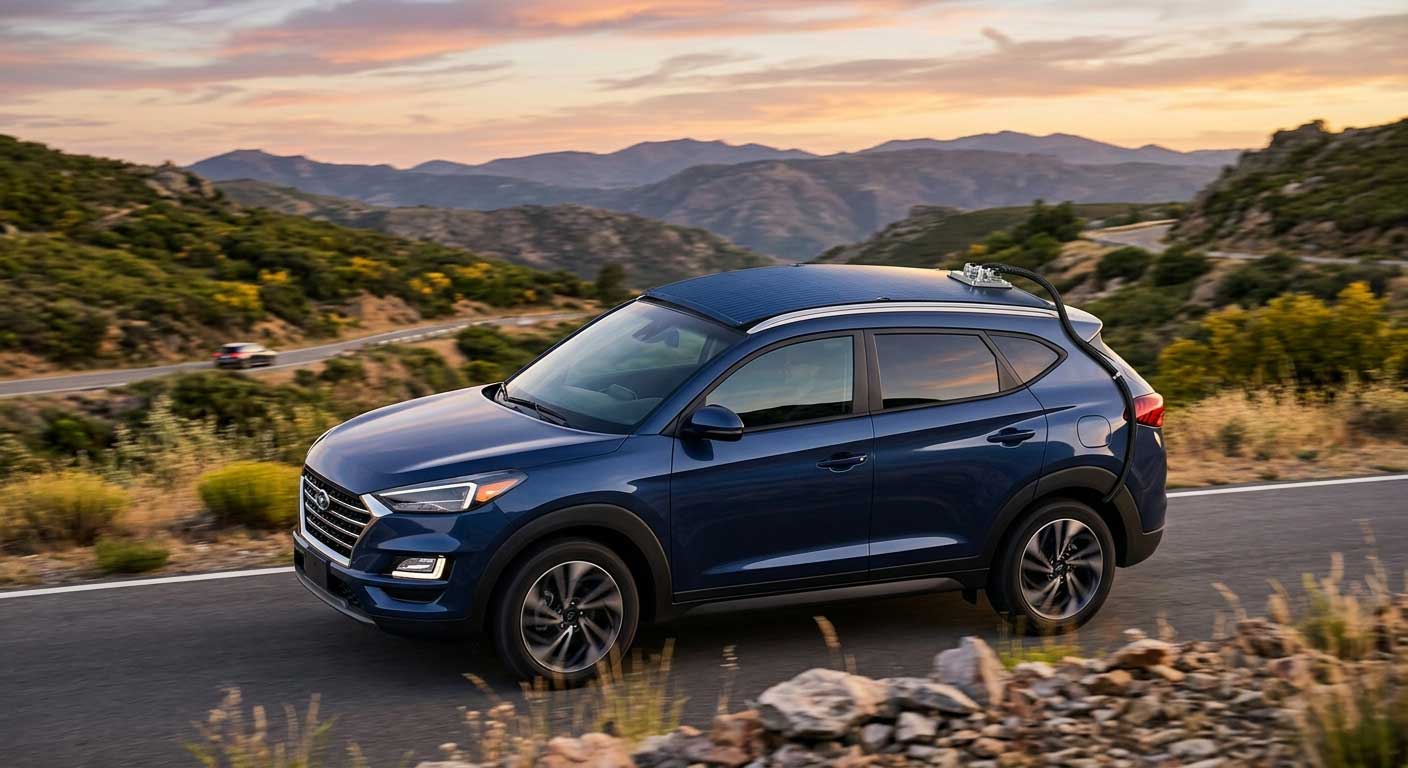
This is where vehicle installations differ dramatically from residential rooftops.
A solar panel on a parked vehicle experiences static conditions.
At highway speeds, aerodynamic forces increase significantly.
Even a properly bonded panel can experience uplift pressure at its leading edge.
That is why edge bonding quality matters so much.
For overlanding projects traveling across desert highways, I often recommend a hybrid mounting strategy that combines adhesive bonding with discreet mechanical retention points.
Not because failure is likely.
Because prevention is cheaper than replacement.
Common Mistakes That Shorten Panel Lifespan
After inspecting hundreds of mobile solar systems, the same issues appear repeatedly.
Installation Errors to Avoid
- Mounting on dirty surfaces
- Using household construction adhesive
- Ignoring roof curvature limits
- Exposing wiring to direct abrasion
- Skipping waterproof sealing
- Installing during unsuitable temperatures
Most failures begin as small details.
Months later, those details become expensive problems.
FAQ: how to install flexible solar panel on car roof
Can I install a flexible solar panel on a car roof without drilling?
Yes. Most vehicle installations use structural adhesives specifically designed for outdoor and automotive applications.
Will a flexible solar panel stay attached at highway speeds?
Yes. Properly installed systems are designed to withstand highway travel, vibration, and environmental exposure.
What is the best adhesive for vehicle solar installations?
A UV-resistant structural adhesive rated for exterior automotive use typically provides the most reliable results.
Can flexible solar panels damage vehicle paint?
When installed and removed according to manufacturer recommendations, damage is generally minimal, although paint condition should always be evaluated beforehand.
How long do flexible solar panels last on a car roof?
Service life depends on environmental exposure, installation quality, and maintenance practices, but many systems operate successfully for years.
Visit the product page:Flexible Solar Panel
Final Answer
The safest and most reliable approach to how to install flexible solar panel on car roof projects is to combine careful roof preparation, high-quality structural adhesive, protected cable routing, and consideration of real-world driving conditions. In my experience, successful installations are rarely about the panel itself. They’re about understanding vibration, heat, wind exposure, and long-term durability. When installed correctly, a Bright Solar flexible module can provide dependable off-grid power while maintaining a clean, aerodynamic appearance. That remains the most practical answer to how to install flexible solar panel on car roof installations today.
Related recommendations
-

How much is it to install a solar panel?
106How much is it to install a solar panel? Learn installation costs, labor factors, system sizing, and real pricing insights from Bright Solar experts.
View details -
how long do solar panels last on a roof?
144Learn how long do solar panels last on a roof with real lifespan data, degradation rates, and field insights from Bright solar engineers across global installations.
View details -
what is a solar panel made of?
247what is a solar panel made of? Explore the silicon cells, glass, aluminum frame, encapsulants, backsheet, copper, and other materials inside modern PV modules.
View details -
How to install ring solar panel?
17how to install ring solar panel with proper mounting, wiring, and setup steps. Learn practical solar installation tips and expert insights from Bright Solar.
View details