do solar panels damage roof?
do solar panels damage roof? No, properly installed solar panels do not damage a healthy roof. In many cases, solar modules can protect roofing materials from sunlight, rain, and weather exposure while extending roof surface durability when installed correctly.
Can Solar Panels Really Damage a Roof?
The short answer is no—when the installation is done correctly.
A solar panel system is not naturally harmful to a roof. The damage people worry about usually comes from poor installation practices, unsuitable mounting methods, incorrect flashing, or installing panels on a roof that was already near the end of its service life.
During solar projects I have reviewed, the biggest roof problems rarely came from the panels themselves. They usually started with small installation details: a poorly sealed penetration, a missing flashing component, or a contractor who ignored the roof condition before installation.
A solar array adds weight and creates attachment points, but professional installers design the mounting system to distribute loads safely across the roof structure.
The National Renewable Energy Laboratory (NREL) notes that rooftop PV systems must be evaluated for structural loading, including dead loads, wind loads, and other environmental forces, as part of proper system design.
Source: https://www.nrel.gov/
The key is not whether solar panels are installed.
The key is how they are installed.
How Do Solar Panels Affect Roof Lifespan?
Solar panels can actually help protect certain roofing materials.
A rooftop solar array creates a protective layer between the roof surface and outdoor conditions.
Panels reduce direct exposure to:
- Ultraviolet radiation
- Heavy rainfall
- Snow accumulation
- Temperature fluctuations
- Weather-related surface degradation
Roofing materials naturally age because of repeated heating, cooling, moisture exposure, and UV radiation.
By covering parts of the roof, solar modules can reduce some environmental stress on those areas.
However, solar panels do not repair an old roof.
This is where planning matters.
Before installation, experienced solar companies normally inspect:
- Roof age
- Shingle condition
- Existing leaks
- Roof slope
- Structural framing
- Waterproofing condition
Installing a 25-year solar system on a roof with only 3–5 years of remaining life creates unnecessary future costs.
The U.S. Department of Energy recommends considering roof condition before installing rooftop solar because replacing roofing after solar installation may require removing and reinstalling the PV system.
Source: https://www.energy.gov/
Can Solar Panels Damage Roof Shingles?
Solar panels usually do not damage asphalt shingles when proper mounting equipment is used.
The main concern is not the solar module itself.
It is the attachment method.
Traditional rooftop solar systems typically use:
- Roof attachments
- Flashing
- Rails
- Clamps
- Sealing systems
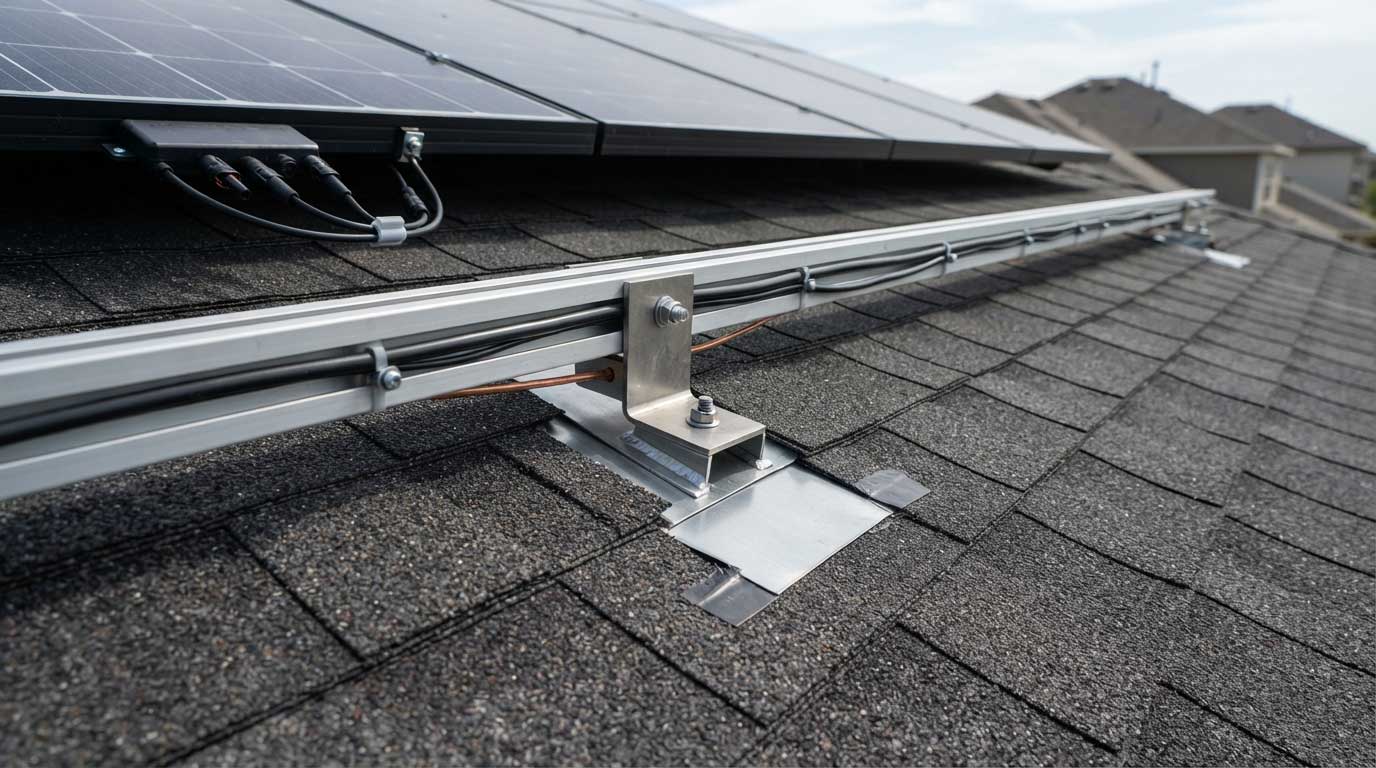
The flashing creates a waterproof barrier around roof penetrations.
Poor-quality installations may cause problems such as:
- Water leaks
- Damaged shingles
- Loose mounting hardware
- Improper drainage
- Accelerated roof wear
A professional installer should never simply drill through roofing material and rely only on sealant.
Sealant can degrade over time.
A properly engineered flashing system is designed to integrate with the roofing structure.
Do Solar Panels Cause Roof Leaks?
Solar panels themselves do not cause roof leaks.
Leaks usually happen because of installation mistakes.
Common causes include:
| Problem | Why it happens |
|---|---|
| Poor flashing | Water enters around attachment points |
| Incorrect mounting location | Roofing structure may not support loads properly |
| Damaged shingles | Installation damages existing roofing |
| Low-quality sealant | Sealant fails after weather exposure |
| Old roof condition | Existing problems become worse |
A properly installed solar mounting system should maintain the roof’s waterproofing ability.
In my experience reviewing solar installations, the roof attachment detail is one of the first areas I inspect when evaluating system quality. The difference between a professional installation and a rushed one is often visible in small details:
- Clean flashing edges
- Proper bolt placement
- Organized cable management
- Correct spacing
- No unnecessary penetrations
The solar panels are rarely the weak point.
The installation process is.
Should You Replace Your Roof Before Installing Solar Panels?
Sometimes, yes.
If your roof is approaching the end of its useful life, replacing it before solar installation is usually the smarter financial decision.
A typical residential solar system is designed to operate for decades. The National Renewable Energy Laboratory states that modern PV modules commonly have expected service lives of 25 years or longer.
Source: https://www.nrel.gov/
Installing solar on an aging roof can create this situation:
- Solar panels are installed.
- Roof begins failing several years later.
- Panels must be removed.
- Roof is replaced.
- Solar system is reinstalled.
That additional labor can significantly increase project costs.
Before installing solar, consider:
| Roof condition | Recommendation |
| New roof | Good candidate |
| Mid-life roof | Inspect carefully |
| Minor repairs needed | Repair before installation |
| Near replacement age | Replace first |
How Much Weight Do Solar Panels Add to a Roof?
Solar panels add weight, but most modern roofs are designed to handle additional loads when properly evaluated.
A typical residential solar panel weighs approximately 40–50 pounds (18–23 kg), depending on the model.
A complete rooftop system also includes:
- Mounting rails
- Attachments
- Wiring
- Inverter equipment
The final load depends on the number of panels and the roof structure.
Professional installers evaluate:
- Roof framing
- Rafter spacing
- Structural capacity
- Local building codes
- Wind and snow loads
The International Building Code and local structural requirements are commonly used when evaluating rooftop solar installations.
Source: https://www.iccsafe.org/
Can Solar Panels Protect Your Roof?
Yes, solar panels can provide some protective benefits.
Areas underneath solar modules experience:
- Less direct sunlight
- Reduced UV exposure
- Lower temperature swings
- Less direct rainfall
However, the protection depends on proper installation.
Poor installation can eliminate those benefits.
A quality solar project should combine:
- Reliable mounting hardware
- Correct roof assessment
- Professional waterproofing
- Proper electrical installation
- Long-term maintenance planning
At Bright Solar, roof compatibility is an important part of evaluating a solar solution. Panel efficiency matters, but a system must also work with the building it is installed on.
What Roof Types Work Best With Solar Panels?
Most common roofing materials can support solar installation.
| Roof type | Solar compatibility |
| Asphalt shingles | Excellent |
| Metal roofs | Excellent |
| Tile roofs | Possible with specialized mounting |
| Flat roofs | Possible with ballast or attached systems |
| Wood shake roofs | Requires additional evaluation |
Metal roofs are often considered excellent solar candidates because mounting can sometimes attach directly to standing seams without roof penetration.
Tile roofs require more careful installation because tiles can crack if handled improperly.
How To Prevent Solar Panel Roof Damage
Homeowners can reduce risk by following several steps:
- Inspect the roof before installation.
- Choose an experienced solar installer.
- Use certified mounting equipment.
- Confirm waterproof flashing methods.
- Review warranties.
- Avoid unnecessary roof penetrations.
- Monitor for leaks after installation.
A good installer should explain not only the panel specifications but also how the system connects to your home structure.
FAQ About do solar panels damage roof?
do solar panels damage roof?
No. Properly installed solar panels do not damage a healthy roof. Problems usually come from poor installation or installing panels on an unsuitable roof.
Can solar panels cause roof leaks?
Solar panels do not directly cause leaks. Leaks typically result from improper flashing, poor mounting practices, or existing roof problems.
Do solar panels shorten roof life?
No. Solar panels may protect portions of a roof from UV exposure and weather, although they cannot extend the life of damaged roofing materials.
Should I replace my roof before solar panels?
If the roof is near the end of its expected lifespan, replacing it before solar installation is usually recommended.
Can solar panels damage asphalt shingles?
Not when installed correctly. Professional mounting systems are designed to protect shingles and maintain waterproofing.
How long do roofs last under solar panels?
The roof and solar system lifespan depends on materials and maintenance. Many solar panels are designed for 25 years or more, so roof condition should be considered before installation.
Are solar panels safe for old roofs?
Older roofs require inspection. Installing solar on a roof with structural issues or major wear can create future problems.
Conclusion
do solar panels damage roof? No, solar panels do not damage roofs when installed correctly. A professionally designed system can protect roof areas from weather exposure while providing decades of clean energy.
The real risk comes from poor workmanship, improper mounting, or ignoring roof condition before installation.
For Bright Solar projects, the goal is not only producing electricity. A successful solar installation should become a long-term part of the building, protecting both energy performance and structural integrity.
The prev: do solar panels cause cancer?The next: do solar panels emit radiation?
Related recommendations
-

how much can you save with solar panels?
166Discover how much can you save with solar panels using real cost data, electricity savings examples, and Bright solar insights for long-term energy value.
View details -
Can Hail Damage Solar Panels?
143Can hail damage solar panels? Learn how hail storms affect solar modules, testing methods, protection tips, and why hail resistant solar panels matter.
View details -
How Much Is A Solar Panel For House?
147How much is a solar panel for house? Explore residential solar panel pricing, installation factors, equipment costs, and expert advice from Bright Solar.
View details -
How Solar Panels Manufactured?
202How solar panels manufactured? Explore the complete photovoltaic manufacturing process, from silicon wafers and solar cells to testing and quality control with Bright Solar.
View details