How to tell if solar panels are working?
To tell if solar panels are working, check energy production data, measure voltage output, inspect system indicators, and compare performance under sunlight. A properly operating panel should generate measurable electricity when exposed to sunlight.
How to tell if solar panels are working correctly
Understanding how to tell if solar panels are working helps homeowners, RV users, and off-grid system owners identify performance problems before they affect energy availability.
At Bright Solar, we design flexible solar panels for RV, marine, portable, and off-grid applications. During product testing and customer support discussions, one common question appears repeatedly: “How do I know my solar panel is actually producing power?”
The answer is not always visible. A solar panel can look clean and undamaged while having issues with wiring, shading, controllers, or battery connections.
A working solar panel should show:
- Voltage output under sunlight
- Current flowing through the system
- Charge controller activity
- Battery charging response
- Expected power generation based on conditions
According to the U.S. Department of Energy, photovoltaic systems produce electricity when sunlight activates semiconductor materials inside solar cells. However, actual output changes depending on sunlight intensity, temperature, orientation, shading, and system design.
Check solar panel performance through energy monitoring
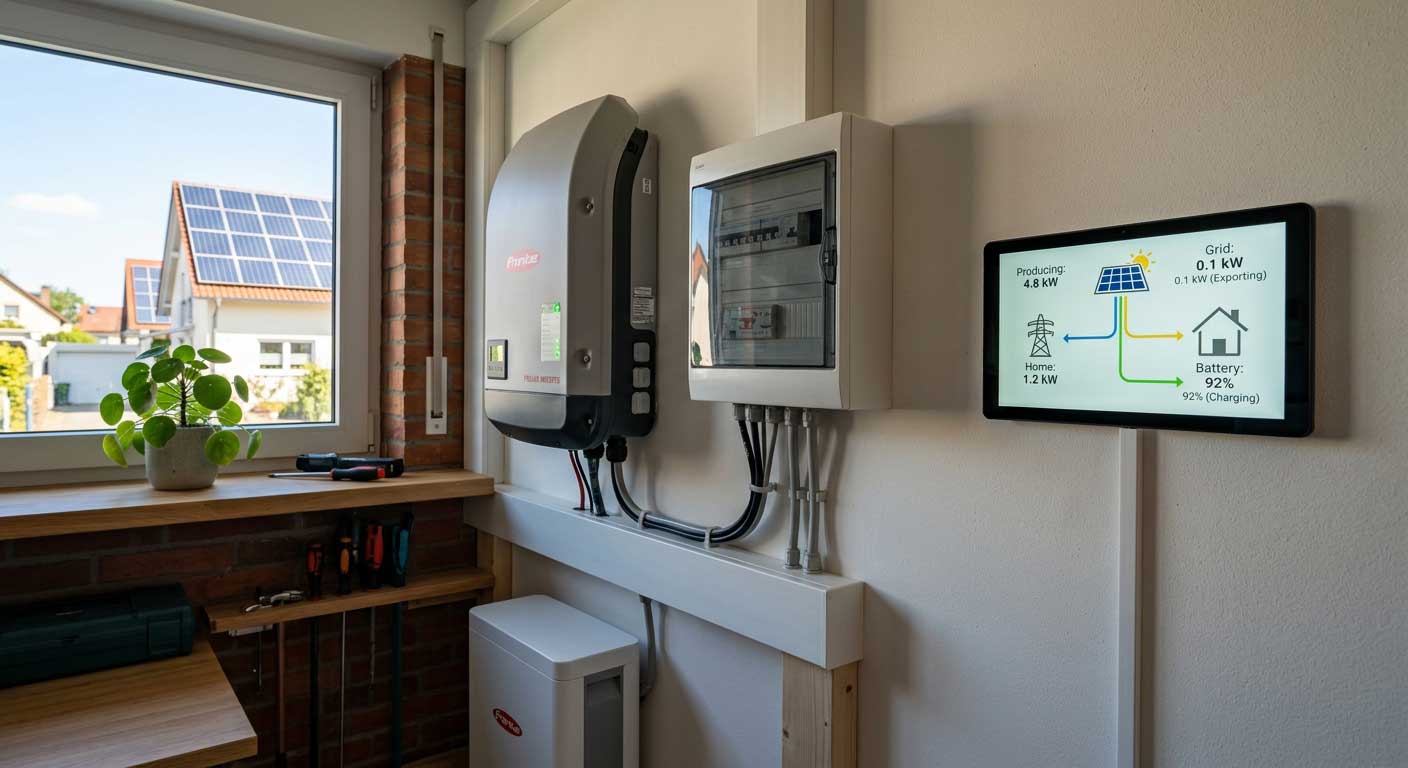
Review your inverter or solar controller data
The easiest way to confirm solar performance is checking system monitoring equipment.
Many solar systems provide:
| Monitoring Data | What It Shows |
|---|---|
| Voltage | Electrical pressure from the panel |
| Current | Electricity flowing from the panel |
| Power (Watts) | Real-time energy production |
| Daily kWh | Total energy generated |
For example, a 100W flexible solar panel operating under strong sunlight may not always produce exactly 100 watts. Rated power is measured under Standard Test Conditions (STC), which include specific laboratory conditions.
Real-world output changes because of:
- Cloud cover
- Panel angle
- Temperature
- Dust accumulation
- Cable losses
At Bright Solar, engineers often compare expected output with actual field conditions rather than judging performance from one single reading.
How to test if a solar panel is producing electricity
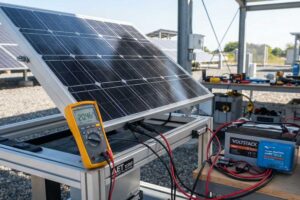
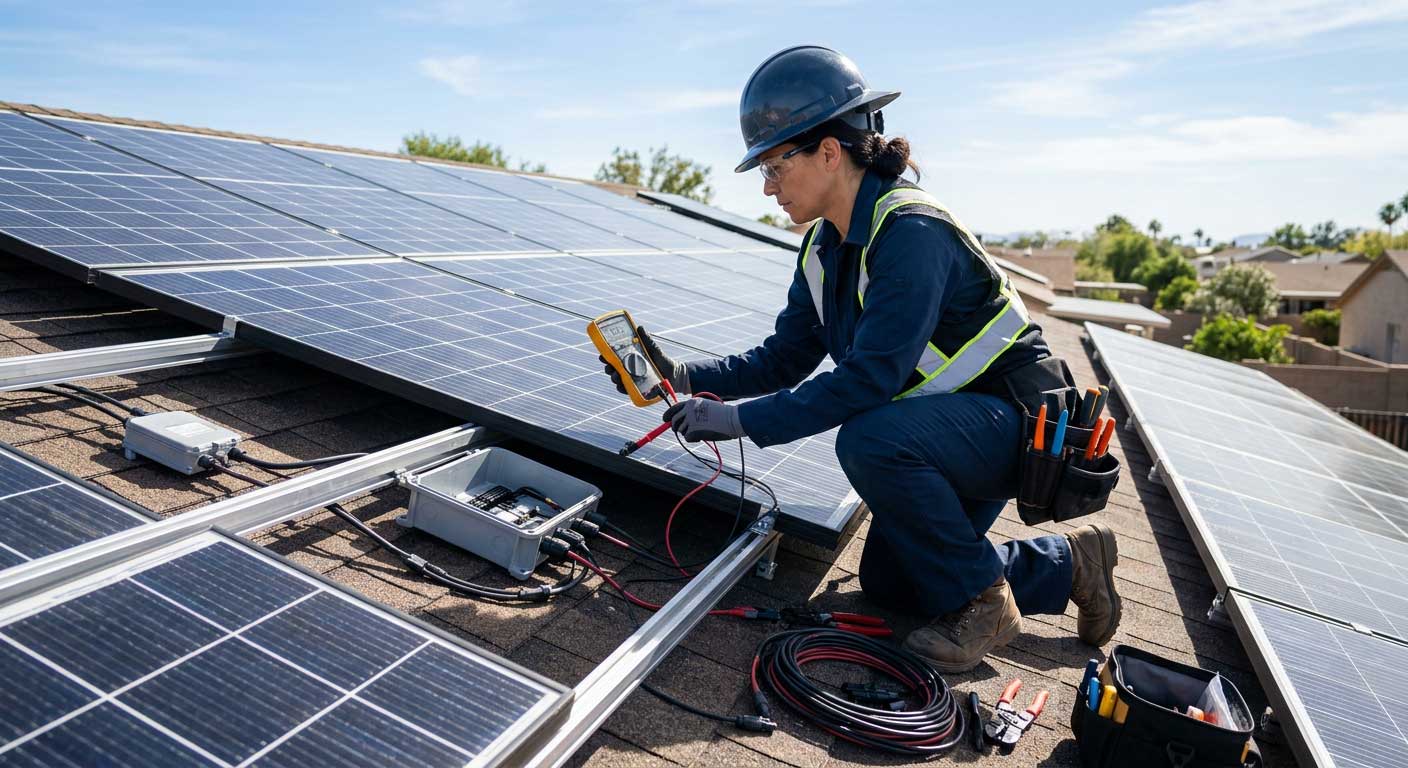
Use a multimeter to measure voltage
A digital multimeter is one of the simplest tools for checking solar panel operation.
Basic testing steps:
- Place the panel under direct sunlight
- Disconnect the panel from the load if necessary
- Set the multimeter to DC voltage
- Measure voltage across positive and negative terminals
- Compare the result with the panel specification
A voltage reading close to the panel’s open-circuit voltage (Voc) usually indicates the solar cells are generating electricity.
However, voltage alone does not confirm full performance. A panel can show voltage but produce little current if there is:
- Cell damage
- Poor connections
- Internal faults
- Controller problems
Check current output under load
Current measurement provides more information about actual power generation.
The basic relationship is:
Power (W) = Voltage (V) × Current (A)
Example:
A solar panel producing:
- 18V
- 5A
would generate approximately:
90 watts
under those specific conditions.
Actual output should be compared with sunlight conditions and the panel’s rated specifications.
Signs that your solar panels are working properly
The system produces expected energy
One important sign is consistent energy production.
A healthy solar system usually shows:
- Higher output around midday
- Lower output during morning and evening
- Reduced production on cloudy days
- Stable performance over time
Solar production should be evaluated by trends rather than a single day.
Weather changes naturally affect output. A cloudy winter day and a clear summer day will produce different results even when the equipment is functioning correctly.
Batteries and connected devices receive power
For off-grid systems, battery charging behavior is another useful indicator.
Check:
- Battery voltage increase during charging
- Charge controller status
- Power delivery to connected devices
For RV and portable solar applications, users often notice problems when batteries stop reaching normal charging levels.
Common reasons solar panels may not appear to work
Shading problems
Even partial shading can reduce solar production.
Common causes:
- Trees
- Buildings
- Roof structures
- Dirt buildup
Solar panels require direct sunlight exposure to generate maximum energy.
Wiring or connection issues
A panel may produce electricity, but poor connections can prevent power from reaching the battery or inverter.
Inspect:
- Loose connectors
- Damaged cables
- Incorrect polarity
- Corrosion
Marine and outdoor applications require extra attention because moisture and salt exposure can affect electrical connections over time.
Controller or inverter problems
Sometimes the solar panel is working correctly, but another component causes low output.
Possible issues:
| Component | Possible Problem |
|---|---|
| Charge controller | Incorrect settings |
| Inverter | Fault condition |
| Battery | Charging limitation |
| Cable | Resistance or damage |
Solar panel performance checks for different applications
Residential solar systems
Homeowners should monitor:
- Daily energy production
- Monthly trends
- System alerts
- Inverter status
RV solar panels
RV owners should check:
- Portable connections
- Battery charging
- Panel positioning
- Cable condition
Off-grid solar systems
Remote systems require regular checks because energy reliability directly affects daily operation.
Recommended monitoring:
- Battery level
- Solar input
- Load consumption
- Seasonal changes
FAQ About Checking Solar Panels
How can I tell if my solar panels are working?
Check energy monitoring data, measure voltage output, and confirm that batteries or connected devices are receiving power.
Do solar panels work when the sun is not very bright?
Yes, but output decreases because photovoltaic cells receive less sunlight.
Can solar panels have voltage but not produce power?
Yes. Voltage can exist even when current output is low because of wiring, shading, or equipment issues.
How often should I check solar panel performance?
Regular monitoring is recommended, especially after storms, installation changes, or noticeable production drops.
Why are my solar panels not producing enough electricity?
Possible causes include shading, dirt, wiring problems, incorrect settings, or equipment faults.
Can I test solar panels without professional tools?
Yes. Basic checks can be done through monitoring systems, while detailed testing may require a multimeter.
What is normal solar panel output?
Output depends on panel rating, sunlight conditions, temperature, installation angle, and system design.
Final Answer: How to tell if solar panels are working?
Knowing how to tell if solar panels are working requires checking real electrical output instead of relying only on appearance. Monitoring data, voltage tests, and system inspections help confirm whether photovoltaic equipment is operating correctly.
Bright Solar provides flexible solar panel solutions designed for RV, marine, portable, and off-grid applications where dependable energy production matters.
The prev: How to make your own solar panel?The next: How to test solar panel output?
Related recommendations
-

How To Mount Solar Panels To RV Roof?
215How to mount solar panels to RV roof? Learn RV solar panel mounting methods, installation tips, materials, and expert guidance from Bright Solar.
View details -
how to set up a portable solar panel system?
176Set up a portable solar panel system by positioning the panel in direct sunlight, connecting it to a compatible controller or power station, and checking vol...
View details -
How many volts should a 100 watt solar panel produce?
334How many volts should a 100 watt solar panel produce? Learn the normal voltage range, testing methods, and real performance data for 100W solar panels with Bright Solar.
View details -
how much are solar panels for a house?
293Find out how much are solar panels for a house with real installation data, pricing breakdowns, and field insights from Bright solar residential projects worldwide.
View details