How Much Do Flexible Solar Panels Weight?
How Much Do Flexible Solar Panels Weight?
Most flexible solar panels weigh between 2 kg and 5 kg (4.4–11 lbs), depending on wattage, materials, and construction. Compared with traditional rigid solar panels that often weigh 8–18 kg (18–40 lbs), flexible solar panels can reduce rooftop load by more than 70%, making them popular for RVs, boats, vans, and weight-sensitive applications.
The first time I physically lifted a flexible solar panel, I almost overcompensated.
Years of handling framed glass panels had conditioned me to expect weight.
Instead, the panel felt closer to a thick laptop than a traditional photovoltaic module.
That moment explains why flexible solar technology became so popular in the RV and marine markets.
People usually focus on watts.
Veteran installers often focus on kilograms.
Because when you’re working on a fiberglass sailboat, an aluminum camper roof, or a lightweight expedition trailer, every kilogram matters.
Typical Flexible Solar Panel Weight by Size
Flexible solar panels vary significantly in weight depending on power output and construction.
The following ranges reflect most premium ETFE monocrystalline panels currently available on the market.
| Panel Wattage | Typical Weight |
|---|---|
| 50W | 1.0–1.8 kg (2.2–4 lbs) |
| 100W | 1.8–3.0 kg (4–6.6 lbs) |
| 150W | 2.5–4.0 kg (5.5–8.8 lbs) |
| 200W | 3.5–5.0 kg (7.7–11 lbs) |
| 300W+ | 5.0–8.0 kg (11–17.6 lbs) |
A typical 100W flexible solar panel weighs roughly one-third of a comparable framed glass panel.
That difference becomes substantial when multiple panels are installed.
Real Example from an RV Installation
Last summer I worked with a customer converting a Mercedes Sprinter into an off-grid camper.
His original plan involved four traditional 100W rigid panels.
Total rooftop weight:
Approximately 40 lbs (18 kg) before mounting hardware.
Switching to premium flexible panels reduced panel weight to roughly 18 lbs (8 kg).
That saved more than 20 lbs before accounting for aluminum brackets and mounting rails.
For a vehicle already carrying water tanks, batteries, tools, and camping gear, that reduction mattered.
Why Flexible Solar Panels Weigh Less
The biggest reason is simple.
They eliminate glass.
Traditional solar panels typically include:
- Tempered glass front sheet
- Aluminum frame
- Reinforced backing materials
- Heavy mounting structures
Flexible solar panels replace many of those components with lightweight polymers and composite materials.
Materials That Reduce Weight
Modern premium flexible panels often use:
- ETFE protective layers
- Thin monocrystalline solar cells
- Lightweight composite backing sheets
- Frameless construction
According to material performance data published by DuPont, ETFE combines durability, UV resistance, and low weight, making it suitable for demanding outdoor applications.
Source:
https://www.dupont.com
Removing glass alone accounts for a significant portion of the weight reduction.
Flexible vs Rigid Solar Panel Weight Comparison
Weight differences become more obvious when comparing similar wattages.
| Specification | Flexible Panel | Rigid Panel |
|---|---|---|
| 100W Panel | 2–3 kg | 6–9 kg |
| 200W Panel | 4–5 kg | 12–16 kg |
| 400W System | 8–12 kg | 25–40 kg |
| Roof Loading | Low | Moderate to High |
The percentage difference can easily exceed 60–70%.
For some applications, that advantage is more important than efficiency differences.

Why Weight Matters More Than Most Buyers Expect
Many first-time buyers focus exclusively on power output.
Experienced installers think differently.
They ask:
“Can the roof handle the load?”
That question becomes especially important for:
- RV roofs
- Camper vans
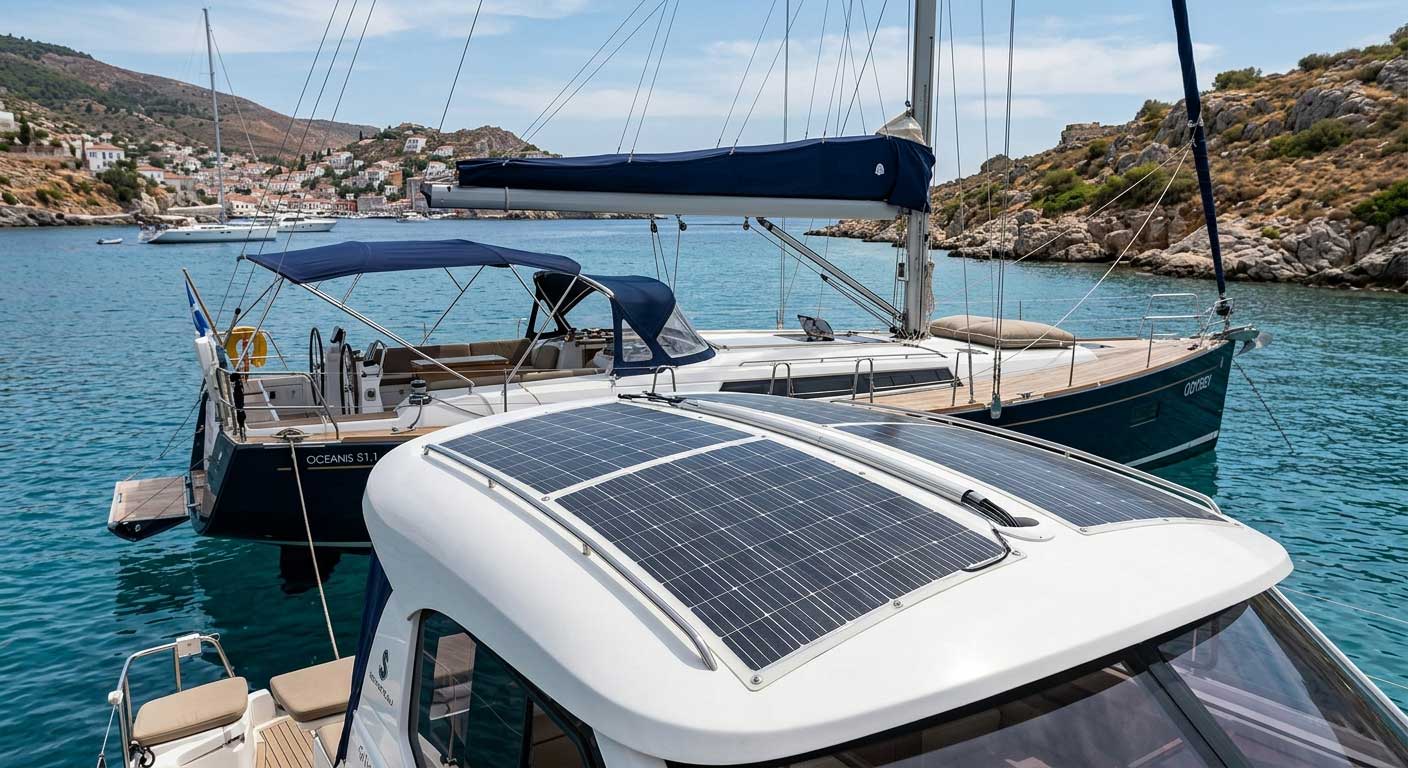
- Sailing yachts
- Small fishing boats
- Portable solar systems
- Lightweight trailers
A few extra kilograms may not seem significant.
Spread across multiple panels and mounting systems, the difference quickly adds up.
Marine Applications
Weight is particularly important aboard boats.
Additional weight positioned high above the waterline can affect vessel stability.
The American Boat and Yacht Council (ABYC) regularly emphasizes proper equipment placement and weight distribution as important considerations in marine electrical system design.
Source:
https://www.abycinc.org
This is one reason flexible solar panels became so common on sailing yachts.
Not because they generate more electricity.
Because they add less weight.
Do Lighter Panels Mean Lower Quality?
Not necessarily.
This misconception appears frequently.
Many people assume heavier products are stronger.
In solar, that’s not always true.
The weight difference usually comes from construction methods rather than cell quality.
A premium ETFE monocrystalline flexible panel may use the same high-performance solar cells found in much heavier modules.
The surrounding materials simply weigh less.
Weight vs Durability
A quality flexible solar panel should still offer:
- UV resistance
- Saltwater resistance
- Impact resistance
- Thermal stability
- Long-term weather protection
Weight alone tells you very little about durability.
Construction quality tells you much more.
How Much Weight Can You Save on a Complete Solar System?
This is where the numbers become interesting.
Consider a typical 400W RV installation.
Rigid Solar System
- Four 100W panels
- Approximately 32–40 lbs (14.5–18 kg)
Flexible Solar System
- Four 100W panels
- Approximately 16–24 lbs (7–11 kg)
Potential weight reduction:
15–25 lbs (7–11 kg)
In some builds, eliminating heavy mounting rails increases the savings even further.
For expedition vehicles and overlanding rigs, that reduction is often a selling point by itself.
Factors That Influence Flexible Solar Panel Weight
Not all flexible panels weigh the same.
Several factors affect final weight.
Panel Wattage
Higher wattage generally means larger dimensions and increased weight.
Cell Technology
Monocrystalline cells may differ slightly from alternative technologies depending on design.
Surface Materials
ETFE protective layers can add durability without significantly increasing weight.
Reinforcement Layers
Marine-grade and industrial panels often include additional structural layers.
These improvements can increase weight slightly while enhancing lifespan.
What Bright Solar Customers Usually Prioritize
Interestingly, weight rarely appears in a customer’s first question.
They usually ask:
- How much power?
- How much does it cost?
- How long will it last?
Weight enters the conversation later.
Then they climb onto an RV roof.
Or calculate payload limits.
Or realize their sailboat already carries several hundred pounds of batteries and equipment.
At that point, lightweight solar suddenly becomes very important.

FAQ About How Much Do Flexible Solar Panels Weight?
How much do flexible solar panels weight compared to rigid panels?
Flexible solar panels often weigh 60–70% less than equivalent rigid panels.
How much does a 100W flexible solar panel weigh?
Most 100W flexible solar panels weigh between 1.8 and 3.0 kg (4–6.6 lbs).
Are lightweight solar panels durable?
Yes. High-quality ETFE monocrystalline panels are designed to withstand UV exposure, moisture, and demanding outdoor conditions.
Why are flexible solar panels lighter?
They eliminate heavy tempered glass and aluminum framing, replacing them with lightweight composite materials.
Are flexible solar panels good for RV roofs?
Yes. Their low weight makes them especially attractive for RVs, camper vans, trailers, and boats.
Final Thoughts
So, how much do flexible solar panels weight? Most models weigh between 2 and 5 kilograms, depending on size and construction. Their ability to reduce rooftop load while still delivering reliable solar power is one of the primary reasons flexible panels continue gaining popularity among RV owners, boat builders, and off-grid travelers around the world.
The prev: How Much Do Flexible Solar Panels Cost?The next: How Many Watts in a Volt?
Related recommendations
-

How Much Do Residential Solar Panels Cost?
117How much do residential solar panels cost? Explore real 2026 solar panel prices, installation factors, system sizes, and expert insights from Bright Solar.
View details -
Can You Recycle Solar Panels?
218Yes. Solar panels can be recycled through specialist facilities that recover materials such as glass, aluminum, silicon, and metals.
View details -
How Much Does One Solar Panel Cost?
198How much does one solar panel cost? Discover current solar panel prices, what affects costs, and how to choose the right panel for your home with Bright Solar's expert guide.
View details -
how expensive are solar panels?
174Find out how expensive are solar panels with real pricing data, installation factors, and expert insights from Bright solar for smarter solar decisions.
View details