How to Attach Flexible Solar Panel?
How to Attach Flexible Solar Panel?
Flexible solar panels should be attached using industrial adhesive, mounting tape, screws with grommets, or adjustable brackets depending on the surface and ventilation requirements. Proper airflow underneath the panel is critical because excessive heat dramatically shortens flexible solar panel lifespan.
I learned this after inspecting a camper van installation in Nevada where the owner had glued flexible panels directly onto a black aluminum roof. Less than two years later, the panels showed bubbling and output loss. Another van parked nearby used elevated mounting spacers with airflow gaps, and those panels still tested near original performance.
That difference came down to installation—not the solar cells themselves.
Why Proper Flexible Solar Panel Installation Matters
Flexible solar panels look simple to mount. In reality, installation mistakes destroy more panels than manufacturing defects.
Heat buildup becomes the biggest issue.
Traditional rigid solar panels naturally allow airflow underneath because of their aluminum frame structure. Flexible panels often sit directly against surfaces, trapping heat beneath the cells.
The National Renewable Energy Laboratory (NREL) has published extensive research showing that elevated temperatures accelerate photovoltaic degradation and reduce long-term efficiency.
That becomes especially important on:
- RV roofs
- Marine decks
- Black metal surfaces
- Cargo trailers
- Tiny homes
I’ve measured roof temperatures above 160°F (71°C) during summer field inspections in Arizona. Flexible panels attached incorrectly in those conditions age very quickly.
Best Ways to Attach Flexible Solar Panels
Different mounting methods work better for different applications.
Some prioritize aerodynamics. Others prioritize removability or cooling.
1. Industrial Adhesive Mounting
This is the most common installation method.
Popular marine-grade adhesives include:
- Sikaflex 252
- 3M 5200
- Dicor adhesive systems
Advantages
- Clean appearance
- No roof drilling
- Good waterproofing
- Fast installation
Problems
- Limited airflow
- Difficult removal
- Potential overheating
I rarely recommend full-surface adhesive mounting anymore unless the roof already includes ventilation channels.
2. VHB Tape Installation
Very High Bond (VHB) tape is widely used for lightweight flexible solar installations.
It works especially well on:
- Fiberglass roofs
- RV surfaces
- Aluminum panels
Important Detail
Cheap tape fails quickly under UV exposure.
High-quality 3M VHB tape performs much better outdoors and resists vibration surprisingly well.
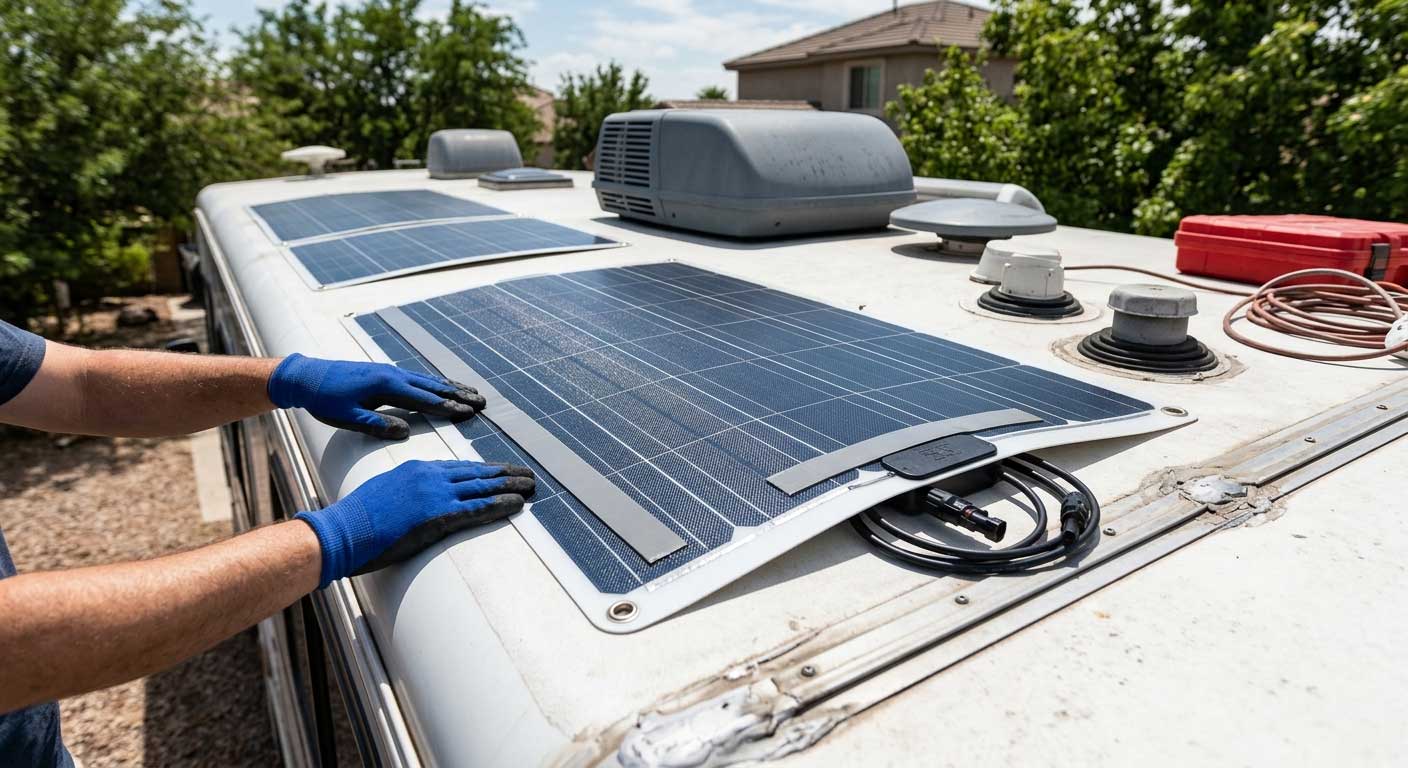
3. Screw Mounting Through Grommets
Some flexible solar panels include reinforced eyelets or grommets for mechanical fastening.
This approach works well for:
- Marine installations
- Temporary systems
- Portable applications
- Wind-prone environments
Advantages
- Strong wind resistance
- Easier replacement
- Better airflow options
Drawbacks
- Requires drilling
- Waterproof sealing becomes critical
On offshore boats, I still prefer mechanical fastening combined with marine sealant. Saltwater vibration eventually weakens many adhesive-only systems.
4. Raised Bracket Installation
This is my preferred method for long-term performance.
Small mounting brackets create an air gap underneath the flexible panel.
Even a 10–20mm gap improves cooling significantly.
Why Airflow Matters
Heat trapped underneath flexible solar panels causes:
- Faster degradation
- Reduced efficiency
- Adhesive fatigue
- Cell microcracking
The International Energy Agency (IEA) has repeatedly identified thermal management as a major durability challenge for lightweight photovoltaic systems.
Raised mounting helps solve that problem.
How to Attach Flexible Solar Panels on Different Surfaces
Not all surfaces behave the same outdoors.
RV Roof Installation
For RV roofs:
- Use lightweight mounting methods
- Avoid direct full-surface bonding
- Leave airflow underneath
- Seal cable entry points carefully
The biggest RV mistake is gluing panels flat onto dark roofs with zero ventilation.
That setup overheats constantly.
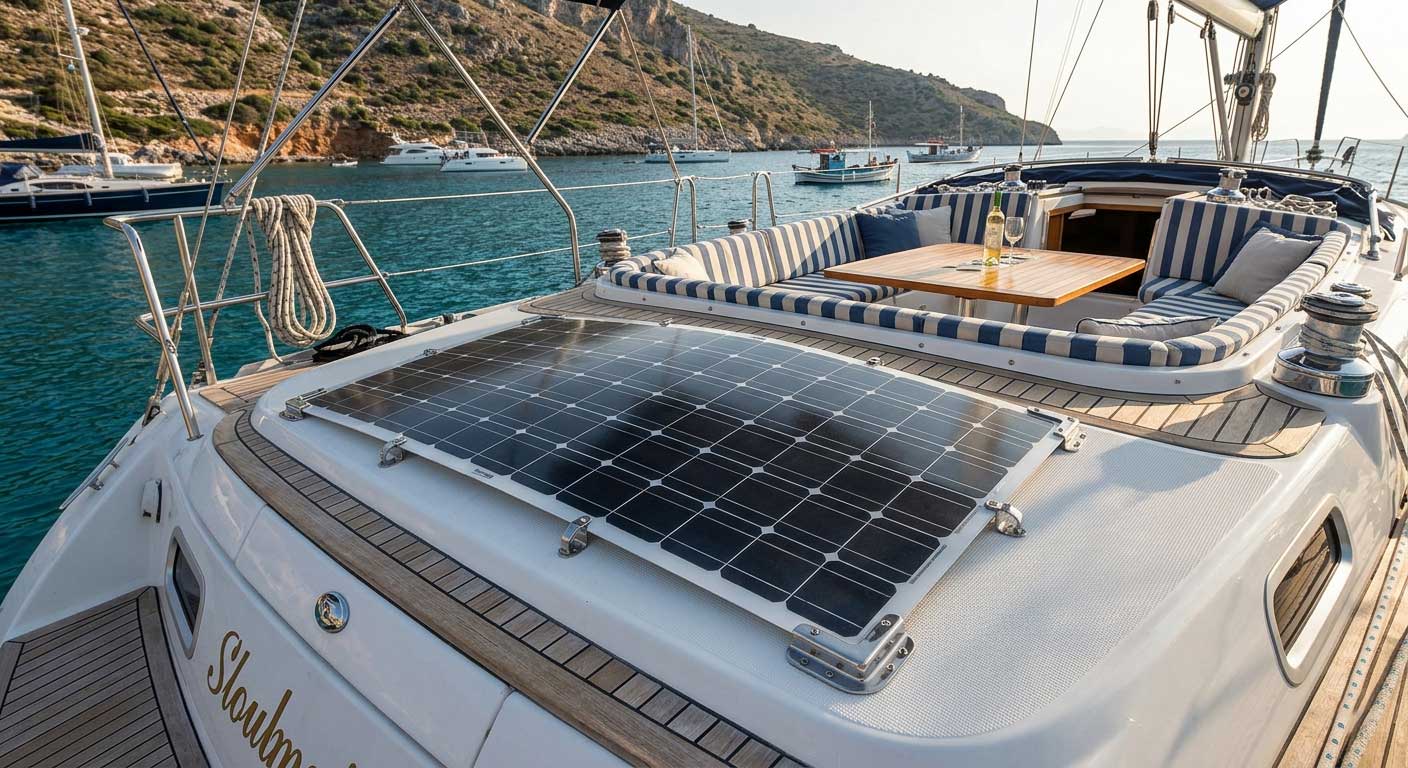
Boat and Marine Installation
Marine environments are harsher than most people expect.
Salt exposure accelerates:
- Corrosion
- Adhesive breakdown
- Connector oxidation
Marine flexible solar panels should use:
- UV-resistant adhesive
- Stainless hardware
- Waterproof MC4 connectors
- ETFE-coated surfaces
I inspected a yacht installation near Long Beach where low-cost connectors corroded in under 18 months despite the panels themselves still functioning.
Should Flexible Solar Panels Be Glued Directly to Roofs?
Technically yes. Practically, it depends.
Direct adhesive bonding creates:
- Cleaner appearance
- Better aerodynamics
- Faster installation
But it also creates more heat.
After years of field inspections, I’ve noticed directly bonded panels usually degrade faster than elevated systems.
Especially in hot climates.
A small airflow gap often matters more than buyers realize.
Common Flexible Solar Panel Installation Mistakes
Using Indoor Adhesives Outdoors
Many general-purpose adhesives fail under UV exposure.
Only use outdoor-rated products.
Blocking Ventilation
This is probably the most common mistake I see.
No airflow = excessive heat.
Over-Bending the Panel
Flexible panels are bendable—not foldable.
Exceeding bend radius limits creates invisible cell fractures.
Poor Cable Routing
Loose cables vibrate constantly during travel and eventually fail near connector points.
How Long Does Flexible Solar Panel Adhesive Last?
Quality marine adhesives can last 10 years or longer under proper conditions.
Cheap mounting tape sometimes fails within one summer.
Factors affecting adhesive lifespan include:
| Condition | Effect on Adhesive |
|---|---|
| UV exposure | Accelerates breakdown |
| High temperatures | Weakens bonding |
| Saltwater | Causes corrosion |
| Roof flexing | Creates stress fatigue |
| Poor surface cleaning | Reduces adhesion strength |
Preparation matters enormously.
I’ve seen excellent adhesives fail simply because installers skipped proper surface cleaning.
FAQ:How to Attach Flexible Solar Panel?
Can I glue flexible solar panels directly to an RV roof?
Yes, but raised mounting with airflow underneath usually improves cooling and lifespan significantly.
What adhesive is best for flexible solar panels?
Marine-grade adhesives like Sikaflex 252 or 3M 5200 are commonly used for outdoor flexible solar installations.
Do flexible solar panels need airflow?
Yes. Ventilation helps reduce heat buildup and slows long-term degradation.
Can flexible solar panels be screwed down?
Yes. Panels with reinforced grommets can be mechanically fastened using screws and waterproof sealant.
How do you waterproof flexible solar panel cables?
Use waterproof MC4 connectors, sealed cable glands, and UV-resistant outdoor wiring systems.
Final Thoughts on How to Attach Flexible Solar Panel
Flexible solar panels are lightweight and convenient, but their long-term performance depends heavily on installation quality.
Most premature failures I’ve inspected were caused by trapped heat, poor airflow, or cheap mounting materials—not defective solar cells.
At Bright Solar, we’ve found that elevated mounting with proper ventilation consistently produces better long-term results than fully bonded installations. A small airflow gap may not look dramatic, but over years of outdoor exposure, it can make a very large difference.
The prev: How Long Do Flexible Solar Panels Last?The next: How to Clean Flexible Solar Panels?
Related recommendations
-

How Good Are Flexible Solar Panels?
267How good are flexible solar panels for RVs, boats, and off-grid systems? Discover real-world performance, durability, efficiency, and expert insights from Bright Solar.
View details -
How Much Energy Does One Solar Panel Produce?
286How much energy does one solar panel produce? Learn daily kWh output, solar panel efficiency factors, real production data, and expert insights from Bright Solar.
View details -
common flexible solar panel problems and how to fix them?
293Discover common flexible solar panel problems and how to fix them with real repair experience, failure analysis, maintenance tips, and practical solutions from Bright Solar.
View details -
what direction do solar panels face?
194what direction do solar panels face? Learn the best solar panel orientation, compare south, east, and west-facing roofs, and improve home solar production.
View details