20 Watt Folding Solar Panel: Setup, Charging Times, and Mistakes to Avoid
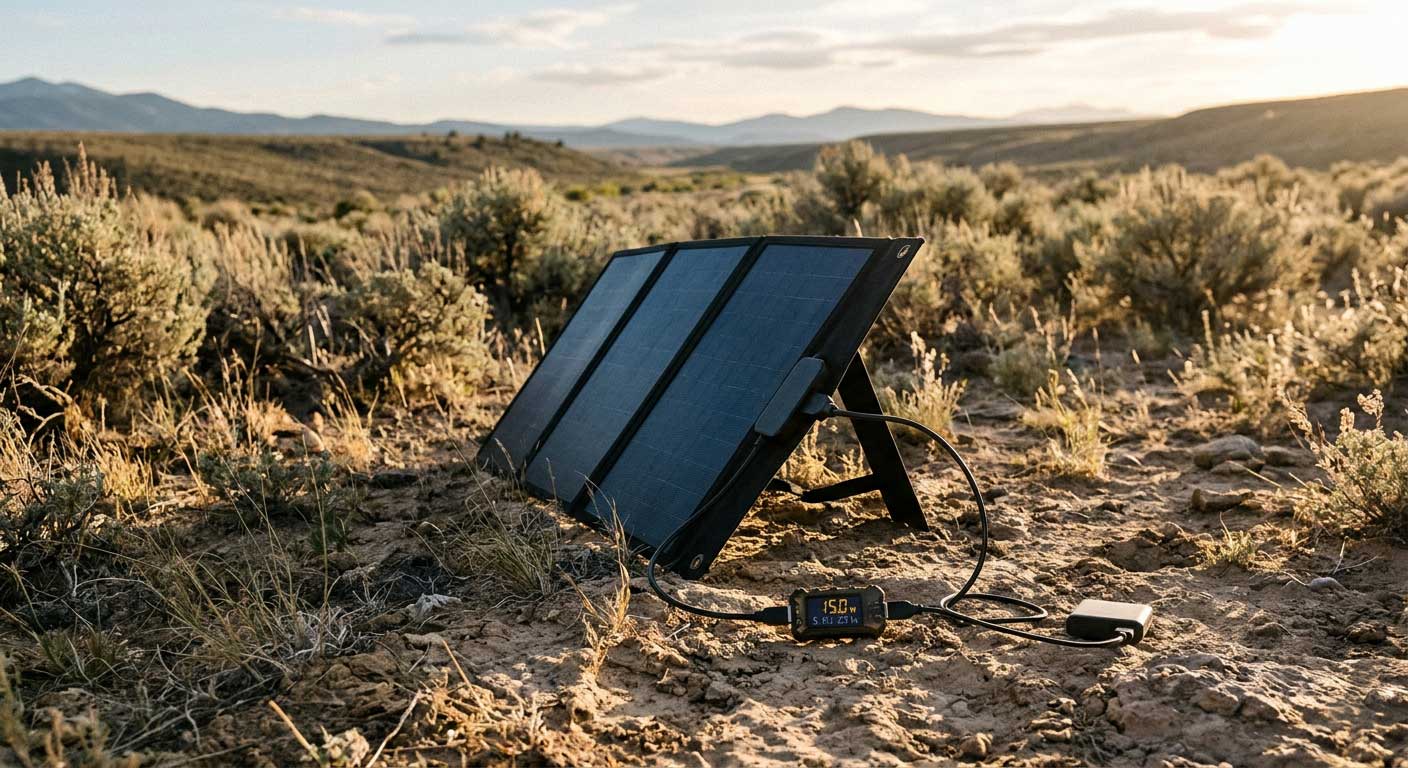
A 20 watt folding solar panel, set up correctly, puts out 13 to 17 real watts in clear sun: enough to charge a phone in about 2.5 hours, a 10,000mAh power bank in five, or hold a small 12V battery at full over a weekend. Set up wrong, it delivers half that, and most owners never realize which half they’re getting.
The gap between those outcomes is the point of this guide. I’ve tested folding panels for six years as Bright Solar’s product test lead, most recently a three-week Utah-and-Nevada run with an hourly watt log. What follows: the setup sequence, honest charging times, and the five mistakes that cost owners real power.
About the author: Marcus Hale is the product test lead at Bright Solar. He has run field tests on 40+ folding and rigid panels across the American West, logging output with inline USB meters and shunt monitors. His protocols are the basis for every Bright Solar charging guide.
First setup: five steps, in this order
The order matters more than people expect. Skipping ahead is how devices get confused about their power source. The whole sequence takes under two minutes.
- Unfold every panel segment. A half-opened panel runs its cells in partial shade. Open it all the way and check that no segment is resting face-down on dirt.
- Angle it toward the sun before connecting anything. In North America, face it south and tilt 30 to 45 degrees for midday use. Lower in morning and evening. The tilt alone is worth about 28% in my logs versus laying it flat.
- Connect the device, then the controller, then the panel. For USB gear, plug the phone or power bank in first. For a 12V battery, wire the charge controller to the battery before the panel leads go in. Controllers need battery power to boot before they’ll regulate panel input.
- Read the numbers once. An inline USB meter costs under ten dollars and ends every guess about whether the panel is working. First reading should land between 10 and 17 watts on a clear day.
- Re-angle every one to two hours. The sun moves roughly 15 degrees an hour. Two quick adjustments roughly triple the usable full-power window compared to a set-it-and-forget-it panel.
Step two is the one most owners skip. Lying flat on gravel, the panel gets full sun at a glancing angle. Angling puts the cells closer to perpendicular to the sun, and the meter response is immediate.
Charging times: what to expect, hour by hour
Marketing copy tends to quote best-case numbers. Here’s the range I actually recorded across eleven clear days and four overcast ones, so you can set expectations before your first trip.
| Device | Clear sun, angled | Partly cloudy | Overcast |
| Smartphone, 4,500mAh | 2–3 hours | 4–5 hours | Won’t finish |
| 10,000mAh power bank | ~5 hours | 8–9 hours | No |
| Headlamp or GPS | 1–2 hours | 2–3 hours | 4–5 hours |
| 12V 10Ah battery, empty to full | 1.5–2 sunny days | 3 days | Practically no |
| Car battery maintenance (50Ah) | Topping only | Topping only | No |
Two numbers from the U.S. Department of Energy explain why the panel can’t do better. Panels are rated at 1,000 W/m² and a 25°C cell temperature, conditions that rarely line up in the field, and module output degrades about 0.5% per year once deployed (energy.gov/cmei/femp/optimizing-solar-photovoltaic-performance-longevity). Add the standard 0.3 to 0.5% loss per degree Celsius above 25°C at the cell, and a panel baking on hot rock is already down 12% or more before clouds even enter the picture. Commercial mono cells top out near 22 to 23% efficiency against a laboratory record of 26.7% on NREL’s Best Research-Cell Efficiency Chart (nrel.gov/solar/cell-efficiency.html), which is why a “20 watt” panel is designed, from the factory, to underperform its label in the real world.
Charging a 12V battery the right way
A folding solar panel with charge controller is the correct pairing for any 12V battery, no exceptions. Direct connection lets the panel push current into a full battery, which boils off electrolyte in wet cells and permanently shortens AGM and lithium packs. A 5A PWM controller costs fifteen dollars and makes the panel plug-and-play forever after. For the complete wiring options, our guide “How to wire a solar panel?” walks through both PWM and MPPT hookups for small panels.
The five mistakes that quietly cut your output
Every one of these showed up in my field logs with a measurable watt penalty. None of them announce themselves.
- Laying it flat. Already covered above, but it bears repeating: flat costs roughly a quarter of your power.
- Letting one shadow cross the panel. Cells in a folding panel are wired in series, so one strap, branch, or chair leg across a corner drags down the entire string. My test panel dropped from 13W to 6W with a cap brim covering about a tenth of the surface.
- Charging through a thick phone case. Slow-charging generates heat, and a rubber case traps it. Phones on thermal protection throttle their own input from 15W down to 5W or less. Take the case off in summer.
- Skipping the controller on 12V. Covered above, and the most expensive mistake on the list, because the damage shows up weeks later as a dead cell.
- Storing it creased and hot. A panel zipped shut and left in a trunk all summer develops permanent crease marks along the fold line. Those micro-cracks are invisible from a distance and permanently shave output. Store it flat or loosely rolled.
One more habit: dust. A dusty panel loses a few percent within days in desert country. A damp microfiber cloth fixes it in a minute; our FAQ “What to Clean Solar Panels With?” covers which household materials are safe on the cell surface.
Case study: the truck that wouldn’t start in Ely, Nevada
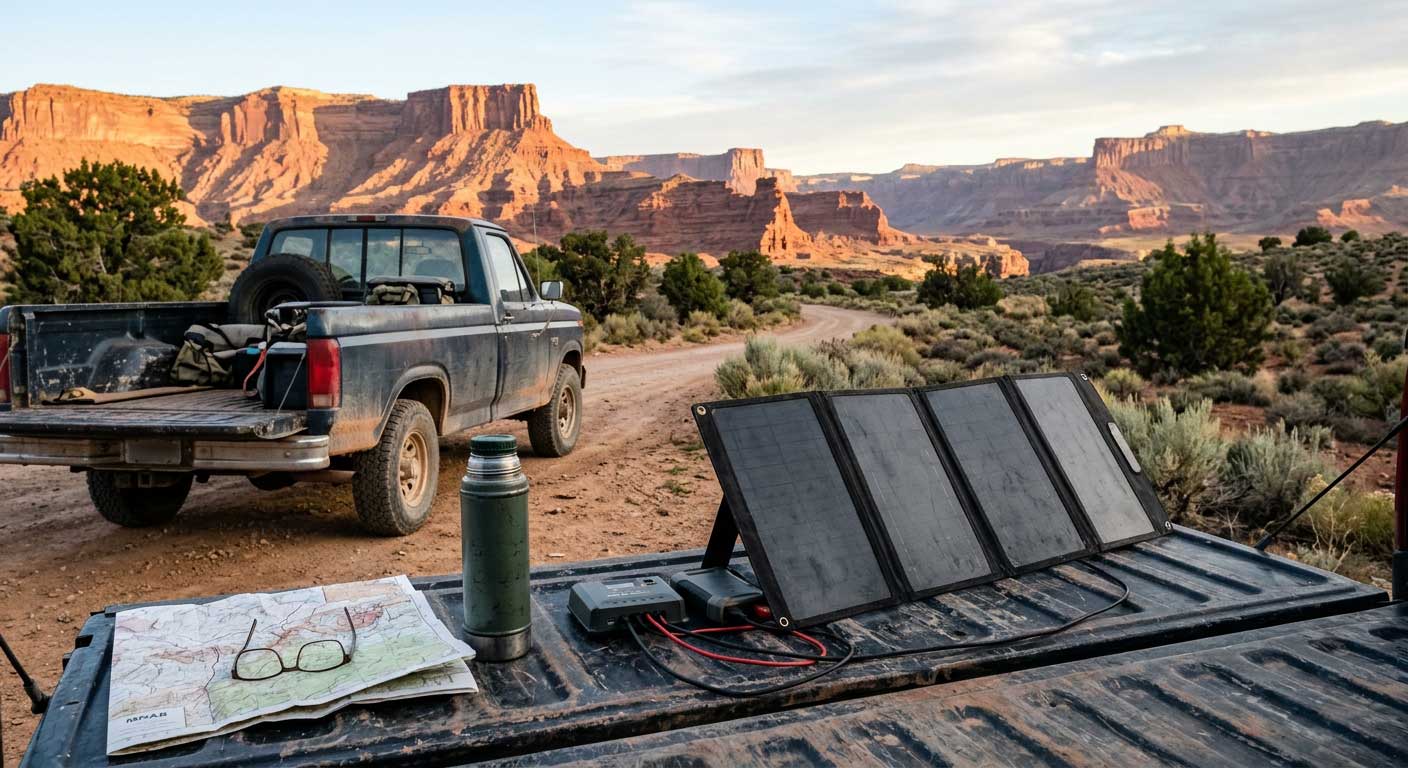
Last November a neighbor in Ely parked his F-150 for three weeks while he was out of state. Cold snap, battery at 12.1 volts, engine clicking but turning over. He borrowed my panel, a 5A controller, and clipped it to the battery through the hood gap while he was at work.
This is where a 20 watt folding panel shows both sides of its character. As a rescue device, it failed: 20 watts is about 1.3 amps, and pulling a 50Ah battery from 12.1V back to cranking voltage would take the better part of two full sunny days. Nobody sits on a no-start truck for two days. A wall charger or jump pack handles that job in minutes.
As a prevention device, though, it worked exactly as intended. He left it clipped in every Friday through the winter. By spring his resting voltage sat at 12.6V, and the truck started first crank every morning. A parked vehicle’s parasitic draw sips 0.5 to 1.2 amp-hours a day, and a panel returning 40 to 60 watt-hours on a sunny day covers that with room to spare. If you’re wondering how to check whether any of this is actually working, our article “How to tell if solar panels are working?” covers the voltage readings to look for at the battery.
Folding versus rigid at 20 watts: when the fold is worth paying for
A rigid 20W panel costs less, sheds heat better with its aluminum frame, and survives drops that would crack a folding panel’s cells. So why buy the folding one at all? Packability. A folding panel collapses to roughly tablet size and slides into a pannier, backpack lid, or under a seat, which is exactly where a rigid glass panel has no home.
The honest trade-off list, from my notes across both types:
- Folding wins on storage volume, roughly a third of the packed space.
- Rigid wins on lifespan; hinges are the first thing to wear on any folding unit.
- Folding panels with fabric backs run hotter, costing a few percent on hot days.
- For vehicle-based use where space isn’t tight, buy rigid. For anything carried on a back, folding is the only sensible shape.
If your loads have outgrown 20 watts entirely, the upgrade path runs through our breakdown of the 100 Watt Foldable Solar Panel Kit: Output, Setup and Uses, which uses the same test protocol at five times the power.
Frequently asked questions
How do you use a 20 watt folding solar panel for the first time?
Unfold it completely, angle it toward the sun, connect your device first and the panel last, then verify the output with a meter. Re-angle every one to two hours. The full sequence takes about two minutes.
How long does a 20 watt folding solar panel take to charge a phone?
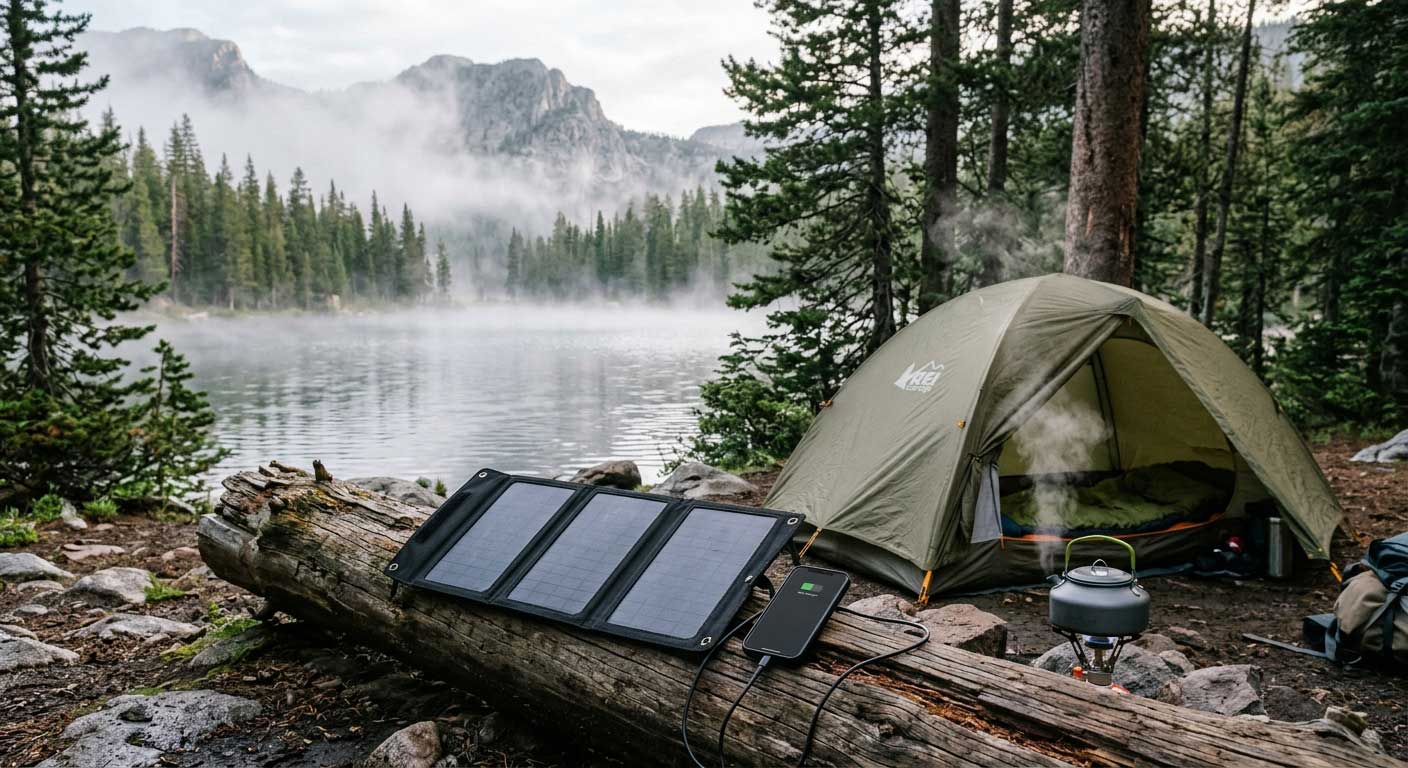
Two to three hours of angled clear sun for a modern 4,500mAh phone, or four to five in mixed clouds. Thick cases and heat throttling are the two most common reasons a charge drags past that window.
Can a 20 watt folding solar panel charge a car battery?
It can maintain a healthy 12V car battery indefinitely, but it cannot rescue a deeply discharged one in a single day. At roughly 1.3 amps of real charge current, a fully drained 50Ah battery needs nearly two sunny days. Keep it clipped in during storage instead and you’ll never face the dead battery in the first place.
Do I need a charge controller with this panel?
For 12V batteries, always. For USB devices, no, since phones and power banks regulate their own input. A 5A PWM controller costs about fifteen dollars and protects the battery from overcharge the moment the panel isn’t needed.
Can a folding solar panel get wet?
Light rain won’t hurt the cells, and most fabric-backed panels handle a soaking, but water pooling along the crease and connectors is where failures start. Prop it at an angle so water runs off, dry the connectors before storing, and never fold a wet panel shut.
Why is my panel only showing half its rated watts?
Check four things in order: is it lying flat, is anything shading a corner, is the surface hot to the touch, and is the sky overcast. Each one alone can cut output by 25% or more, and any two together will land you near half the label. That behavior is normal physics, not a defect.
Keep reading from Bright Solar
These guides from our own library pick up right where this article stops:
- How to wire a solar panel? — the hookup options behind step three of the setup sequence, including controller wiring for 12V batteries.
- How to tell if solar panels are working? — the voltage and meter readings that separate a working panel from a dying one.
- What are the best portable solar panels? — our comparison of sizes and styles, including when a rigid panel beats a folding one.
The bottom line
A 20 watt folding solar panel rewards setup discipline the way a cast iron pan rewards preheating. Open it fully, angle it at the sun, connect in the right order, and it quietly covers every small-device charge you’ll generate on the move. Do it lazily and you’ll conclude the panel is weak. It isn’t. Your angle is.
Author bio: Marcus Hale, product test lead at Bright Solar, has logged 1,200+ field hours on portable solar across Utah, Nevada, and Wyoming. He designs the repeatable protocols behind every Bright Solar charging guide and still measures everything twice, because panels lie politely.
Related recommendations
-

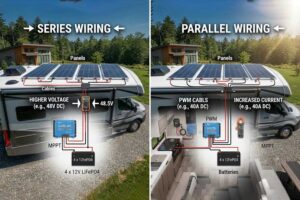
Solar Panel Series vs Parallel: Which Connection Method Is Better?
295Compare solar panel series vs parallel wiring methods to choose the right setup. Learn voltage, current, shading, and RV solar solutions with Bright Solar.
View details -
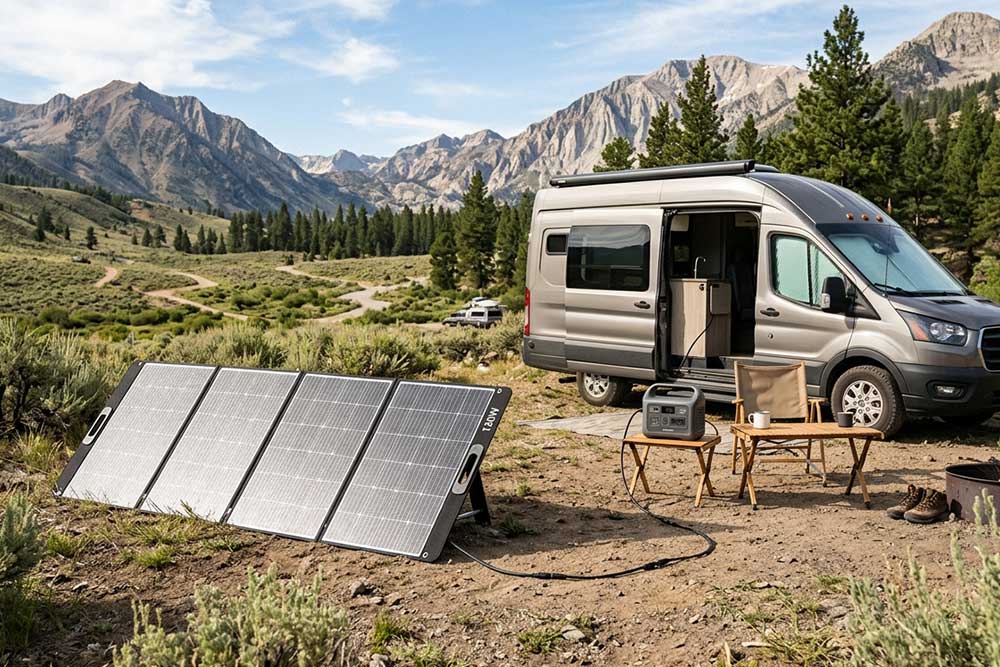
120 Watt Foldable Solar Panel: Output, Uses, and Buying Guide
61A 120W foldable solar panel provides portable power for camping, RV travel, outdoor electronics, and compatible battery systems. Actual energy production dep...
View details -
ETFE Solar Panel Flexible: Benefits, Uses and Buying Guide
252An ETFE solar panel flexible uses an ETFE front surface and a bendable module construction. It can suit RV, marine, and off-grid projects, but selection depe...
View details -
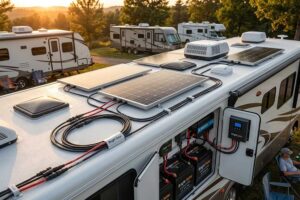
Solar Panel Wiring for RV, Marine, and Off-Grid Solar Systems
335Learn solar panel wiring for RVs, boats, homes, and off-grid systems. Discover series vs parallel setups, safety tips, and real installation cases.
View details