what are the best portable solar panels?
The best portable solar panels combine suitable wattage, efficient energy conversion, manageable weight, durable construction, and compatibility with your battery or power station. The right choice depends on your daily energy needs, available sunlight, and where you plan to use it.
For a weekend camper, a compact folding panel may be ideal. For an RV owner with limited roof space, a lightweight semi-flexible panel may fit better. Boat owners have another concern: moisture, salt exposure, and how securely the panel can be installed.
Bright Solar helps B2B buyers evaluate flexible and portable solar solutions for outdoor power, RVs, marine applications, and off-grid systems. Rather than choosing a panel based on its advertised wattage alone, compare the complete setup.
What Makes a Portable Solar Panel the Best Choice?
A good portable panel needs to perform in the environment where it will actually be used. Five factors deserve particular attention.
- Rated power: Choose wattage based on the energy your devices consume, not just the number printed on the panel.
- Conversion efficiency: Higher efficiency can produce more power from a limited surface area, although real-world output also depends on sunlight, temperature, and orientation.
- Portability: Folding panels are convenient to transport and reposition. Flexible Solar Panels can suit curved surfaces when their installation requirements are met.
- Durability: Check the encapsulation material, connectors, moisture protection, and suitability for outdoor exposure.
- System compatibility: Confirm the panel’s operating voltage, current, connector, and maximum input limits against your charge controller or power station.
The distinction between rated power and actual energy production matters. A 100W panel does not continuously generate 100W throughout the day. Clouds, shading, panel angle, and temperature all affect output.
The U.S. Department of Energy explains that photovoltaic cells convert sunlight into electricity, while the National Renewable Energy Laboratory’s PVWatts calculator estimates solar production using location and system conditions. These are useful starting points for realistic expectations.
Sources: U.S. Department of Energy — Solar Photovoltaic Technology Basics and NREL — PVWatts Calculator.
Best Portable Solar Panels by Use Case
There is no single model that suits every traveler. Independent testing published by OutdoorGearLab in July 2026 compared 12 portable solar panels and found meaningful differences between rated and measured output. Its testing measured 177W from a 200W Renogy portable panel, illustrating why published wattage should not be treated as a guaranteed daily result.
| Application | Recommended panel type | What to prioritize |
|---|---|---|
| Backpacking and hiking | Compact 10–40W panel | Low weight, USB charging |
| Weekend camping | 100W folding solar panel | Easy setup, adjustable angle |
| RV and campervan | 100–200W portable panel | Battery compatibility, cable reach |
| Boat and marine use | Marine-suitable flexible or portable panel | Corrosion resistance, secure mounting |
| Extended off-grid stays | 200W or higher, depending on loads | Daily energy yield, expandability |
| Curved vehicle roofs | Semi-flexible solar panel | Approved mounting method, ventilation and temperature limits |
These wattage ranges are starting points, not universal sizing rules. A laptop, compressor refrigerator, or medical device can change the system requirements considerably.
Best Portable Solar Panels for Camping
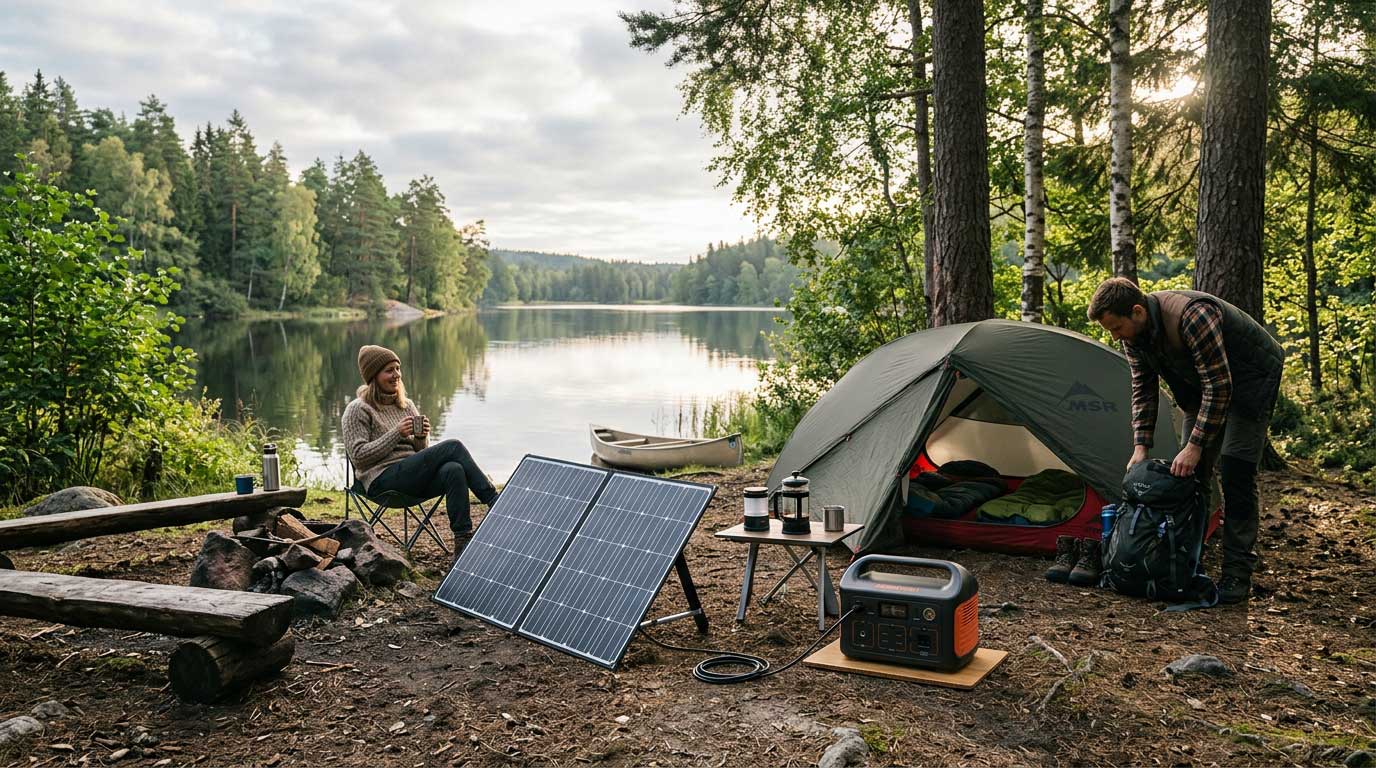
For car camping, a 100W folding panel is a practical starting point for charging a power station, phones, lights, and small electronics. Choose a 200W model if you need more energy during short daylight windows or have several devices competing for power.
A useful detail often overlooked in product listings is the support system. Kickstands that hold the panel at a stable angle can make more difference than a small advertised efficiency advantage when the sun moves across the campsite.
Folding vs. Flexible Portable Solar Panels
The physical design should match how you intend to use the panel. A folding panel is designed to be opened, positioned, and packed away. A flexible panel is designed to conform to certain curved surfaces within its specified bending limits; flexibility does not automatically mean it can be folded repeatedly.
| Feature | Folding portable panel | Flexible solar panel |
|---|---|---|
| Main advantage | Easy to deploy and store | Fits suitable curved surfaces |
| Typical use | Campsites, temporary charging | RV roofs, selected marine installations |
| Positioning | Often uses integrated support legs | Depends on the mounting surface |
| Key concern | Carrying weight and wind stability | Heat, adhesive compatibility and bending limits |
| Best buyer | Travelers who move frequently | Buyers who need a low-profile installation |
For marine and vehicle applications, verify the product’s actual environmental ratings and installation instructions. Do not assume that every flexible panel is waterproof for immersion, safe to walk on, or suitable for a saltwater environment.
Bright Solar’s L Series offers flexible solar panel options with a stated maximum flexibility of up to 30%. That specification should be interpreted according to the manufacturer’s product documentation and mounting requirements, not as permission to bend the panel arbitrarily.
Best Lightweight Portable Solar Panels for RVs
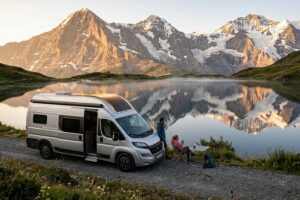
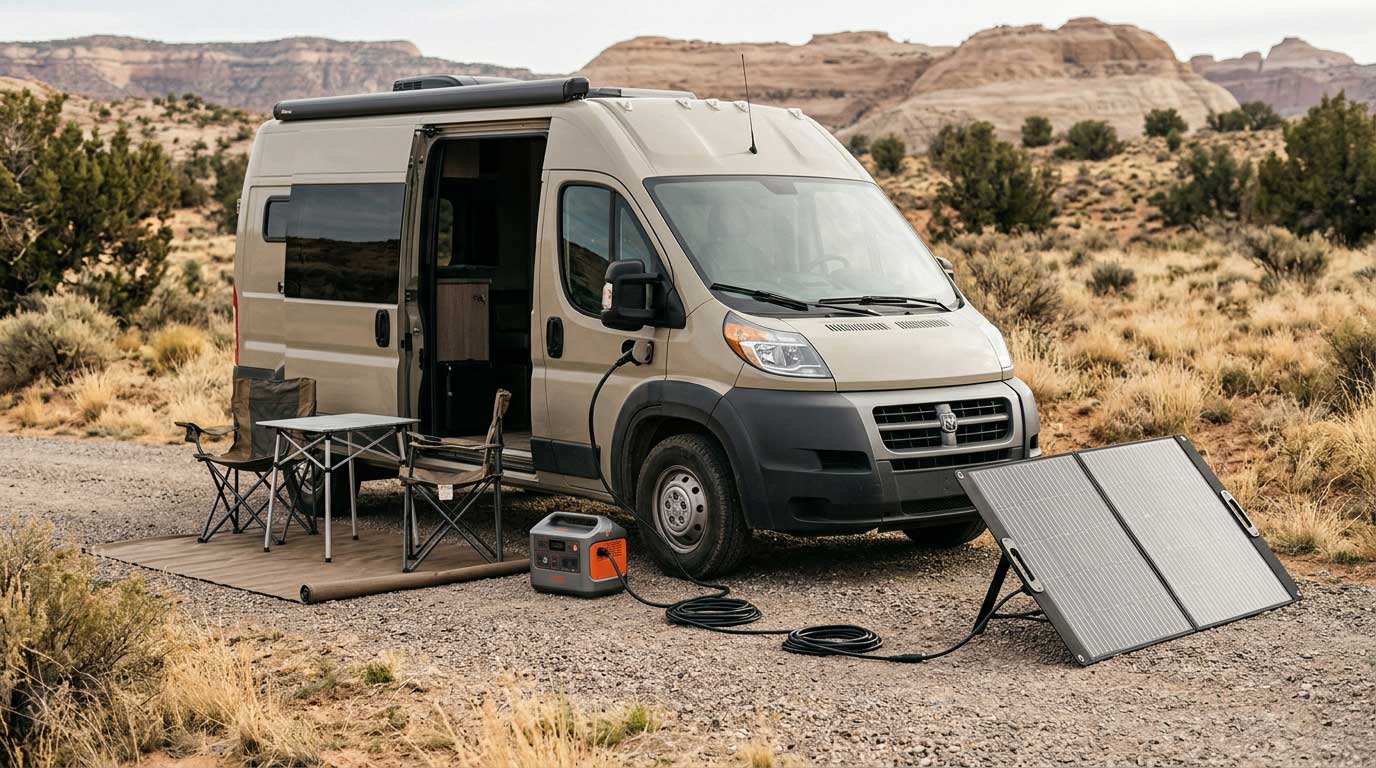
RV buyers should first decide whether the panel will sit outside on the ground or remain attached to the vehicle. A portable folding unit is convenient when parking in different orientations, while a suitable semi-flexible module can be considered when roof curvature and low profile matter.
Before purchasing, check three numbers on the product datasheet:
- Open-circuit voltage (Voc), including its increase in cold conditions.
- Operating current and voltage against the controller’s input limits.
- Maximum solar input accepted by the power station or battery system.
A panel rated at 200W will not deliver its full rating to a power station that limits solar input to 100W. Compatibility is an electrical constraint, not a marketing detail.
How to Choose the Right Portable Solar Panel
Before placing an order, work through these practical checks:
- Estimate daily consumption. Add the watt-hours required by your devices over 24 hours.
- Allow for conversion losses. Battery charging, cables, controllers, and inverters reduce the energy available to your appliances.
- Check the real operating environment. Shade from trees, roof vents, rigging, or nearby buildings can reduce production.
- Inspect the connection details. Verify connectors, polarity, voltage limits, and whether a charge controller is included or required.
- Review the warranty and mounting guidance. Especially important for B2B buyers sourcing panels for OEM products, vehicle installations, or marine equipment.
For example, a device drawing 60W for five hours consumes 300Wh. A nominal 100W panel would need at least three equivalent hours at its full rated output to generate that energy, before system losses. In practice, you should allow additional charging time and account for local solar conditions.
FAQ About what are the best portable solar panels?
What are the best portable solar panels for camping?
A 100W folding solar panel is a useful starting point for car camping and charging a small power station. Backpackers generally benefit from smaller, lighter panels, while longer trips may justify a higher-wattage setup.
Are portable solar panels worth buying?
Yes, if you regularly need electricity away from a grid connection. They can recharge compatible batteries and devices using sunlight, but their usefulness depends on weather, available daylight, power consumption, and storage capacity.
Is a 100W or 200W portable solar panel better?
A 100W panel is generally easier to carry and sufficient for lighter charging needs. A 200W panel offers greater potential energy production in comparable conditions but is usually bulkier and heavier.
Can portable solar panels charge a power station?
Yes. The panel’s voltage, current, connector, and polarity must be compatible with the power station’s solar input. Check the manufacturer’s limits before connecting the equipment.
Are flexible solar panels better than folding panels?
Neither design is universally better. Folding panels suit temporary, repositionable charging, while flexible panels can suit certain curved surfaces and low-profile installations. Compare durability, heat management, mounting requirements, and intended use.
Do portable solar panels work on cloudy days?
Yes, photovoltaic panels can generate electricity in diffuse daylight, but output typically decreases when sunlight is obscured. The reduction depends on cloud cover, panel characteristics, and local conditions.
How long do portable solar panels last?
Lifespan varies by construction, materials, exposure, handling, and manufacturer warranty. Review the specific product documentation rather than applying the service life of a rigid rooftop module to every portable or flexible design.
Conclusion
The best portable solar panel is the one that matches your energy demand, available space, transport needs, and electrical system. For most car campers, a folding 100W or 200W panel is a sensible starting point; RV and marine buyers should give equal attention to mounting, weather resistance, and long-term operating conditions.
Bright Solar supports B2B buyers exploring flexible solar panel solutions and customized configurations. When evaluating what are the best portable solar panels, compare documented specifications and system compatibility before choosing a product for your application.
The prev: Is my house good for solar panels?
Related recommendations
-

How much are residential solar panels?
183Discover how much are residential solar panels and what affects total costs, including panel prices, installation factors, system size, and expert solar insights from Bright Solar.
View details -
How Do Solar Energy Generate Electricity?
234How do solar energy generate electricity? Learn how sunlight becomes power through photovoltaic cells, solar technology, and expert insights from Bright Solar.
View details -
How Does Solar Panels Work on a House?
199Solar panels convert sunlight into DC electricity, while an inverter converts it to AC power for household use, with the grid or battery covering shortfalls.
View details -
How Much Electric Does a Solar Panel Generate?
267How much electric does a solar panel generate? Discover daily and yearly solar panel output, real-world performance, and expert insights from Bright Solar with verified industry data.
View details