Custom Size Flexible Solar Panels: MOQ, Tooling, 15-Day Samples
Custom size flexible solar panels are built to your drawing instead of picked from a catalog: you send dimensions and voltage, the factory cuts the module to the millimeter, makes a functional sample, and starts mass production only after you approve it. At Bright Solar the path from drawing to functional sample takes 15 working days, the power window runs from 1 W to 500 W+ at 5 / 12 / 24 / 48 V or custom, and every sample is tested with 100% IV-curve and EL inspection before it ships.
This page explains what is actually customizable, what the tooling fee pays for, how the 15-day sample window breaks down day by day, and what three real custom projects looked like — so you can judge feasibility and cost before you send a drawing.
Custom Size vs. Custom Shape: Which One Do You Actually Need?
The two terms get mixed up in RFQs constantly, and the mix-up costs one round of revisions.
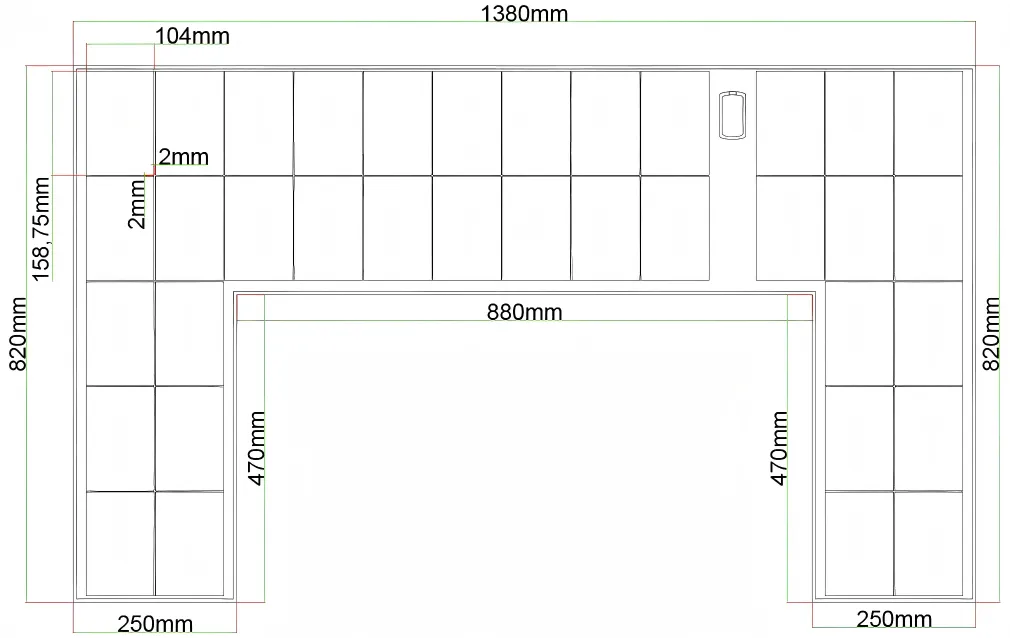
Custom size means a rectangular module with non-standard length and width — say 1,200 × 420 mm instead of a catalog 1,072 × 532 mm. The outline stays rectangular; only the dimensions move.
Custom shape means the outline itself follows the installation surface: rounded corners, angled edges, a cutout around a hatch, a cable exit moved to a corner. Shapes involve cell-layout redesign, not just cutting.
The rule: if your surface is rectangular and the problem is only that standard panels are too long, too short, or too wide, you need a custom size — faster to quote, cheaper to tool. If the outline itself is the problem, read our custom shape flexible solar panels guide instead; the two pages share the same process but differ in engineering review depth.
Size Limits: How Small and How Large We Can Go
Power is the wrong ruler for size limits. A 1 W module and a 500 W module can share the same laminator — what actually constrains dimensions is cell layout, edge sealing, and the junction box.
We build custom flexible panels from 1 W to 500 W+, configured at 5 V, 12 V, 24 V, 48 V, or a custom voltage to match your battery bank or charge controller. For reference, our standard L-series modules span 532 mm wide (the BS100-FT) to 870 mm wide and 1,745 mm long (the BS300-FT); custom sizes move outside this frame in either direction.
| Dimension element | What constrains it | What it affects |
|---|---|---|
| Minimum panel size | One complete cell plus edge-seal margin on all four sides | Smallest practical module; power from 1 W |
| Maximum panel size | Laminator bed width; cell-string layout | Top end of single-module power (~500 W+) |
| Minimum width (narrow strips) | Cell width after cutting, plus two sealed edges | Walkway strips, hardtop edges, rail gaps |
| Hole and cutout positions | Clearance from busbars and cell edges | Rooftop penetrations, mounting hardware |
| Cable exit position | Junction box placement rules | Cable routing into the vehicle or vessel |
Ask us with two numbers — target length × width in millimeters and target watts — and we will tell you in the first reply whether the size is a standard customization or needs a new layout.
Laser Cutting Tolerance: What ± 0.5 mm Means in Practice
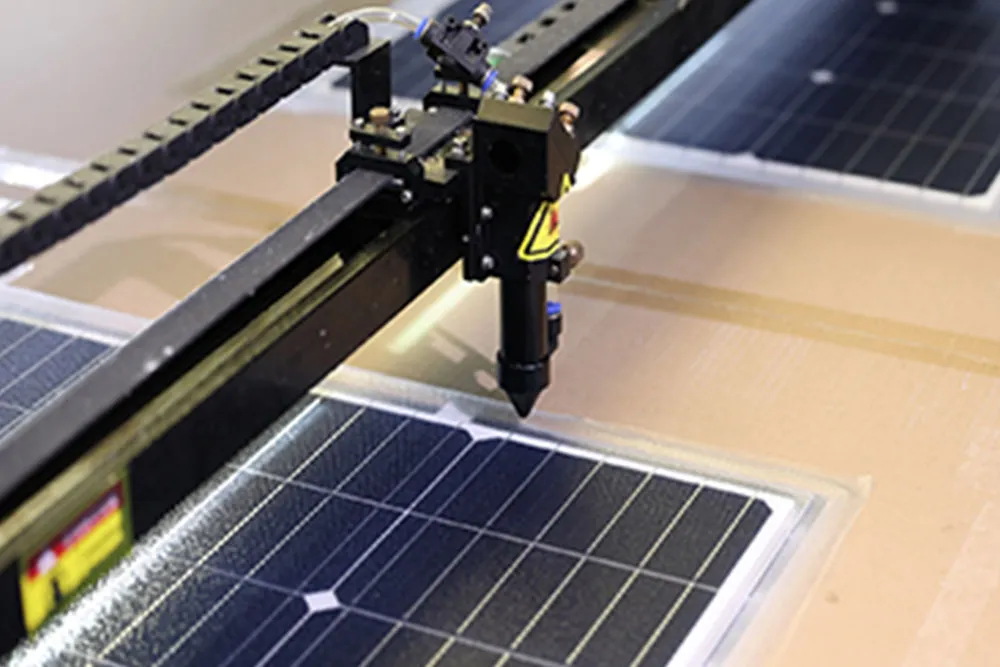
Flexible panels are cut after lamination with a CNC laser, and the tolerance we hold on length, width, and hole positions is ± 0.5 mm. That number matters more than it looks, because three things depend on it:
- Edge seal integrity. Cutting too close to the cell edge removes the encapsulation margin that keeps moisture out; the seal margin is engineered into the layout, not trimmed in post.
- Mounting-hole alignment. If your roof penetrations or brackets are drilled at fixed centers, a tolerance loose enough to matter at 1 mm becomes a misaligned fastener at 1,700 mm panel length.
- Cable exit repeatability. For OEM buyers installing the same panel across a product line, every unit’s cable exit needs to land in the same place relative to your enclosure opening.
For curved surfaces: L-series modules tolerate bending up to 30% flexibility along a single axis. Curvature is a design input, not a cutting output — we confirm the allowed bend direction and radius during drawing review, before anything is laminated.
Tooling Fees and the 15-Day Sample Process
The tooling fee is a one-time charge that covers the engineering work a custom size requires before the first panel can be laminated: cell-layout design, the cutting fixture, and the lamination template for your dimensions. It is quoted as a flat number per design, it does not repeat on reorders of the same drawing, and if the design is close to an existing layout the fee drops accordingly — this is exactly what the first reply from our engineers will tell you.
Here is how the 15-day window actually breaks down:
| Days | Stage | What happens |
|---|---|---|
| Day 0 | Drawing received | You send dimensions (mm), target W/V, quantity, application |
| Day 1–2 | CAD + DFM review | Our engineers produce the 2D/3D drawing and run a design-for-manufacturing check on cell layout and cost |
| Day 3–4 | Quote + confirmation | Tooling fee, unit price tiers, and sample lead time are fixed in writing |
| Day 5–12 | Sample build | Cell stringing, layup, lamination, laser cutting to final size |
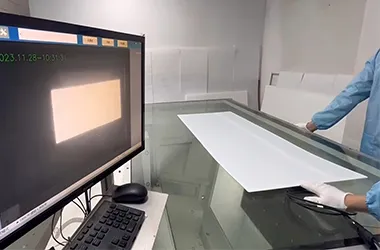
| Day 13–14 | 100% testing | Every sample gets an IV-curve test and EL (electroluminescence) inspection — no sampling statistics, each unit |
| Day 15 | Ship | Samples plus full test reports leave the factory |
The two-day test window is where custom projects are won or lost. IV curves catch power deviation from the datasheet target; EL imaging catches micro-cracks that a multimeter will never see. You do not have to take the factory report on faith, either — here is how to test a solar panel’s output yourself when the sample arrives.
MOQ and the Price Logic Behind It
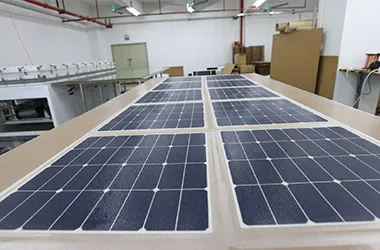
Custom size MOQ at Bright Solar is 20 pcs per design. The number is not arbitrary — it exists because three costs do not scale down gracefully:
- Material yield. Custom dimensions cut from standard cell-string layouts leave offcut material; a minimum order absorbs that yield loss sensibly.
- Lamination batching. The laminator runs most efficiently on full batches of one layup; a 10-piece run shares the same setup cost across too few units.
- Tooling amortization. The layout and fixtures exist for your drawing; the MOQ is where one-time engineering stops distorting unit economics.
Unit price drops in tiers as quantity rises — expect the first meaningful step at the jump from sample quantity to production quantity, and a second one at container quantities. Reorders of an approved drawing skip the tooling fee entirely and shorten lead time, because the layout and fixtures already exist.
Three Custom Projects, Real Numbers
We have been shipping custom-sized panels since 2016. Three projects show the range of what “custom size” means in practice:
| Project | Product | Power | What was customized |
|---|---|---|---|
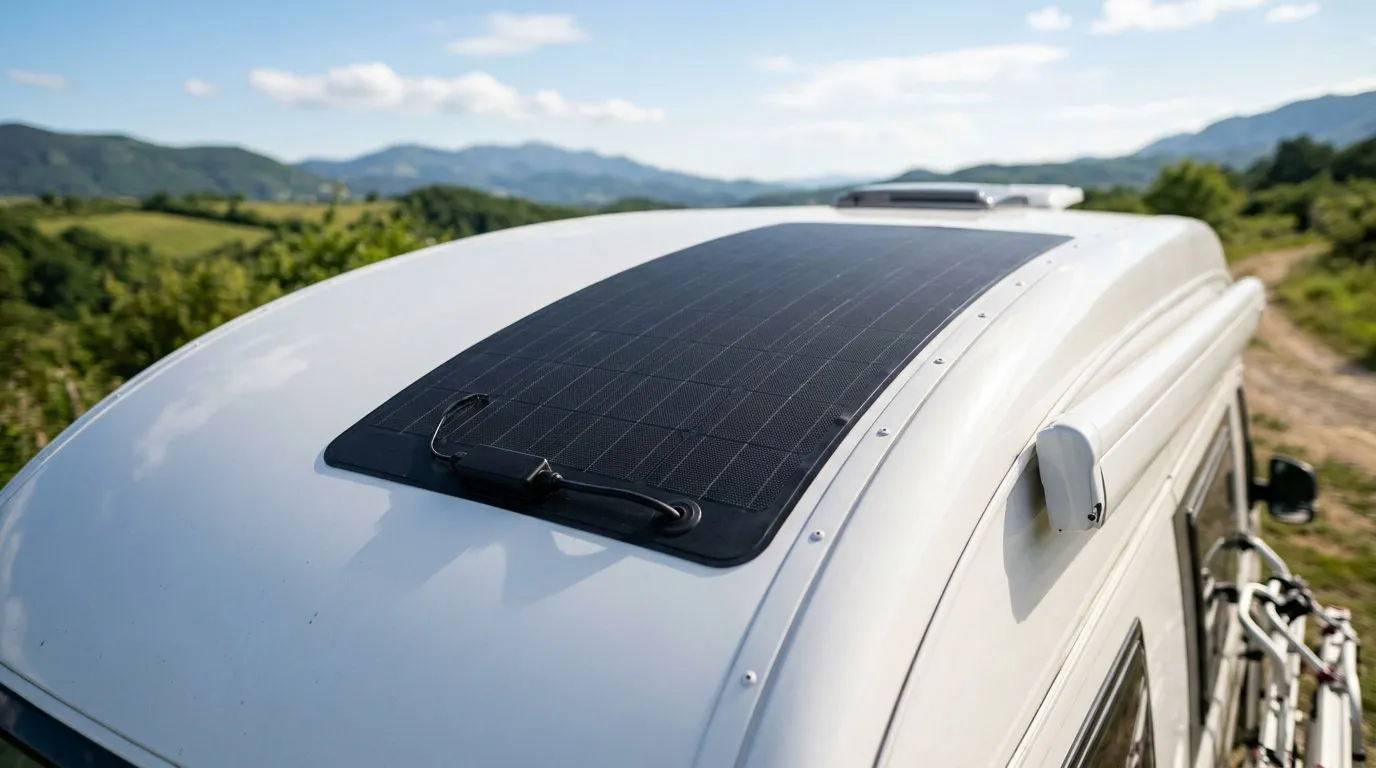
| France, 2016 — special RV roof project | Custom mono semi-flexible, L Series | 100 W | Precise sizing to the client’s non-standard RV roof for a snug, seamless fit — 【长×宽 mm】 |
| USA, 2019 — yacht deck project | Flexible, L Series (Sunpower cells) | 200 W | Deck-fit dimensions for a yacht manufacturer, ultra-light and corrosion-resistant build — 【长×宽 mm】 |
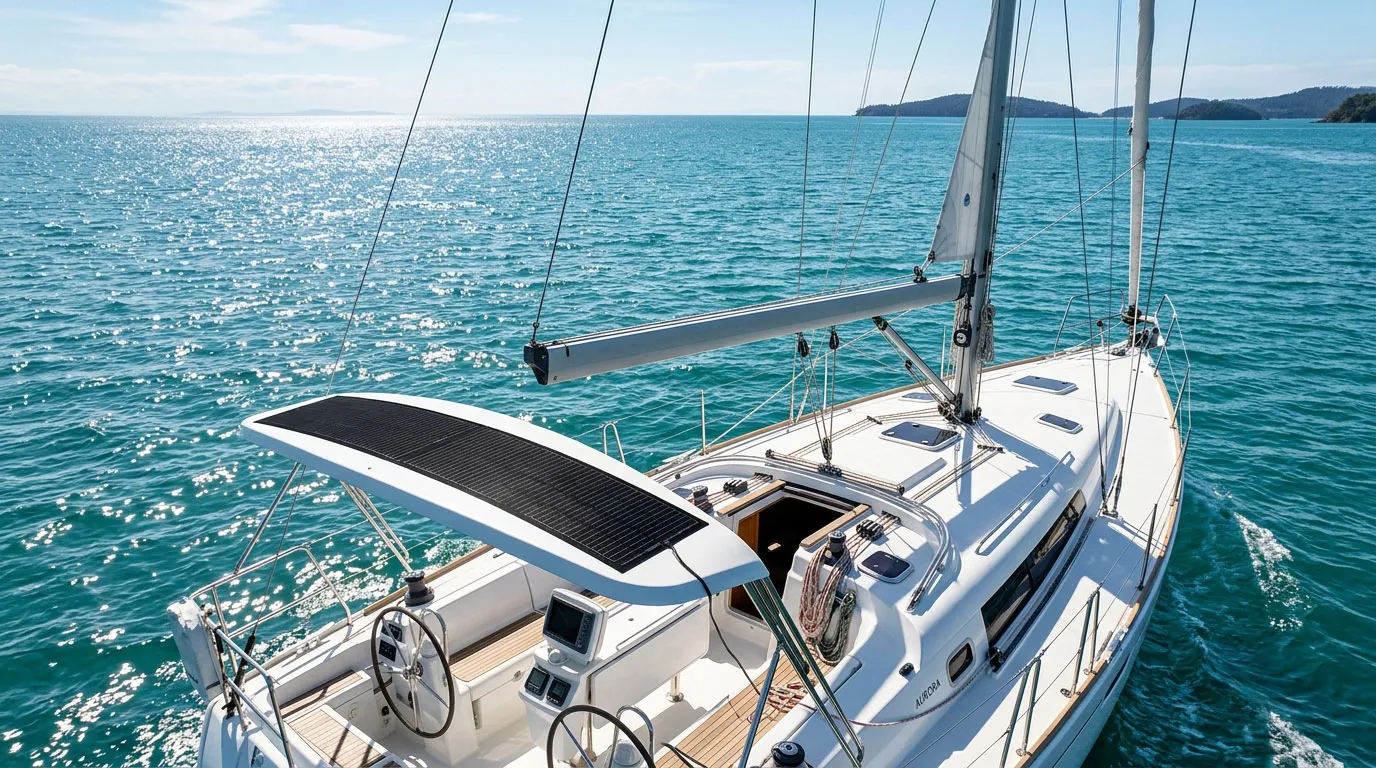
| Netherlands, 2022 — boat Bimini-top project | Mono flexible, L Series | 80 W | Panel engineered to be sewn onto the vessel’s fabric roof without hurting appearance — 【长×宽 mm】 |
Note the third case: sewn-on mounting is only possible because a flexible laminate survives the stitching line — a rigid module cannot do that, and neither can a flexible panel with a glass layer. The customization conversation and the mounting-method conversation are the same conversation. If you are comparing constructions, start with flexible vs. rigid solar panels.
What to Send Us for an Exact Quote
An exact quote needs six things. A dimensioned sketch is enough to start — our engineers turn it into the CAD drawing:
- Target length × width in millimeters (usable area, not roof outline)
- Target power (W) and system voltage (5 / 12 / 24 / 48 V)
- Order quantity — sample quantity now, production estimate later
- Application and surface: RV roof, yacht deck, bimini, product enclosure
- Cable exit position and any holes/cutouts with centers marked
- Curvature: flat, single-direction curve, or a radius if you know it
Send those through our custom solar panel page and the first reply — feasibility, tooling fee, MOQ, sample date — comes back within two working days. If your project is a semi-flexible mono build like the France RV case, the custom mono semi-flexible panel series page shows the product family the process builds on.
FAQ: Custom Size Flexible Solar Panels
What is the smallest custom size flexible solar panel you can make?
The practical floor is one complete cell plus edge-seal margin on all four sides. In power terms we build from 1 W upward; send the millimeter dimensions and we confirm feasibility in the first reply.
How much does a custom size cost compared with a standard panel?
Two costs sit on top of the unit price: a one-time tooling fee for layout and fixtures, and a unit premium that shrinks as quantity rises. Reorders of the same approved drawing carry no tooling fee.
Can the panel match a curved roof or hull section?
Yes — L-series modules allow up to 30% flexibility along a single axis. Curvature direction and radius are confirmed at drawing review, before lamination.
Is the 15-day sample lead time guaranteed?
The 15 days run from drawing approval, not first contact. Standard rectangular sizes hold the window; complex outlines add review days, which the quote states explicitly.
Can you put our brand on the panels?
Yes — logo by silkscreen, laser engraving, or label on the panel surface, junction box, or backsheet, plus custom retail packaging. Branding is part of the same tooling conversation.
What happens after I approve the sample?
Mass production starts on the approved drawing: the same layout, same fixtures, same test regime (100% IV + EL) applied to every production unit, with lead time confirmed against your order quantity.
Start With Two Numbers
Most custom-size conversations start the same way: a length, a width, and a watt target. Send those three with your quantity through our custom solar panel manufacturing page, and you will know within two working days whether your panel is a two-week sample or needs a deeper engineering pass — before any money is spent on tooling.
Related recommendations
-

500 watt flexible solar panel: High Power Flexible Solar Solution for RV, Marine and Off-Grid Applications
360Discover how a 500 watt flexible solar panel delivers high power output with lightweight design, durability, and versatile installation options for RVs, marine, and off-grid applications.
View details -
Solar Power Flexible Panels for Modern Off-Grid Energy
262Solar power flexible panels deliver lightweight off-grid electricity for RVs, boats, campers, and rooftops. Discover durable ETFE solar solutions from Bright Solar.
View details -
Camping Folding Solar Panels: How to Choose and Use Them
174Camping folding solar panels provide portable electricity for outdoor devices and power stations. Choose based on daily energy needs, sunlight, carrying weig...
View details -
200W Flexible Solar Panel: Lightweight Solar Power for RV, Marine, and Off-Grid Use
381200w flexible solar panel solutions for RVs, boats, and off-grid travel. Discover lightweight ETFE solar panels with high efficiency and real-world durability.
View details