What to Clean Solar Panels With?
The safest way to clean solar panels is to use clean, preferably low-mineral water, a soft microfiber cloth or non-abrasive sponge, and a gentle, manufacturer-approved soap when necessary. Avoid abrasive brushes, harsh chemicals, and high-pressure washing.
Solar panels are designed to withstand outdoor conditions, but their front surfaces still need appropriate care. Dust, pollen, bird droppings, leaves, and dried mineral deposits can accumulate over time. Using the wrong cleaning equipment may leave scratches, damage protective coatings, or affect seals and electrical components.
For most residential installations, cleaning does not require specialized chemicals. A bucket of suitable water, a soft cleaning tool, and a little patience are usually enough.
What Cleaning Supplies Are Best for Solar Panels?
The best cleaning supplies are those that remove dirt without scratching the module surface or leaving chemical residue.
Here is what to prepare before starting:
| Cleaning Supply | Recommended Use | Important Consideration |
|---|---|---|
| Clean water | Rinsing dust and loose dirt | Prefer low-mineral water |
| Microfiber cloth | Removing light surface dirt | Use a clean, soft cloth |
| Soft sponge | Cleaning stubborn deposits | Avoid abrasive surfaces |
| Soft-bristle brush | Reaching larger panel areas | Never use stiff or metal bristles |
| Mild, pH-neutral soap | Removing greasy bird droppings | Use only when permitted by the manufacturer |
| Rubber squeegee | Removing excess water | Use a clean, non-damaging blade |
1. Clean Water
Water is the first choice for ordinary dust and loose dirt.
If your local tap water contains substantial dissolved minerals, it may leave white spots or mineral deposits after drying. Deionized or appropriately filtered water can help reduce this problem.
This is particularly useful for large solar arrays, where repeated water spotting can make the panels look dirty even after cleaning.
2. Microfiber Cloths and Soft Brushes
A microfiber cloth is useful for small areas and delicate cleaning work. A soft-bristle brush with an appropriate extension handle can help reach larger surfaces without putting unnecessary pressure on the glass.
Do not use kitchen scouring pads, steel wool, rough towels, or stiff brushes. They can create scratches that are difficult to remove.
3. Mild Soap or Solar Panel Cleaner
For sticky contamination, clean water alone may not be sufficient.
Use a small amount of mild, non-abrasive, residue-free soap if the solar panel manufacturer’s cleaning instructions allow it. Commercial solar panel cleaners are another option, but check their compatibility with the module’s glass, coatings, seals, and frame materials.
More detergent does not mean better cleaning. Excess soap can leave a film that attracts additional dirt.
What Should You Avoid When Cleaning Solar Panels?
Some household cleaning products are designed to remove stubborn stains from windows, kitchens, or vehicles. That does not make them suitable for photovoltaic modules.
Avoid the following:
| Cleaning Product or Tool | Why You Should Avoid It |
|---|---|
| Steel wool | Can scratch the glass surface |
| Abrasive scouring pads | May damage protective coatings |
| Bleach | Can affect materials and seals |
| Ammonia-based cleaners | May be incompatible with module coatings |
| Strong solvents | Can damage encapsulation or surrounding materials |
| High-pressure washers | May damage seals, wiring, and connections |
| Metal scrapers | Can scratch glass and create permanent damage |
The National Renewable Energy Laboratory recommends following module manufacturers’ instructions and using demineralized water with manufacturer-approved mild detergent where cleaning agents are necessary. Its guidance also warns against high-pressure water and abrasive cleaning methods.
Source: NREL – Best Practices for Operation and Maintenance of Photovoltaic Systems.
A common mistake is using a pressure washer to remove dried bird droppings. The stain may disappear quickly, but water forced into vulnerable seals or electrical connections can create a much more expensive problem.
How to Clean Solar Panels Without Damaging Them
The cleaning process should be gentle. There is no advantage to scrubbing harder than necessary.
Step 1. Choose the Right Time
Clean panels early in the morning, late in the afternoon, or during cool, overcast weather.
Hot glass causes water to evaporate quickly, leaving mineral spots and detergent residue. A sudden temperature difference between hot glass and cold water should also be avoided.
Step 2. Rinse Away Loose Dirt
Use a garden hose with a gentle, normal-pressure water flow to remove dust, pollen, and loose debris.
Do not direct water into electrical connections, damaged junction boxes, or exposed cables.
Step 3. Remove Stubborn Stains
Use a clean microfiber cloth or soft sponge. If necessary, apply a small amount of manufacturer-approved mild detergent.
Allow dried bird droppings to soften with water before gently wiping them away. Do not scrape them off with a blade.
Step 4. Rinse and Check the Surface
Rinse thoroughly to remove detergent residue. If your water contains substantial minerals, consider deionized water to reduce spotting.
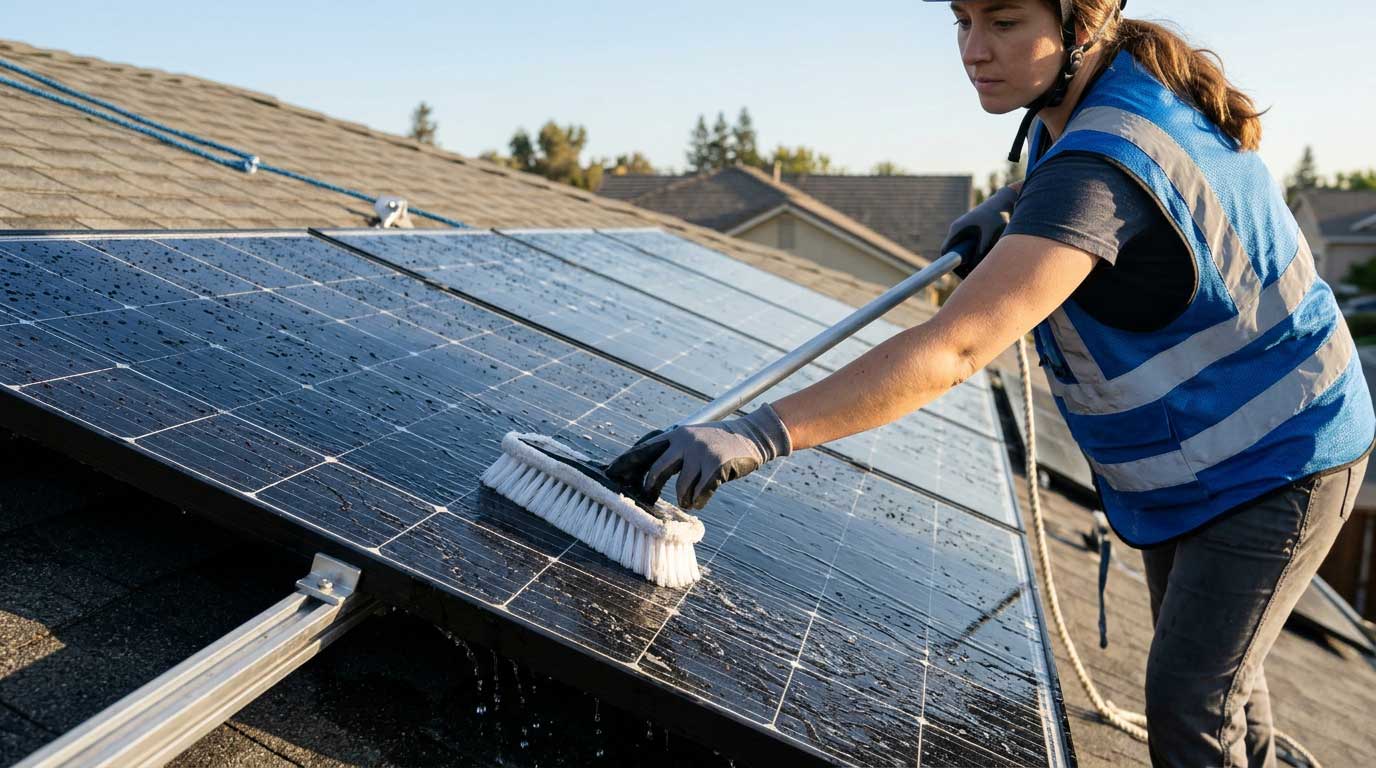
The Energy Saving Trust also recommends cool-weather cleaning, soft brushes or sponges, and safe access from the ground wherever possible. It advises homeowners to seek professional assistance when rooftop access is difficult or unsafe.
Source: Energy Saving Trust – Solar Panel Cleaning and Maintenance.
Does Every Solar Panel Need the Same Cleaning Method?
No. The panel’s surface material and construction should determine the cleaning approach.
| Solar Panel Type | Recommended Cleaning Approach |
|---|---|
| Rigid glass panels | Clean water and a soft cloth or brush |
| Flexible ETFE panels | Soft microfiber cloth and manufacturer-approved cleaning solution |
| Portable folding panels | Gentle wiping with a damp, non-abrasive cloth |
| Marine solar panels | Freshwater rinsing to remove salt deposits, followed by gentle cleaning |
For flexible solar panels, avoid pulling, folding, or pressing the module while cleaning. Check the manufacturer’s instructions before applying any detergent.
Bright Solar develops flexible and semi-flexible solar modules for RV, marine, and off-grid applications. Its L Series uses an ETFE surface designed for outdoor use and offers up to 30% flexibility. Proper cleaning should still account for the module’s construction, bonding method, and electrical connections.
FAQ About What to Clean Solar Panels With?
Can I use dish soap to clean solar panels?
A small amount of mild dish soap may be suitable for certain modules, but always check the manufacturer’s cleaning instructions first. Some products leave residue that attracts dust.
Can I clean solar panels with vinegar?
Vinegar is acidic and should not be used unless the panel manufacturer specifically approves it. Plain water is a safer starting point for ordinary dirt.
Is Windex safe for solar panels?
Do not assume household glass cleaners are safe for solar modules. Some contain ammonia, solvents, or other ingredients that may be incompatible with panel coatings and seals.
Can I use a pressure washer on solar panels?
No. High-pressure water can damage seals, electrical connections, and other vulnerable components. A normal garden hose with gentle water flow is preferable.
Should I clean solar panels with hot or cold water?
Use clean water close to ambient temperature when the panels are cool. Avoid sudden temperature changes, particularly when the modules have been exposed to strong sunlight.
How often should solar panels be cleaned?
There is no universal cleaning schedule. Rainfall, dust, pollen, bird activity, and local pollution determine how quickly panels become dirty. Inspect them periodically and clean when contamination becomes significant.
Does rain clean solar panels sufficiently?
Rain removes some loose dust and dirt, but it may not remove dried bird droppings, sticky pollen, or accumulated mineral deposits. Occasional manual cleaning may still be necessary.
Conclusion
The best answer to what to clean solar panels with is simple: start with clean water and a soft microfiber cloth or non-abrasive brush. Use manufacturer-approved mild detergent only when ordinary rinsing cannot remove stubborn dirt.
Avoid aggressive chemicals, abrasive tools, and high-pressure washing. More importantly, never risk climbing onto an unsafe roof just to clean a few panels.
For Bright Solar customers, especially those using flexible solar modules on RVs, boats, and outdoor equipment, cleaning methods should match the actual panel construction and installation environment.
Good maintenance does not require complicated chemicals or expensive equipment. It requires suitable materials, gentle handling, and attention to the manufacturer’s instructions.
Author Information
Author: Bright Solar Technical Content Team
Technical Expertise: Flexible and semi-flexible photovoltaic modules, ETFE surface materials, solar panel maintenance, marine photovoltaic applications, RV solar installations, and OEM/ODM solar module development.
Editorial Review: Cleaning recommendations should be verified against the specific module manufacturer’s installation and maintenance documentation. Different glass coatings, ETFE surfaces, encapsulation materials, and electrical enclosures may have different cleaning requirements.
The prev: What Is the Maintenance Cost of Solar Panels?The next: What to Use to Clean Solar Panels?
Related recommendations
-

How to make your own solar panel?
117Making your own solar panel involves connecting photovoltaic cells, arranging electrical wiring, protecting the module, and testing its output safely. DIY pa...
View details -
How do you convert solar energy into electricity?
214How do you convert solar energy into electricity? Learn how solar panels generate power, photovoltaic technology, inverters, and complete solar systems.
View details -
How to install ring solar panel?
149how to install ring solar panel with proper mounting, wiring, and setup steps. Learn practical solar installation tips and expert insights from Bright Solar.
View details -
Why Are Solar Panels Good for the Environment?
222Solar panels generate electricity without fuel combustion during operation, helping reduce greenhouse-gas emissions and air pollution.
View details