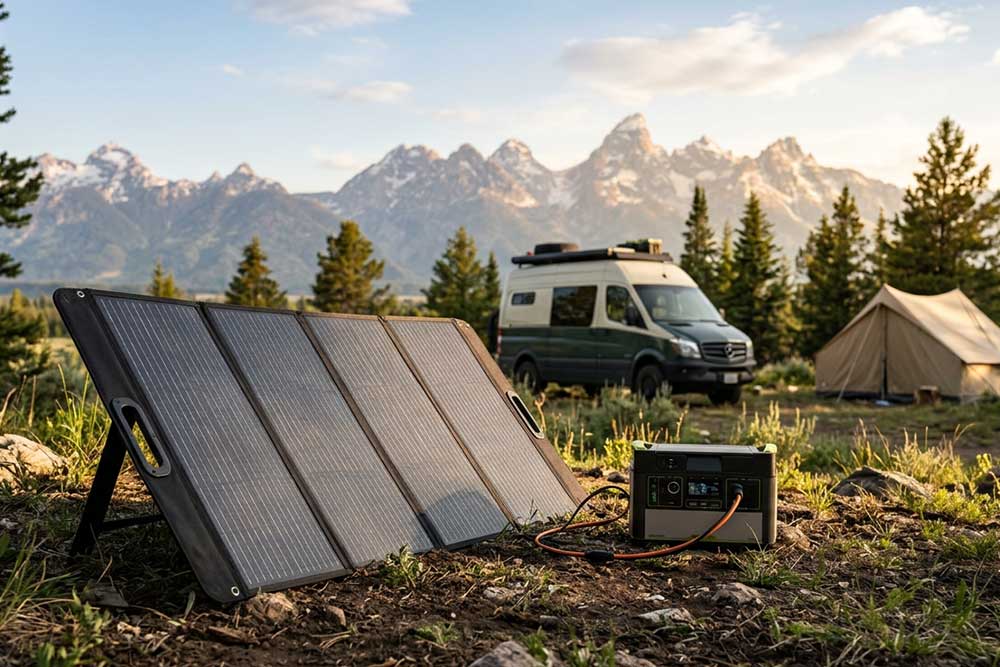
Solar Panel Wiring for RV, Marine, and Off-Grid Solar Systems
Solar panel wiring connects solar modules, charge controllers, batteries, and inverters into a complete energy system. Proper solar panel wiring improves charging efficiency, reduces voltage loss, increases safety, and ensures stable performance in RV, marine, residential, and off-grid installations.
The first badly wired solar system I inspected looked fine from a distance.
Clean panels.
Neat roof layout.
Expensive lithium batteries.
Then the owner opened the electrical compartment.
The smell hit immediately.
Warm insulation.
Overheated cable jackets.
One fuse holder already partially melted.
The system technically worked. But the installer used undersized wiring between the charge controller and battery bank, creating excessive heat during peak afternoon charging.
This was on a nearly new overlanding vehicle in southern Utah.
And honestly, situations like this are more common than people think.
Solar panels get most of the attention online because they are visible. Wiring gets ignored because it disappears behind walls and cabinets.
Yet after years around RVs, marine systems, and remote cabins, I’ve learned something simple:
Good solar wiring quietly keeps systems alive.
Bad wiring eventually announces itself.
Usually at the worst possible moment.
Why Solar Panel Wiring Matters More Than Most Buyers Expect
Solar energy systems are not just collections of panels.
They are electrical systems under continuous environmental stress:
- Heat
- Vibration
- Moisture
- UV exposure
- Temperature swings
And the wiring carries all the power.
According to the U.S. Department of Energy, poor electrical connections and voltage losses significantly affect solar system performance and efficiency.
Source: U.S. Department of Energy
https://www.energy.gov/eere/solar
In mobile systems especially, wiring quality often determines long-term reliability more than panel wattage alone.
That surprises many first-time RV owners.
Real RV Case Study: Voltage Drop Problem
One Bright Solar customer installed:
- 600W rooftop solar
- 200Ah lithium battery bank
- 3000W inverter
- MPPT charge controller
Everything appeared correctly sized.
But charging performance remained inconsistent during summer travel across Arizona.
The issue was not the solar panels.
The installer used cable that was too small between:
- Charge controller
- Battery bank
Under heavy charging current, voltage drop exceeded acceptable limits.
After upgrading the wiring gauge:
- Charging efficiency improved immediately
- Cable temperatures dropped noticeably
- Battery recovery became faster
The owner originally planned to replace the solar panels unnecessarily.
The actual problem cost less than a single new panel to solve.
Understanding Basic Solar Panel Wiring Components
Every solar system relies on several major electrical parts working together.
Solar Panels
Panels generate DC electricity from sunlight.
Common types include:
- Monocrystalline
- Polycrystalline
- Flexible solar panels
Charge Controllers
Charge controllers regulate battery charging safely.
Two main types:
- PWM
- MPPT
MPPT systems are more efficient in most modern installations.
Battery Banks
Battery systems store solar energy for later use.
Common battery types:
- Lithium iron phosphate (LiFePO4)
- AGM
- Gel batteries
Inverters
Inverters convert DC battery power into AC electricity for appliances.
Solar Wiring and Connectors
This includes:
- MC4 connectors
- Battery cables
- Fuse protection
- Breakers
- Grounding systems
And this is where many DIY mistakes happen.
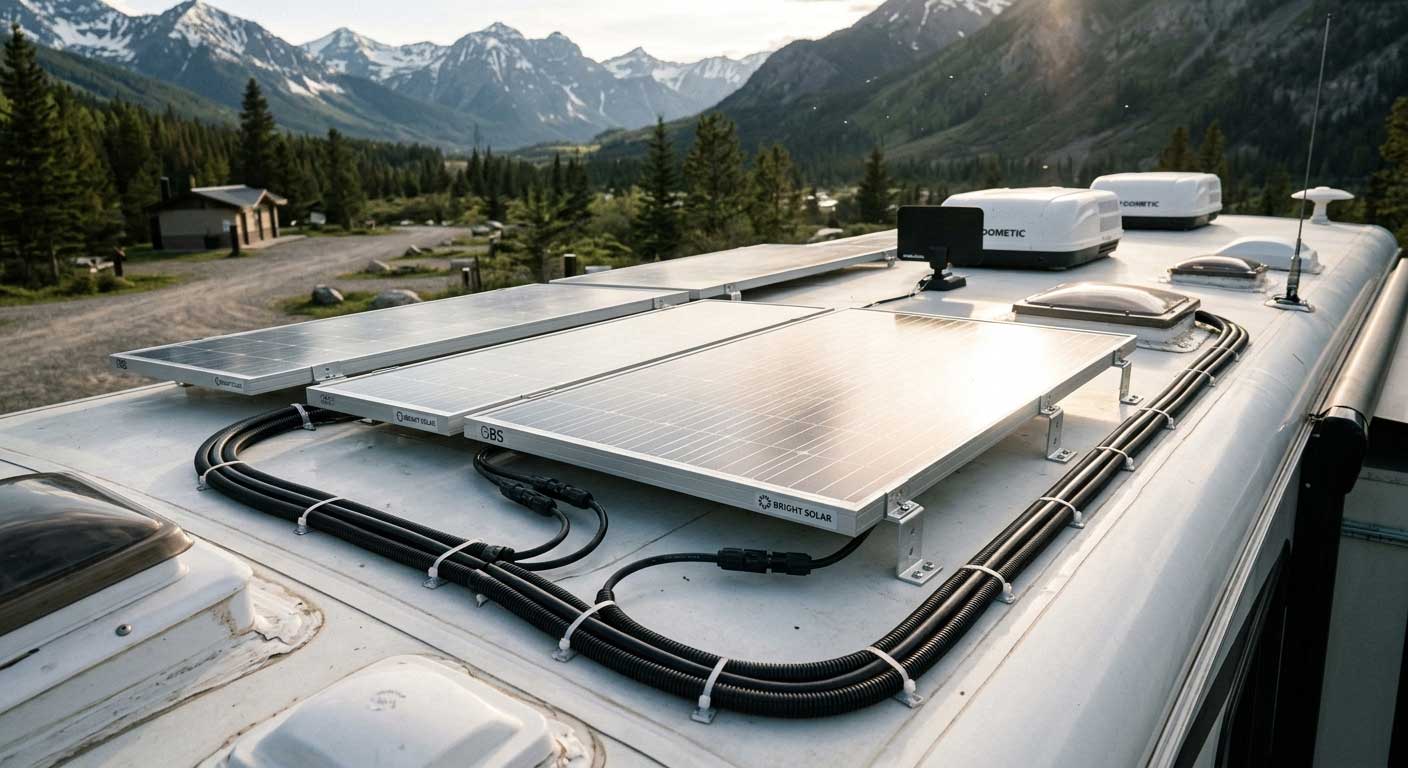
Series vs Parallel Solar Panel Wiring
This is one of the most important design decisions in any solar installation.
Series Wiring
Series wiring:
- Increases voltage
- Keeps current constant
Example:
- Two 12V panels in series
- Result: 24V output
Advantages:
- Better long-distance efficiency
- Lower cable heat
- Reduced voltage loss
Best for:
- Large systems
- Long cable runs
- MPPT charge controllers
Parallel Wiring
Parallel wiring:
- Increases current
- Keeps voltage constant
Example:
- Two 12V panels in parallel
- Result: 12V with doubled current
Advantages:
- Better shading tolerance
- Easier system expansion
- Stable charging under variable sunlight
Best for:
- RV systems
- Marine solar
- Partial shading environments
Real Boat Installation Example
A customer operating a 40-foot sailboat near Miami originally wired four solar panels in series.
Performance looked excellent in open sunlight.
Then offshore sailing conditions introduced moving mast shadows across one section of the array.
Battery charging dropped sharply throughout the day.
The installer later rewired the array in parallel.
Peak efficiency decreased slightly.
But overall daily charging stability improved substantially during real sailing conditions.
For marine solar, consistency mattered more than theoretical peak output.
Why Wire Size Matters in Solar Panel Wiring
Undersized cable is one of the most common solar installation mistakes.
Especially in DIY RV builds.
Electrical resistance increases heat.
Heat wastes energy.
Excessive heat damages components.
According to National Fire Protection Association (NFPA) electrical safety standards, improper conductor sizing increases overheating and fire risk.
Source: NFPA
https://www.nfpa.org
Common Solar Cable Sizes
| System Size | Typical Cable Recommendation |
|---|---|
| Small 100W systems | 10 AWG |
| 200W–400W systems | 8 AWG |
| Large battery cables | 4 AWG to 2/0 AWG |
Actual sizing depends on:
- Voltage
- Distance
- Current
- Temperature
One universal chart does not fit every installation.
Heat Case from Nevada Desert Travel
An off-grid van traveling through Nevada developed repeated inverter shutdowns during hot afternoons.
The inverter itself was fine.
The issue:
- Battery cables overheated under sustained current load
Temperatures inside the rear storage compartment exceeded 50°C.
After upgrading to thicker cable:
- Voltage stabilized
- Shutdowns stopped
- Charging improved
Sometimes the solution is not more solar.
It is simply better electrical design.
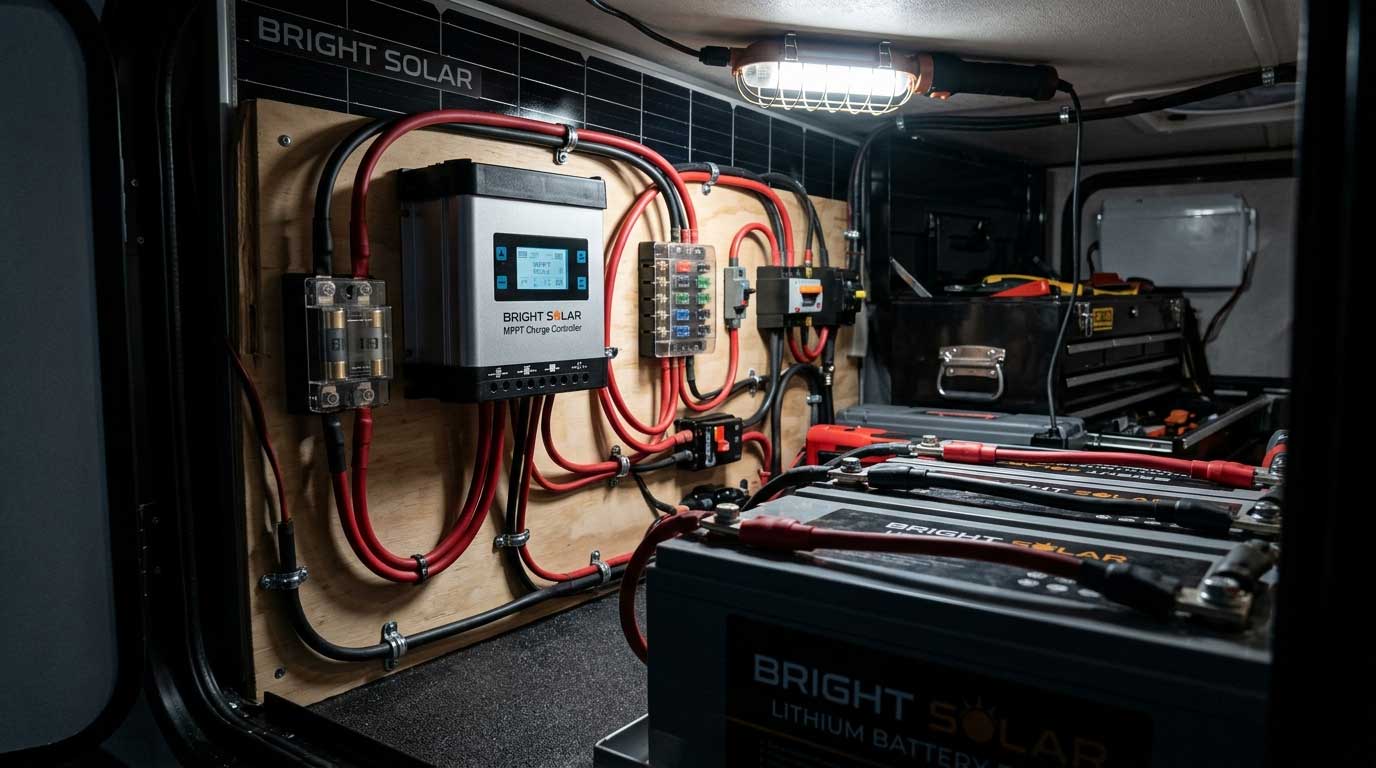
How Weather Affects Solar Panel Wiring
Outdoor electrical systems never experience stable conditions for long.
Environmental exposure changes everything.
Heat
High temperatures:
- Increase resistance
- Reduce charging efficiency
- Accelerate cable aging
Moisture
Marine systems especially face:
- Corrosion
- Salt exposure
- Connector oxidation
Waterproof MC4 connectors matter enormously offshore.
Vibration
RV travel creates constant mechanical stress.
Poorly secured cables eventually loosen or fail.
One overlanding truck I inspected in Colorado had wiring insulation worn through after months of highway vibration against an aluminum bracket edge.
The owner discovered it before a short circuit occurred.
Barely.
Solar Panel Wiring Safety Tips
Professional installers follow strict electrical safety procedures for good reason.
Solar systems continuously generate power whenever exposed to sunlight.
Even during installation.
Important Solar Wiring Safety Practices
- Use properly rated fuses
- Install circuit breakers
- Secure all cable runs
- Protect wiring from abrasion
- Use waterproof connectors outdoors
- Disconnect batteries before maintenance
- Verify polarity carefully
One reversed polarity connection can destroy expensive electronics instantly.
I have unfortunately seen that happen more than once.
Common Solar Panel Wiring Mistakes
Most failures are not caused by defective solar panels.
Installation quality matters more.
Undersized Wiring
Creates heat and voltage loss.
Poor Grounding
Increases electrical safety risks.
Loose Connectors
Causes arcing and unstable charging.
Ignoring Shade Patterns
One shaded panel can dramatically reduce output in series systems.
FAQ: Solar Panel Wiring
What is the best wiring setup for solar panels?
The best solar panel wiring setup depends on system voltage, cable distance, shading conditions, and battery configuration.
Should solar panels be wired in series or parallel?
Series wiring improves efficiency over long distances, while parallel wiring performs better under partial shading conditions.
What wire should I use for solar panels?
Most small solar systems use 10 AWG solar cable, though larger systems often require thicker wiring depending on current and distance.
Can bad solar wiring reduce charging performance?
Yes. Poor solar panel wiring can create voltage loss, overheating, unstable charging, and reduced system efficiency.
How long does solar wiring last?
High-quality UV-resistant solar wiring commonly lasts 15–25 years when properly installed and protected.
Final Thoughts
Solar panel wiring rarely gets attention in product advertisements.
But in real-world systems, wiring often determines whether solar performs reliably for years or becomes a recurring maintenance problem.
The strongest solar setup is not necessarily the one with:
- The biggest panels
- The most expensive batteries
- The highest inverter rating
It is the one where every connection remains stable through:
- Heat
- Moisture
- Highway vibration
- Dust
- Long-term outdoor exposure
And after enough years around RVs, marine systems, and off-grid cabins, one pattern becomes obvious:
Reliable solar starts with good electrical foundations.
Everything else depends on them.
Related recommendations
-

Flexible solar panel 300w: Lightweight Solar Solution for Mobile and Home Applications
216Explore flexible solar panel 300w solutions from Bright Solar. Learn power output, installation methods, real applications, durability, and how 300W flexible solar panels support modern energy needs.
View details -
Best Flexible Solar Panel for RVs, Boats, and Off-Grid Travel
266Find the best flexible solar panel for RVs, boats, vans, and off-grid systems. Lightweight, durable, and built for real outdoor conditions.
View details -
Solar Power Flexible Panels for Modern Off-Grid Energy
197Solar power flexible panels deliver lightweight off-grid electricity for RVs, boats, campers, and rooftops. Discover durable ETFE solar solutions from Bright Solar.
View details -
Portable Folding Solar Panel: How to Choose and Use One
7A portable folding solar panel provides mobile electricity for camping, RV travel, and off-grid charging. Choose a model based on energy demand, total weight...
View details