How to wire a solar panel?
To wire a solar panel, connect positive and negative terminals correctly, choose series or parallel wiring based on system needs, and verify voltage before connecting batteries or controllers.
How to wire a solar panel correctly
Learning how to wire a solar panel is essential for building a safe and efficient solar system. Correct wiring determines system voltage, current capacity, charging performance, and overall reliability.
At Bright Solar, we design flexible solar panels for RV, marine, portable, and off-grid applications. During system design discussions, our engineers often find that wiring mistakes are one of the most common causes of poor solar performance. A panel itself may work correctly, but incorrect connections can reduce output or prevent batteries and controllers from operating properly.
A solar wiring setup usually connects:
- Solar panels
- Charge controller
- Battery storage
- Inverter or electrical loads
The basic energy path is:
Solar panel → Charge controller → Battery → Inverter → Appliances
Before wiring, always confirm:
| Check Point | Why It Matters |
|---|---|
| Panel voltage | Prevents system mismatch |
| Current rating | Protects cables and components |
| Polarity | Avoids connection errors |
| Cable size | Reduces power loss |
According to the U.S. Department of Energy, photovoltaic system performance depends not only on solar modules but also on balance-of-system components, including wiring, inverters, and controllers.
Understand solar panel wiring configurations
Series wiring for higher voltage
In a series connection, the positive terminal of one solar panel connects to the negative terminal of the next panel.
The result:
- Voltage increases
- Current stays approximately the same
Example:
Two 100W solar panels:
| Connection | Voltage | Current |
|---|---|---|
| Single panel | 20V | 5A |
| Two panels in series | 40V | 5A |
Series wiring is commonly used when:
- Cable distance is longer
- Higher voltage is required
- MPPT charge controllers are used
Parallel wiring for higher current
Parallel wiring connects positive terminals together and negative terminals together.
The result:
- Voltage remains similar
- Current increases
Example:
Two 100W solar panels:
| Connection | Voltage | Current |
|---|---|---|
| Single panel | 20V | 5A |
| Two panels parallel | 20V | 10A |
Parallel wiring is often selected for:
- 12V battery systems
- RV solar setups
- Portable solar applications
Step-by-step guide on how to wire a solar panel
Step 1: Identify panel specifications
Before connecting cables, check:
- Rated power
- Open-circuit voltage (Voc)
- Maximum power voltage (Vmp)
- Short-circuit current (Isc)
- Maximum current (Imp)
These values determine whether panels, controllers, and batteries are compatible.
For example, Bright Solar flexible solar panels include electrical specifications that help system designers select suitable wiring configurations for different applications.
Step 2: Select the correct cable and connectors
Solar wiring requires cables designed for outdoor electrical use.
Important factors include:
- Cable length
- Current capacity
- Environmental exposure
- Connector compatibility
Using cables that are too thin can create voltage drops and unnecessary energy losses.
For RV and marine applications, wiring should also consider:
- Vibration
- Moisture
- Salt exposure
Step 3: Connect panels to the charge controller
A typical connection order is:
- Connect battery to charge controller
- Connect solar panels to controller
- Verify charging status
Many solar professionals recommend connecting the battery first because the controller can correctly recognize system voltage before receiving solar input.
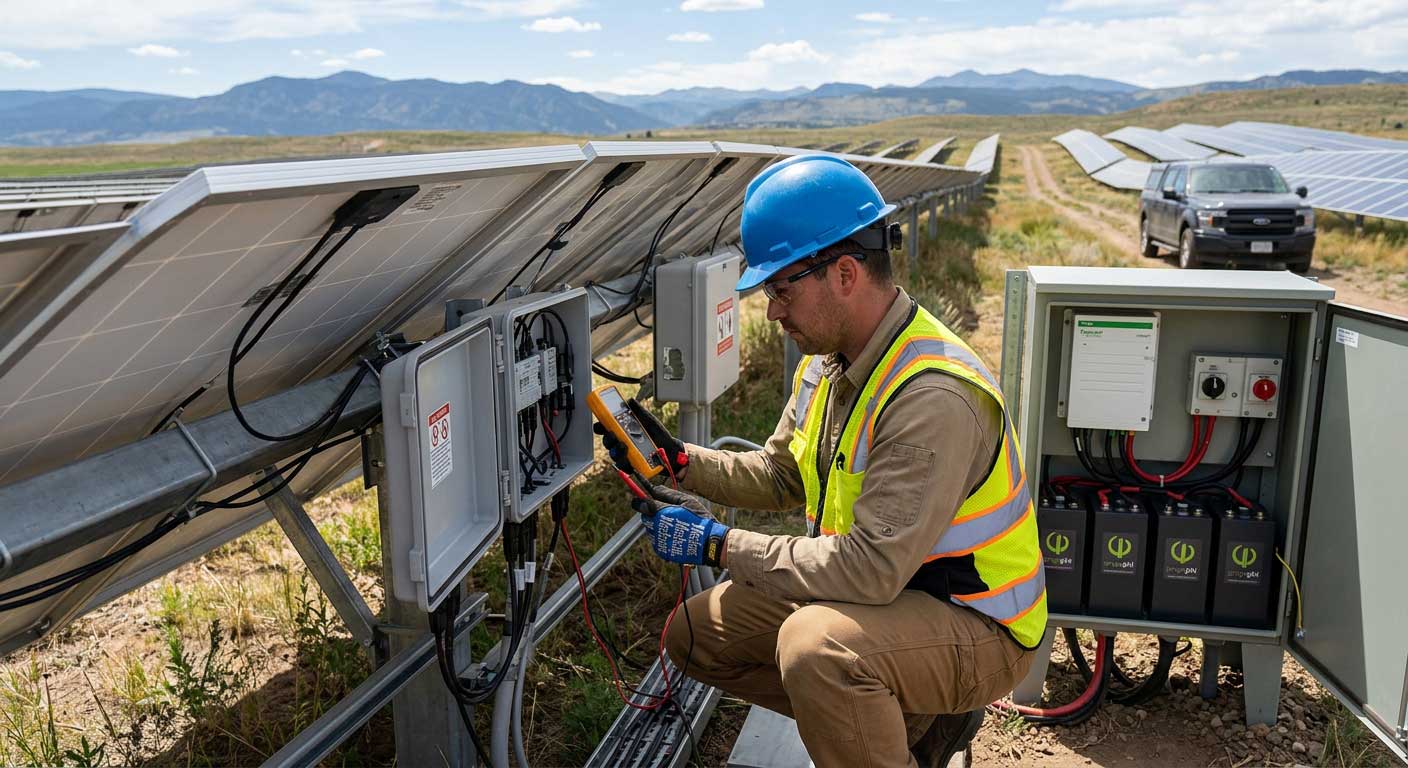
Step 4: Check polarity and voltage
Before turning on the system:
- Confirm positive and negative terminals
- Measure voltage with a multimeter
- Check controller indicators
A reversed connection can damage sensitive electronic components.
Common solar panel wiring mistakes
Incorrect polarity connection
Connecting positive and negative terminals incorrectly may cause:
- Controller errors
- Equipment damage
- System failure
Always check polarity before final connection.
Using incorrect wire size
Small cables create resistance.
Problems may include:
- Lower charging efficiency
- Heat generation
- Reduced voltage
Cable selection should match:
- System voltage
- Current
- Cable length
Mixing incompatible solar panels
Different panels may have different:
- Voltage ratings
- Current ratings
- Electrical characteristics
Combining unsuitable panels can reduce system performance.
How to wire a solar panel to a battery
Basic battery connection method
For small off-grid systems:
Solar panel → Charge controller → Battery
The charge controller regulates charging and protects the battery.
Important considerations:
| Component | Function |
|---|---|
| Solar panel | Generates DC electricity |
| Charge controller | Controls charging |
| Battery | Stores energy |
| Inverter | Converts DC to AC |
RV and portable solar wiring considerations
For RV solar systems, wiring must handle movement and changing weather.
Bright Solar flexible panels are commonly used in applications where lightweight design and installation flexibility are important.
Typical RV considerations:
- Short cable routes
- Secure connectors
- Weather protection
- Easy maintenance access
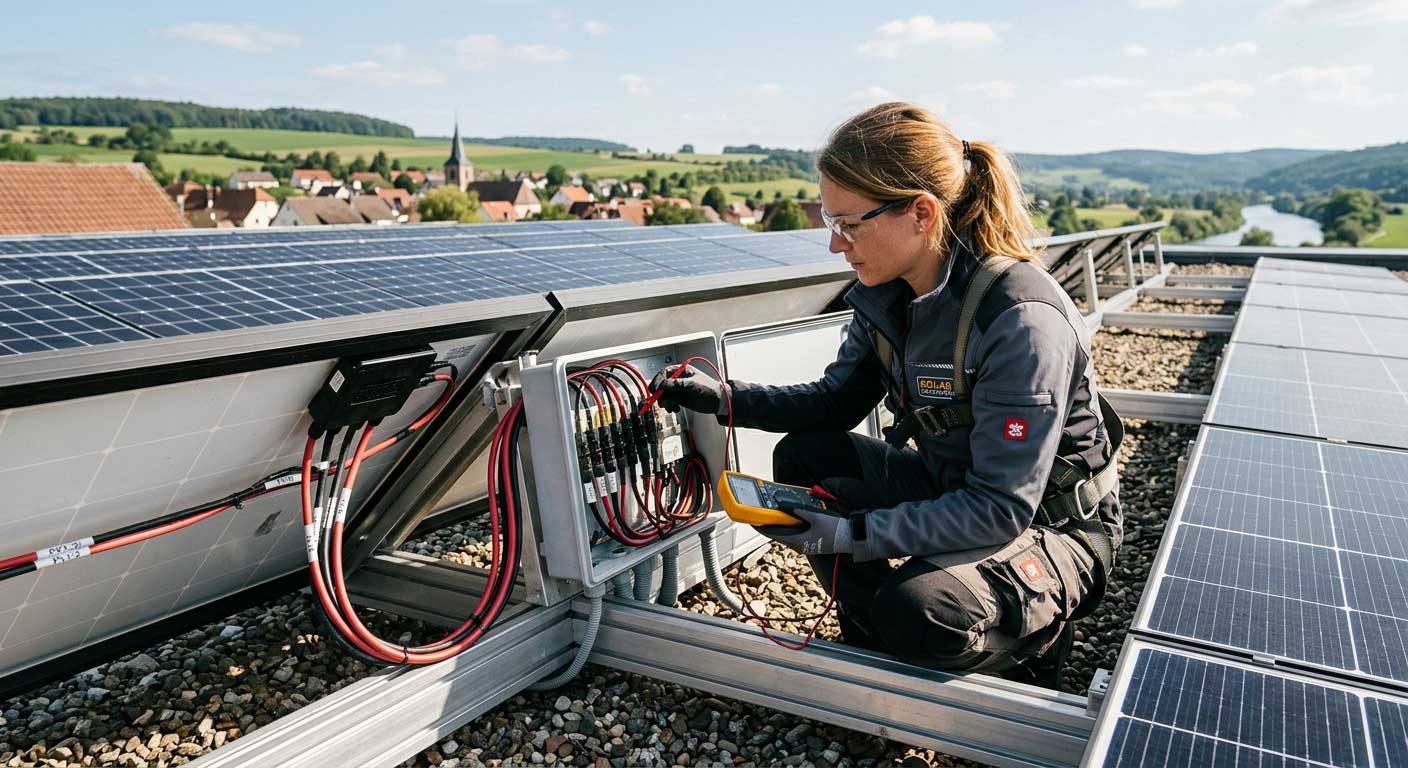
Testing solar wiring after installation
Measure voltage output
Use a multimeter to check:
- Panel voltage
- Controller input
- Battery charging voltage
Monitor charging performance
A correctly wired system should show:
- Solar input
- Battery charging activity
- Stable electrical output
Performance should be evaluated over time because sunlight conditions constantly change.
FAQ About Solar Panel Wiring
Can I wire a solar panel myself?
Yes. Small systems can be wired by experienced users, but electrical safety and correct component selection are important.
Should solar panels be wired in series or parallel?
It depends on system requirements. Series increases voltage, while parallel increases current.
Can I connect a solar panel directly to a battery?
It is generally recommended to use a charge controller between the solar panel and battery.
What wire size should I use for solar panels?
Wire size depends on current, voltage, distance, and system design.
Why is my solar panel wired correctly but not charging?
Possible causes include shading, controller settings, battery problems, or incorrect connections.
Can different solar panels be connected together?
Yes, but compatibility between voltage and current ratings should be considered.
How do I know if solar wiring is working?
Check voltage, current, controller status, and battery charging performance.
Final Answer: How to wire a solar panel?
Understanding how to wire a solar panel helps create safer and more efficient solar systems. Correct series or parallel connections, proper cable selection, and careful testing ensure reliable energy production.
Bright Solar provides flexible solar panel solutions for RV, marine, portable, and off-grid applications where dependable wiring and long-term outdoor performance are required.
The prev: How to test solar panel output?The next: How to wire solar panels in parallel?
Related recommendations
-

How Much Is One Solar Panel?
215How much is one solar panel? Learn current panel prices, cost factors, wattage differences, and expert buying tips from Bright Solar for better decisions.
View details -
How to attach solar panels to rv roof?
269Learn how to attach solar panels to rv roof with secure mounting methods, practical tips, and expert advice for long-lasting RV solar installations from Bright Solar.
View details -
how hot do solar panels get?
307how hot do solar panels get? Learn typical PV temperatures, heat-related power loss, ventilation effects, flexible panel performance, and practical summer installation tips.
View details -
How Much Do Solar Panels Cost for a House?
276How much do solar panels cost for a house? Explore 2026 solar installation prices, system size costs, expert insights, and real factors affecting home solar investment.
View details