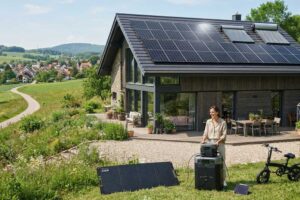
200W Flexible Solar Panel: Lightweight Solar Power for RV, Marine, and Off-Grid Use
A 200w flexible solar panel is a lightweight, bendable photovoltaic module designed for curved or weight-sensitive surfaces like RV roofs, boats, vans, and off-grid cabins. Compared with rigid panels, it installs faster, adds less roof stress, and adapts better to uneven mounting surfaces while still delivering reliable daily solar charging.
I learned this the hard way during a coastal RV retrofit in Florida several summers ago. The owner originally chose rigid aluminum-frame panels because they looked “more industrial.” Two months later, the roof developed stress cracks around the mounting points after repeated highway vibration and salt-air exposure. We replaced the system using flexible ETFE-coated solar panels. The total roof load dropped by nearly 70 kilograms. More importantly, the vibration issue disappeared.
That project changed how I look at flexible solar technology.
Rigid panels still dominate residential rooftops. But for mobile power systems — RVs, yachts, camper vans, overlanding trailers — modern 200w flexible solar panel systems solve problems traditional modules simply cannot.
Why the 200W Flexible Solar Panel Market Is Growing So Fast
According to the International Energy Agency (IEA), global solar PV capacity additions exceeded 440 GW in recent years, with mobile and distributed solar applications expanding rapidly alongside RV and marine electrification trends.
At the same time, the RV Industry Association (RVIA) reported continued growth in off-grid travel and solar-equipped recreational vehicles across North America.
That combination matters.
People are no longer installing solar only to reduce utility bills. They want mobility:
- Remote camping
- Van life power systems
- Silent marine charging
- Portable energy independence
- Lightweight rooftop systems
And that is exactly where the 200w flexible solar panel fits best.
What Is a 200W Flexible Solar Panel?
Unlike conventional framed solar modules, flexible solar panels use thin photovoltaic cells laminated onto lightweight composite backings.
Most premium models now use:
- Monocrystalline PERC cells
- ETFE surface coating
- Fiberglass reinforcement
- Flexible polymer substrates
The result is a panel that can slightly bend while remaining weather resistant.
Typical Specifications
| Specification | Common Range |
|---|---|
| Power Output | 200W |
| Weight | 3–5 kg |
| Efficiency | 20%–23% |
| Flexibility | 10°–30° curvature |
| Waterproof Rating | IP67/IP68 |
| Lifespan | 10–20 years |
Bright Solar flexible panels are commonly engineered with ETFE surfaces because ETFE performs significantly better against UV degradation and salt corrosion compared with older PET materials.
That difference becomes obvious after about two summers outdoors.
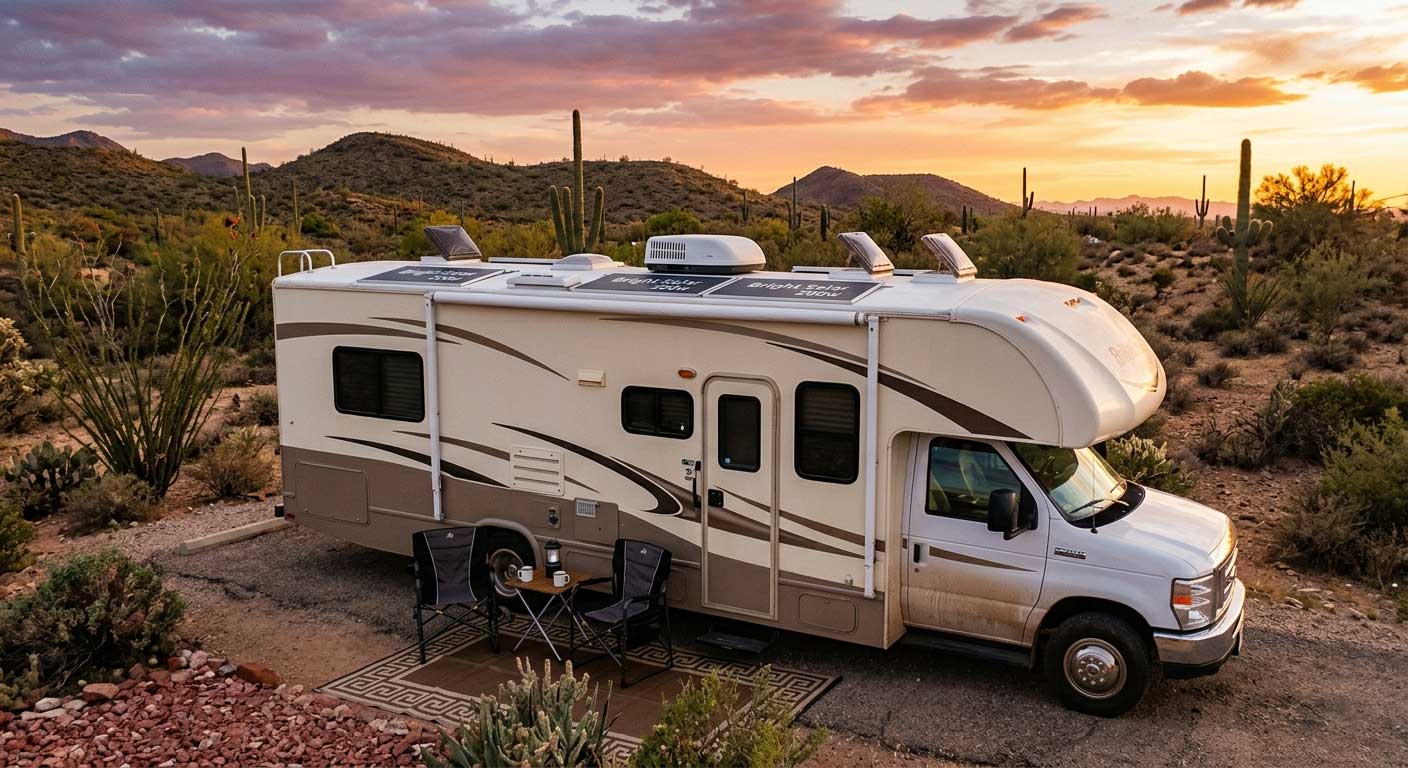
Why RV Owners Prefer Flexible Solar Panels
Rigid panels work well on flat rooftops.
But RV roofs are rarely perfectly flat.
Air conditioners, vents, antennas, skylights, and curved fiberglass roofs create installation problems quickly.
A 200w flexible solar panel avoids many of those issues.
Real Advantages on RV Roofs
From field installations I’ve personally worked on, the biggest advantages are not marketing buzzwords. They’re practical installation realities.
Lower Roof Stress
A flexible panel may weigh less than half of a rigid equivalent.
That matters on older RV roofs where excessive point-load stress can lead to cracking.
Better Aerodynamics
Flexible panels sit closer to the roof surface.
Less wind resistance means:
- Lower highway drag
- Reduced vibration
- Less mounting fatigue
Easier Installation
Many RV users now install flexible panels using:
- Structural adhesive
- VHB tape
- Hybrid adhesive mounting systems
That eliminates dozens of roof penetrations.
And fewer holes mean fewer leak problems five years later.
Marine Applications Are Driving Flexible Solar Demand
Boats are brutal environments for electronics.
Salt.
Humidity.
Constant vibration.
UV exposure.
I’ve inspected marine solar installations where cheap PET flexible panels became yellow and brittle within two years.
High-quality ETFE panels behave differently.
Why Marine Users Choose Flexible Solar Panels
| Marine Challenge | Flexible Panel Advantage |
|---|---|
| Curved deck surfaces | Conforms more easily |
| Weight sensitivity | Lightweight structure |
| Salt corrosion | ETFE protection |
| Limited space | Flush low-profile installation |
| Wind resistance | Reduced uplift risk |
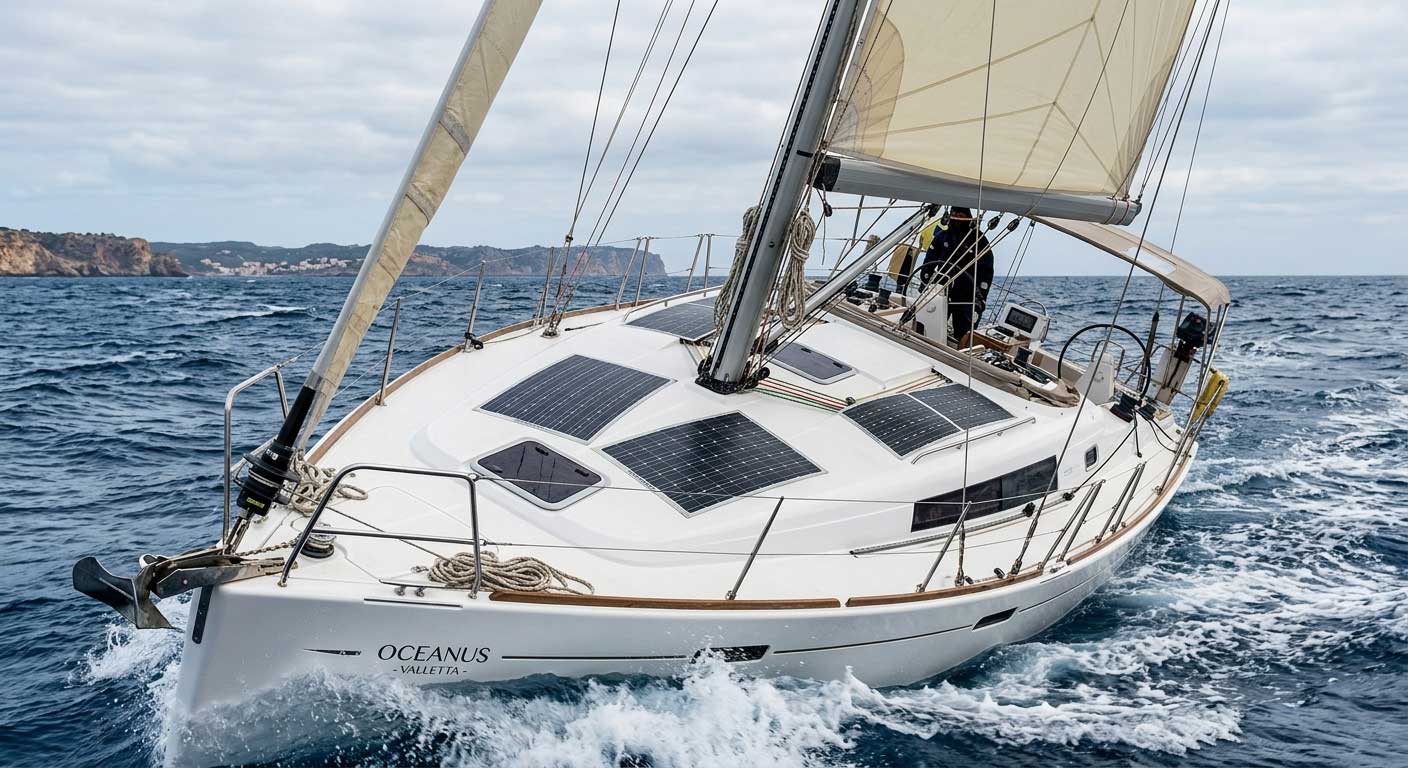
Flexible marine solar panels are especially common on:
- Sailboats
- Catamarans
- Fishing vessels
- Yacht auxiliary systems
The lower profile matters offshore.
Rigid aluminum frames create wind loading problems during storms. Flexible panels reduce that exposure significantly.
200W Flexible Solar Panel vs Rigid Solar Panels
This debate shows up constantly online.
The truth is more nuanced than most comparison articles suggest.
Flexible Panels Are Not Automatically Better
Rigid panels still usually offer:
- Longer lifespan
- Better passive cooling
- Higher structural rigidity
- Lower cost per watt
But mobile applications are different.
Flexible Panels Solve Different Problems
| Feature | Flexible Panel | Rigid Panel |
|---|---|---|
| Weight | Very light | Heavy |
| Curved surfaces | Excellent | Poor |
| Aerodynamics | Better | Moderate |
| Lifespan | Moderate | Longer |
| Installation complexity | Lower | Higher |
| Roof penetration needs | Minimal | Higher |
For stationary rooftops, rigid panels often win.
For mobility and weight-sensitive applications, flexible systems frequently make more sense.
Understanding ETFE vs PET Surface Materials
This is one of the most overlooked buying factors.
Cheap Flexible Panels Usually Use PET
PET coatings are inexpensive.
But they often suffer from:
- UV yellowing
- Surface cracking
- Reduced light transmission
- Faster aging
ETFE Performs Better Outdoors
Bright Solar flexible modules typically use ETFE because it offers:
- Higher UV resistance
- Better anti-scratch performance
- Improved saltwater resistance
- Longer optical clarity retention
NASA and aerospace industries have used ETFE materials for years because of their weather durability.
That alone tells you something.
Real-World Daily Output of a 200W Flexible Solar Panel
Many buyers misunderstand watt ratings.
A 200W panel does not continuously produce 200 watts all day.
Actual output depends on:
- Sun angle
- Temperature
- Shading
- Installation angle
- Geographic location
Typical Daily Production
| Sunlight Conditions | Estimated Daily Output |
|---|---|
| Excellent summer sun | 800–1000Wh |
| Moderate conditions | 600–800Wh |
| Cloudy weather | 250–500Wh |
That’s usually enough for:
- RV refrigerators
- LED lighting
- Laptops
- Ventilation fans
- Portable battery systems
- Smartphones
- Navigation electronics
In many van-life setups, two 200w flexible solar panels paired with lithium batteries create surprisingly capable off-grid systems.
Common Installation Mistakes
I see the same problems repeatedly.
Installing Directly Without Ventilation
Flexible panels still generate heat.
Bonding them directly onto dark roofs without airflow can increase operating temperatures dramatically.
Higher heat reduces efficiency.
A small ventilation gap helps significantly.
Using Cheap Adhesives
Marine-grade adhesive matters.
Inferior adhesive systems fail surprisingly fast under:
- UV exposure
- Thermal cycling
- Moisture
Ignoring Cable Protection
Many DIY installations route exposed wiring carelessly across rooftops.
Eventually:
- UV cracks insulation
- Water enters connectors
- Voltage drops increase
Most long-term failures start with poor installation, not poor solar cells.
Corrosion Resistance Matters More Than Most Buyers Realize
Solar buyers often focus only on wattage.
Professionals look at materials.
Bright Solar flexible solar panels commonly integrate:
- Corrosion-resistant junction boxes
- UV-resistant cable jackets
- Waterproof MC4 connectors
- Salt-resistant ETFE surfaces
These details become critical after years outdoors.
Especially near coastlines.
I’ve inspected marine installations where stainless hardware survived perfectly while cheaper plated steel brackets completely failed.
The panel itself wasn’t the problem.
The hardware was.
Flexible Solar Panels for Off-Grid Living
The rise of off-grid travel changed the solar industry.
People now expect silent, renewable power almost everywhere.
Popular Off-Grid Applications
- Camper vans
- Overlanding trailers
- Tiny homes
- Remote cabins
- Emergency backup systems
- Portable battery charging
A properly designed 200w flexible solar panel system can dramatically reduce generator dependency.
And once you spend several nights camping without generator noise, it’s hard to go back.
FAQ — 200W Flexible Solar Panel
Is a 200w flexible solar panel enough for an RV?
For small and medium RV systems, yes. It can power lighting, fans, device charging, and battery maintenance. Larger appliances may require multiple panels.
How long do flexible solar panels last?
High-quality ETFE flexible panels commonly last 10–20 years depending on climate and installation quality.
Can flexible solar panels walk on?
Some marine-grade panels support light foot traffic, but repeated walking is not recommended unless specifically rated.
Do flexible solar panels overheat?
They can run hotter than rigid panels if mounted directly onto surfaces without airflow.
Are flexible solar panels waterproof?
Most premium models are IP67 or IP68 rated for outdoor use.
Why Bright Solar Flexible Panels Are Used in Mobile Energy Projects
Bright Solar develops flexible solar solutions for:
- RV systems
- Marine installations
- Off-grid cabins
- Portable energy applications
- Lightweight rooftop solar retrofits
Key features commonly include:
- ETFE anti-aging surfaces
- High-efficiency monocrystalline cells
- Lightweight low-profile design
- Saltwater resistance
- Waterproof outdoor construction
- Long-term UV durability
These systems are engineered for real outdoor environments — not just laboratory conditions.
About the Author
Author: JED
Brand: Bright Solar
JED has spent years working with mobile solar systems, flexible photovoltaic applications, RV power retrofits, and marine renewable energy projects across North America and Southeast Asia. His experience includes flexible panel installation testing, saltwater corrosion analysis, and off-grid lithium battery integration for mobile energy systems.
Related recommendations
-

400W Solar Panel: High Power Solar Solution for Residential and Off-Grid Energy
193Explore the 400W solar panel from Bright Solar for RV, home backup, and off-grid applications. Learn output, efficiency, installation, and real-world solar performance.
View details -
Flexible Solar Panels 200W: Lightweight Solar Power for RV, Marine and Off-Grid Applications
145Flexible solar panels 200w deliver lightweight, efficient solar power for RVs, boats, and off-grid systems. Explore Bright Solar technology, real applications, and installation insights.
View details -
Panel Solar Flexible 100W for RV, Marine, and Off-Grid Use
122Discover panel solar flexible 100W systems for RVs, boats, vans, and portable power. Lightweight, durable, and built for outdoor performance.
View details -
Motorhome Solar Kit: Reliable Off-Grid Power for Modern RV Travel
104Compare series vs parallel solar panels for RVs, homes, and off-grid systems. Bright Solar explains voltage, current, shading, and wiring efficiency.
View details