What Flexible Solar Panel OEM Actually Means at Bright Solar
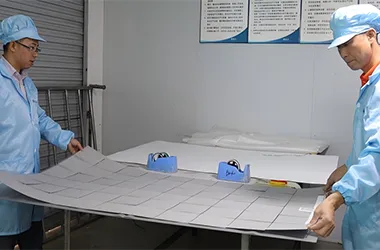
The rule: OEM means you bring the brand and we manufacture to your specification; ODM means we also design the product. We do both, and the difference shows up in who owns the drawing.
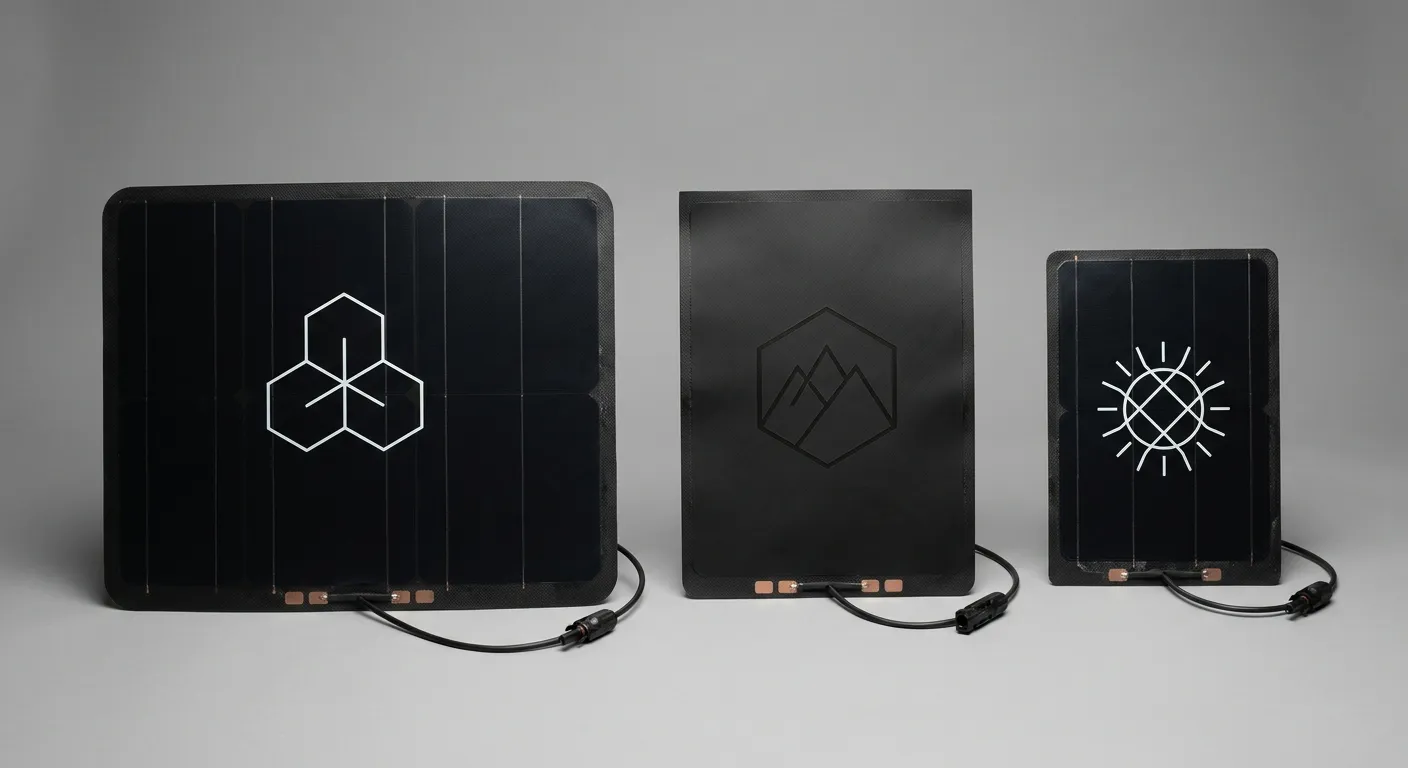
Under OEM you supply the logo, the target size and the electrical specification, and we manufacture against them — your brand goes on the panel, the packaging and the manuals, and the drawing library stays yours. Under ODM we start one step earlier: you describe the application and target price, and our engineers propose the cell layout, dimensions and voltage, then run the same prototype-to-production path. Since 2009 we have completed more than 200 custom designs for RV, marine and off-grid brands, and most brand clients start with 2-3 SKUs in one footprint family — for example a 100 W, a 150 W and a 200 W panel sharing the same width so one retail box range fits all three.
The distinction matters for private label buyers because the drawing number and BOM define what you can re-order. If your panel is an OEM build, any factory can be asked to quote it; if it is an ODM build, the design work — cell stringing layout, ETFE lamination recipe, junction box placement — was ours. Either way the custom solar panel process from drawing to mass production (Custom Solar Panels: MOQ, Tooling and Sample Process) page shows the step-by-step route both models share.
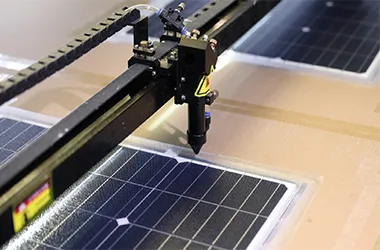
Private Label Options: Silkscreen, Laser Engraving or Labels
The rule: silkscreen for volume, laser engraving for durability, labels for speed — and packaging carries more brand value than the panel face.
| Method | Where it goes | Minimum order |
|---|---|---|
| Best for | Silkscreen printing | Panel surface, backsheet |
| 200 pcs | High-volume retail lines; logo in white or custom ink on ETFE | Laser engraving |
| Backsheet, frame edge, junction box cover | 100 pcs | Permanent marking that survives salt spray and abrasion; no ink to fade |
| Serial number labels | Junction box, carton | Any quantity |
| Traceability, warranty registration and compliance marking | Retail packaging | Carton, PET foam insert, manual |
| 200 pcs | Your brand on the box buyers actually see on the shelf |
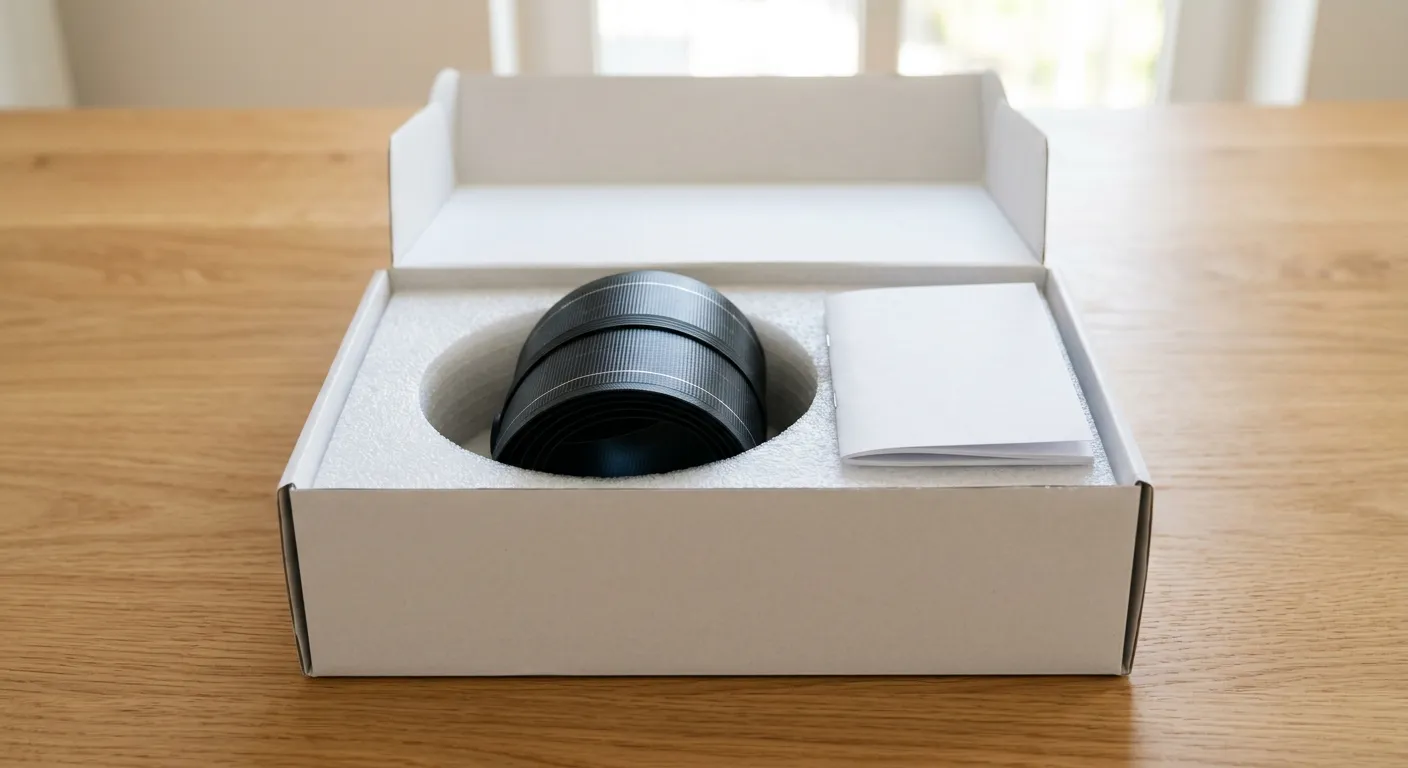
Silkscreen is applied after lamination and before the finished-product EL and IV tests in our 16-step production flow, so a printed panel still passes 100 percent electrical testing — the print never replaces a test. Laser engraving costs a tooling setup but never wears off, which is why marine private-label clients prefer it on the backsheet. Retail packaging customization covers the box design, PET foam inserts for protection, instruction manuals and serial number labels; a panel sold in a custom-sized footprint (Custom Solar Panels: MOQ, Tooling and Sample Process) should have a box cut for that footprint, not a generic one.
Certifications You Can Hand to Your Compliance Team
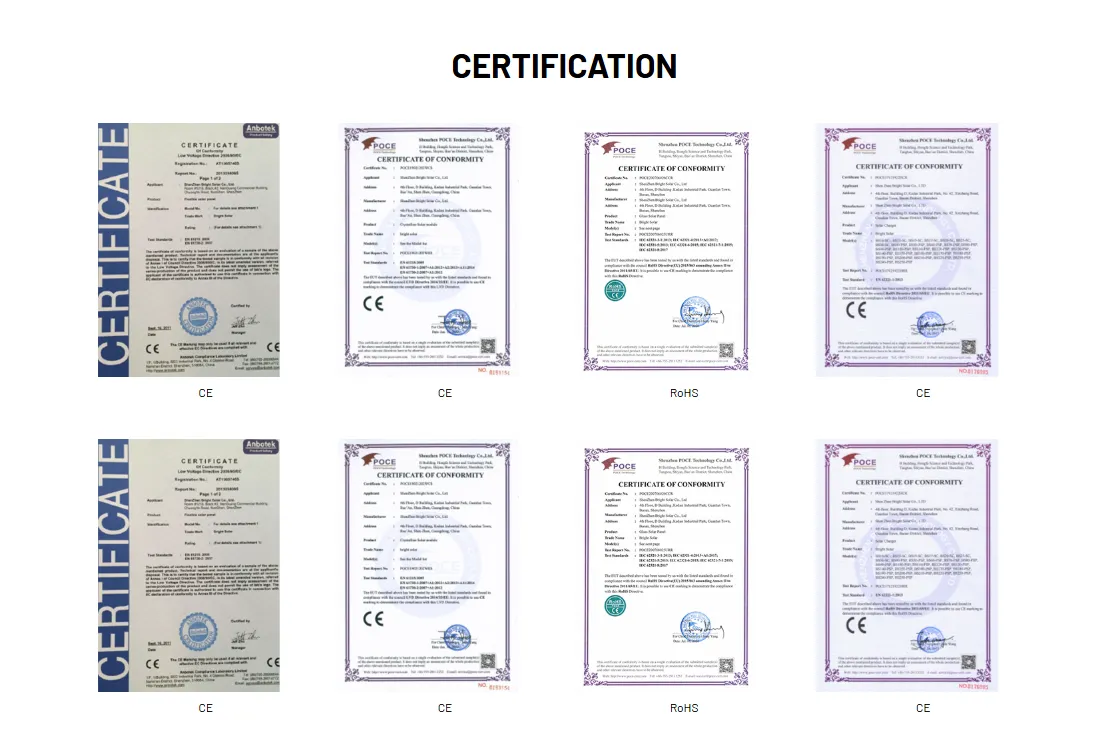
The rule: ask for the certificate number, not the certificate logo — a logo proves nothing; a number lets your compliance team verify scope and validity on the issuing body’s database.
| Certificate | Scope | Certificate number |
|---|---|---|
| Notes | CE (EMC + LVD) | Flexible PV modules EU market access |
| AT1818C502054128 | Covered by DoC referencing EN standards | RoHS |
| Hazardous substances in module materials | [fill in] | Renewed per material revision |
| ISO 9001 | Factory quality management system | [fill in] |
| Audits the 16-step process, not just the product | IEC 61215 / IEC 61730 test reports | Design qualification and safety of PV modules |
| [fill in if held] | TUV-tested module reports available on request |
Every certificate on our certification page (Bright Solar Certifications: CE, RoHS and ISO 9001) can be sent as a PDF with the certificate number visible, and the test reports behind them — salt spray, IP67 waterproof, thermal cycling, humidity-freeze and UV precondition — are run in our own laboratory as part of the 11-test quality inspection process. When a brand client private-labels a panel, the certificates stay valid because the module construction does not change; a logo print does not alter the design the certificate covers. If your market requires additional marks, tell us the destination country during RFQ so the compliance check happens before tooling, not after.

Container Loading: How Many Panels Fit a 20GP or 40HQ
The rule: a flexible panel is a freight anomaly — it weighs almost nothing but takes volume, so you plan by carton cube, not by weight.
| Container | Inner volume | Typical 100W flexible panel cartons (535 x 555 x 45 mm) |
|---|---|---|
| Panels per container | 20 GP | 33 cbm |
| about 1,900-2,200 cartons (70-80 percent fill) | about 1,900-2,200 pcs | 40 HQ |
| 76 cbm | about 4,400-5,100 cartons (70-80 percent fill) | about 4,400-5,100 pcs |
These counts assume one 100 W panel per carton at 535 x 555 x 45 mm packed flat with PET foam, stacked to a 1.8 m pallet height and loaded to 70-80 percent of nominal container volume — the realistic fill that leaves room for air and handling. Your exact quantity depends on your carton size and whether panels ship nested in fives, so we confirm the loading plan with a packing drawing before the sales contract is signed. Flexible panels almost never hit the weight limit: a 40 HQ of 100 W flexible panels weighs roughly 9-10 tonnes, while the same container of glass modules would exceed the road limit three times over. That is why mixed orders — panels plus controllers plus solar system kits for private-label programs (Marine Solar System Kits) — cube out before they weigh out, and why we quote freight by volume.
From Prototype to Mass Production: The Real Timeline
The rule: 48 hours to first drawing, 10-15 working days to tested samples, 25-30 working days to a 500-piece run — the clock starts when the CAD drawing is approved, not when the inquiry is sent.
| Stage | Elapsed time | What you receive |
|---|---|---|
| Requirement review | Day 0-1 | Engineer review of size, power, voltage and application |
| First CAD drawing | Day 1-2 | 2D/3D drawing for sign-off (48-hour response commitment) |
| Engineering evaluation (DFM) | Day 3-5 | Material usage, structure and cost optimization |
| Prototype build | Day 6-20 | Sample panels with EL image and flash test data |
| Sample confirmation | Day 20-25 | Your sign-off on quality, dimensions and electrical parameters |
| Mass production | Day 25-55 | 500-pc run with first-article inspection and 100 percent EL + IV |
| Shipment | Day 55-65 | Packing, container loading plan, customs documents |
Two things move this timeline. Design changes after sample testing restart the prototype stage, so lock the drawing before tooling — the real-world example of a custom-cut bimini panel (Custom Flexible Solar Panels for a Boat Bimini Top) shows how one millimetre-level CAD check protected the install date. And certification for a new market adds lead time on top; start that conversation at RFQ. Repeat orders skip the first four stages entirely because the approved golden sample — drawing number, BOM and flash data locked into the work order — is already on file.
How Samples and Mass Production Stay Identical
The rule: what we draw is what we sample, and what we sample is what we ship — enforced by a golden sample, first-article inspection and 100 percent EL plus IV testing.
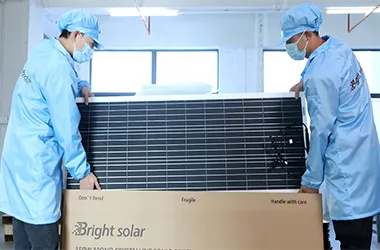
The approved sample becomes the golden reference: its drawing number, BOM and flash-test data are locked into the work order. Every production run starts with a first-article inspection, every module passes 100 percent EL and IV testing, and the batch report is compared against the golden sample before packing. The same laboratory that runs the factory quality inspection process (Inside the Bright Solar Factory: 16 Workshops and 11 Tests) runs the reliability suite — insulation, wet leakage current, simulated transport vibration and the salt spray test that matters most for marine private-label stock. When you re-order in season two, the work order pulls the same drawing library, which is how brand clients avoid the classic private-label failure: a second batch that looks the same but performs differently.
Who This Page Is For
RV and marine parts distributors stock private-label panels that fit the retail box range they already carry. Brand owners launch a solar line without buying a laminator — we carry the engineering, the certification paperwork and the 16-step production flow, you carry the brand. Conversion and retrofit shops order custom footprints that match the van roofs and yacht decks they actually work on. And project contractors for telecom, agriculture and off-grid sites specify ODM panels sized to the installation, not the catalogue. Whichever you are, send the target size, wattage, voltage, quantity and destination market, and the first CAD drawing comes back within 48 hours — the timeline in the section above starts from that point.
FAQ: Flexible Solar Panel OEM
What is the MOQ for a private-label flexible solar panel?
Standard custom specifications start at 100-500 pieces depending on the size; a standard module with your branding only starts at 200 pieces. Prototype samples run 5-15 pieces with no MOQ on samples, and small-batch runs from 50 pieces carry a unit premium because tooling and line changeover are amortized over fewer units. We quote the price curve at 50, 100 and 500 pieces so you can see the real volume effect.
Can you private-label different models under one brand?
Yes. Most brand clients start with 2-3 SKUs in the same footprint family and expand after the first season. We keep one drawing library per brand, so every repeat order matches the golden sample exactly.
Do certificates stay valid when the panel carries our logo?
Yes. Silkscreen printing, engraving and labels change the marking, not the module design the certificate covers. If your destination market needs an additional mark, raise it during RFQ so compliance is checked before tooling.
Who owns the panel design under ODM?
For ODM projects we handle development from concept through sample to mass production, and can also manage certification under your brand. Ownership terms of the drawing library are agreed in the development contract before the prototype stage.
Related recommendations
-

Flexible Solar Panel Film: Lightweight Solar Technology for Curved Surfaces
255Discover how flexible solar panel film delivers lightweight, durable solar power for RVs, marine, and off-grid applications. Explore technology, materials, and real-world performance from Bright Solar experts.
View details -
flexible solar panels for van roof: Lightweight Solar Solution for Camper Conversions
213Explore flexible solar panels for van roof with lightweight design, easy installation, and reliable off-grid power solutions for camper conversions and travel vehicles.
View details -
1000 Watt Flexible Solar Panel: Output, Sizing and Installation Guide
396A 1000 watt flexible solar panel system is suitable for large RVs, vans, boats, and cabins where roof shape and weight matter. Actual energy production depen...
View details -
Qcells to Expand Solar Panel Manufacturing in Dalton, Zodiac
381Qcells PV module manufacturing in Dalton, Zodiac, with a new 3.1 GW solar panel facility, increasing flexible solar panel production, strengthening the U.S. solar supply chain, and creating new clean energy manufacturing jobs.
View details