Camping Folding Solar Panels: How to Choose and Use Them
Camping folding solar panels provide portable solar power for charging a power station, phones, lights, and other outdoor essentials without relying entirely on a vehicle or campsite electrical hookup. The right setup depends on your daily energy use, sunlight, panel wattage, and battery capacity—not simply how large the panel looks when unfolded.
For campers, van travelers, and outdoor equipment suppliers, camping folding solar panels offer a practical balance between portability and usable power. They can be packed away during travel, unfolded at a sunny campsite, and repositioned as sunlight changes. However, a panel’s rated wattage is not the same as the energy it will produce over an entire day.
The useful question is not just, “How many watts should I buy?” It is, “How much energy do I need, how much sun can I realistically collect, and how will I store it?”
What Are Camping Folding Solar Panels?
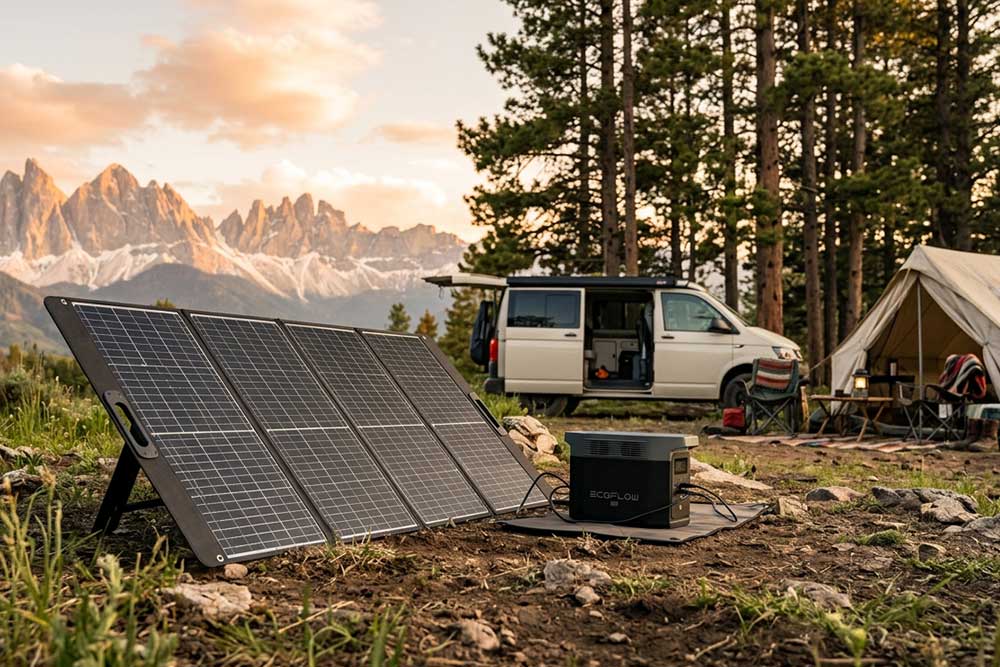
Camping folding solar panels are portable photovoltaic modules designed to fold or collapse into a more compact package for transport. When opened, their solar cells collect sunlight and convert it into DC electricity. Depending on the model, that electricity can power compatible devices directly or charge a portable power station that supplies energy later.
Unlike a permanently installed rooftop system, a folding panel can be moved away from tree shade, angled toward the sun, or packed up when the weather changes.
Typical uses include:
- Charging a portable power station for lights, cameras, laptops, and small appliances.
- Recharging phones, GPS units, and other USB-compatible electronics when the panel has suitable outputs or a compatible controller.
- Supporting off-grid camping where grid power is unavailable.
- Providing supplemental charging for van trips, overlanding, fishing, and extended stays at remote campsites.
- Helping outdoor equipment brands build portable solar kits for retail, OEM, or private-label applications.
Folding Panels vs. Fixed and Flexible Solar Panels
The word folding describes the panel’s portable design, not a guarantee of a particular cell technology or power output. A folding product may use several connected panel sections, a fabric-supported structure, or another collapsible design. Its actual weight, folded dimensions, output ports, and weather resistance depend on the specific model.
| Solar panel type | Main advantage | Main consideration |
|---|---|---|
| Folding solar panel | Packs into a portable form and can be repositioned | Needs space to unfold and exposure to sunlight |
| Rigid solar panel | Stable construction for fixed installations | Less convenient to transport and store |
| Flexible solar panel | Lightweight profile that can suit selected curved surfaces | Installation surface, heat, mounting, and product-specific bending limits matter |
| Small USB solar charger | Convenient for lightweight electronics | Usually limited in the loads it can support |
For weekend camping, a folding panel is often attractive because it does not need to remain mounted on a vehicle. For a long-term van conversion, a fixed or appropriately designed flexible panel may be more convenient because it can collect energy while the vehicle is parked without setting up separate equipment.
Neither design is automatically more efficient. Compare the actual specifications and the conditions in which you will use the panel.
How Much Power Can Camping Folding Solar Panels Produce?
A folding solar panel’s rated wattage describes its output under defined test conditions, not the amount of electricity it will generate throughout a camping day. Actual production changes with sunlight intensity, panel angle, shading, temperature, and the efficiency of the connected charging equipment.
The U.S. Department of Energy explains that photovoltaic module ratings are measured under standard test conditions, including irradiance of 1,000 W/m² and a cell temperature of 25°C. Real outdoor conditions often differ from those values. Source: U.S. Department of Energy — Optimizing Solar Photovoltaic Performance for Longevity.
Estimate Daily Energy Before Choosing a Panel
Use this simplified estimate to compare panel sizes:
Daily energy (Wh) = panel wattage (W) × equivalent peak sun hours × estimated system factor
Peak sun hours represent the equivalent number of hours at a reference solar intensity, rather than the total number of daylight hours. The system factor is an assumption to account for real-world losses; it is not a guaranteed rating for a specific panel.
For example, consider a hypothetical 200W panel, four equivalent peak sun hours, and an assumed system factor of 0.75:
200W × 4 hours × 0.75 = 600Wh per day
That is an illustrative estimate, not a Bright Solar product test result or a promise of daily output. Cloud cover, tree shade, poor orientation, and charging-system limitations can reduce the energy available. A sunny day may also produce a different result depending on season and location.
The NREL PVWatts Calculator provides a useful reference for understanding how location, system configuration, orientation, and system losses affect solar production estimates. Its model is designed for grid-connected PV systems, so use it as a planning reference rather than a direct performance guarantee for a portable camping panel.
Match Panel Output to Your Daily Loads
Start with the devices you actually take camping. Their power labels and estimated hours of use give you a more useful baseline than a vague goal of “having enough solar.”
| Camping device | Example energy estimate | Planning note |
|---|---|---|
| LED camping light | 10W × 4 hours = 40Wh | Actual consumption depends on brightness and design |
| Phone charging | 15Wh per charge | Illustrative allowance; phone and charging losses vary |
| Laptop | 60W × 2 hours = 120Wh | Check the laptop’s adapter and battery requirements |
| Small 12V fridge | 400Wh per day | Illustrative estimate only; cycling, ambient heat, and insulation matter |
| Camera batteries and accessories | 30Wh per day | Depends on the number of batteries and charging method |
These examples total 605Wh per day. They are planning figures, not universal consumption values. A refrigerator can use substantially more or less energy depending on its model and conditions.
If your daily requirement is around 600Wh, a nominal 200W panel may meet that target on a favorable day under the assumptions above. It may fall short during cloudy weather or under tree cover. A larger panel, reduced consumption, or a power station charged before departure can provide more flexibility.
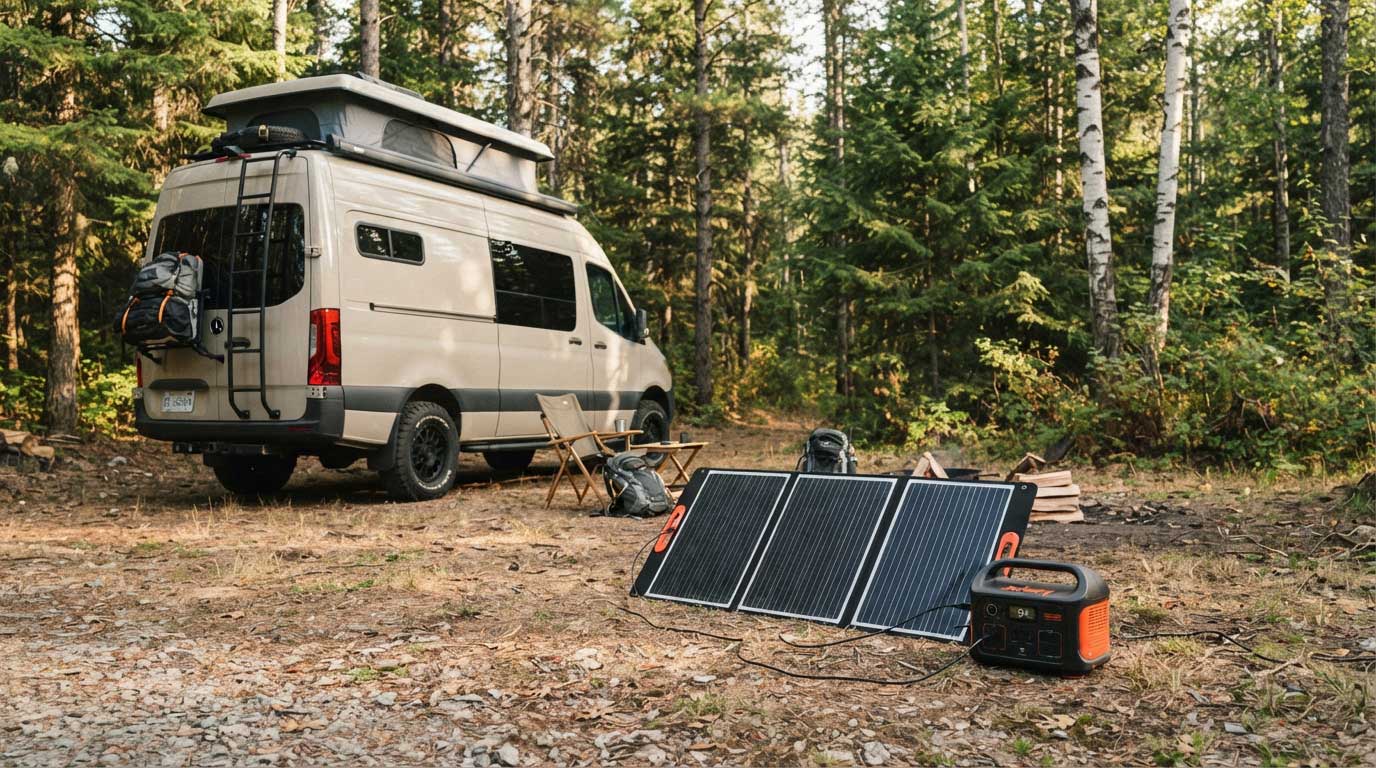
How to Choose Camping Folding Solar Panels
The best panel is not necessarily the one with the highest wattage. A useful choice fits your power station, your transport space, your typical campsite, and the amount of setup you are willing to do every day.
1. Check Rated Wattage and Folded Size
Estimate daily energy needs first, then compare suitable power ratings. Also check the folded dimensions: a panel that fits in a car trunk may be awkward for backpacking, while a very compact panel may take longer to recharge a large battery.
Look at both packed and unfolded dimensions. Some campers have plenty of storage space but very little clear ground at a crowded campground.
2. Verify Voltage, Connectors, and Controller Compatibility
A panel and power station must be electrically compatible. Before purchasing, check:
- The panel’s rated power, operating voltage, and current.
- The power station’s supported solar input voltage and maximum input current or wattage.
- Connector type and polarity.
- Whether a suitable charge controller is included or required.
- Any restrictions on connecting multiple panels in series or parallel.
Do not assume that two connectors that physically fit are electrically compatible. Follow the power station manufacturer’s input limits, and never exceed its maximum permitted voltage. When using an adapter, verify its wiring and specifications rather than relying on appearance alone.
3. Compare Weather Resistance and Build Quality
Camping equipment may encounter dew, dust, wind, splashes, and sudden showers. Check the manufacturer’s stated weather-resistance rating and operating instructions. “Portable” does not mean waterproof, and a weather-resistant panel should not automatically be left outside during heavy rain or a storm.
Inspect the hinges, fabric supports, kickstands, cable strain relief, and connection points. These areas are easy to overlook when comparing product photos but can matter during repeated packing and unpacking.
4. Think About Carrying Weight
For car camping, a heavier panel may be acceptable if it offers the power and features you need. For hiking, weight and packed dimensions become much more important. Include the weight of the panel, cables, controller, and any separate stand when comparing complete systems.
A panel that is technically powerful but stays in the car because it is too cumbersome is not a useful camping solution.
How to Set Up Folding Solar Panels at a Campsite
A reliable setup starts with site selection, not with plugging in the cable. A little attention to sunlight and cable placement can prevent a frustrating afternoon of low charging performance.
Step 1 — Find an Unshaded, Stable Position
Place the panel in an area with good exposure to the sun throughout the part of the day when you expect to charge. Check for shadows from trees, tents, vehicles, and people. A narrow shadow crossing part of a panel can affect output, depending on the panel’s electrical design.
Use the panel’s supports or a stable surface according to the manufacturer’s instructions. Do not place it where it can slide into a walkway, block an emergency exit, or be blown over by wind.
Step 2 — Orient and Adjust the Panel
Point the panel toward the sun and adjust its angle when the design permits. The ideal direction depends on your location and the sun’s path; there is no single angle that works best at every campsite or in every season.
Check the panel again later in the day. Moving it out of a new shadow can be more useful than repeatedly changing small angle adjustments while leaving the panel partly shaded.
Step 3 — Connect the Charging System
Follow the connection order and operating instructions supplied by the panel and power station manufacturers. Confirm connector compatibility and input limits before connecting the equipment. If the system requires a separate charge controller, use a suitable controller and follow its instructions.
Keep connectors clean and dry, avoid pulling on cables, and route leads where they will not be tripped over or pinched under equipment.
Step 4 — Check Charging Performance
After setup, check the power station’s displayed solar input, if available. A reading lower than the panel’s rated wattage does not automatically mean the panel is faulty: sunlight intensity, panel temperature, battery state, and input limitations can all affect the reading.
If input appears unexpectedly low, check for partial shade, loose connections, incorrect settings, or a full battery. Change one factor at a time so you can identify what helps.
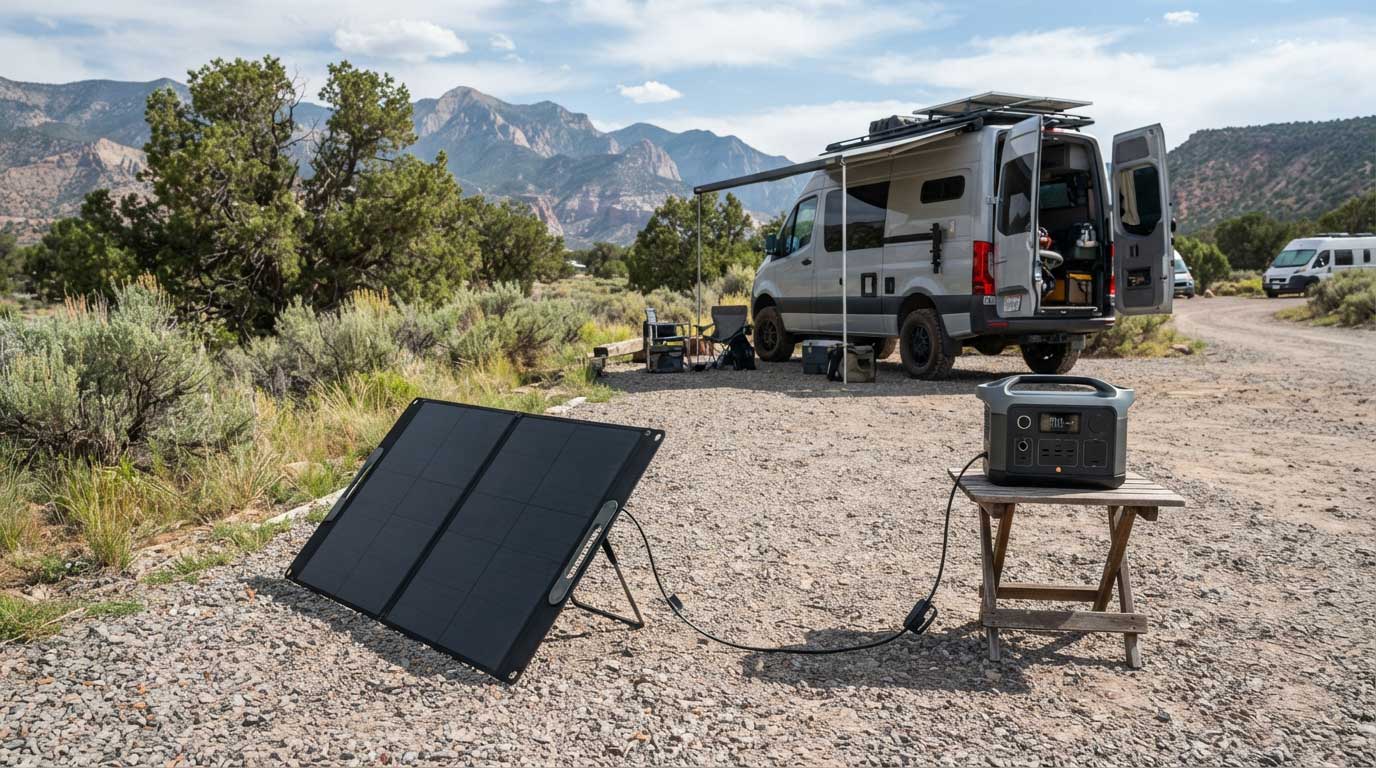
A Practical Camping Solar Setup: A Two-Night Example
Consider a couple spending two nights at a campground without an electrical hookup. They bring two phones, LED lights, a camera, and a small power station. They do not run a large electric cooker or rely on solar power for every appliance.
For planning purposes, assume their estimated daily energy requirement is 350Wh. They select a hypothetical 200W folding panel and expect four equivalent peak sun hours on a favorable day. Using the same illustrative 0.75 system factor:
200W × 4 hours × 0.75 = 600Wh estimated daily energy.
On paper, that is enough to cover their estimated 350Wh daily use and potentially replenish some stored energy. But it is not a guarantee. A shaded campsite or a cloudy afternoon could reduce production substantially. The couple should therefore arrive with the power station charged and avoid planning essential needs around ideal solar conditions alone.
The useful lesson is simple: size the system around expected consumption, but keep a backup plan for poor weather. For multi-day camping, that is usually more practical than buying a panel based only on its maximum wattage.
Common Problems with Camping Folding Solar Panels
The Panel Is Producing Less Power Than Expected
First, check the sunlight. A campsite that feels bright to your eyes may still have partial shade across the panel. Then check its orientation, connectors, and the power station’s input limit.
Solar cells also respond to temperature and irradiance. The U.S. Department of Energy notes that higher cell temperatures can reduce voltage and affect photovoltaic performance. Direct sun is important, but a hot panel should not be assumed to deliver its rated output continuously. DOE: Solar Photovoltaic Performance and Efficiency Basics.
The Battery Is Not Charging
Check whether the battery has reached its charging limit, whether the input is enabled, and whether the panel voltage falls within the power station’s permitted range. Inspect connectors for dirt or damage and confirm that any required controller or adapter is appropriate.
If the system remains unresponsive, disconnect it safely and consult the manufacturers’ troubleshooting guidance. Avoid improvising electrical connections in the field.
The Panel Is Difficult to Keep in Position
Wind can move lightweight portable equipment. Use the manufacturer’s approved supports and place the panel on a stable surface. Do not use improvised weights or restraints that damage the panel, strain the hinges, or block ventilation.
Pack the panel away when conditions become unsafe. Solar charging is optional; protecting people and equipment comes first.
Using Folding Solar Panels Responsibly Outdoors
A portable solar setup can reduce dependence on campsite electrical hookups, but it still needs thoughtful placement. Keep panels and cables away from paths, cooking areas, and places where children or pets may trip over them. Do not leave equipment where it can obstruct other campers or damage vegetation.
Follow local campsite rules and the equipment manufacturer’s weather instructions. The U.S. National Park Service’s Leave No Trace principles also encourage visitors to plan ahead, use durable surfaces, and avoid damaging the natural environment. Choose an existing durable area for the panel rather than clearing plants or altering a campsite to make room for it.
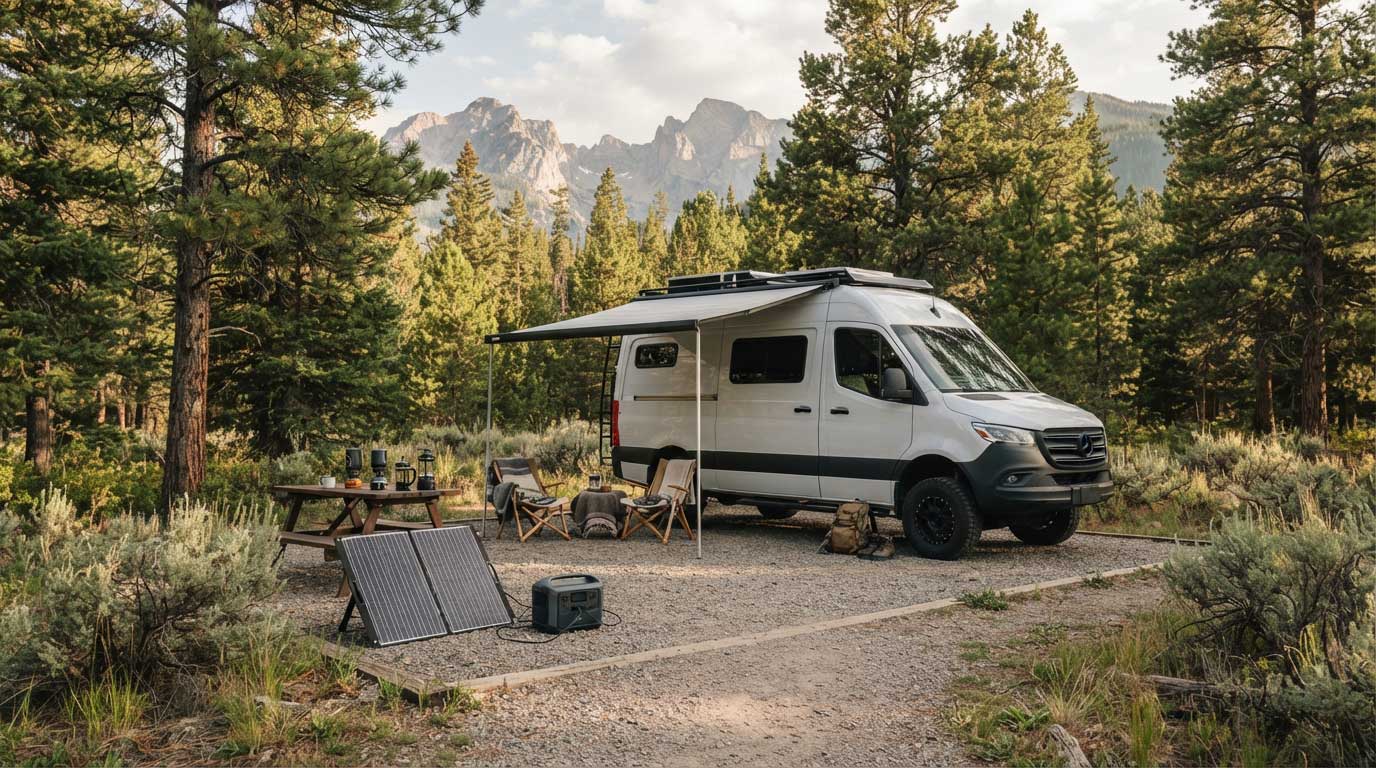
Why Bright Solar Matters for Portable Solar Buyers
For outdoor equipment brands, distributors, and system integrators, choosing a folding solar panel involves more than selecting a wattage. Product dimensions, electrical specifications, connector options, durability requirements, packaging, and target-market expectations all influence whether a panel suits a particular product line.
Bright Solar works in the solar panel manufacturing sector, including flexible solar panel products and customized solutions for business buyers. Buyers evaluating a portable solar product should confirm the exact model’s specifications and intended use before placing an order. Do not assume that every panel from a manufacturer shares the same cell technology, construction, output, or weather-resistance rating.
For OEM and ODM projects, useful questions include:
- What rated power and electrical parameters are required?
- What folded dimensions and total carrying weight fit the intended market?
- Which connectors and charging-system interfaces are needed?
- What environmental conditions must the product be designed for?
- Which test reports, certifications, packaging requirements, and warranty terms apply to the specific model?
Clear answers help prevent a mismatch between the product listing and the customer’s actual camping setup.
FAQ About Camping Folding Solar Panels
Are camping folding solar panels worth buying?
Yes, they can be worthwhile for campers who need portable charging without a fixed installation. Their value depends on daily electricity use, available sunlight, carrying weight, and whether the panel is compatible with the devices or power station.
What wattage folding solar panel do I need for camping?
Choose wattage based on your daily energy demand and the sunlight you expect. Estimate device consumption in watt-hours, then account for charging losses and cloudy conditions. A higher-wattage panel may recharge a battery faster when the weather and equipment allow.
Can I charge a power station directly with a folding solar panel?
Often, yes, if the panel’s voltage, current, connector, and output are compatible with the power station’s solar input. Check both manufacturers’ specifications before connecting them, and use a suitable charge controller if the system requires one.
Do folding solar panels work on cloudy days?
They can still produce electricity in cloudy conditions, but output is usually lower and varies with cloud thickness and available sunlight. Do not assume a cloudy day will provide enough energy for essential equipment; keep a charged battery or alternative charging option available.
Can I leave camping folding solar panels outside overnight?
Follow the product’s instructions. Many portable panels are intended to be packed away when not in use, especially when rain, dew, wind, or temperature changes may pose a risk. Disconnect and store the equipment as directed by the manufacturer.
Are folding solar panels better than flexible solar panels?
Neither is universally better. Folding panels are designed for portable deployment and storage, while flexible panels may suit certain curved or weight-sensitive installations. Compare the intended application, construction, mounting method, weight, electrical specifications, and verified environmental ratings.
How can I improve solar charging at a campsite?
Reduce shade, position the panel toward the available sunlight, keep it stable, and check the power station’s input limits. Monitor charging performance during the day and adjust the panel if the sun moves or a new shadow appears.
Technical References and Editorial Approach
The technical guidance in this article draws on publicly available resources:
- U.S. Department of Energy — Optimizing Solar Photovoltaic Performance for Longevity: explains standard test conditions and factors that affect real-world output.
- U.S. Department of Energy — Solar Photovoltaic Performance and Efficiency Basics: explains solar-cell efficiency and the effects of temperature and other factors.
- National Renewable Energy Laboratory — PVWatts Calculator: provides a location-based reference for estimating photovoltaic energy production.
- National Park Service — Leave No Trace Seven Principles: provides guidance for reducing environmental impact outdoors.
Author and review note: This guide is prepared for Bright Solar’s solar-product audience, with emphasis on portable power planning, panel compatibility, and practical campsite use. The energy calculations are explicitly illustrative rather than claimed field-test results. Product-specific performance should be confirmed using the applicable manufacturer’s datasheet and test documentation.
For campers, the most useful camping folding solar panels are the ones that fit the trip, connect safely to the intended equipment, and provide realistic charging capacity under the conditions you expect—not simply the ones with the largest number on the product label.
Related recommendations
-

Lightweight Folding Solar Panels: How to Choose the Right Portable Power System
12Lightweight folding solar panels provide portable power for camping, hiking, RV travel, and off-grid use. Choose based on total kit weight, wattage, folded d...
View details -
200 Watt Flexible Solar Panels: Lightweight Power Solution for RV, Marine and Off-Grid Applications
162200 watt flexible solar panels deliver lightweight and powerful solar energy for RVs, boats, camping, and off-grid systems. Explore Bright Solar solutions today.
View details -
1000 Watt Flexible Solar Panel: Output, Sizing and Installation Guide
295A 1000 watt flexible solar panel system is suitable for large RVs, vans, boats, and cabins where roof shape and weight matter. Actual energy production depen...
View details -
100 watt solar panel flexible: A Practical Guide for RV, Marine and Off-Grid Applications
254100 watt solar panel flexible solutions explained with real RV, marine, and off-grid applications, performance data, installation tips, and expert insights.
View details