Flexible Solar Panels vs Rigid: Which Solar Panel Type Performs Better?
Flexible solar panels vs Rigid Solar Panels is no longer simply a weight comparison. Flexible panels offer easier installation, lower roof loads, and greater versatility, while rigid panels usually provide higher efficiency and longer service life. The best choice depends on roof structure, mobility, installation conditions, and energy requirements.
The debate usually starts online.
Someone asks whether flexible panels are finally “as good” as Lightweight Rigid Solar Panels.
Another person answers with a specification sheet.
Then somebody posts a photograph of a cracked panel on a sailboat.
After fifteen years working with mobile solar applications, I have learned that these discussions often miss the real question.
The question is not which technology wins.
The question is where each technology wins.
At Bright Solar, we have supplied flexible solar solutions for RV builders, marine installers, mobile homes, emergency trailers, and off-grid projects. Some customers replaced Lightweight Rigid Solar Panels. Others abandoned flexible systems and returned to glass modules.
The reasons were rarely technical.
They were practical.
Author Experience and Industry Background
This article was reviewed by the Bright Solar engineering team, whose experience includes:
- Flexible solar panel manufacturing.
- RV and marine installations.
- Mobile power systems.
- Off-grid battery charging.
- Lightweight rooftop solar applications.
Over the past several years, we have reviewed hundreds of customer installations from North America, Australia, and Europe.
Some systems operate on fishing boats.
Others sit on aluminum camper roofs.
A few survive desert environments where rooftop temperatures exceed 70°C.
Those installations tell a more useful story than laboratory brochures.
Understanding Flexible Solar Panels vs Rigid Technology
What Is a Flexible Solar Panel?
Flexible panels use thin composite backing materials rather than aluminum frames and tempered glass.
Common materials include:
- ETFE surfaces.
- Fiberglass reinforcement.
- Polymer back sheets.
- Lightweight composite substrates.
Most flexible products weigh 60–80% less than Lightweight Rigid Solar Panels.
A typical 200W flexible panel may weigh:
- 4–5 kg.
An equivalent Lightweight Rigid Solar Panels may weigh:
- 11–14 kg.
That difference matters on moving vehicles.
What Is a Rigid Solar Panel?
Lightweight Rigid Solar Panels use:
- Tempered glass.
- Aluminum frames.
- Crystalline silicon cells.
- Standard junction boxes.
These products dominate residential solar installations because they offer:
- High structural strength.
- Excellent ventilation.
- Long warranties.
- Proven durability.
According to the National Renewable Energy Laboratory (NREL), modern crystalline silicon modules can maintain performance for more than 25 years.
Source:
https://www.nrel.gov/pv/lifetime.html
Flexible Solar Panels vs Rigid Efficiency Comparison
The efficiency discussion often becomes oversimplified.
Ten years ago, flexible products were clearly less efficient.
That gap has narrowed considerably.
Typical Module Efficiency
| Panel Type | Typical Efficiency |
|---|---|
| Flexible PERC panels | 20–23% |
| Monocrystalline rigid panels | 21–24% |
| Premium rigid panels | 23–25% |
Many modern flexible panels now use:
- PERC cells.
- Half-cut cells.
- Multi-busbar designs.
Cell efficiency itself is no longer the largest difference.
Temperature management often matters more.
Heat Changes Everything
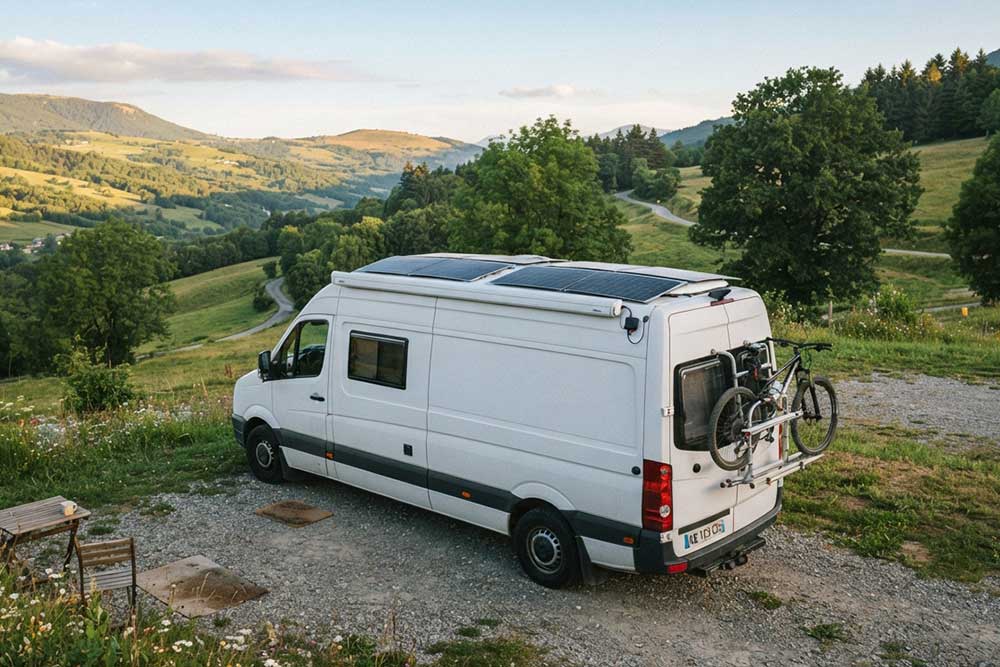
I once inspected two identical 200W systems installed on camper vans in Arizona.
One used Lightweight Rigid Solar Panels.
The other used adhesive-mounted flexible modules.
Roof temperature:
- Flexible panel surface: 72°C.
- Lightweight Rigid Solar Panels surface: 58°C.
The air gap beneath Lightweight Rigid Solar Panels improved cooling.
The flexible modules produced slightly lower afternoon output.
This wasn’t a manufacturing defect.
It was simply thermal behavior.
According to the U.S. Department of Energy, solar panel efficiency declines as operating temperature rises.
Source:
https://www.energy.gov/eere/solar
Weight Comparison
This category is not close.
Average Weight Per 200W Panel
| Type | Weight |
|---|---|
| Flexible panel | 4–5 kg |
| Rigid panel | 11–14 kg |
For residential roofs, this difference may not matter.
For:
- RV roofs.
- Camper vans.
- sailboats.
- mobile homes.
- trailers.
It absolutely matters.
Several mobile home owners contact us each year because older roofs cannot safely support large framed panels.
Lightweight systems become the only practical solution.
Installation Differences
Lightweight Rigid Solar Panels usually require:
- Roof brackets.
- Drilling.
- Rails.
- Mounting feet.
- Fasteners.
Flexible panels often use:
- Adhesives.
- VHB tape.
- Low-profile mounting.
- Minimal hardware.
One customer in Florida installed four flexible panels on a curved fiberglass roof in less than four hours.
A comparable Lightweight Rigid Solar Panels installation would have required:
- Aluminum rails.
- Roof penetrations.
- Sealants.
- Additional reinforcement.
That difference often determines purchasing decisions.
Real RV Installation Case
In 2024, a retired couple from Oregon converted a Class B camper van.
Their original plan included:
- Two rigid 200W panels.
The installer later discovered:
- Roof vents.
- Air conditioner placement.
- Curved roof sections.
Available flat space disappeared quickly.
The solution became:
- Three 150W flexible panels.
Total output:
450W.
Total added weight:
Less than 12 kg.
Six months later they reported daily production averaging approximately 1.8–2.1 kWh during summer travel.
The numbers aligned closely with NREL irradiance estimates.
Source:
The interesting part wasn’t energy production.
It was the fact that the installation became possible at all.

Durability: Which Lasts Longer?
This question generates strong opinions.
Lightweight Rigid Solar Panels generally win.
Glass modules have accumulated decades of field data.
Many continue operating after 25 years.
The Solar Energy Industries Association reports that solar panels commonly operate for multiple decades.
Source:
Flexible products vary significantly.
Premium ETFE flexible panels can provide:
- 10–20 years of service.
Lower-quality laminated products may fail much earlier.
The difference often comes down to:
- Materials.
- Encapsulation.
- UV resistance.
- Installation quality.
Cheap flexible panels gave the entire category a poor reputation several years ago.
Modern products have improved considerably.
Flexible Solar Panels vs Rigid for Different Applications
| Application | Better Choice |
|---|---|
| Residential roof | Rigid |
| Large solar farm | Rigid |
| RV roof | Flexible |
| Sailboat | Flexible |
| Curved surfaces | Flexible |
| Mobile home | Flexible |
| Permanent installations | Rigid |
| Heavy snow regions | Rigid |
The answer is not universal.
The environment decides.
Long-Term Ownership Costs
Lightweight Rigid Solar Panels often have:
- Lower cost per watt.
- Longer warranties.
- Higher resale value.
Flexible panels often reduce:
- Installation costs.
- Structural modifications.
- Roof reinforcement expenses.
One customer saved nearly $1,500 in installation labor by avoiding roof rail systems on a mobile trailer.
The panel price was higher.
The project cost was lower.
That distinction rarely appears in online comparisons.
Original Insight From Field Installations
The biggest difference between flexible solar panels vs Rigid Solar Panels is not efficiency.
It is design freedom.
Lightweight Rigid Solar Panels ask:
“Where can the panel fit?”
Flexible panels ask:
“Where can energy be useful?”
That difference explains why mobile applications increasingly adopt lightweight solar solutions despite the continued dominance of Lightweight Rigid Solar Panels in residential markets.
Flexible Solar Panels vs Rigid in Different Climates
Climate changes the entire conversation.
Many online comparisons assume ideal laboratory conditions:
- 25°C cell temperature.
- Perfect sunlight.
- No dust.
- No wind.
- No roof movement.
Real installations behave differently.
Hot Climate Performance
During a site visit in southern Arizona, I measured roof temperatures on two parked RVs at approximately 2:00 PM.
The Lightweight Rigid Solar Panels surface measured 59°C.
The flexible panel mounted directly against the roof reached nearly 73°C.
This matters because solar cells lose efficiency as temperature increases.
According to the U.S. Department of Energy, photovoltaic output declines as operating temperatures rise.
Reference:
https://www.energy.gov/eere/solar
Lightweight Rigid Solar Panels often benefit from:
- Rear airflow.
- Lower operating temperatures.
- Better heat dissipation.
Flexible modules can compensate through:
- Lower roof weight.
- Larger usable installation areas.
- Additional panel capacity.
Cold Weather Performance
Cold weather creates a different situation.
Several customers in Alberta and northern Minnesota reported excellent winter production because solar cells generally operate more efficiently at lower temperatures.
Snow introduces another issue.
Lightweight Rigid Solar Panels mounted at an angle often shed snow naturally.
Flat flexible panels installed directly against RV roofs usually require manual cleaning.
That is not a defect.
It is simply physics.
Maintenance Requirements
Many buyers assume flexible panels require more maintenance.
That is not always true.
Rigid Panel Maintenance:
- Bracket inspections.
- Fastener checks.
- Roof seal monitoring.
- Cleaning under rails.
- Corrosion inspection.
Flexible Panel Maintenance:
- Surface cleaning.
- Adhesive inspection.
- Cable inspection.
- Junction box checks.
In marine environments, flexible systems often require fewer hardware inspections because fewer metal mounting components exist.
One sailboat owner from Florida told me:
“I stopped worrying about loose brackets during storms.”
That comment stayed with me.
Failure Modes You Rarely Read About
Failures rarely happen the way brochures describe.
Rigid Panel Failures
Common problems:
- Broken glass.
- Transport damage.
- Loose mounting hardware.
- Roof leaks.
- Wind uplift.
I once inspected an RV after a highway crosswind damaged two aluminum mounting rails.
The solar cells survived.
The brackets failed.
Flexible Panel Failures
Common issues:
- Overheating.
- Poor adhesives.
- Low-quality encapsulation.
- Water ingress.
- Delamination.
Many inexpensive flexible products from several years ago developed surface cracking.
Modern ETFE construction has improved durability considerably.
Material quality matters enormously.
Cost Comparison in 2026
Many buyers expect flexible panels to be cheaper because they use less material.
That assumption is usually incorrect.
Typical Installed Cost Comparison
| Category | Flexible | Rigid |
|---|---|---|
| Panel price | Higher | Lower |
| Shipping cost | Lower | Higher |
| Mounting hardware | Lower | Higher |
| Labor cost | Lower | Higher |
| Structural support | Lower | Higher |
| Roof drilling | Often none | Usually required |
The final project cost often depends more on installation than panel pricing.
A mobile home owner in Texas reduced installation labor by nearly 30% by selecting lightweight adhesive-mounted panels.
The panels cost more.
The total project cost was lower.
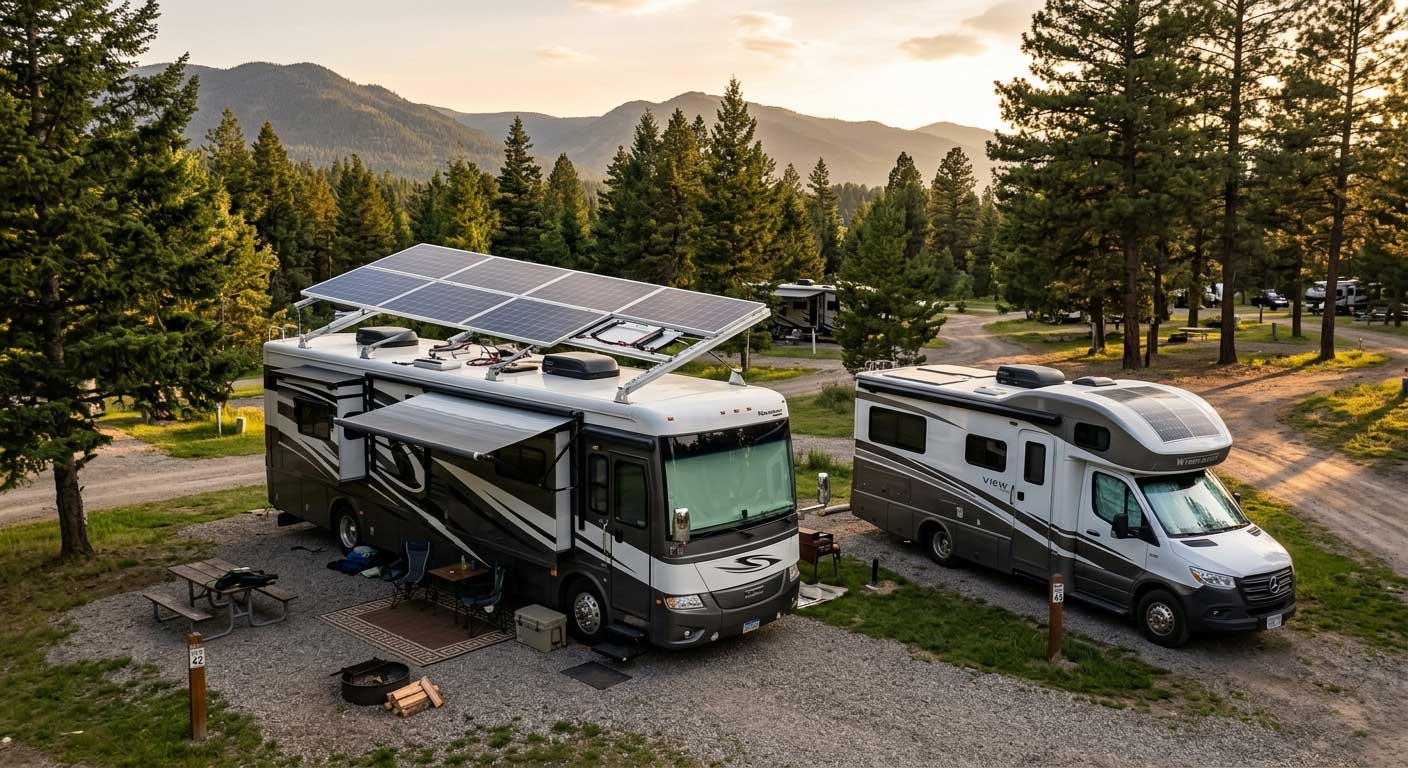
Flexible Solar Panels vs Rigid for RV Owners
RV applications have changed dramatically.
Five years ago, most RV roofs contained:
- Air conditioners.
- Skylights.
- Vents.
Today many roofs also contain:
- Starlink equipment.
- Cellular boosters.
- Additional fans.
- Storage boxes.
Available space becomes fragmented.
Flexible panels can fit areas that rigid modules cannot.
That flexibility explains why RV adoption continues to increase.
Flexible Solar Panels vs Rigid for Boats
Marine applications may be the strongest argument for flexible technology.
Boat owners care about:
- Weight.
- Wind resistance.
- Corrosion.
- Curved surfaces.
A rigid aluminum frame exposed to salt environments requires maintenance.
Low-profile flexible installations reduce:
- Wind drag.
- Hardware exposure.
- Deck obstructions.
Many modern sailboats now incorporate flexible solar into bimini tops and curved cabin roofs.
Buyer Mistakes I See Repeatedly
After reviewing hundreds of projects, several mistakes appear repeatedly.
Mistake 1: Buying Based Only on Efficiency
A 23% efficient panel installed poorly may produce less energy than a 21% panel installed correctly.
Mistake 2: Ignoring Roof Structure
Older mobile homes and RV roofs often have weight limitations.
Panel weight matters.
Mistake 3: Buying the Cheapest Flexible Panel
Low-cost laminated products frequently create problems years later.
Material quality determines lifespan.
Mistake 4: Copying Residential Solar Advice
Residential roofs and moving vehicles operate in entirely different environments.
Vibration changes everything.
FAQ About Flexible Solar Panels vs Rigid
Are flexible solar panels as efficient as rigid panels?
Modern premium flexible panels can achieve efficiencies above 22%, reducing the historical performance gap.
Do flexible solar panels last as long?
Lightweight Rigid Solar Panels generally have longer proven lifespans, but high-quality ETFE flexible panels can provide many years of reliable service.
Which is better for RV roofs?
Flexible panels often work better because of lower weight, easier installation, and improved compatibility with curved roofs.
Are rigid panels stronger?
Yes. Tempered glass and aluminum frames provide excellent structural strength.
Which is more expensive?
Flexible panels often cost more per watt, although total installation costs may sometimes favor flexible systems.
What is the typical efficiency range for flexible solar panels compared to rigid panels?
Flexible solar panels typically achieve around 18%–23% efficiency, while rigid monocrystalline panels usually range from 21%–25%. The gap has become smaller as flexible solar technology improves with PERC and high-efficiency cell designs.
Flexible vs rigid solar panels: which one is better?
Flexible vs rigid solar panels depends on the application. Flexible panels are better for RVs, boats, and curved surfaces because they are lightweight and easy to install. Rigid panels usually perform better for homes and permanent solar systems due to higher durability and cooling performance.
Are flexible solar panels as good as rigid?
Flexible solar panels can be as good as rigid panels in specific applications, especially where weight and installation flexibility matter. However, rigid panels generally offer longer service life, stronger protection, and better heat dissipation for fixed installations.
Flexible solar panel vs rigid: which should I choose?
Flexible solar panel vs rigid depends on your installation environment. Choose flexible panels for RV roofs, marine applications, and lightweight projects. Choose rigid panels for residential rooftops, commercial buildings, and systems requiring maximum lifespan.
Solar panel flexible vs rigid: what are the main differences?
Solar panel flexible vs rigid mainly differs in weight, durability, installation method, and application range. Flexible panels are lightweight, low-profile, and adaptable, while rigid panels provide higher mechanical strength, better ventilation, and longer proven performance.
Visit the product page:
Final Thoughts
The answer to flexible solar panels vs Rigid Solar Panels is not universal.
Lightweight Rigid Solar Panels continue to dominate:
- Residential systems.
- Commercial rooftops.
- Ground-mounted projects.
Flexible panels increasingly dominate:
- RVs.
- Camper vans.
- Boats.
- Mobile homes.
- Curved surfaces.
- Lightweight applications.
After years of reviewing real installations, I no longer ask which technology is better.
I ask where the panel will live.
A glass module on a house roof may operate perfectly for decades.
A lightweight flexible panel on a camper roof may make a solar installation possible in the first place.
That distinction is why the conversation around flexible solar panels vs Rigid Solar Panels continues to evolve.
Related recommendations
-

ETFE Flexible Solar Panels: Benefits, Uses and Buying Guide
94ETFE flexible solar panels use ETFE film as a protective front layer and may suit RV, marine, and off-grid applications. Selection should be based on the com...
View details -
Best Solar Panel Setup for RV and Off-Grid Systems: Complete Guide
204Discover the best solar panel setup for RV and off-grid systems with wiring options, battery sizing, MPPT controllers, and flexible solar panel solutions.
View details -
Panel Solar Flexible 100W for RV, Marine, and Off-Grid Use
122Discover panel solar flexible 100W systems for RVs, boats, vans, and portable power. Lightweight, durable, and built for outdoor performance.
View details -
400w Solar Panel Size: Dimensions, Power Output, and Installation Guide
160A 400W solar panel typically measures about 65–82 × 39–44 inches, with actual dimensions varying by manufacturer, cell technology, and module design.
View details