Best flexible solar panels for RV: A Complete Guide for Mobile Solar Power
The best flexible solar panels for RV applications combine lightweight construction, durability, and reliable energy output for mobile living. Bright Solar recommends choosing panels based on roof space, power demand, weather exposure, and installation conditions rather than wattage alone. The right flexible panel can improve RV energy independence while reducing installation complexity.
Why choosing the best flexible solar panels for RV requires more than comparing watts
When RV owners search for the best flexible solar panels for RV, many focus on one number: wattage.
A 200W panel sounds better than a 100W panel. A higher efficiency percentage looks impressive. A thinner design seems easier to install.
However, after working with flexible photovoltaic systems for RV, marine, and off-grid applications, Bright Solar found that the real performance difference usually comes from how well the panel matches the vehicle.
An RV roof is not the same as a residential rooftop.
It has:
- limited available space
- curved surfaces
- vibration during driving
- changing weather conditions
- weight restrictions
- irregular shading from vents, air conditioners, and antennas
A solar panel that performs well on a house roof may not be the best solution for a camper.
The best RV flexible solar panels should balance:
| Selection Factor | Why It Matters |
|---|---|
| Weight | Reduces roof load and improves vehicle efficiency |
| Flexibility | Allows installation on curved RV surfaces |
| Durability | Handles vibration, UV exposure, and temperature changes |
| Efficiency | Produces more energy from limited roof space |
| Surface material | Protects against outdoor conditions |
| Warranty support | Provides long-term reliability |
What makes a flexible solar panel suitable for RV applications?
Flexible solar panels are designed differently from traditional glass solar modules.
A rigid solar panel usually depends on:
- aluminum frames
- glass protection
- fixed mounting structures
Flexible Solar Panels focus on:
- lightweight materials
- thinner construction
- adaptable installation methods
For RV owners, this difference matters.
A camper roof may have only a few usable areas:
- between roof vents
- around skylights
- above storage compartments
- on curved fiberglass surfaces
A flexible solar module can use spaces where rigid panels cannot fit.
Lightweight design for RV roof limitations
Weight is often overlooked.
Many RV manufacturers consider roof load capacity when designing vehicles. Adding multiple heavy solar modules, mounting brackets, and hardware can increase unnecessary weight.
A flexible solar panel system can reduce:
- mounting hardware requirements
- drilling points
- overall roof load
For traveling RV owners, every kilogram matters.
A lighter installation can also simplify future maintenance because fewer mechanical components are involved.
Better installation flexibility on curved surfaces
One reason RV owners choose flexible panels is installation freedom.
Common RV roof materials include:
- fiberglass
- aluminum
- rubber membrane roofing
- composite panels
These surfaces are often uneven or curved.
Flexible solar panels can follow these shapes better than traditional framed modules.
Bright Solar field testing showed that installation compatibility often determines project success.
A technically powerful panel that cannot fit the roof properly may produce less practical value than a slightly smaller panel installed in an optimal position.
How much energy can the best flexible solar panels for RV produce?
Solar output depends on:
- sunlight availability
- geographic location
- installation angle
- temperature
- shading
- system losses
According to the National Renewable Energy Laboratory (NREL), photovoltaic output varies significantly depending on solar irradiance and environmental conditions.
Source:
A typical RV flexible solar system may produce:
| Solar System Size | Approximate Daily Energy Production |
|---|---|
| 100W flexible panel | 300–500Wh/day |
| 200W flexible panel | 600–1000Wh/day |
| 400W flexible system | 1200–2000Wh/day |
Actual results depend heavily on location.
For example:
- Arizona summer travel can provide strong solar conditions.
- Northern Europe winter conditions may provide much lower production.
- Coastal areas may experience changing cloud coverage.
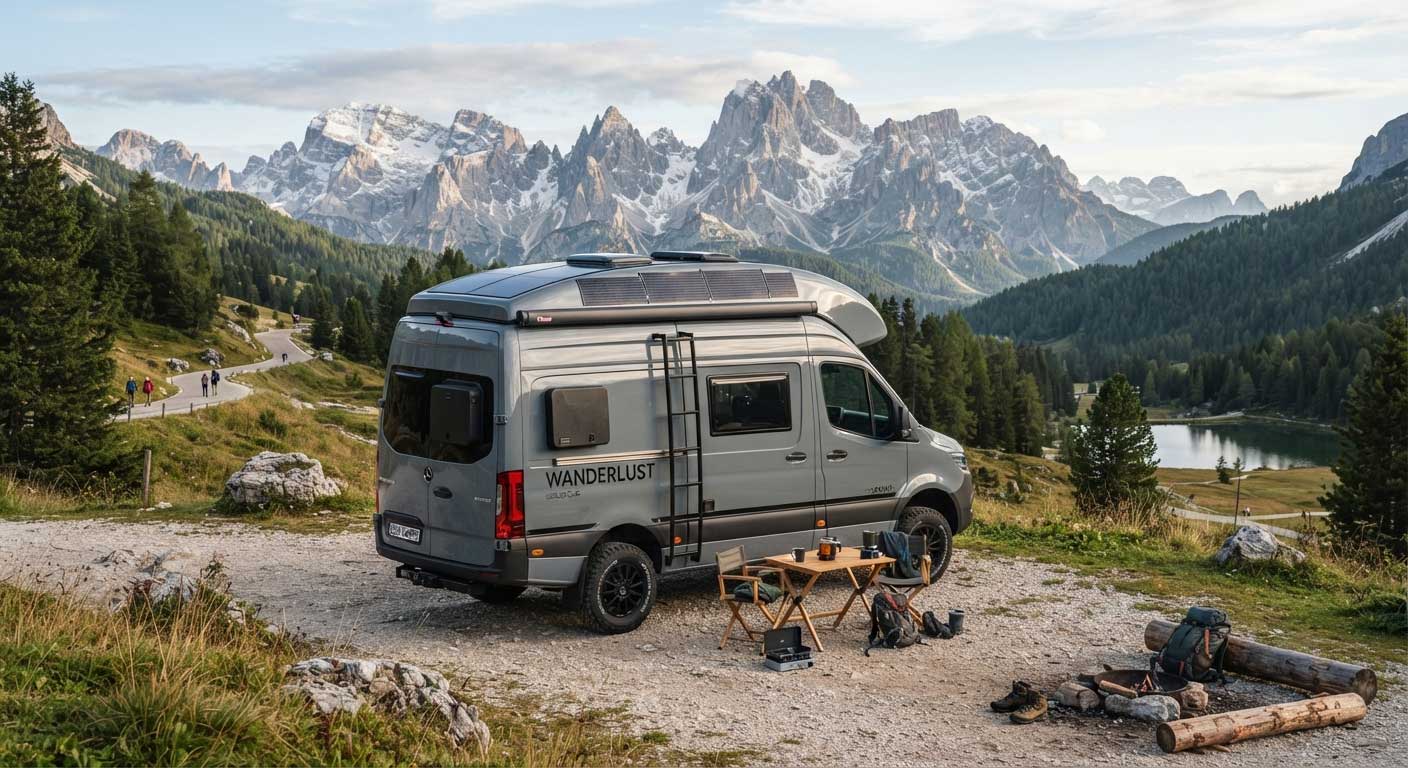
Key features to look for in the best flexible solar panels for RV
Not every flexible panel is designed for vehicle applications.
Before purchasing, RV owners should evaluate several technical factors.
1. Solar cell technology
Most modern flexible solar panels use monocrystalline cells because they provide higher efficiency compared with older technologies.
Advantages include:
- better power output per square meter
- improved performance in limited installation areas
- suitable for compact RV roofs
For RV applications where space is limited, efficiency matters.
A small roof area cannot always be solved by adding more panels.
2. Protective surface material
RV solar panels experience harsh outdoor conditions.
Important materials include:
| Material | Purpose |
|---|---|
| ETFE coating | UV resistance and surface protection |
| PET coating | Lightweight protection |
| Composite layers | Structural durability |
Bright Solar flexible panels use durable surface solutions designed for outdoor environments.
The protective layer is not only cosmetic.
It affects:
- weather resistance
- cleaning frequency
- long-term performance stability
3. Temperature performance
RV users frequently travel through different climates.
A panel installed in the desert may experience:
- strong sunlight
- high roof temperatures
- rapid temperature changes
Temperature affects solar efficiency.
The U.S. Department of Energy explains that photovoltaic module output changes as operating temperature increases.
Source:
Therefore, installation design and ventilation conditions remain important even with flexible solar products.
Comparing flexible solar panels and rigid RV solar panels
| Feature | Flexible Solar Panels | Rigid Solar Panels |
|---|---|---|
| Weight | Lower | Higher |
| Installation | Easier on curved surfaces | Requires brackets |
| Roof drilling | Often avoidable | Usually required |
| Durability | Depends on material quality | Strong glass protection |
| Best use | RVs, boats, mobile systems | Fixed installations |
| Appearance | Low profile | Visible frame structure |
Neither option is perfect for every RV.
The correct choice depends on:
- travel style
- available roof space
- energy requirements
- installation preference
How Bright Solar evaluates RV flexible solar panels
At Bright Solar, product evaluation is not limited to laboratory specifications.
Our engineering approach considers real usage situations:
- How does the panel behave after months of outdoor exposure?
- How does it handle repeated vehicle movement?
- Can installers complete the project efficiently?
- Does the system match customer energy expectations?
During flexible solar panel testing, we pay attention to details that are often ignored:
- cable connection protection
- adhesive compatibility
- roof temperature changes
- cleaning requirements
- long-term mechanical stress
A successful RV solar installation is not just about producing electricity.
It is about creating a system that works reliably while traveling.
Recommended RV applications for flexible solar panels
Small camper vans
Suitable for:
- phone charging
- LED lighting
- navigation devices
- small electronics
Typical system:
- 100W–200W flexible solar panels
Medium RVs
Suitable for:
- refrigerators
- fans
- communication equipment
- battery charging
Typical system:
- 200W–400W solar configuration
Off-grid travel vehicles
Suitable for:
- extended camping
- remote travel
- outdoor work vehicles
Typical system:
- multiple flexible panels combined with lithium batteries
Real RV Installation Case Studies: How the Best Flexible Solar Panels for RV Perform in Practice
Specifications tell only part of the story.
During real RV projects, the most important factors are often discovered after installation: how the panel fits the roof, how stable the charging system remains during travel, and whether the owner can actually use the stored energy comfortably.
At Bright Solar, we have worked with flexible solar solutions for mobile applications where customers needed lightweight, reliable, and low-maintenance power systems.
The following cases represent common RV installation scenarios.
Case Study 1: Lightweight solar upgrade for a European camper van
Customer background
A customer traveling across Europe with a compact camper van wanted to reduce dependence on campground electricity.
The vehicle had:
- a curved fiberglass roof
- limited installation space
- rooftop ventilation equipment
- strict weight considerations
The original plan was to install a traditional framed solar panel.
However, after checking the roof structure, several problems appeared:
- the mounting brackets occupied valuable space
- additional drilling points increased waterproofing concerns
- the final installation looked bulky
The customer changed to a flexible solar configuration.
Final system design
The installed system included:
| Component | Specification |
|---|---|
| Solar panel | 200W flexible solar panels |
| Battery | 100Ah lithium battery |
| Controller | MPPT charge controller |
| Application | Lighting, charging devices, communication equipment |
Performance observation
During normal summer travel:
| Test Item | Result |
|---|---|
| Daily solar generation | 700–950Wh |
| Installation weight reduction | Significant compared with framed solution |
| Roof modification | Minimal |
| Main supported loads | LED lights, phones, laptop, router |
The owner originally focused on maximum wattage.
After several weeks of travel, the feedback changed:
“The biggest improvement was not only electricity production. It was having a clean roof installation without complicated hardware.”
This reflects a common RV solar lesson:
The best flexible solar panels for RV are usually the ones that fit the lifestyle, not simply the ones with the largest specification sheet.
Case Study 2: Marine-style RV conversion project in North America
Project challenge
A North American customer converted a cargo van into a mobile workspace.
The vehicle required:
- daily laptop charging
- communication equipment
- lighting
- portable electronics
The roof design included:
- curved edges
- limited flat sections
- frequent exposure to outdoor weather
Installation approach
Bright Solar engineers recommended:
- flexible solar modules instead of heavy framed panels
- carefully planned cable routing
- MPPT charging technology
- lithium battery storage
The installation focused on:
- Maximizing usable roof area
- Avoiding shading from roof accessories
- Protecting cable entry points
- Maintaining vehicle appearance
Measured results
| Category | Data |
|---|---|
| Solar capacity | 300W flexible solar system |
| Daily energy production | 900–1500Wh depending on weather |
| Primary usage | Mobile office equipment |
| Travel environment | Highway + outdoor camping |
The project demonstrated that flexible solar technology is especially valuable when the vehicle itself is the limitation.
Common mistakes when choosing flexible solar panels for RV
Many RV solar problems do not come from the panel itself.
They usually come from system planning mistakes.
Mistake 1: Buying based only on wattage
A larger panel does not automatically create a better system.
For example:
A 300W panel installed under partial shade may produce less energy than a properly positioned 200W system.
The complete system matters:
- panel placement
- battery capacity
- controller quality
- cable size
Mistake 2: Ignoring roof temperature
RV roofs can become extremely hot under direct sunlight.
High temperatures affect photovoltaic performance.
According to the National Renewable Energy Laboratory (NREL), solar module output changes as cell temperature increases.
Source:
Good design considers:
- airflow
- mounting method
- panel material
- installation location
Mistake 3: Installing without calculating energy needs</h3>
Before selecting a panel, RV owners should estimate daily consumption.
Example:
| Device | Daily Energy Use |
|---|---|
| LED lighting | 20–50Wh |
| Smartphone charging | 10–20Wh |
| Laptop | 80–150Wh |
| Small fan | 50–150Wh |
| Router | 100–200Wh |
A realistic energy calculation prevents disappointment.
Bright Solar Expert Insight: What makes an RV solar installation successful?
Engineering experience from product development
At Bright Solar, flexible solar panels are developed with real application environments in mind.
Our experience comes from evaluating:
- RV installations
- marine solar applications
- portable power systems
- off-grid projects
The biggest difference between successful and unsuccessful installations is usually not the solar cell technology.
It is system matching.
A good RV solar system balances:
- available roof area
- travel habits
- energy consumption
- battery storage
- environmental conditions
Our practical evaluation process
Before recommending a flexible solar solution, we consider:
1. Roof analysis
We check:
- usable installation area
- curves and obstacles
- possible shading sources
2. Energy analysis
We review:
- daily electricity demand
- battery capacity
- expected travel conditions
3. Environmental conditions
We consider:
- temperature range
- humidity
- UV exposure
- mechanical vibration
This approach avoids the common mistake of choosing a solar panel first and designing the system afterward.
FAQ: Best Flexible Solar Panels for RV
What are the best flexible solar panels for RV use?
The best flexible solar panels for RV use should offer a balance of lightweight design, durability, efficiency, and weather resistance.
For most RV applications, monocrystalline flexible panels with ETFE protection are preferred because they provide reliable output while maintaining a low-profile installation.
How many flexible solar panels do I need for an RV?
The number of panels depends on energy usage.
Typical examples:
| RV Type | Recommended Solar Capacity |
|---|---|
| Weekend camper | 100W–200W |
| Regular traveler | 200W–400W |
| Full-time off-grid RV | 400W+ |
Energy calculation should always come before purchasing.
Are flexible solar panels good for RV roofs?
Yes.
Flexible panels are especially suitable for RV roofs because they:
- reduce weight
- fit curved surfaces
- require less mounting hardware
- maintain a cleaner appearance
They are widely used for camper vans, trailers, and mobile living systems.
How long do flexible RV solar panels last?
A high-quality flexible solar panel can provide many years of outdoor service when installed correctly.
Lifespan depends on:
- material quality
- UV exposure
- temperature cycles
- installation method
Proper cable protection and surface maintenance can improve long-term reliability.
Can flexible solar panels power an RV refrigerator?
Yes, but the complete system must be designed correctly.
A refrigerator requires:
- enough solar capacity
- sufficient battery storage
- efficient power management
A single 100W panel is usually not enough for continuous refrigerator operation.
Are flexible solar panels better than rigid panels for RVs?
Flexible panels are better when:
- weight is important
- roof shape is irregular
- low-profile installation is preferred
Rigid panels may be better when:
- maximum cooling is required
- roof space is unlimited
- permanent mounting is acceptable
The correct choice depends on the RV design.
Can flexible solar panels be installed without drilling?
Many flexible solar installations can avoid traditional drilling methods by using suitable mounting solutions.
However, installation methods depend on:
- roof material
- adhesive selection
- environmental conditions
Professional installation planning is recommended for long-term reliability.
Final Conclusion: Choosing the Best Flexible Solar Panels for RV
The best flexible solar panels for RV are not simply the panels with the highest watt rating.
They are the panels that match:
- your RV roof design
- your energy requirements
- your travel habits
- your installation conditions
Bright Solar’s experience with flexible photovoltaic systems shows that successful RV solar projects depend on thoughtful design.
A lightweight flexible panel can provide excellent performance when it is correctly sized, properly installed, and combined with the right battery and controller.
For RV owners seeking more freedom on the road, flexible solar technology offers a practical path toward cleaner and more independent travel.
Related recommendations
-

Flexible solar panel 300w: Lightweight Solar Solution for Mobile and Home Applications
175Explore flexible solar panel 300w solutions from Bright Solar. Learn power output, installation methods, real applications, durability, and how 300W flexible solar panels support modern energy needs.
View details -
Solar Panels Series or Parallel: Which Wiring Method Is Better?
195Learn Solar Panels Series or Parallel wiring methods with our complete guide. Compare series, parallel, voltage, current, and choose the best solar setup.
View details -
Sungrow Inverter Helps Chilean Photovoltaic Project in the Atacama Desert
191Sungrow Inverter turnkey PV inverter solutions and solar panel cleaning robots to a 480 MW photovoltaic project in Chile’s Atacama Desert, supporting the country’s Energy Policy 2050 with high-efficiency inverters, anti-PID technology, and waterle...
View details -
Flexible Solar Panels RV: The Smarter Solar Upgrade for Modern Campers
211Explore how flexible solar panels RV systems provide lightweight, durable off-grid power for campers, vans, and motorhomes with Bright Solar.
View details