Cigs thin film flexible solar panel for Lightweight and Flexible Solar Applications
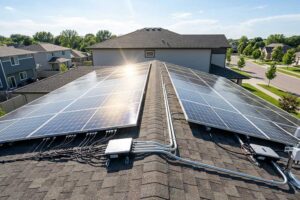
A cigs thin film flexible solar panel uses copper indium gallium selenide technology to create lightweight and bendable photovoltaic modules. It offers excellent performance on curved surfaces, portable systems, and applications where traditional glass solar panels are difficult to install.
At Bright Solar, our interest in CIGS thin film technology started from a practical problem.
Solar panels are usually designed around buildings.
But many real applications do not look like buildings.
A delivery vehicle roof is curved.
A marine platform has limited space.
A portable power system must be lightweight.
A temporary structure may not support heavy glass modules.
During product discussions with European system integrators, one question appeared repeatedly:
“Can solar power be integrated into surfaces that were never designed for solar panels?”
That question is where thin film technology becomes interesting.
A cigs thin film flexible solar panel is not simply a lighter solar module. It represents a different photovoltaic approach that focuses on flexibility, weight reduction, and integration possibilities.
What is a cigs thin film flexible solar panel?
A CIGS thin film flexible solar panel uses a semiconductor material called copper indium gallium selenide (CIGS) as the photovoltaic absorption layer.
The basic structure usually includes:
| Layer | Function |
|---|---|
| Flexible substrate | Provides lightweight support |
| Back contact layer | Collects generated electricity |
| CIGS semiconductor layer | Converts sunlight into electrical energy |
| Transparent conductive layer | Allows electrical flow |
| Protective coating | Improves environmental resistance |
Unlike traditional crystalline silicon panels that use thick silicon wafers mounted between glass layers, CIGS thin film technology creates a much thinner photovoltaic structure.
This difference gives CIGS several advantages:
- Lower weight
- Better flexibility
- Improved performance in certain low-light conditions
- Ability to integrate with unusual surfaces
According to the National Renewable Energy Laboratory (NREL), CIGS is one of the major thin-film photovoltaic technologies alongside cadmium telluride (CdTe) and amorphous silicon.
Source:
National Renewable Energy Laboratory – Thin-Film Solar Technology
https://www.nrel.gov/pv/thin-film.html
Why choose CIGS thin film technology for flexible solar panels?
When customers compare solar technologies, efficiency is usually the first number they look at.
However, engineers often look at something else first:
“Can this technology solve the installation problem?”
For flexible solar applications, CIGS technology provides several practical advantages.
Lightweight structure for mobile applications
Weight reduction is one of the biggest reasons companies consider thin film flexible solar.
A traditional glass solar panel requires:
- Tempered glass
- Aluminum frame
- Heavy mounting system
A thin film flexible module removes many of these rigid components.
For applications such as:
- RVs
- Boats
- Portable equipment
- Remote monitoring stations
the weight difference can directly affect system design.
One Bright Solar customer in Germany was developing a mobile environmental monitoring platform.
The original design used conventional rigid modules.
The problem appeared during transportation testing.
The solar system added too much weight and required additional mechanical support.
After evaluating flexible thin film options:
- Transportation weight was reduced
- Installation became faster
- The equipment structure required fewer modifications
The interesting part was not the solar output.
The improvement came from making the entire system easier to deploy.
Better integration with curved surfaces
Many solar projects fail before installation begins because the available surface is not suitable.
Examples:
- Curved vehicle roofs
- Marine equipment covers
- Portable shelters
- Architectural structures
A rigid module needs a mounting solution.
A flexible CIGS panel can become part of the surface design.
At Bright Solar, we often describe this difference as:
Rigid panels are installed on a structure.
Flexible panels can sometimes become part of the structure.
CIGS thin film flexible solar panel efficiency and performance
A common misunderstanding is that flexible solar panels always sacrifice too much performance.
The reality is more complicated.
Solar efficiency depends on:
- Cell technology
- Temperature
- Installation angle
- Light conditions
- Manufacturing quality
CIGS technology has achieved strong laboratory results.
According to NREL’s Best Research-Cell Efficiency Chart, CIGS laboratory cells have exceeded 23% efficiency.
Source:
National Renewable Energy Laboratory – Best Research-Cell Efficiencies
https://www.nrel.gov/pv/cell-efficiency.html
Commercial products usually operate at lower efficiency because they require:
- Larger manufacturing areas
- Protective layers
- Real-world durability requirements
For many flexible solar applications, the goal is not maximum efficiency per square meter.
The goal is usable energy from surfaces that would otherwise remain unused.
Real-world performance of CIGS flexible solar technology
During outdoor testing, we noticed something that is often overlooked.
Solar panels do not operate in perfect laboratory conditions.
A panel installed on a vehicle roof may experience:
- Morning shade
- Heat buildup
- Changing sunlight angles
- Dust accumulation
CIGS thin film technology has shown strong adaptability in changing light environments.
This makes it interesting for:
- Mobile solar systems
- Building-integrated photovoltaics
- Transportation applications
A project partner in the Netherlands installed flexible solar modules on a lightweight outdoor structure.
The structure was used throughout different seasons.
The feedback was not only about electricity production.
The installer highlighted:
- Easier transportation
- Faster installation
- Lower structural requirements
For this type of project, flexibility itself became part of the energy solution.

CIGS thin film vs crystalline silicon flexible solar panels
The choice between technologies depends on the application.
| Feature | CIGS Thin Film Flexible Solar Panel | Crystalline Silicon Flexible Panel |
|---|---|---|
| Material | Copper indium gallium selenide | Silicon cells |
| Weight | Very lightweight potential | Usually heavier |
| Flexibility | Excellent | Moderate |
| Surface integration | Strong advantage | Limited |
| Manufacturing process | Thin film deposition | Silicon wafer process |
| Best use cases | Curved, portable, integrated applications | General flexible solar systems |
Neither technology is perfect for every situation.
The correct choice depends on what the solar panel needs to do after installation.
How CIGS thin film flexible solar panels are manufactured
The manufacturing process of a cigs thin film flexible solar panel is different from traditional crystalline silicon modules.
Instead of cutting silicon wafers and assembling individual cells, CIGS technology creates a semiconductor layer directly on a flexible substrate.
The general production process includes:
Step 1: Flexible substrate preparation
The process begins with a flexible base material.
Depending on the product design, manufacturers may use:
- Polymer substrates
- Stainless steel sheets
- Flexible metal foils
The substrate needs to provide:
- Mechanical flexibility
- Thermal stability
- Long-term reliability
Step 2: Thin film layer deposition
The CIGS semiconductor layer is deposited onto the substrate through controlled manufacturing processes.
This layer contains:
- Copper
- Indium
- Gallium
- Selenium
The composition ratio affects:
- Light absorption
- Electrical performance
- Manufacturing stability
Unlike crystalline silicon panels that require thicker active material, thin film technology uses a much thinner photovoltaic layer.
Step 3: Electrical connection and protective coating
After forming the photovoltaic layer, manufacturers add:
- Conductive layers
- Protective coatings
- Electrical connections
The final product must balance:
- Flexibility
- Weather resistance
- Electrical performance
At Bright Solar, our approach is not only focused on producing a flexible panel.
The product must survive the environment where it will be installed.
A solar panel installed on a building roof and a solar panel installed on a vehicle experience completely different conditions.
Where are CIGS thin film flexible solar panels used?
The biggest advantage of CIGS flexible technology is installation freedom.
Some applications where this technology provides unique value include:
1. Building integrated solar applications
Traditional solar panels usually require dedicated mounting structures.
However, modern architecture increasingly includes:
- Curved roofs
- Lightweight structures
- Special building materials
CIGS flexible solar panels can be integrated into surfaces where conventional modules create design limitations.
Examples include:
- Commercial building facades
- Lightweight roofing systems
- Architectural structures
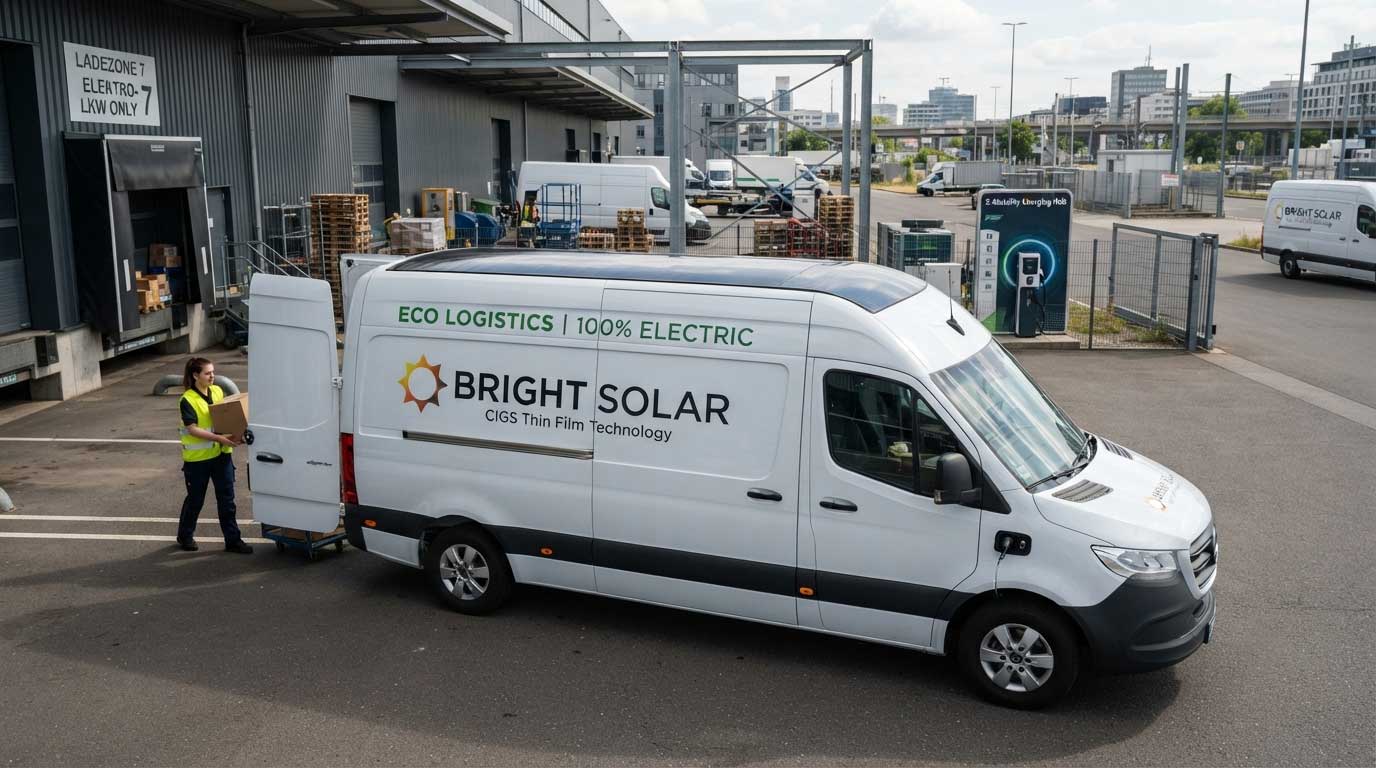
2. Transportation solar systems
Transportation is one of the strongest application areas for lightweight solar.
Vehicles have limited available energy space.
Applications include:
- Electric vehicles
- Delivery vans
- RVs
- Mobile charging systems
Reducing solar system weight can improve overall system efficiency.
3. Off-grid and portable energy systems
Remote locations often create transportation challenges.
A heavy solar system can increase:
- Shipping costs
- Installation difficulty
- Structural requirements
Flexible CIGS modules are attractive for:
- Emergency power
- Outdoor equipment
- Remote sensors
- Field communication systems

Advantages and limitations of CIGS thin film flexible solar panels
Like every solar technology, CIGS has strengths and limitations.
Understanding both sides helps customers make better decisions.
| Advantages | Considerations |
|---|---|
| Lightweight design | Commercial efficiency varies by product |
| Excellent flexibility | Manufacturing requires specialized technology |
| Suitable for curved surfaces | Cost may be higher than basic rigid panels |
| Good low-light performance potential | Availability depends on supplier |
| Easier integration into special applications | Requires correct installation method |
At Bright Solar, we usually recommend CIGS flexible solutions when the installation challenge is the priority.
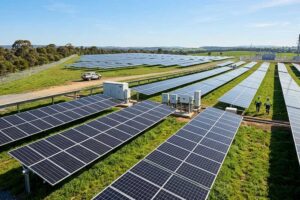
For a large flat solar farm, other technologies may provide better economics.
For a curved mobile application, the calculation changes completely.
Installation guide for CIGS thin film flexible solar panels
A flexible solar panel installation still requires professional planning.
The following process is recommended:
Step 1: Evaluate the installation environment
Before installation, check:
- Surface shape
- Sun exposure
- Temperature range
- Mechanical stress
- Cable location
A panel installed on a vehicle will experience movement.
A panel installed on a building will experience different loading conditions.
Step 2: Prepare the surface
The surface should be:
- Clean
- Dry
- Free from contaminants
- Suitable for bonding
Dust, oil, or moisture can reduce installation reliability.
Step 3: Connect the electrical system
The complete solar system normally includes:
- Solar charge controller
- Battery storage
- Inverter if AC power is required
- Monitoring equipment
The solar panel is only one part of the energy system.
Bright Solar experience with flexible photovoltaic technology
At Bright Solar, we focus on flexible solar products because we see demand from industries that cannot use standard modules easily.
Our development discussions often start with practical questions:
“Can it survive outdoor conditions?”
“Can installers work with it easily?”
“Can it provide reliable energy after months of use?”
Through cooperation with distributors and system integrators, we continue improving:
- Material selection
- Surface protection
- Product structure
- Application guidance
One lesson from our projects is clear:
A solar panel is not successful because it looks advanced.
It is successful when it performs in the environment where customers actually use it.
CIGS thin film flexible solar panel cost considerations
The price of CIGS flexible solar panels depends on:
- Manufacturing technology
- Material quality
- Power output
- Customization requirements
- Order quantity
Compared with conventional rigid silicon modules, CIGS flexible products may have a higher cost per watt.
However, the total project value includes more than the panel price.
For example, a flexible solar solution may reduce:
- Mounting hardware
- Structural reinforcement
- Installation labor
- Transportation weight
For specialized applications, these savings can offset the higher module cost.
A simple comparison:
| Cost Factor | Rigid Solar Panel | CIGS Flexible Solar Panel |
|---|---|---|
| Panel price | Usually lower | Usually higher |
| Mounting system | More components | Fewer components |
| Installation difficulty | Higher in unusual areas | Easier integration |
| Transportation | Heavier | Lightweight advantage |
FAQ About CIGS Thin Film Flexible Solar Panels
What is a CIGS thin film flexible solar panel?
A CIGS thin film flexible solar panel uses copper indium gallium selenide technology to create a lightweight photovoltaic module that can bend and integrate into curved surfaces.
Are CIGS flexible solar panels better than silicon panels?
It depends on the application. CIGS panels provide advantages in flexibility and lightweight design, while silicon panels often provide higher commercial efficiency.
Can CIGS flexible solar panels be installed on curved surfaces?
Yes. Flexibility is one of the main reasons customers choose CIGS technology for vehicles, marine systems, and architectural applications.
Do CIGS thin film solar panels work in cloudy conditions?
Yes. They can continue generating electricity under indirect sunlight, although output will decrease compared with direct sunlight.
How long do CIGS flexible solar panels last?
The lifespan depends on product design, materials, installation environment, and maintenance. Quality flexible solar products are designed for long-term outdoor operation.
Are CIGS flexible solar panels waterproof?
Outdoor CIGS flexible solar panels are designed with protective layers, but installation sealing and electrical protection remain important.
Where are CIGS flexible solar panels commonly used?
They are commonly used in transportation, portable energy systems, building-integrated photovoltaics, marine applications, and remote power systems.
Final Thoughts
A cigs thin film flexible solar panel represents a different way of thinking about solar installation.
Traditional solar design starts with the question:
“How can we install a panel here?”
Flexible solar design asks:
“Which surfaces can become solar power sources?”
That difference creates opportunities for vehicles, boats, buildings, and remote applications.
After years working with Bright Solar flexible photovoltaic solutions, we have found that customers usually choose CIGS technology not because they need another solar panel.
They choose it because their application has limitations that traditional panels cannot solve.
Lightweight construction, flexible integration, and thin film technology make CIGS an important option for the future of distributed solar power.
Related recommendations
-

Series vs Parallel Solar Panels: Which Wiring Method Performs Better?
109Compare series vs parallel solar panels for RVs, homes, and off-grid systems. Bright Solar explains voltage, current, shading, and wiring efficiency.
View details -
500 watt flexible solar panel: High Power Flexible Solar Solution for RV, Marine and Off-Grid Applications
209Discover how a 500 watt flexible solar panel delivers high power output with lightweight design, durability, and versatile installation options for RVs, marine, and off-grid applications.
View details -
400 Watt Solar Panel: Real Performance, Efficiency, and Buying Guide
302400 watt solar panel systems deliver reliable off-grid and residential power. Learn efficiency, output, installation tips, and real-world performance.
View details -
Solar Roof Tile Solutions from Bright Solar for Modern Homes
246Solar Roof Tile from Bright Solar combines power generation and roofing in one, offering a discreet alternative to traditional solar panels while protecting your home and reducing electricity bills.
View details