Best semi flexible solar panels: A Complete Guide for RV, Marine and Off-Grid Applications
The best semi flexible solar panels provide a balance between lightweight design, durability, and energy performance. They are ideal for RVs, boats, and curved surfaces where rigid panels are difficult to install. Bright Solar recommends selecting panels based on application, materials, installation conditions, and long-term reliability rather than price alone.
What are semi flexible solar panels and why do they matter?
When customers search for the best semi flexible solar panels, they are usually looking for something between traditional rigid solar panels and ultra-thin flexible modules.
Semi flexible solar panels combine:
- lightweight construction
- moderate bending capability
- improved durability
- easier installation
- higher mechanical stability than extremely thin flexible products
They are designed for applications where traditional glass solar panels are too heavy or difficult to install.
Common applications include:
- RV roofs
- camper trailers
- marine vessels
- expedition vehicles
- portable energy systems
- remote monitoring equipment
At Bright Solar, we have evaluated flexible photovoltaic products for different environments. One thing becomes clear after field testing:
A solar panel is not valuable because it bends.
It is valuable because it continues producing reliable power after installation.
Semi flexible vs flexible vs rigid solar panels: Understanding the difference
Many buyers use “flexible solar panel” as a general term, but there are important differences.
| Type | Structure | Flexibility | Common Applications |
|---|---|---|---|
| Rigid solar panel | Glass + aluminum frame | Almost none | Homes, commercial rooftops |
| Semi flexible solar panel | Reinforced lightweight layers | Limited bending | RV, marine, mobile systems |
| Ultra flexible solar panel | Thin polymer structure | Higher bending ability | Portable applications |
Semi flexible panels often provide a middle ground.
They offer:
- easier installation than rigid modules
- stronger structure than extremely thin flexible panels
- better suitability for long-term outdoor use
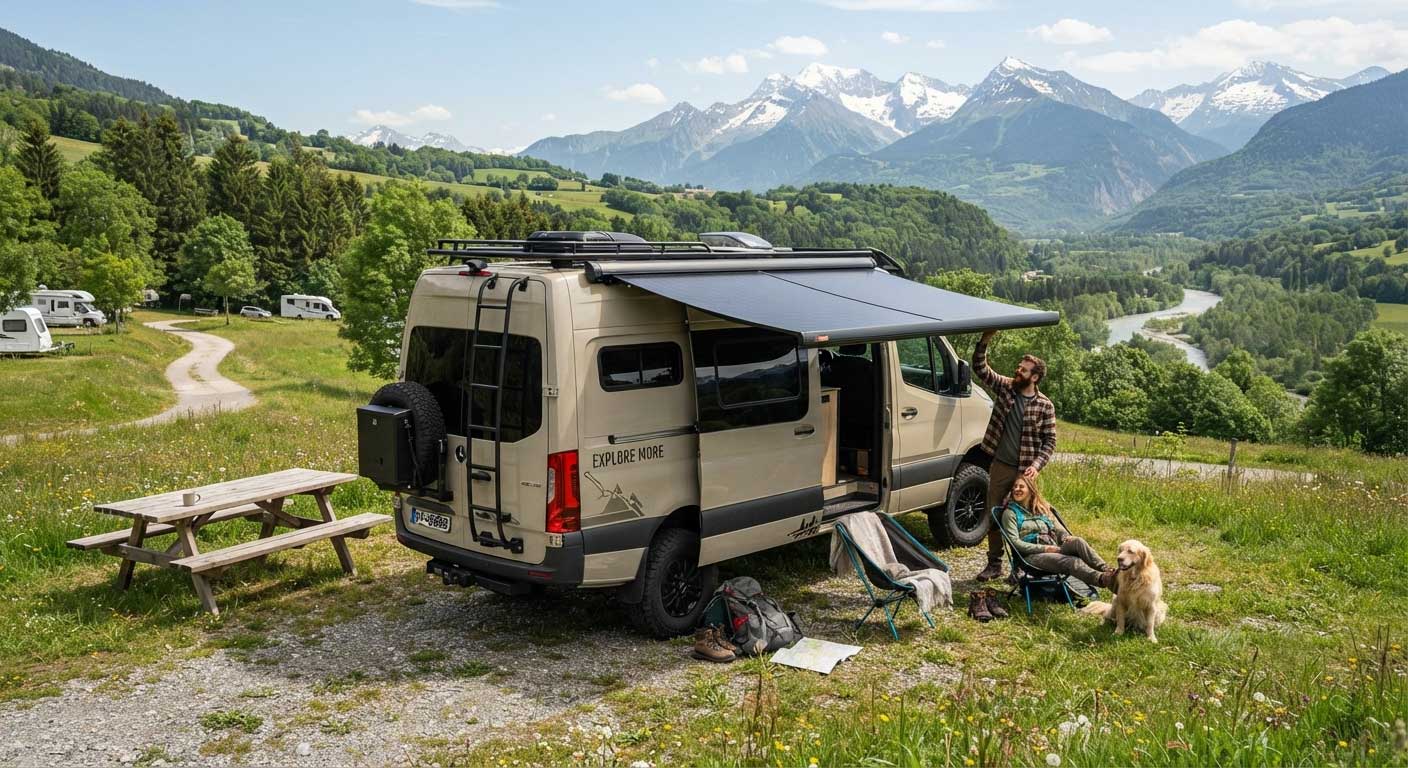
Why choose the best semi flexible solar panels for RV applications?
RV solar systems have unique requirements.
Unlike residential rooftops, RV roofs experience:
- constant vibration
- temperature changes
- movement during driving
- limited installation area
- irregular surfaces
A semi flexible solar panel can solve several common installation challenges.
Lightweight design reduces RV roof stress
Weight is one of the biggest advantages.
Traditional framed solar panels require:
- aluminum frames
- mounting brackets
- additional hardware
These components increase:
- installation complexity
- roof loading
- maintenance requirements
Semi flexible panels reduce unnecessary weight.
For RV owners, lower weight means:
- easier installation
- less structural impact
- cleaner vehicle appearance
Better adaptation to curved surfaces
Many RV roofs are not perfectly flat.
Common obstacles include:
- air conditioners
- skylights
- roof vents
- curved fiberglass sections
A semi flexible panel can follow these surfaces more naturally.
This allows installers to use more available roof space.
How much energy can semi flexible solar panels produce?
Solar output depends on multiple conditions:
- sunlight intensity
- temperature
- installation angle
- shading
- controller efficiency
- battery system design
According to the National Renewable Energy Laboratory (NREL), photovoltaic performance changes depending on environmental conditions, especially solar irradiance and module temperature.
Source:
Typical output examples:
| Solar Capacity | Average Daily Production |
|---|---|
| 100W semi flexible panel | 300–500Wh/day |
| 200W semi flexible panel | 600–1000Wh/day |
| 400W semi flexible system | 1200–2000Wh/day |
These numbers are estimates under practical outdoor conditions.
A poorly positioned 200W panel may produce less energy than a properly installed 100W system.
Key features to consider when choosing the best semi flexible solar panels
Choosing a solar panel requires looking beyond wattage.
1. Cell technology
Most modern high-quality semi flexible panels use monocrystalline solar cells.
Advantages include:
- higher conversion efficiency
- better performance in limited space
- improved energy generation for mobile applications
For RV and marine installations, roof space is usually limited.
Efficiency becomes important because adding more panels is not always possible.
2. Surface protection and durability
Outdoor solar panels experience:
- UV radiation
- rain
- salt air
- temperature changes
- physical impact
The surface material affects long-term reliability.
Common protective materials include:
| Material | Function |
|---|---|
| ETFE coating | UV resistance and durability |
| PET layer | Lightweight protection |
| Composite structure | Mechanical reinforcement |
Bright Solar focuses on protective construction because outdoor reliability is often determined by material quality.
3. Weather resistance
Marine and RV applications require stronger environmental protection.
Important considerations:
- waterproof junction box
- sealed connectors
- corrosion resistance
- temperature tolerance
A solar panel installed on a boat faces different challenges compared with one installed on a camper.
Advantages of semi flexible solar panels for marine applications
Marine environments create additional challenges.
Boat owners need solar solutions that can handle:
- vibration
- humidity
- saltwater exposure
- limited installation space
Semi flexible solar panels are often used on:
- sailboats
- fishing boats
- yachts
- marine cabins
Marine installation benefits
| Challenge | Semi Flexible Solution |
|---|---|
| Limited deck space | Fits irregular surfaces |
| Weight concerns | Lightweight construction |
| Appearance | Low-profile installation |
| Maintenance | Fewer mechanical parts |
A traditional framed panel may require additional structures that are not practical on smaller vessels.
Bright Solar engineering experience: Selecting panels based on real conditions
At Bright Solar, product evaluation focuses on real-world applications.
Our engineers consider:
- installation environment
- customer usage habits
- weather exposure
- system compatibility
During testing, we found that customers often underestimate installation conditions.
For example:
A customer may choose a high-power panel but install it behind a roof vent where afternoon shading reduces performance.
Another customer may choose a slightly smaller panel but install it in an optimal position and achieve better daily output.
The lesson:
Solar design starts with the environment, not the product catalog.
How to install semi flexible solar panels correctly
A reliable installation requires several steps.
Step 1: Evaluate the installation surface
Check:
- roof condition
- available space
- shading sources
- surface material
Step 2: Plan cable routing
Good cable management prevents:
- water leakage
- connector damage
- unnecessary power loss
Step 3: Match the battery system
Solar panels work together with:
- charge controller
- battery
- inverter
A complete system design improves reliability.
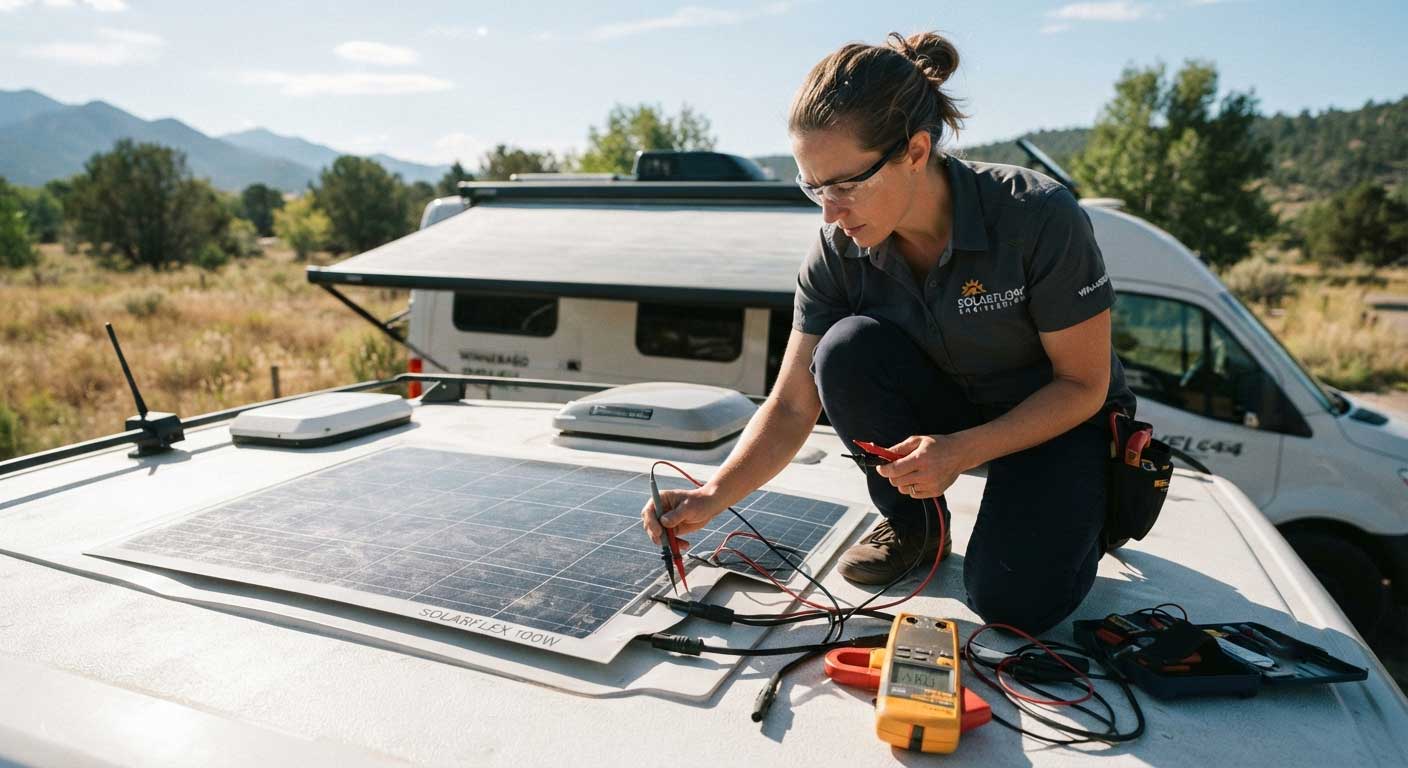
Real Project Cases: How the Best Semi Flexible Solar Panels Perform in Real Applications
Specifications can explain what a solar panel is designed to do.
Real projects show whether it actually works.
At Bright Solar, we have found that semi flexible solar panels are often selected by customers who face installation limitations rather than customers simply looking for more power.
The most successful projects usually share three characteristics:
- the panel matches the available space
- the energy output matches daily consumption
- the installation method matches the environment
Below are practical examples from RV and marine applications.
Case Study 1: Semi flexible solar upgrade for an RV travel vehicle
Project background
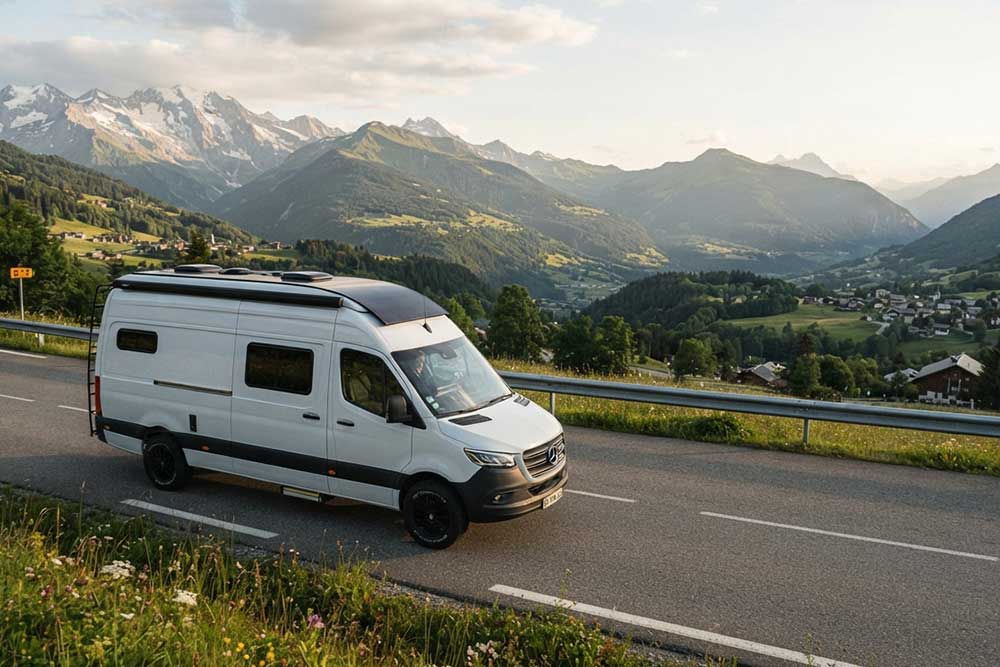
A customer in Germany owned a compact camper van used for long-distance travel.
The vehicle was designed for:
- weekend camping
- European road trips
- remote outdoor locations
The customer wanted a solar system that could support:
- mobile phones
- cameras
- LED lighting
- navigation equipment
- small electronics
The challenge was the roof.
The camper had:
- limited flat area
- curved fiberglass sections
- multiple roof accessories
A conventional framed solar panel would have required additional brackets and more complicated installation.
System configuration
Bright Solar recommended:
| Component | Specification |
|---|---|
| Solar panel | 200W semi flexible solar panels |
| Battery | 100Ah lithium battery |
| Controller | MPPT solar controller |
| Application | RV travel power system |
Installation process
The installation followed several practical steps:
Surface preparation
The roof surface was cleaned and inspected.
This step is often underestimated.
Dust, moisture, and uneven surfaces can affect long-term adhesion.
Position planning
Before fixing the panel, the team checked:
- roof shadow areas
- antenna positions
- cable entry points
A few centimeters of repositioning can make a difference over years of use.
Electrical connection
The system was connected with:
- weather-resistant cables
- protected connectors
- appropriate fuse protection
Observed performance
During normal summer travel:
| Measurement | Result |
|---|---|
| Daily solar generation | 700–950Wh |
| Main loads | Lighting, electronics, communication devices |
| Installation appearance | Low profile |
| Roof modification | Minimal |
The customer initially focused on maximum wattage.
After several months, the feedback was different:
The biggest improvement was having a reliable system without changing the vehicle structure.
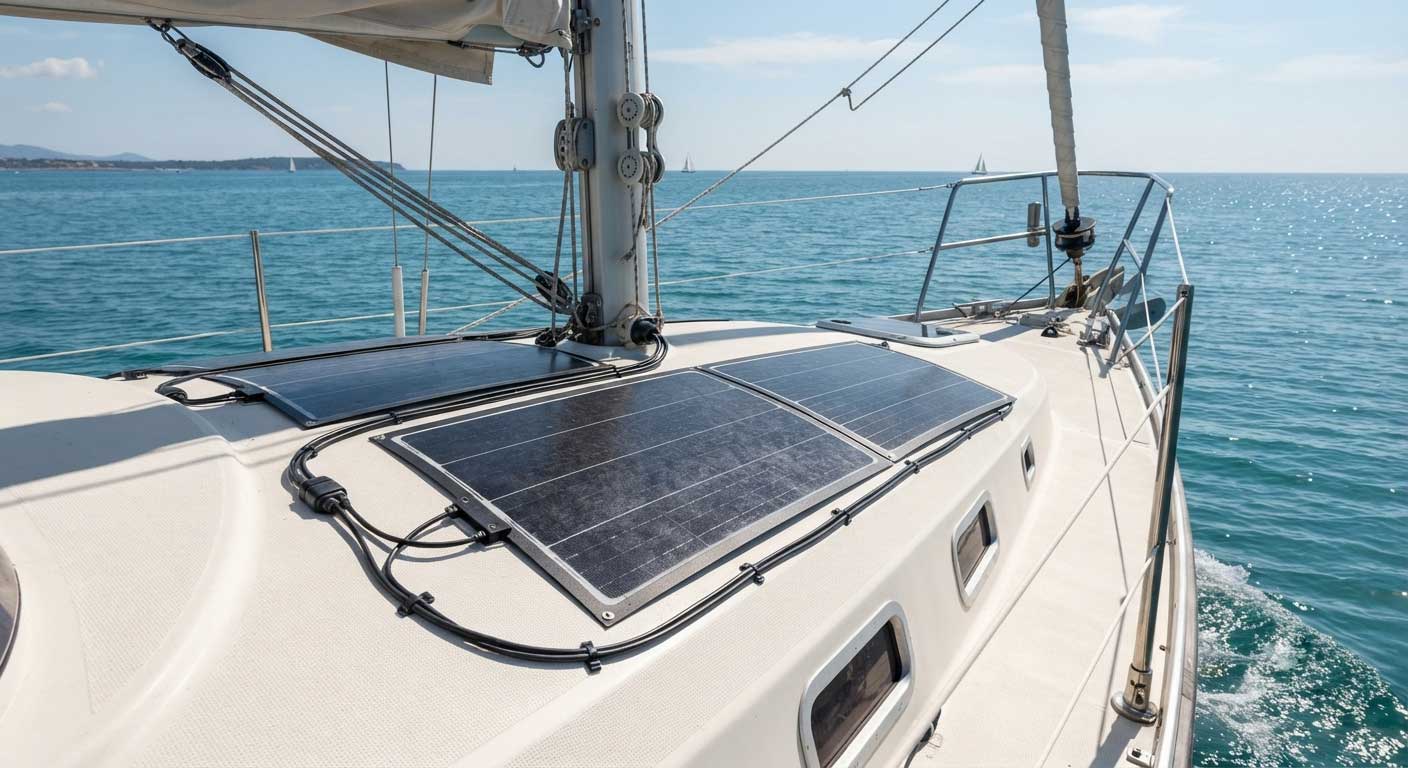
Case Study 2: Marine semi flexible solar installation
Project background
A small boat owner needed independent battery charging during periods without shore power.
The vessel had limited installation space.
The owner needed solar power for:
- navigation equipment
- battery maintenance
- cabin lighting
- communication devices
The challenges included:
- saltwater environment
- constant vibration
- irregular deck surface
Solution design
The final system used:
| Component | Purpose |
|---|---|
| Semi flexible solar panel | Energy generation |
| Waterproof junction box | Environmental protection |
| Marine cable system | Safe power transmission |
| Battery storage | Energy availability |
Performance observation
After installation:
| Category | Result |
|---|---|
| Solar capacity | 200W |
| Daily production | 500–900Wh depending on weather |
| Supported devices | Navigation and onboard electronics |
| Maintenance | Low |
The project showed an important point:
Marine solar systems are not only about producing electricity.
They are about surviving harsh environments.
Bright Solar Experience: What We Learned From Field Applications
Practical experience beyond product specifications
At Bright Solar, our experience with flexible photovoltaic solutions comes from evaluating products in different environments:
- RV travel systems
- marine applications
- portable power solutions
- off-grid projects
The biggest difference between laboratory testing and real installation is uncertainty.
Real users deal with:
- changing weather
- imperfect roof conditions
- different travel habits
- unexpected energy demands
A panel that performs perfectly in controlled conditions may not always be the best choice in the field.
Our engineering approach when selecting semi flexible solar panels
Before recommending a solution, Bright Solar evaluates:
1. Application environment
Questions we consider:
- Is the panel installed on a vehicle?
- Will it experience vibration?
- Is there saltwater exposure?
- How much sunlight is available?
2. Energy requirements
We analyze:
- daily electricity consumption
- battery capacity
- charging expectations
For example:
A customer who only needs phone charging and lighting requires a very different system from someone operating refrigeration equipment.
3. Installation limitations
We examine:
- available roof area
- curvature
- mounting options
- cable routing
This prevents choosing a panel that cannot perform well after installation.
Common mistakes when buying semi flexible solar panels
Mistake 1: Choosing the highest wattage without checking space
More power is not always better.
A large panel may:
- cover roof vents
- create installation problems
- receive partial shading
A smaller but correctly positioned system may generate more usable energy.
Mistake 2: Ignoring battery capacity
Solar panels generate electricity, but batteries determine availability.
A balanced system requires:
| Component | Function |
|---|---|
| Solar panel | Generate energy |
| Charge controller | Manage charging |
| Battery | Store electricity |
| Inverter | Convert power |
Mistake 3: Selecting panels based only on price
Lower initial cost may create higher long-term problems.
Important quality factors include:
- cell reliability
- protective materials
- connector quality
- warranty support
FAQ: Best Semi Flexible Solar Panels
What are the best semi flexible solar panels?
The best semi flexible solar panels combine reliable solar cells, durable surface protection, lightweight construction, and suitable installation flexibility.
For RV and marine use, monocrystalline semi flexible panels with weather-resistant materials are commonly preferred.
Are semi flexible solar panels good for RVs?
Yes.
Semi flexible solar panels are suitable for RV applications because they:
- reduce roof weight
- fit curved surfaces
- require fewer mounting components
- maintain a clean appearance
They are especially useful for camper vans and travel trailers.
How long do semi flexible solar panels last?
The lifespan depends on:
- material quality
- environmental exposure
- installation method
- maintenance
High-quality semi flexible panels can provide many years of outdoor operation when properly installed.
Can semi flexible solar panels be installed on boats?
Yes.
They are commonly used on boats because they:
- fit irregular surfaces
- reduce weight
- avoid large mounting structures
However, marine installations require proper waterproofing and corrosion protection.
Are semi flexible solar panels better than rigid panels?
It depends on the application.
Semi flexible panels are better when:
- weight matters
- surfaces are curved
- installation space is limited
Rigid panels may be better for:
- large fixed rooftops
- maximum cooling requirements
- permanent installations
How many semi flexible solar panels do I need for an RV?
It depends on energy usage.
Typical examples:
| Usage | Recommended Solar Capacity |
|---|---|
| Basic camping | 100W–200W |
| Regular RV travel | 200W–400W |
| Full off-grid living | 400W+ |
Do semi flexible solar panels need professional installation?
Small systems can sometimes be installed by experienced DIY users.
However, professional installation is recommended when:
- drilling or sealing is required
- multiple panels are connected
- lithium batteries are used
- marine environments are involved
Final Conclusion: Choosing the Best Semi Flexible Solar Panels
The best semi flexible solar panels are not defined only by flexibility or watt rating.
They are defined by how well they perform in real environments.
For RV owners, they provide:
- lightweight installation
- better roof compatibility
- reliable mobile power
For marine users, they offer:
- space-efficient energy generation
- reduced structural requirements
- practical battery support
Bright Solar’s experience shows that successful solar projects begin with understanding the application first.
The right panel is the one that fits the vehicle, matches the energy demand, and continues working after installation.
Related recommendations
-

400w Flexible Solar Panels: Complete Guide for RV & Off-Grid Use
229Explore 400w flexible solar panels for RVs, boats and off-grid systems. Learn sizing, output, installation, wiring, efficiency and practical selection tips.
View details -
solar panel golf cart roof Solutions from Bright Solar
258Bright Solar’s solar panel golf cart roof keeps golf cart batteries topped up while driving, reducing downtime and electricity use. Ideal for eco-conscious courses with solar charging options.
View details -
Flexible CIGS Solar Panel: Efficiency, Uses and Buying Guide
34A flexible CIGS solar panel uses thin-film copper indium gallium diselenide technology to create lightweight, bendable modules for curved and space-constrain...
View details -
Solar Pergolas for Outdoor Living and Clean Energy Generation
109Discover how solar pergolas combine shade, clean energy, and modern outdoor living. Learn design options, costs, performance, and installation insights from Bright Solar.
View details