400 W Solar Panel: Real-World Power Output, Applications, and Buying Guide
A 400 w solar panel can typically generate around 1.6–2.4 kWh of electricity per day under average sunlight conditions, making it suitable for RVs, cabins, boats, mobile homes, battery charging systems, and small off-grid power setups. The actual performance depends more on sunlight availability, installation quality, and system design than the panel’s nameplate wattage alone.
When customers contact Bright Solar asking for a 400 w solar panel, they often believe the number tells the whole story.
It doesn’t.
Over the last decade working with flexible solar panels for RV manufacturers, marine installers, and off-grid system builders, I have seen identical 400W systems produce dramatically different results.
One RV owner in Arizona consistently generated over 2.1 kWh daily.
Another customer with the same rated capacity in Oregon struggled to reach 1.2 kWh during winter months.
The panel wasn’t the difference.
The environment was.
This guide explains what buyers should actually evaluate before purchasing a 400 w solar panel.
Author Expertise
This article is written by the Bright Solar engineering and application team.
Our experience includes:
- Flexible solar panel manufacturing
- RV solar integration projects
- Mobile home solar retrofits
- Marine solar installations
- Battery charging system design
- Off-grid energy consulting
The technical observations in this guide are based on field installations, customer performance reports, and long-term product testing across North America, Europe, and Australia.
What Is a 400 W Solar Panel?
A 400 w solar panel is a photovoltaic module capable of producing up to 400 watts under Standard Test Conditions (STC).
According to the U.S. Department of Energy:
https://www.energy.gov/eere/solar
Solar panel ratings are determined under controlled laboratory conditions including:
- Cell temperature of 25°C
- Irradiance of 1000W/m²
- Standardized testing procedures
Real-world operating conditions rarely match laboratory conditions.
That distinction matters.
A lot.
Typical Electrical Specifications
| Specification | Typical Range |
|---|---|
| Rated Power | 400W |
| Open Circuit Voltage (Voc) | 45V–50V |
| Maximum Power Voltage (Vmp) | 36V–42V |
| Maximum Current (Imp) | 9A–11A |
| Efficiency | 20%–23% |
These values vary slightly depending on cell technology and manufacturer design.
How Much Electricity Does a 400 W Solar Panel Produce?
This is the first question customers ask.
It should probably be the second.
The first question should be:
“Where will the panel be installed?”
Daily production depends heavily on solar irradiance.
The National Renewable Energy Laboratory (NREL) provides solar resource maps showing major regional differences throughout the United States.
Source:
https://www.nrel.gov/gis/solar.html
Estimated Daily Energy Production
| Peak Sun Hours | Daily Output |
| 4 Hours | 1.6 kWh |
| 5 Hours | 2.0 kWh |
| 6 Hours | 2.4 kWh |
| 7 Hours | 2.8 kWh |
Under excellent summer conditions, a 400 w solar panel may exceed these values.
During winter, actual production can fall significantly below them.
One customer in British Columbia reported December averages near 0.8 kWh daily despite using premium modules.
Meanwhile a Nevada installation regularly exceeded 2.5 kWh.
Location changes everything.
What Can a 400 W Solar Panel Power?
The answer depends on operating duration.
Example Daily Loads
| Appliance | Daily Consumption |
| LED Lighting | 100Wh |
| Laptop | 300Wh |
| Portable Refrigerator | 600Wh |
| WiFi Router | 150Wh |
| Ventilation Fan | 250Wh |
Total:
1.4 kWh
Under average conditions, a single 400 w solar panel can comfortably support this load profile.
This explains why 400W systems have become increasingly common among RV owners and off-grid travelers.
Why 400W Became a Popular Size
Ten years ago, most mobile solar installations used:
- 100W panels
- 150W panels
- 200W panels
Today the landscape looks different.
Higher-efficiency cells have allowed manufacturers to increase power density without proportionally increasing installation footprint.
According to the International Energy Agency (IEA), global solar PV deployment continues expanding rapidly due to improving efficiency and falling costs.
Source:
https://www.iea.org/energy-system/renewables/solar-pv
For users with limited roof space, higher wattage often means better utilization of available area.
Real Project Example – RV Upgrade from 200W to 400W
A Bright Solar customer based in Utah traveled extensively through national parks.
Original system:
- 200W solar
- 100Ah lithium battery
Daily challenges:
- Battery reached low state of charge before sunrise
- Generator usage several times per week
- Limited appliance operation
After monitoring energy consumption, average daily usage measured approximately 1.5 kWh.
The original system generated:
Approximately 0.9–1.1 kWh daily.
A deficit existed from the beginning.
The upgrade included:
- 400W flexible solar array
- MPPT charge controller
- Existing battery retained
Results over a three-month period:
- Generator runtime reduced dramatically
- Battery state of charge improved
- Greater appliance flexibility
Nothing about the batteries changed.
Generation capacity did.
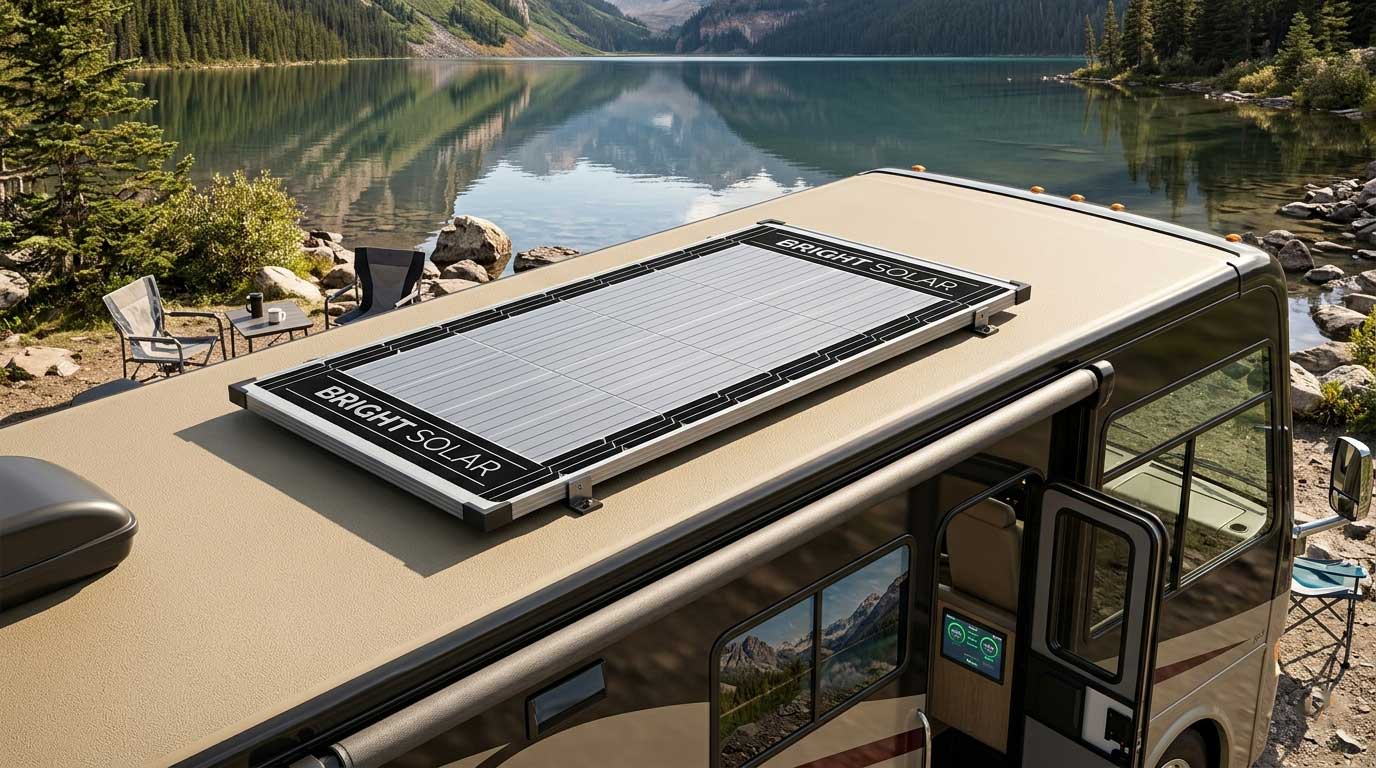
Flexible vs Rigid 400 W Solar Panel Systems
Not every 400W installation uses the same construction.
Traditional Rigid Panels
Advantages:
- Lower cost per watt
- Excellent airflow
- Long-established technology
Disadvantages:
- Higher weight
- More mounting hardware
- Greater wind profile
Flexible Solar Panels
Advantages:
- Lightweight design
- Lower roof loading
- Easier transportation
- Better appearance on curved surfaces
Disadvantages:
- Require proper installation surfaces
- Heat management becomes more important
For RVs, boats, and mobile homes, weight often becomes the deciding factor rather than efficiency alone.
How Many Batteries Can a 400 W Solar Panel Charge?
This question appears constantly in support emails.
The better question is:
How much energy must be replaced each day?
Example
One 12V 100Ah lithium battery stores approximately:
12.8V × 100Ah = 1,280Wh
Assuming average solar conditions:
A 400 w solar panel generating 2.0 kWh daily can theoretically recharge a fully discharged 100Ah battery while still supporting moderate daytime loads.
However, no experienced installer designs around theoretical numbers.
Weather, shading, temperature, and seasonal variation always deserve a safety margin.
Long-Tail Keyword Section – 400 Watt Solar Panel for RV
RV applications continue driving demand for 400W systems.
The reason is practical.
A modern RV often contains:
- Refrigerator
- Water pump
- Ventilation system
- Internet equipment
- Lighting
- Device charging
Energy consumption accumulates faster than many first-time owners expect.
For travelers spending multiple days away from hookups, 400W often represents a useful starting point rather than an oversized system.
Long-Tail Keyword Section – Flexible 400 Watt Solar Panel Solutions
Flexible modules have become increasingly attractive for:
- Curved RV roofs
- Marine vessels
- Mobile homes
- Lightweight trailer builds
The biggest advantage is not necessarily efficiency.
It is installation flexibility.
In several customer projects, roof weight limitations eliminated conventional rigid panels entirely.
Flexible solutions made the project possible.
Real-World Cost Analysis of a 400 W Solar Panel System
One mistake I see repeatedly is buyers focusing only on panel wattage.
A 400 W solar panel is not a solar system.
Several years ago, a customer from Arizona purchased two 400W flexible solar panels from us for a cargo trailer conversion. He expected to run a rooftop air conditioner throughout summer afternoons.
The math looked fine at first glance.
800W of solar generation sounded substantial.
The reality was different.
The rooftop AC consumed approximately 1,300–1,500W while operating.
Even under strong desert sunlight, the solar array could only offset part of the consumption.
Within a few hours the battery bank became the primary energy source.
The lesson wasn’t that solar failed.
The lesson was that system sizing matters more than panel size.
Typical Daily Energy Production
Using NREL solar irradiance data, many locations in the United States receive roughly 4–6 peak sun hours daily.
Source:
https://www.nrel.gov/gis/solar.html
A single 400W solar panel can therefore produce approximately:
| Peak Sun Hours | Daily Production |
|---|---|
| 4 hours | 1.6 kWh |
| 5 hours | 2.0 kWh |
| 6 hours | 2.4 kWh |
Real-world conditions typically reduce output due to:
- Temperature losses
- Dust accumulation
- Cable resistance
- Charge controller losses
- Shading
Actual usable energy often falls between:
1.4–2.2 kWh per day
This is still substantial energy for:
- RV battery charging
- Mobile offices
- Marine systems
- Telecommunications equipment
- Portable power stations
What Can a 400 W Solar Panel Run?
This question generates enormous search traffic because people think in appliances rather than watt-hours.
That approach actually makes sense.
Here is a realistic example.
Daily Appliance Support
| Appliance | Power | Runtime Supported |
|---|---|---|
| LED lights | 20W | 80–100 hours |
| Laptop | 60W | 25–35 hours |
| Portable fridge | 40–60W average | Continuous |
| Starlink terminal | 50–75W | 20–30 hours |
| CPAP machine | 30–60W | Several nights |
| Smartphone charging | 10W | Hundreds of charges |
A single 400W panel can comfortably support many off-grid energy needs when paired with adequate battery storage.
It is less suitable for:
- Electric heaters
- Large air conditioners
- Electric water heaters
- Induction cooktops
Those loads require substantially larger solar arrays.
Flexible vs Rigid 400 W Solar Panel Solutions
The industry has changed dramatically.
Ten years ago, a 400W flexible solar panel was uncommon.
Today, advances in:
- PERC cell technology
- Half-cut cell architecture
- ETFE encapsulation
- Lightweight composite substrates
have made flexible high-output panels increasingly practical.
Comparing Installation Types
| Feature | Flexible 400W Panel | Rigid 400W Panel |
|---|---|---|
| Weight | Much lower | Higher |
| Roof drilling | Often unnecessary | Usually required |
| Curved surfaces | Excellent | Poor |
| Wind resistance | Excellent | Moderate |
| Transportation | Easy | More difficult |
| Walkability | Limited depending on model | Not designed for walking |
For mobile applications such as:
- RVs
- Camper vans
- Marine vessels
- Mobile homes
flexible panels frequently reduce installation complexity significantly.
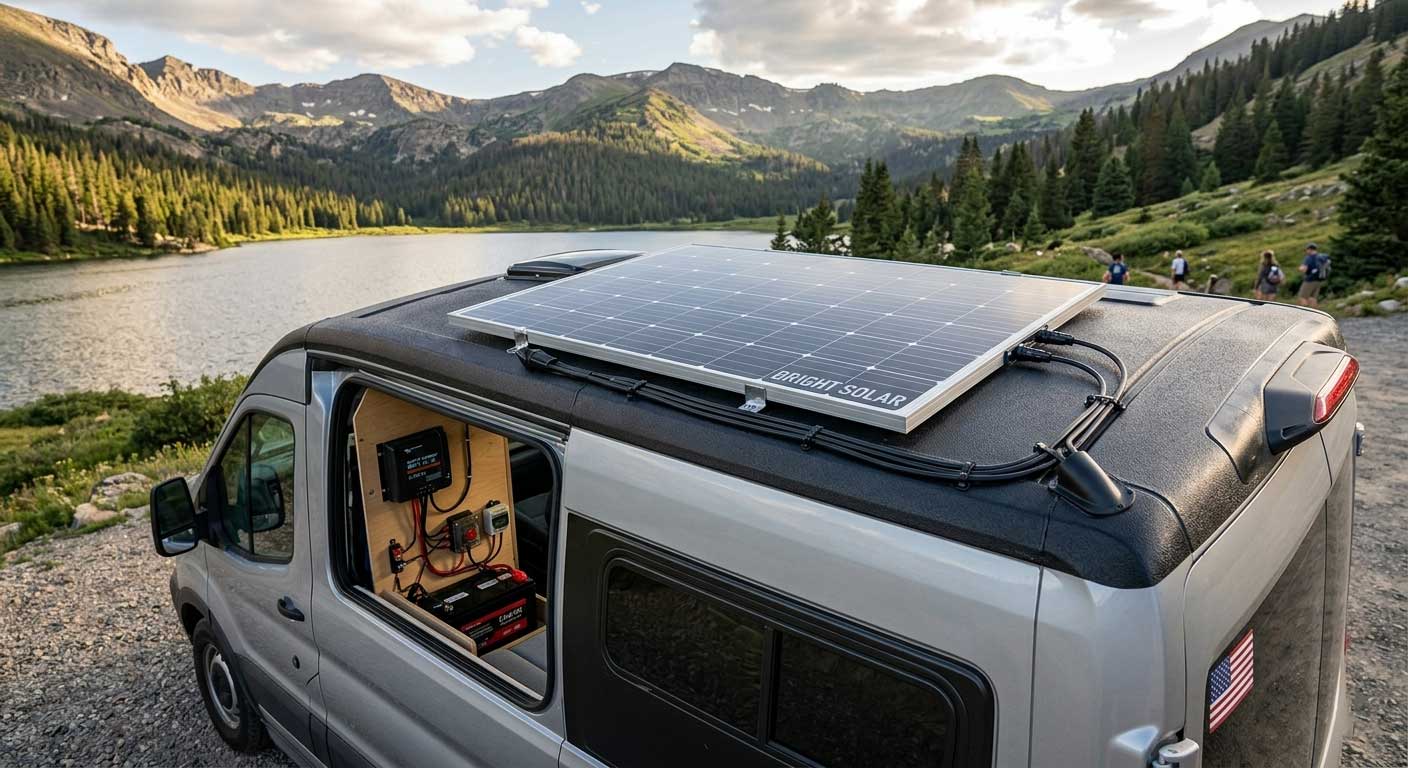
At Bright Solar, many customers choose flexible 400W configurations because structural roof load becomes a concern before power production does.
How Many Batteries Pair Well With a 400 W Solar Panel?
Battery sizing is often backwards.
People buy batteries first and solar later.
I usually recommend designing around daily energy consumption.
Example Configuration
Daily consumption:
- Refrigerator: 600Wh
- Lighting: 150Wh
- Electronics: 250Wh
Total:
1,000Wh daily
Recommended battery storage:
- 12V 100Ah LiFePO4 = approximately 1.28kWh usable
This pairing works well with a 400W solar panel in many climates.
For heavier users:
- 12V 200Ah lithium battery
- 24V battery systems
- Multiple 400W panels
provide better long-term performance.
Common Mistakes Buyers Make
After reviewing hundreds of installations, the same errors appear repeatedly.
Mistake #1 — Ignoring Shade
According to the U.S. Department of Energy, shading can dramatically reduce solar output.
Source:
https://www.energy.gov/eere/solar/homeowners-guide-going-solar
One tree branch can affect production more than most people expect.
Mistake #2 — Buying Based Only on Wattage
A poorly built 400W panel does not outperform a high-quality 400W panel.
Important factors include:
- Cell efficiency
- Encapsulation quality
- UV resistance
- Water ingress protection
- Temperature coefficient
Mistake #3 — Underestimating Battery Capacity
Solar generation is only half the equation.
Storage determines how much energy remains available after sunset.
Mistake #4 — Using Cheap PWM Controllers
A quality MPPT controller can significantly improve harvest efficiency, especially during cooler weather and variable sunlight conditions.
For larger 400W installations, MPPT technology is generally the preferred option.
Why Many Mobile Applications Choose 400W Systems
The popularity of the 400 W solar panel is not accidental.
It occupies a practical middle ground.
Smaller panels often struggle to meet meaningful daily energy demands.
Larger systems increase:
- Roof space requirements
- Installation complexity
- Cost
- Weight
A properly configured 400W setup frequently delivers enough energy for:
- Weekend camping
- Off-grid workstations
- Marine cruising
- Mobile homes
- Emergency backup systems
without becoming overly complicated.
That balance explains why search demand for the keyword “400 w solar panel” continues to grow globally.
FAQ About 400 W Solar Panel
Is a 400 W solar panel enough for an RV?
For many RV users, yes. A 400W system can support refrigeration, lighting, device charging, water pumps, and internet equipment when combined with appropriate battery storage.
How many amps does a 400 W solar panel produce?
At 12V charging systems, output can approach 25–30 amps under favorable conditions. Actual current depends on irradiance, temperature, controller efficiency, and battery state.
Can a 400 W solar panel run a refrigerator?
Yes. Most efficient RV refrigerators consume far less energy than a 400W panel can generate during a typical sunny day.
Are flexible 400W solar panels durable?
Modern ETFE-coated flexible panels are significantly more durable than earlier flexible technologies. Product quality and installation methods remain critical factors.
How long does a 400 W solar panel last?
High-quality solar panels commonly deliver useful performance for 25 years or longer. NREL reliability studies continue to show strong long-term durability across modern photovoltaic technologies.
Source:
https://www.nrel.gov/pv/lifetime.html
Final Thoughts
A 400 w solar panel sits in one of the most useful segments of the solar market. It is powerful enough to support meaningful off-grid energy production, yet compact enough for RVs, boats, mobile homes, portable workstations, and backup systems.
After years of evaluating installations across North America, the strongest systems are rarely the largest. They are the systems where panel size, battery capacity, charge controller selection, and real-world energy usage are properly matched.
For buyers seeking an efficient balance of output, portability, and installation flexibility, a well-engineered 400 w solar panel remains one of the smartest investments available today.
Related recommendations
-

solar panel 100w flexible (Real Compact Off-Grid Guide from Bright Solar)
182solar panel 100w flexible explained with RV installation cases, real output data, mounting insights, and off-grid performance analysis for travel and camping use.
View details -
220w flexible solar panel (Real Field Performance Guide from Bright Solar)
123220w flexible solar panel explained with real RV field data, installation behavior, energy output range, and off-grid performance insights from Bright Solar.
View details -
Marine Flexible Solar Panels: Lightweight Solar Power Solutions for Boats and Yachts
217Marine flexible solar panels provide lightweight solar power for boats, yachts, and offshore systems. Explore installation methods, durability, and real marine applications.
View details -
1000W Solar Panels: Output, Cost, Sizing & Uses
228Learn how 1000w solar panels work, how much electricity they produce, how many panels you need, battery sizing, wiring options, and real-world applications.
View details