flexible solar panels for rv roof: Lightweight Solar Power Solution for RV Travel
Flexible solar panels for rv roof provide a lightweight and adaptable way to generate renewable energy for campers, motorhomes, and travel trailers. They are designed for curved roofs, limited spaces, and mobile off-grid power needs.
At Bright Solar, we develop flexible solar solutions based on real outdoor applications rather than only laboratory specifications. RV owners have very different requirements from residential solar users. They need products that are lightweight, durable, easy to install, and reliable during long-distance travel.
During conversations with RV users, one concern appears again and again: traditional solar panels are often too heavy, too rigid, or difficult to install on curved camper roofs.
An RV is not simply a small house on wheels.
It experiences:
- Road vibration
- Temperature changes
- Outdoor exposure
- Limited roof space
- Frequent movement
A suitable RV solar system must adapt to these conditions.
What are flexible solar panels for rv roof?
Flexible solar panels for rv roof are lightweight photovoltaic modules designed specifically for recreational vehicles, camper vans, motorhomes, and mobile living systems.
Unlike traditional framed solar panels, flexible RV solar panels use lightweight materials that allow easier installation on curved or uneven surfaces.
A typical flexible RV solar panel includes:
| Component | Function |
|---|---|
| Monocrystalline solar cells | Convert sunlight into electricity |
| ETFE protective coating | Protect against UV and weather |
| Flexible substrate | Allows adaptation to curved roofs |
| Encapsulation layer | Protect internal components |
| Junction box | Transfers electrical output |
Traditional RV solar installation often requires:
- Heavy aluminum frames
- Mounting brackets
- Additional roof structures
Flexible solar technology reduces these requirements.
This makes it suitable for:
- Camper vans
- Motorhomes
- Travel trailers
- Tiny mobile homes
- Off-grid vehicles
According to the National Renewable Energy Laboratory (NREL), photovoltaic system performance depends on solar radiation, module characteristics, temperature, and installation conditions.
For RV applications, the installation environment is just as important as the solar panel specification.
Why choose flexible solar panels for rv roof?
RV owners choose flexible solar panels because mobile energy systems have unique limitations.
A typical RV has limited:
- Roof area
- Battery capacity
- Payload capacity
Every component needs to provide value.
Lightweight design reduces RV roof load
Weight is one of the biggest concerns in RV design.
Travel vehicles already carry:
- Water tanks
- Batteries
- Camping equipment
- Kitchen supplies
- Storage items
Adding heavy solar equipment increases vehicle load.
Flexible solar panels remove traditional glass and aluminum structures.
Advantages:
- Lower weight
- Easier transportation
- Reduced roof pressure
- Simpler installation
For older RVs, lightweight solar solutions can be especially useful because roof structures may have stricter weight limitations.
Flexible shape fits curved RV roofs
Many RV roofs are not completely flat.
Common roof obstacles include:
- Air conditioners
- Roof vents
- Skylights
- Storage units
Traditional solar panels require dedicated flat areas.
Flexible solar panels can better utilize available roof space.
Installation areas may include:
| RV Area | Solar Application |
|---|---|
| Main roof | Primary solar generation |
| Camper van roof | Compact energy system |
| Trailer roof | Auxiliary power |
| Side structures | Additional charging |
How do flexible solar panels for rv roof work?
The working principle is the same as traditional photovoltaic systems.
The energy process:
- Solar cells absorb sunlight
- Photovoltaic effect generates electricity
- Charge controller regulates output
- Battery stores energy
- RV appliances use stored power
A typical RV solar system:
Flexible Solar Panel → MPPT Controller → RV Battery → Electrical Devices
What can RV solar panels power?
Depending on system size, flexible RV solar panels can support:
| Equipment | Typical Use |
|---|---|
| LED lights | Interior lighting |
| Mobile devices | Charging |
| Fans | Ventilation |
| GPS equipment | Navigation |
| Small refrigerators | Food storage |
| Portable electronics | Daily use |
For many RV travelers, solar energy reduces dependence on:
- Campground electricity
- Fuel generators
- External power sources
How much power can flexible solar panels for rv roof produce?
The output depends on:
- Panel wattage
- Sunlight hours
- Installation angle
- Weather
- Controller efficiency
Basic calculation:
Daily Energy Output = Solar Capacity × Peak Sun Hours × System Efficiency
Example:
A 200W RV solar system:
200W × 5 sunlight hours × 80%
≈800Wh per day
This may support:
- Lighting
- Charging devices
- Small appliances
- Battery maintenance
The U.S. Department of Energy Solar Energy Technologies Office explains that solar energy production changes according to location, sunlight conditions, and system design.
RV owners should calculate energy needs before selecting panel capacity.
Real application case: Flexible solar panels for rv roof installation
Bright Solar worked with an RV traveler from Germany who converted a delivery van into a long-distance camper.
The customer needed solar power for:
- Weekend camping
- Remote travel
- Electronics charging
The challenges were:
- Limited roof area
- Curved roof structure
- Weight concerns
A traditional solar solution required additional mounting hardware and increased roof weight.
The flexible solar installation provided:
- Lower overall weight
- Cleaner appearance
- Better roof utilization
The owner used the system mainly for:
- Lighting
- Laptop charging
- Communication equipment
The experience showed that RV solar design is not only about maximum wattage.
The best solution is the one that matches the travel lifestyle.

Advantages of flexible solar panels for RV compared with traditional panels
Flexible and rigid solar panels both have advantages.
| Feature | Flexible Solar Panels | Rigid Solar Panels |
|---|---|---|
| Weight | Lower | Higher |
| Installation | Easier | Requires mounting system |
| Roof compatibility | Curved surfaces | Flat surfaces |
| Appearance | Low profile | More visible |
| Transportation | Easier | More difficult |
Flexible solar panels are especially useful when:
- Roof weight is limited
- Installation space is irregular
- Vehicle appearance matters
How to select flexible solar panels for rv roof?
Choosing the right RV solar panel requires evaluating real travel conditions.
1. Calculate energy requirements
Consider daily usage:
- Refrigerator
- Lighting
- Electronics
- Fans
- Communication devices
Do not select a solar panel only because it fits the roof.
Energy demand should determine system size.
2. Check durability features
RV solar panels face:
- Road vibration
- Rain
- Dust
- Strong sunlight
Look for:
- UV-resistant materials
- Waterproof design
- Reliable connectors
- Strong encapsulation
3. Consider installation method
Common options:
- Adhesive mounting
- Bracket mounting
For many camper applications, adhesive installation is preferred because it reduces weight and avoids drilling.
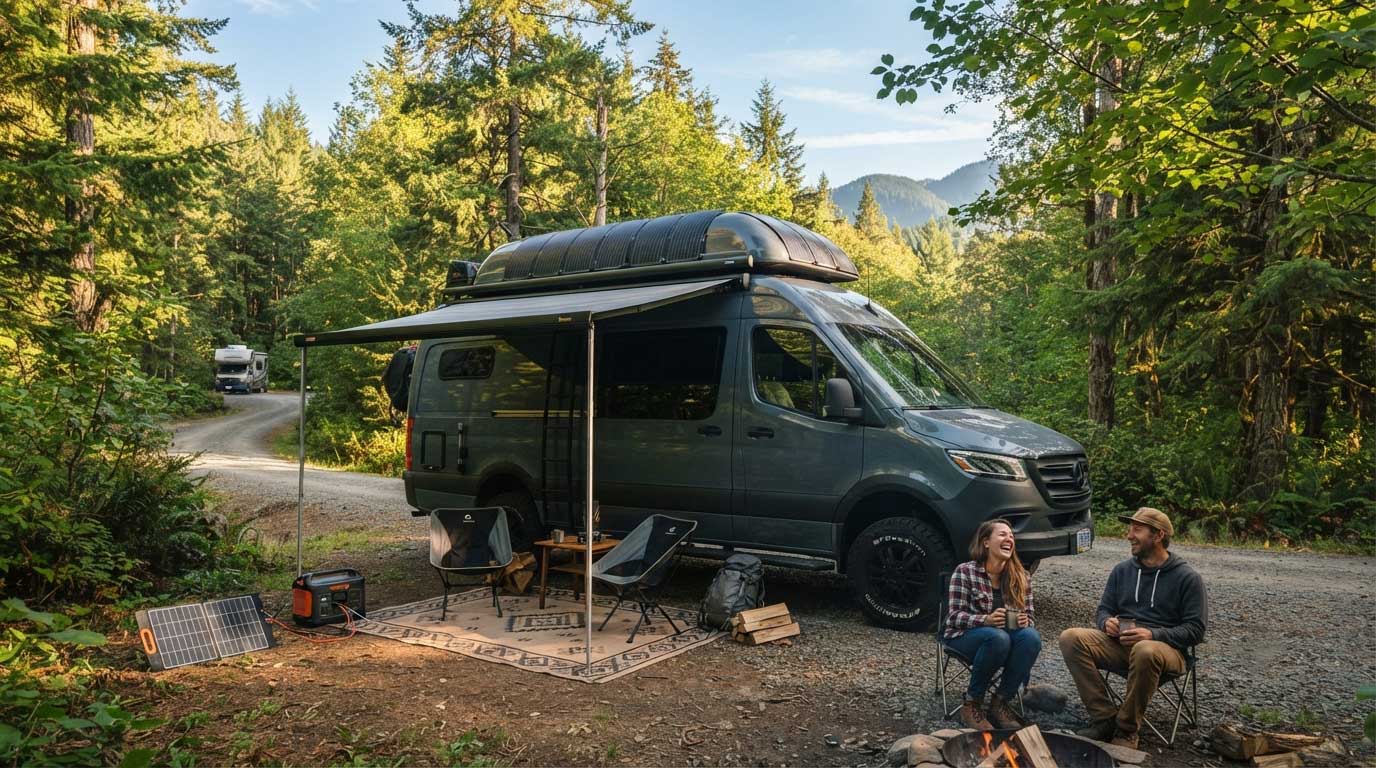
How to install flexible solar panels for rv roof?
Installing flexible solar panels for rv roof requires careful planning because RVs experience movement, vibration, and changing outdoor conditions.
Unlike a fixed residential solar installation, an RV solar system must survive:
- Highway vibration
- Strong wind during driving
- Rain and humidity
- Extreme temperature changes
- Long periods of outdoor exposure
At Bright Solar, we recommend focusing on installation quality rather than only selecting a high-power solar panel. A well-installed 200W system can often perform better than a poorly installed larger system.
Step 1: Check the RV roof condition
Before installation, inspect the roof carefully.
Important checks include:
| Inspection Item | Purpose |
|---|---|
| Roof material | Confirm compatibility |
| Surface condition | Avoid installation failure |
| Available space | Determine panel size |
| Shadow areas | Improve energy output |
| Cable route | Simplify wiring |
Common RV roof materials include:
- Fiberglass
- Aluminum
- Rubber membrane
- Composite materials
Each surface requires suitable preparation.
Step 2: Clean and prepare the installation area
A clean surface is essential for reliable attachment.
Recommended preparation:
Remove contamination
Clean away:
- Dust
- Road dirt
- Oil residue
- Moisture
Dry completely
The surface should be completely dry before attaching the panel.
Mark the installation position
Before permanent installation:
- Place the panel
- Check alignment
- Confirm cable direction
Many installation problems happen because users attach the panel first and think about wiring later.
Step 3: Attach flexible solar panels securely
There are two main installation methods.
Adhesive installation
This is one of the most common methods for flexible RV solar panels.
Advantages:
- No roof drilling
- Lower installation weight
- Cleaner appearance
- Reduced leakage risk
Suitable for:
- Camper vans
- Motorhomes
- Travel trailers
Important points:
- Use outdoor-rated adhesive
- Follow curing instructions
- Avoid trapped air bubbles
Mounting bracket installation
Some RV owners prefer mechanical mounting.
Advantages:
- Easier replacement
- Additional ventilation
- Adjustable positioning
However, it may require:
- More hardware
- Additional weight
- Roof penetration
For lightweight RV applications, adhesive installation is often preferred.
Electrical setup for flexible solar panels for rv roof
A complete RV solar system normally includes:
Flexible Solar Panel → Solar Charge Controller → Battery Bank → RV Appliances
Choosing the right charge controller
The charge controller manages energy flow between the solar panel and battery.
Two common types:
| Controller Type | Feature |
|---|---|
| PWM | Lower cost, suitable for simple systems |
| MPPT | Higher efficiency, better energy harvesting |
For many RV owners, MPPT controllers provide better performance, especially when:
- Weather changes frequently
- Roof angles are limited
- Solar conditions vary
Battery matching
Solar panels should match the battery capacity.
Common RV batteries include:
- Lithium batteries
- AGM batteries
- Lead-acid batteries
Lithium batteries are becoming popular because they provide:
- Higher usable capacity
- Longer cycle life
- Lower weight
A solar system should be designed as a complete solution instead of selecting components separately.
Maintenance tips for flexible solar panels for rv roof
Flexible RV solar panels require less maintenance than many mechanical systems, but regular inspection improves lifespan.
Recommended maintenance:
Monthly inspection
Check:
- Cable connections
- Surface cleanliness
- Physical damage
Seasonal maintenance
Inspect:
- Adhesive condition
- Junction box
- Waterproof seals
Cleaning
Remove:
- Dust
- Bird droppings
- Tree residue
A clean solar surface improves light absorption.
How much do flexible solar panels for rv roof cost?
The cost depends on:
- Panel wattage
- Solar cell technology
- Material quality
- Installation method
- Complete system components
Typical flexible RV solar panel pricing:
| Power Output | Estimated Price Range |
|---|---|
| 100W flexible RV panel | $100–$200 |
| 200W flexible RV panel | $180–$350 |
| 300W flexible RV panel | $300–$500 |
| Complete RV solar system | $800–$2,500+ |
A complete system may include:
- Solar panels
- Controller
- Battery
- Wiring
- Installation accessories
According to Solar Energy Industries Association (SEIA), solar installation costs vary depending on equipment, system design, labor, and application conditions.
RV solar systems are usually smaller than residential systems, but component selection has a major impact on reliability.
Why Bright Solar flexible solar panels for rv roof?
Bright Solar develops flexible solar solutions for mobile energy applications.
RV users need products that can handle real travel conditions.
Our design focus includes:
- Lightweight construction
- Flexible installation
- Weather-resistant materials
- Customized solutions
Designed for real outdoor environments
An RV solar panel may experience thousands of kilometers of travel.
During long-distance use, the system faces:
- Vibration from roads
- Heat from direct sunlight
- Cold weather camping
- Dust exposure
Product design must consider these situations.
Customized RV solar solutions
Different RVs have different energy requirements.
Bright Solar can provide customized solutions for:
- Camper manufacturers
- RV suppliers
- Outdoor equipment companies
- Individual projects
Customization options include:
| Option | Application |
|---|---|
| Panel size | Limited roof areas |
| Cable length | Different RV layouts |
| Connector type | System compatibility |
| Power output | Energy requirements |

FAQ About flexible solar panels for rv roof
Are flexible solar panels good for RV roofs?
Yes. Flexible solar panels are suitable for RV roofs because they are lightweight, easy to install, and can fit curved surfaces where traditional panels may not work well.
Can flexible solar panels power an entire RV?
It depends on the solar system size and energy consumption. A properly designed system can power lighting, electronics, refrigeration, and other RV equipment.
How many watts of solar do I need for my RV?
The required wattage depends on daily electricity usage. Small campers may use 100W–300W systems, while larger RVs may require higher capacity.
Can flexible solar panels be installed without drilling?
Yes. Many flexible RV solar panels can be installed using adhesive methods without drilling holes into the RV roof.
Are flexible solar panels waterproof?
Quality flexible solar panels are designed for outdoor environments and include protective layers to resist moisture and weather exposure.
Do flexible solar panels work on cloudy days?
Yes, they can still generate electricity in cloudy conditions, but power output decreases because sunlight intensity is lower.
How long do flexible solar panels for rv roof last?
The lifespan depends on materials, installation quality, and environmental exposure. High-quality flexible solar panels are designed for years of outdoor operation.
Conclusion: Are flexible solar panels for rv roof worth choosing?
Flexible solar panels for rv roof provide RV owners with a lightweight, practical, and efficient way to generate renewable energy while traveling.
They are especially valuable for:
- Camper vans with limited roof space
- Motorhomes requiring lower weight
- Off-grid travelers
- Outdoor enthusiasts
The future of RV solar energy is not only about installing more solar capacity. It is about creating systems that fit mobile lifestyles.
At Bright Solar, we focus on developing flexible solar solutions that combine:
- Reliable performance
- Easy installation
- Lightweight design
- Real-world durability
For travelers who want more freedom on the road, flexible solar panels for rv roof offer a smarter way to stay powered wherever the journey leads.
Related recommendations
-

220w flexible solar panel (Real Field Performance Guide from Bright Solar)
124220w flexible solar panel explained with real RV field data, installation behavior, energy output range, and off-grid performance insights from Bright Solar.
View details -
Clear Flexible Solar Panels: Benefits, Uses and Buying Guide
102Clear flexible solar panels combine photovoltaic electricity generation with light transmission for selected architectural, vehicle, canopy, and specialized ...
View details -
solar flexible panel (Real Field Engineering Guide from Bright Solar)
184solar flexible panel explained with real RV installs, efficiency data, heat behavior insights, comparison tables, and field-tested off-grid performance cases.
View details -
450 Watt Solar Panels: Output, Sizing and Applications
221Discover how 450 watt solar panels perform, how much energy they can produce, and how to size, wire and install them for RV, home and off-grid systems.
View details