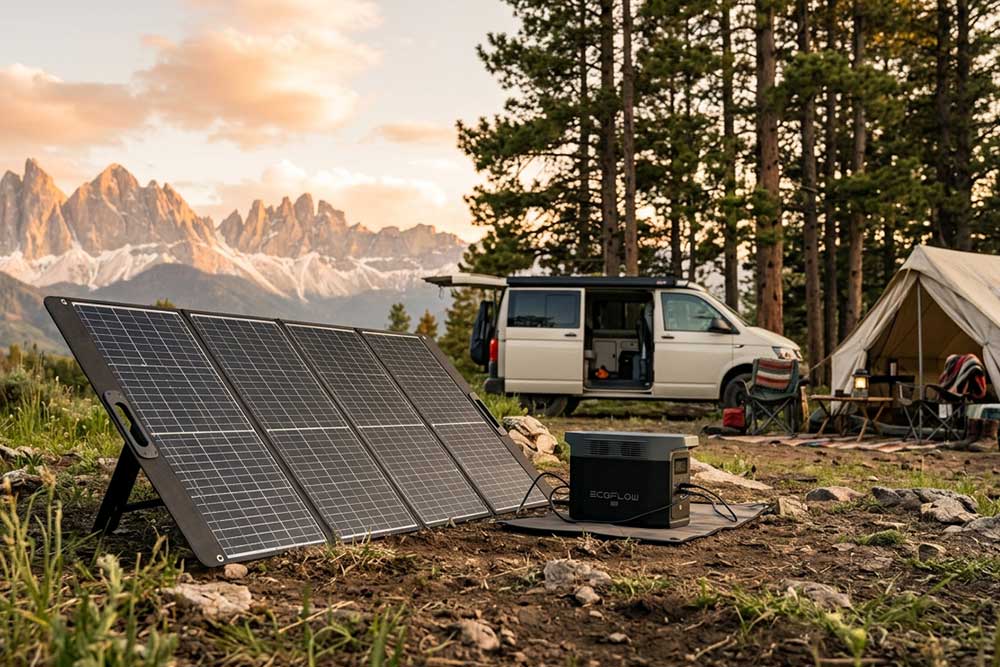
Flexible Solar Panel Kits: Complete Solar Solutions for Mobile and Off-Grid Power
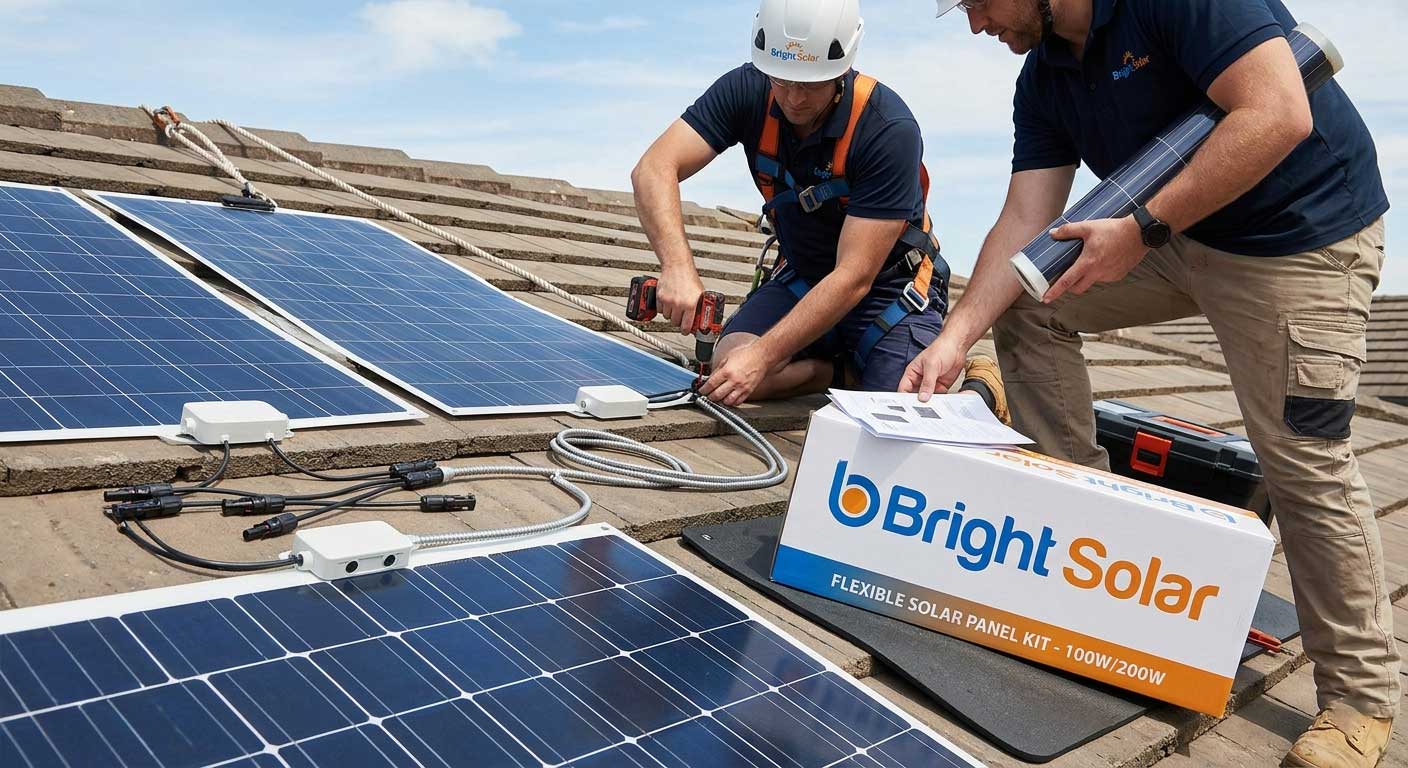
Flexible solar panel kits provide a complete, lightweight, and easy-to-install solar energy solution for RVs, boats, campervans, cabins, and portable power systems. By combining flexible solar panels with charge controllers, cables, and mounting accessories, these kits simplify installation while delivering reliable renewable energy in locations where traditional solar systems may be impractical.
Solar projects rarely fail because of solar panels.
They usually fail because someone forgot something.
A connector.
A controller.
The wrong cable size.
A missing fuse.
After more than a decade working with mobile solar applications at Bright Solar, I’ve learned that customers often spend weeks comparing panel efficiency while overlooking the components that actually make the system work.
That is why flexible solar panel kits have become increasingly popular.
Instead of purchasing separate parts and hoping everything is compatible, users receive a system designed to work together from the start.
For many first-time solar buyers, that simplicity is worth as much as the electricity itself.
Why Flexible Solar Panel Kits Are Growing in Popularity
The solar industry is changing.
Energy generation is no longer limited to rooftops and utility-scale installations.
Today’s solar users want power while:
- Traveling in RVs
- Sailing offshore
- Camping remotely
- Living off-grid
- Working in the field
According to the International Energy Agency (IEA), solar photovoltaic capacity continues to grow globally as distributed energy solutions become more accessible and cost-effective.
Reference Source:
https://www.iea.org
The demand for portable and mobile solar systems has expanded alongside this trend.
Flexible solar panel kits solve several practical challenges simultaneously:
- Weight reduction
- Installation simplicity
- Curved surface compatibility
- Space optimization
- Lower transportation costs
The result is a solar solution that works well beyond traditional rooftops.
What Is Included in Flexible Solar Panel Kits?
Not all kits are identical.
However, most high-quality flexible solar panel kits include the following components.
| Component | Purpose |
|---|---|
| Flexible Solar Panel | Generates electricity |
| Charge Controller | Protects and regulates battery charging |
| Solar Cables | Connect system components |
| MC4 Connectors | Secure electrical connections |
| Mounting Accessories | Installation support |
| User Manual | Setup guidance |
Premium kits may also include:
- MPPT charge controllers
- Bluetooth monitoring
- Battery temperature sensors
- Fuse protection
- Waterproof connectors
The goal is straightforward.
Provide everything needed to start generating solar power with minimal complexity.
Why Flexible Panels Are Different from Traditional Solar Panels
The most obvious difference is weight.
Traditional glass panels are built with:
- Tempered glass
- Aluminum frames
- Rigid construction
Flexible panels replace many of these materials with advanced composites and polymers.
The result is a significantly lighter product.
| 100W Panel Type | Typical Weight |
|---|---|
| Traditional Glass Panel | 6–9 kg |
| Flexible Solar Panel | 2–3 kg |
For small systems, the difference is noticeable.
For larger systems installed on vehicles or boats, it becomes critical.
Every kilogram matters.
Especially above the center of gravity.
Flexible Solar Panel Kits for RV Owners
The RV market has become one of the fastest-growing segments for flexible solar systems.
Modern RV roofs are crowded.
Common obstacles include:
- Air conditioners
- Roof vents
- Satellite antennas
- Skylights
- Storage racks
Finding space for rigid solar panels can become frustrating.
Flexible panels often fit into irregular roof sections that would otherwise remain unused.
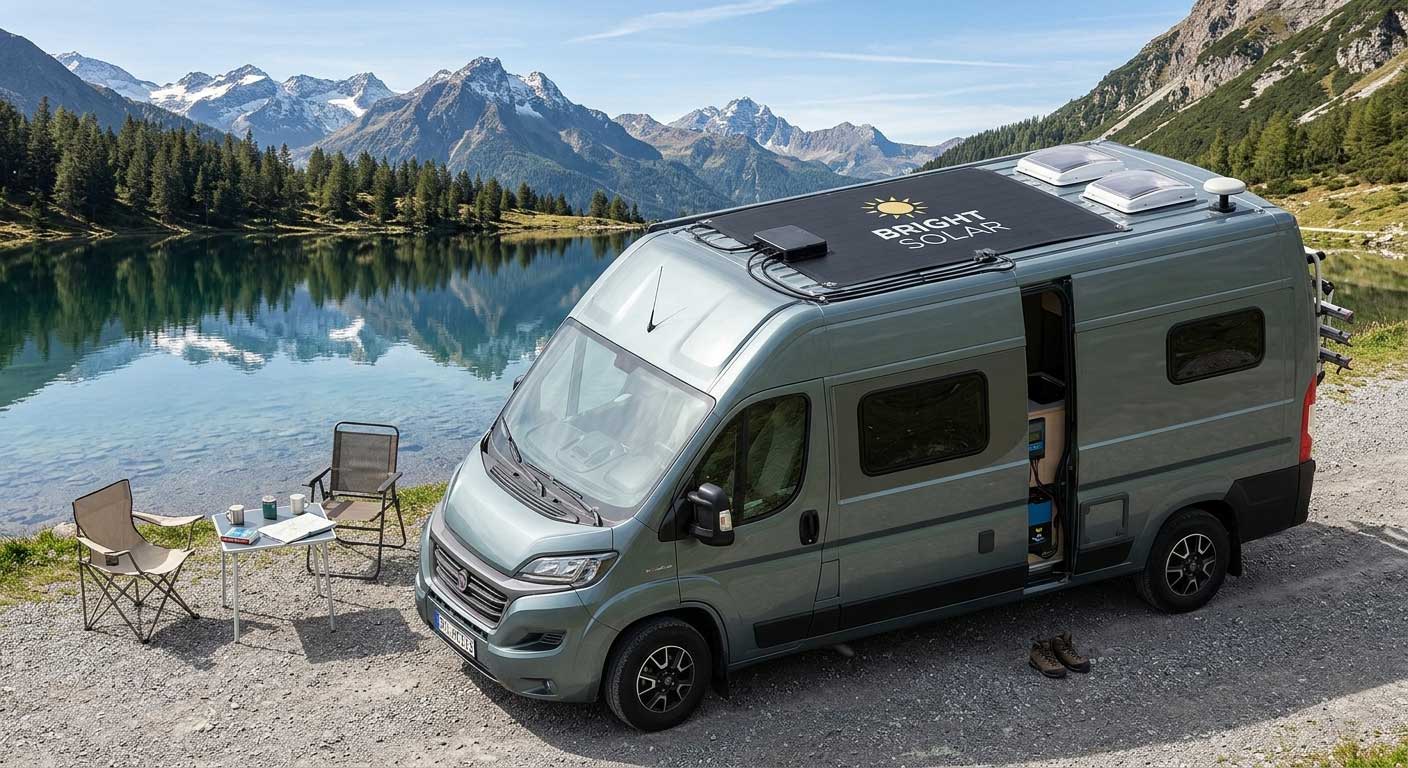
One Bright Solar customer in Germany converted a compact campervan intended for long-distance travel through Scandinavia.
The roof contained:
- Two vents
- One roof fan
- Storage rails
A traditional 300W system would have required significant modifications.
Instead, three flexible panels were integrated around existing equipment.
The result:
- 320W total solar capacity
- No structural roof modifications
- 22 kg less roof weight than the original design
The customer later reported noticeably improved vehicle stability during crosswinds.
That’s not a specification you’ll find on most product datasheets.
Marine Applications: Flexible Solar at Sea
Marine environments expose equipment to some of the harshest conditions imaginable.
Challenges include:
- Salt spray
- UV exposure
- Constant vibration
- Moisture
- Temperature fluctuations
Flexible solar panel kits are particularly well suited for boats because they offer:
- Low-profile installation
- Reduced weight
- Curved surface compatibility
- Improved aesthetics
Many yacht owners prefer flexible panels because they blend naturally into deck surfaces.
Bulky mounting frames become unnecessary.
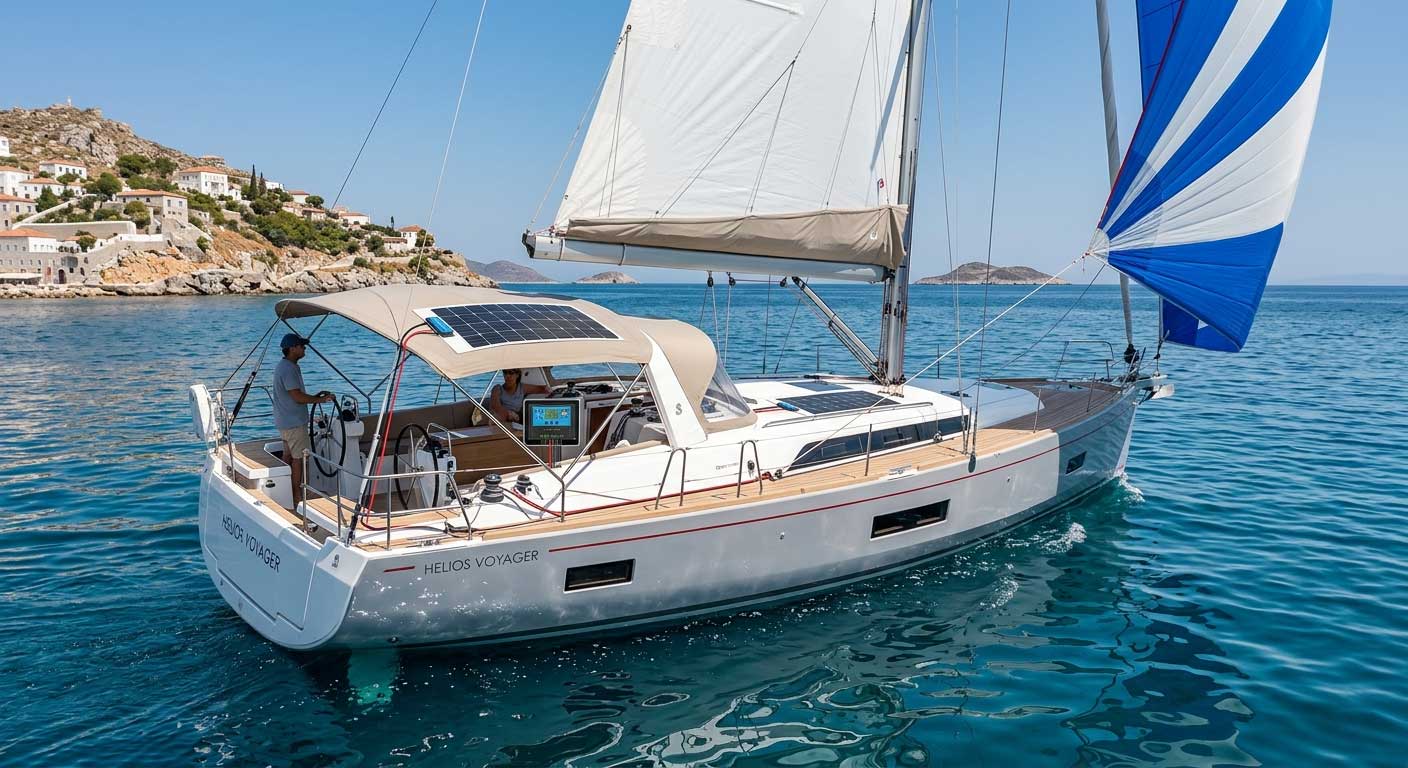
One sailing yacht project supplied by Bright Solar utilized:
- Four 100W flexible panels
- MPPT controller
- Lithium battery bank
During summer operation in the Mediterranean, the system produced approximately 1.5–2.0 kWh daily.
This significantly reduced generator runtime while supporting refrigeration, lighting, and navigation equipment.
Silence became one of the owner’s favorite features.
Solar power doesn’t make noise.
How Much Power Can Flexible Solar Panel Kits Produce?
This depends on three factors:
- System wattage
- Sunlight availability
- Installation quality
General estimates:
| Solar Capacity | Daily Energy Production* |
|---|---|
| 100W | 400–600Wh |
| 200W | 800–1,200Wh |
| 400W | 1.6–2.4kWh |
| 600W | 2.4–3.6kWh |
*Assuming favorable sunlight conditions.
Geography matters.
A system operating in Arizona behaves differently from one operating in northern Scotland.
Solar performance is always local.
Are Flexible Solar Panel Kits Efficient?
A common misconception is that flexible solar panels are less efficient.
That assumption is increasingly outdated.
Many premium flexible panels now use high-efficiency monocrystalline solar cells.
According to the National Renewable Energy Laboratory (NREL), solar cell efficiencies continue improving across commercial photovoltaic technologies.
Reference Source:
https://www.nrel.gov
Modern flexible panels frequently exceed:
- 20% conversion efficiency
- Strong low-light performance
- Improved durability compared to earlier generations
Installation quality often influences performance more than panel flexibility itself.
A well-positioned flexible panel can outperform a poorly installed rigid panel.
The Hidden Challenge: Heat Management
This topic rarely appears in advertisements.
Yet it affects real-world performance.
Flexible panels often sit closer to mounting surfaces than framed modules.
Less airflow can lead to higher operating temperatures.
Higher temperatures reduce efficiency.
Experienced installers address this by:
- Avoiding unnecessary adhesive coverage
- Selecting cooler mounting locations
- Improving ventilation pathways
- Monitoring surface temperatures
One marine installer explained it simply:
“Solar panels love sunlight. They hate heat.”
That statement remains remarkably accurate.
Common Mistakes When Buying Flexible Solar Panel Kits
Choosing Based Only on Wattage
More power is not always better.
System design matters.
Ignoring Controller Quality
A premium panel connected to a poor controller will underperform.
MPPT controllers often provide noticeable efficiency gains.
Underestimating Daily Energy Usage
Many buyers calculate panel size before calculating energy demand.
The process should work in reverse.
Using Low-Quality Wiring
Voltage loss becomes increasingly important in mobile systems.
Good cables matter.
More than many people realize.
Flexible Solar Panel Kits vs Traditional Solar Kits
| Feature | Flexible Solar Panel Kits | Traditional Solar Kits |
|---|---|---|
| Weight | Excellent | Moderate |
| Curved Surface Installation | Excellent | Limited |
| Roof Load | Low | Higher |
| Installation Speed | Fast | Moderate |
| Portability | Excellent | Moderate |
| Residential Rooftops | Good | Excellent |
Neither system is universally superior.
The correct choice depends on the application.
Mobile systems typically benefit most from flexible technology.
FAQ About Flexible Solar Panel Kits
Are flexible solar panel kits waterproof?
Most quality flexible solar panels are designed for outdoor use and can withstand rain and harsh weather conditions when installed correctly.
Can flexible solar panel kits charge lithium batteries?
Yes. Most kits support lithium batteries when paired with a compatible charge controller.
Are flexible solar panels suitable for boats?
Absolutely. Marine environments are one of the most common applications for flexible solar technology.
How long do flexible solar panels last?
Premium flexible panels can provide many years of reliable service depending on installation quality and environmental conditions.
Are flexible solar panel kits easy to install?
Compared with traditional solar systems, flexible kits are generally faster and easier to install because of their lighter weight and reduced mounting requirements.
Final Thoughts on Flexible Solar Panel Kits
The popularity of flexible solar panel kits continues to grow because they solve practical problems rather than theoretical ones.
At Bright Solar, we’ve seen these systems installed on:
- Campervans crossing Europe
- Offshore yachts
- Fishing boats
- Expedition vehicles
- Remote monitoring stations
The common challenge is always the same.
Limited space.
Limited weight capacity.
A need for dependable energy.
For mobile and off-grid users seeking a complete solar solution, flexible solar panel kits remain one of the most versatile and effective options available today.
Related recommendations
-

Lightweight Folding Solar Panels: How to Choose the Right Portable Power System
15Lightweight folding solar panels provide portable power for camping, hiking, RV travel, and off-grid use. Choose based on total kit weight, wattage, folded d...
View details -
Solar Panels for Semi Trucks: Complete Guide to Truck Solar Power Systems
189Solar panels for semi trucks provide reliable power for long-haul vehicles. Learn system sizing, installation, benefits, and real truck applications with Bright Solar flexible solar solutions.
View details -
200w solar panel flexible (Real Field Performance Guide from Bright Solar)
159200w solar panel flexible explained with real RV field data, installation insights, off-grid performance results, and practical energy system design guidance.
View details -
Fitting Flexible Solar Panels: A Practical Installation Guide
148Fitting flexible solar panels requires a suitable surface, correct positioning, approved attachment, protected wiring, and attention to bending, heat, and ve...
View details