12V Folding Solar Panels: Output, Battery Charging and Uses
12v folding solar panels provide portable electricity for camping, RVs, and off-grid battery systems. Their performance depends on rated wattage, sunlight, and battery compatibility, while a suitable charge controller helps regulate charging for the connected battery.
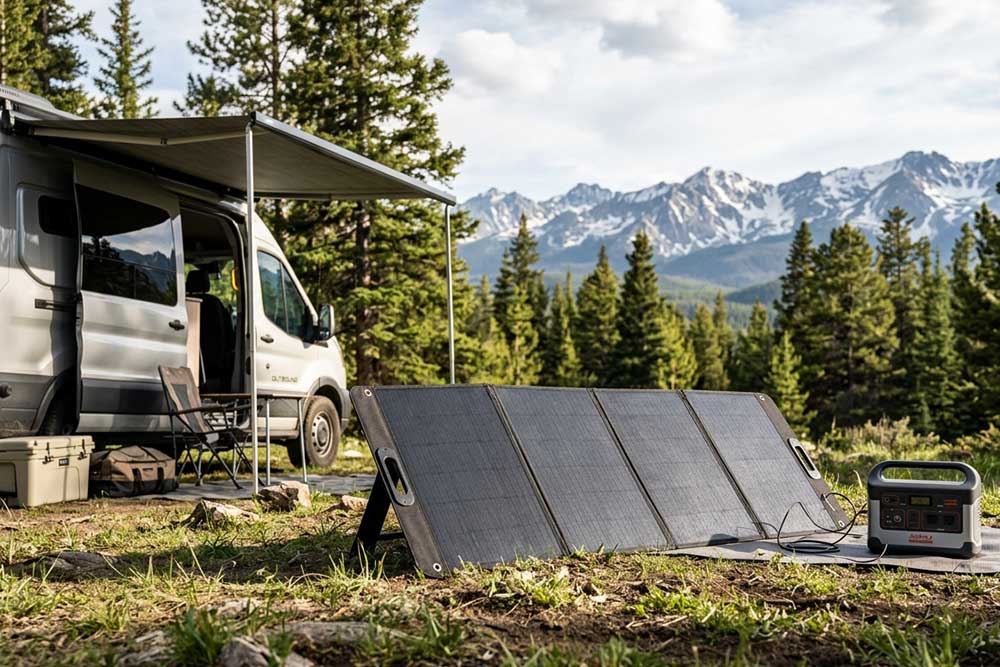
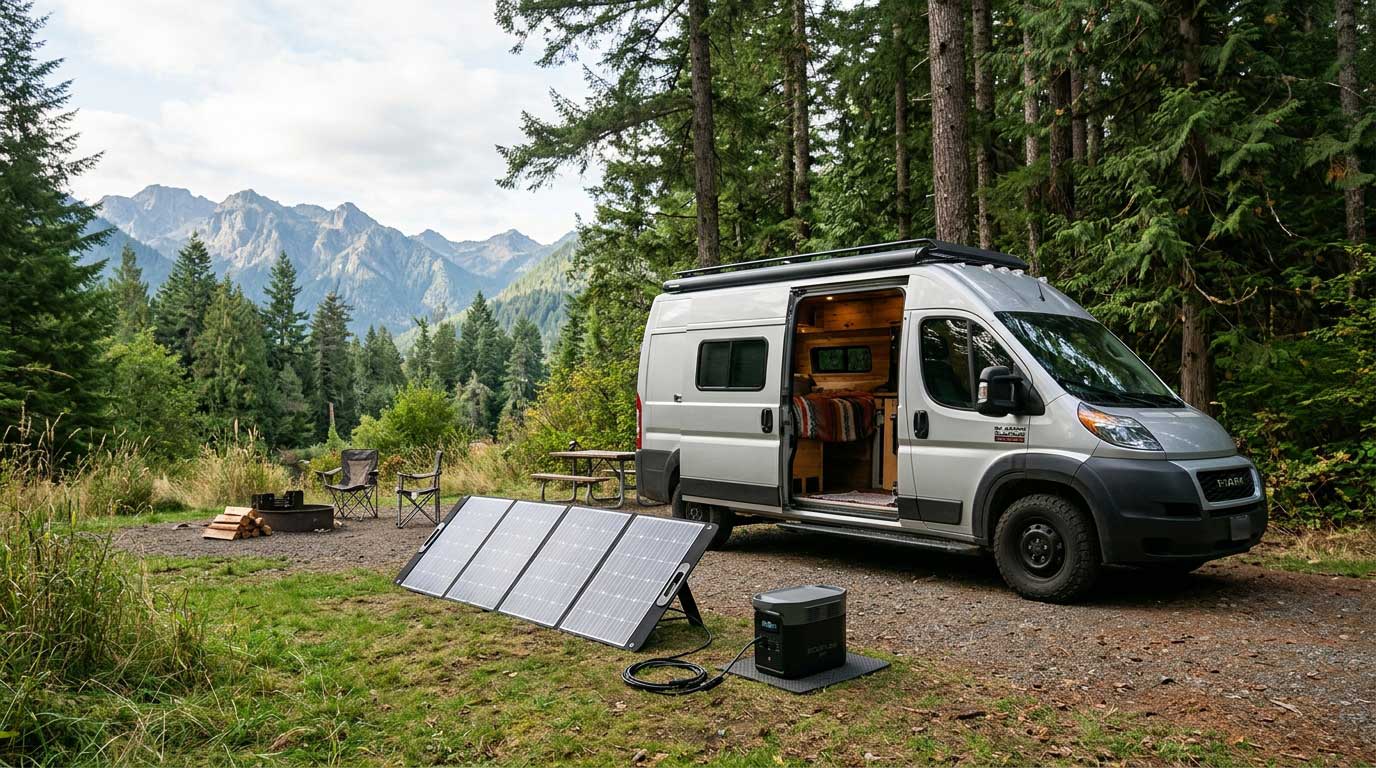
For people who need power away from a wall outlet, folding panels offer a practical alternative to permanent solar installations. They can be unfolded beside a campervan, repositioned as sunlight changes, and packed away when the trip is over.
The important distinction is that a panel marketed for a 12V system does not necessarily produce exactly 12 volts. Its operating voltage must suit the controller and battery arrangement. At Bright Solar, selecting portable solar equipment starts with the application, daily energy demand, and electrical specifications—not the product name alone.
What Are 12V Folding Solar Panels?
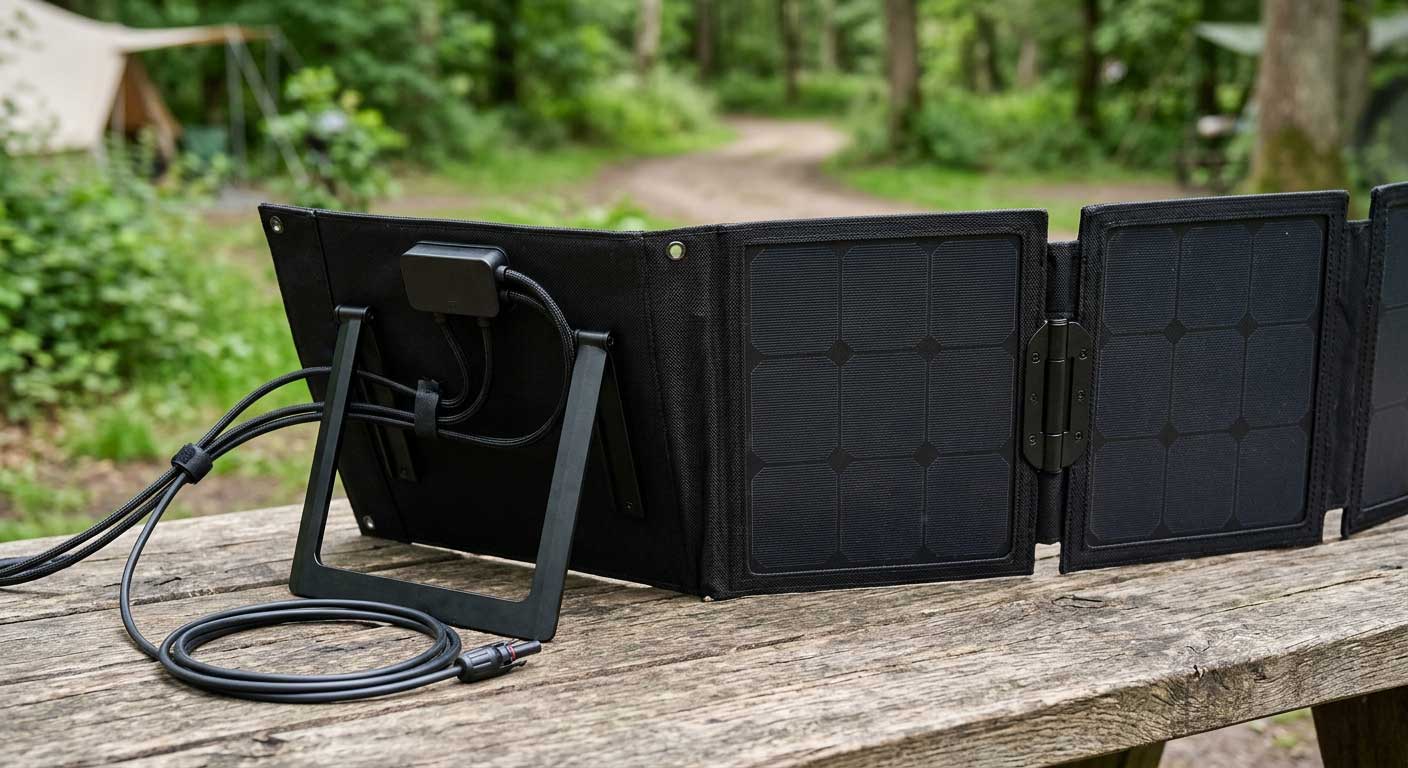
12V folding solar panels are portable photovoltaic products designed to collect sunlight and supply electricity to compatible charging equipment. Their connected sections fold together for transportation, often with a protective fabric cover, carrying handle, support legs, or cable accessories.
They are commonly used where permanent mounting is impractical or unnecessary.
Typical applications include:
- Camping: Charging portable power stations, phones, lights, and camera batteries.
- RV travel: Supplementing a leisure battery while the vehicle is parked.
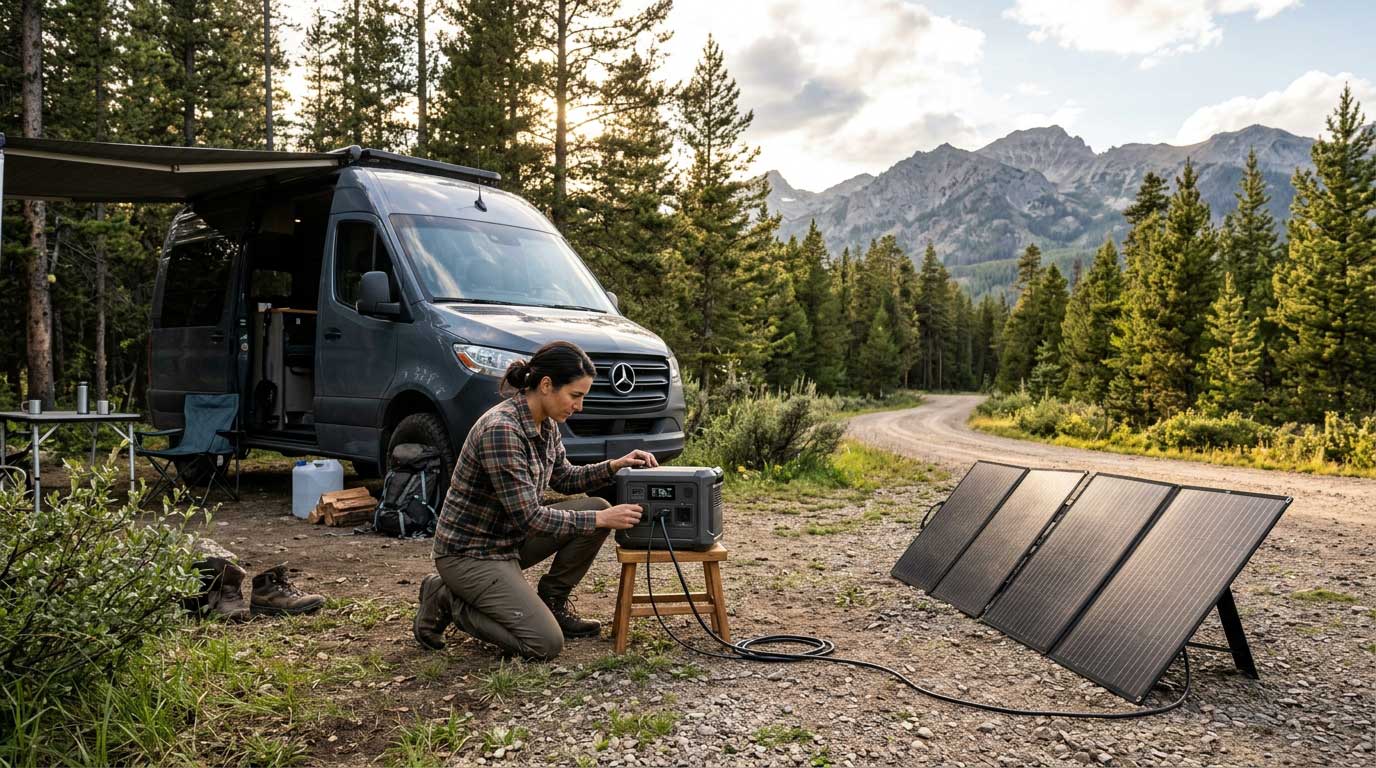
- Campervans: Providing a movable solar source when roof space is limited.
- Boating: Supporting compatible battery systems in suitable, manufacturer-approved environments.
- Emergency preparedness: Recharging portable storage equipment when grid power is unavailable.
- Remote work: Supplying supplemental energy for laptops and other devices through compatible battery equipment.
A folding panel is not automatically a complete battery charger. Some products include a controller or regulated USB output; others need a separate charge controller or compatible power station. Buyers should check the actual product documentation before connecting equipment.
How Do 12V Folding Solar Panels Work?
Solar cells convert sunlight into direct-current electricity. The output changes with light intensity, temperature, orientation, and shading. A charging system then manages that electricity so it can be stored in a battery or used by compatible devices.
A typical battery-based arrangement looks like this:
Solar panel → solar charge controller → 12V battery → connected devices
An inverter may be needed if the system supplies AC appliances. Some portable power stations integrate the battery, controller, and inverter into one unit.View Portable Solar Panels
Why a “12V” Panel Does Not Always Output 12 Volts
A nominal 12V battery does not remain at exactly 12V throughout charging and discharging. Its terminal voltage varies with battery chemistry, state of charge, current, and temperature.
Many panels designed for charging 12V batteries therefore have an operating voltage above 12V, allowing a compatible controller to regulate the charging process.
Before purchasing, check the following specifications:
- Vmp: Voltage at maximum power.
- Imp: Current at maximum power.
- Voc: Open-circuit voltage.
- Isc: Short-circuit current.
- Rated power: Nominal output under specified test conditions.
The controller must support the panel’s voltage and current, and its charging profile must be suitable for the battery. The U.S. Department of Energy’s Solar Photovoltaic System Design Basics explains the role of modules and supporting components in a complete photovoltaic system.
How Much Power Can 12V Folding Solar Panels Generate?
Daily energy production depends on panel wattage and the amount of usable sunlight. The “12V” designation describes the intended system class; it does not tell you how many watts the panel can generate.
The U.S. Department of Energy explains that standard PV module ratings use defined test conditions, including 1,000 W/m² irradiance and a cell temperature of 25°C. Outdoor output changes as these conditions change. See the DOE’s Solar Photovoltaic Cell Basics.
Daily Energy Estimates by Panel Wattage
The following calculations use four equivalent peak sun hours and an illustrative 80% energy-delivery factor. They are planning examples, not measured performance data for Bright Solar products.
| Rated panel power | Theoretical energy | Estimated usable energy |
|---|---|---|
| 50W | 200Wh | 160Wh |
| 100W | 400Wh | 320Wh |
| 120W | 480Wh | 384Wh |
| 200W | 800Wh | 640Wh |
For example, a 100W panel under these assumptions would provide an estimated 320Wh of usable energy:
100W × 4 hours × 0.80 = 320Wh.
The 80% factor is illustrative. Actual delivery depends on the panel, controller, battery, temperature, shading, and operating conditions.
For a location-specific estimate, use the NREL PVWatts Calculator. It models photovoltaic energy production using location and system inputs. Because folding panels are frequently moved and tilted manually, its results should be treated as a planning reference rather than a guarantee.
What Changes the Output in Real Conditions?
Three details are easy to overlook when comparing panels online.
Shadows can arrive unexpectedly. A tree may shade one corner of the panel in the morning, while the campervan casts a longer shadow across it later. Depending on the panel’s electrical design, even partial shading can reduce output.
Heat affects performance. A dark panel lying on hot ground may become considerably warmer than the surrounding air. Rated power is not a promise of constant output in hot weather.
Position matters. A panel facing the sun generally receives more direct sunlight than one placed at an unfavorable angle. Repositioning it can improve collection, provided the panel remains stable and secure.
A useful habit is to record both the instantaneous charging power and the accumulated watt-hours. The first shows what the panel is producing now; the second tells you how much energy it has actually delivered over time.
How to Choose the Right 12V Folding Solar Panels
The best choice depends on where the panel will be used, how much energy is needed, and what equipment will receive the electricity. A higher wattage rating can increase potential generation, but it may also mean more weight, a larger folded package, or a different controller requirement.
Specifications to Compare Before Buying
| Specification | What to verify |
|---|---|
| Rated power | Nominal output under specified test conditions |
| Vmp and Imp | Operating voltage and current at maximum power |
| Voc and Isc | Electrical limits for checking controller compatibility |
| Folded dimensions | Whether the panel fits your vehicle or storage space |
| Weight | Total carrying weight, including necessary accessories |
| Cell technology | The cell type specified for the exact model |
| Charge controller | Whether it is integrated or sold separately |
| Connector | Plug type, polarity, and adapter requirements |
| Weather resistance | Published protection ratings and use restrictions |
| Warranty | Coverage, exclusions, and claim requirements |
Do not assume every folding panel is waterproof, walkable, or suitable for permanent outdoor exposure. Those properties must be confirmed in the manufacturer’s documentation.
Match the Panel to the Battery Chemistry
Lead-acid and lithium batteries can require different charging profiles. Some lithium batteries include a battery management system, but that does not remove the need to follow the manufacturer’s charging voltage, current, and temperature limits.
Before connecting a panel, confirm:
- The battery’s nominal voltage and chemistry.
- The controller’s supported battery types.
- The battery’s permitted charging voltage and current.
- The controller’s maximum PV input voltage and current.
- The manufacturer’s recommended connection sequence.
This matters particularly in RVs where a battery has been upgraded but the original charging equipment remains unchanged. A new panel should not be connected until the complete charging path has been checked.
Consider Portability and Construction
For a panel that will be unfolded every morning and packed away every evening, the small design details matter. Inspect the hinges, protective fabric, support legs, cable strain relief, carrying handle, and storage case.
A panel intended for occasional car camping may have different construction priorities from one used regularly by a boat owner or outdoor equipment rental company. Marine use calls for particular attention to corrosion resistance and moisture limitations. Never infer suitability for saltwater exposure from the folding design alone.
For B2B buyers, also ask about model-specific customization, packaging, sample testing, and minimum order requirements. Bright Solar’s actual available configurations and specifications should be confirmed directly with the manufacturer rather than assumed from the nominal voltage.
How to Set Up 12V Folding Solar Panels Safely
The setup is usually straightforward, but electrical compatibility comes first. Follow the instructions for the specific panel, controller, and battery rather than relying on a generic connection sequence.
Step 1 — Find a Sunny, Stable Position
Unfold the panel on level ground and look for shadows from trees, awnings, roof racks, or the vehicle itself. Leave enough space to adjust the angle and keep cables away from walkways.
Avoid exposed locations where wind could overturn the panel or pull on its connectors.
Step 2 — Check Voltage and Current Limits
Compare the panel’s Voc and Isc with the controller’s permitted PV input limits. Account for the manufacturer’s instructions regarding low temperatures, which can increase a PV module’s open-circuit voltage.
Check battery chemistry and charging settings as well. If any specification is missing, obtain the datasheet before making the connection.
Step 3 — Connect the Equipment Correctly
Follow the controller manufacturer’s connection sequence. Some controllers require the battery to be connected before the solar input; the correct procedure depends on the device.
Verify polarity and connector compatibility. Do not bypass protective equipment or connect an unregulated panel directly to a battery unless the manufacturer explicitly specifies that the arrangement is suitable.
Step 4 — Monitor Charging Performance
Check the controller or power station display after setup. If charging power seems low, inspect the panel for shadows, adjust its orientation, and check cable connections.
Also consider whether the battery is nearly full. Some charging systems reduce the current as the battery approaches its target state of charge, so a low reading does not automatically mean the panel is faulty.
Step 5 — Clean and Store the Panel
Disconnect the system according to its manual. Clean the panel using a manufacturer-approved method, and allow it to dry as required before storage.
Fold it without pinching cables or forcing the joints. Protect connectors from dirt and moisture, and keep heavy objects away from the photovoltaic surface.
A Practical Example — Planning Solar Power for a Weekend RV Trip
Consider a hypothetical RV traveler who wants to power a few small devices over a two-day trip. Their estimated daily use is 20Wh for phone charging, 30Wh for LED lights, 25Wh for camera batteries, and 60Wh for a small USB fan.
The total is 135Wh per day, or 270Wh for two days. These are illustrative load estimates, not measurements from a named customer or Bright Solar installation.
Under the earlier example, a 100W panel delivering 320Wh of usable energy over four peak sun hours could cover the planned daily load in favorable conditions. The traveler would still need to account for cloudy weather, changing sunlight, charging losses, and any additional loads.
The practical lesson is to separate essential equipment from optional consumption. Start with a charged battery, monitor actual energy use, and reposition the panel when necessary. If the battery repeatedly ends the day with less energy than it started with, consider a larger panel, lower consumption, or another charging source.
For product distributors and OEM buyers, the same planning method helps define the required product configuration. Bright Solar customers should confirm electrical ratings, portability requirements, intended operating conditions, and packaging details before selecting a model for a particular market.
FAQ About 12V Folding Solar Panels
Can 12V folding solar panels charge a 12V battery?
Yes, when the panel and charging equipment are compatible with the battery. Many setups require a charge controller to regulate voltage and current according to the battery manufacturer’s requirements.
How many watts do I need for a 12V battery?
The required wattage depends on battery capacity, daily consumption, available sunlight, and desired charging time. Estimate the daily energy deficit in watt-hours before choosing a panel.
Can I leave folding solar panels connected all day?
Potentially, if the panel, controller, and battery are designed for continuous operation under the expected conditions. Follow the manufacturer’s instructions and use the required charging protections.
Are 12V folding solar panels suitable for RVs?
Yes. They can supplement an RV leisure battery when the vehicle is parked. Actual performance depends on panel wattage, shading, sunlight, battery capacity, and the energy used by onboard equipment.
Can folding solar panels run a 12V refrigerator?
They may contribute to a refrigerator’s energy supply, but suitability depends on the refrigerator’s daily watt-hour consumption and the complete battery system. Calculate the load and provide sufficient storage and charging capacity.
Are 12V folding solar panels waterproof?
Not necessarily. Water resistance varies by model and component. Check the manufacturer’s documented protection ratings and restrictions before exposing the panel, connectors, or controller to rain.
What should B2B buyers check before ordering folding solar panels?
Verify the model datasheet, rated power, electrical parameters, folded dimensions, weight, connectors, controller requirements, warranty, packaging, and intended operating environment. Confirm customization options and commercial terms directly with the manufacturer.
Conclusion — Choosing 12V Folding Solar Panels
12v folding solar panels offer a practical way to collect portable solar energy for RVs, camping, and compatible battery systems. Their value comes from matching the panel to real energy needs, not simply choosing the highest wattage or assuming that every product labeled 12V works with every battery.
Check the electrical specifications, plan for variable sunlight, and monitor actual energy delivery after installation. For B2B sourcing, contact Bright Solar to confirm available product configurations and obtain the datasheet for the specific model you are considering.
Related recommendations
-

Flexible Solar Panels 200W: Lightweight Solar Power for RV, Marine and Off-Grid Applications
174Flexible solar panels 200w deliver lightweight, efficient solar power for RVs, boats, and off-grid systems. Explore Bright Solar technology, real applications, and installation insights.
View details -
Solar Panel Electric Fence: A Practical Guide for Reliable Off-Grid Protection
261Discover how a solar panel electric fence delivers reliable off-grid livestock and property protection. Learn sizing, battery requirements, installation tips, and real-world performance.
View details -
100 Watt Folding Solar Panel: Output, Uses and Setup Guide
29A 100 watt folding solar panel provides portable electricity for camping, RV travel, and small off-grid systems. Actual energy production depends on sunlight...
View details -
Solar Panels for AC Units: How Many Do You Need?
224Solar panels for AC units should be sized from actual AC power, operating hours, solar production, efficiency, and system losses—not BTU alone.
View details