400 Watt Flexible Solar Panel for Serious Off-Grid Energy Systems
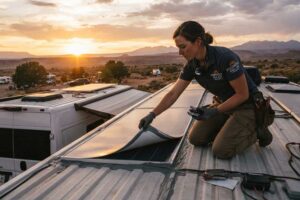
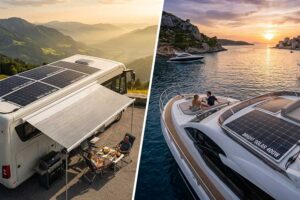
A 400 watt flexible solar panel is one of the most efficient ways to generate substantial off-grid energy on RVs, boats, camper vans, and mobile battery systems without adding the heavy aluminum framing and roof stress associated with traditional rigid solar panels.
The first time I saw a well-designed 400W flexible setup working properly was outside Page, Arizona.
Mid-afternoon temperatures were brutal. Most vehicles at the campground had rooftop rigid arrays sitting several inches above the roofline on thick aluminum brackets. Wind noise echoed constantly whenever trucks passed nearby.
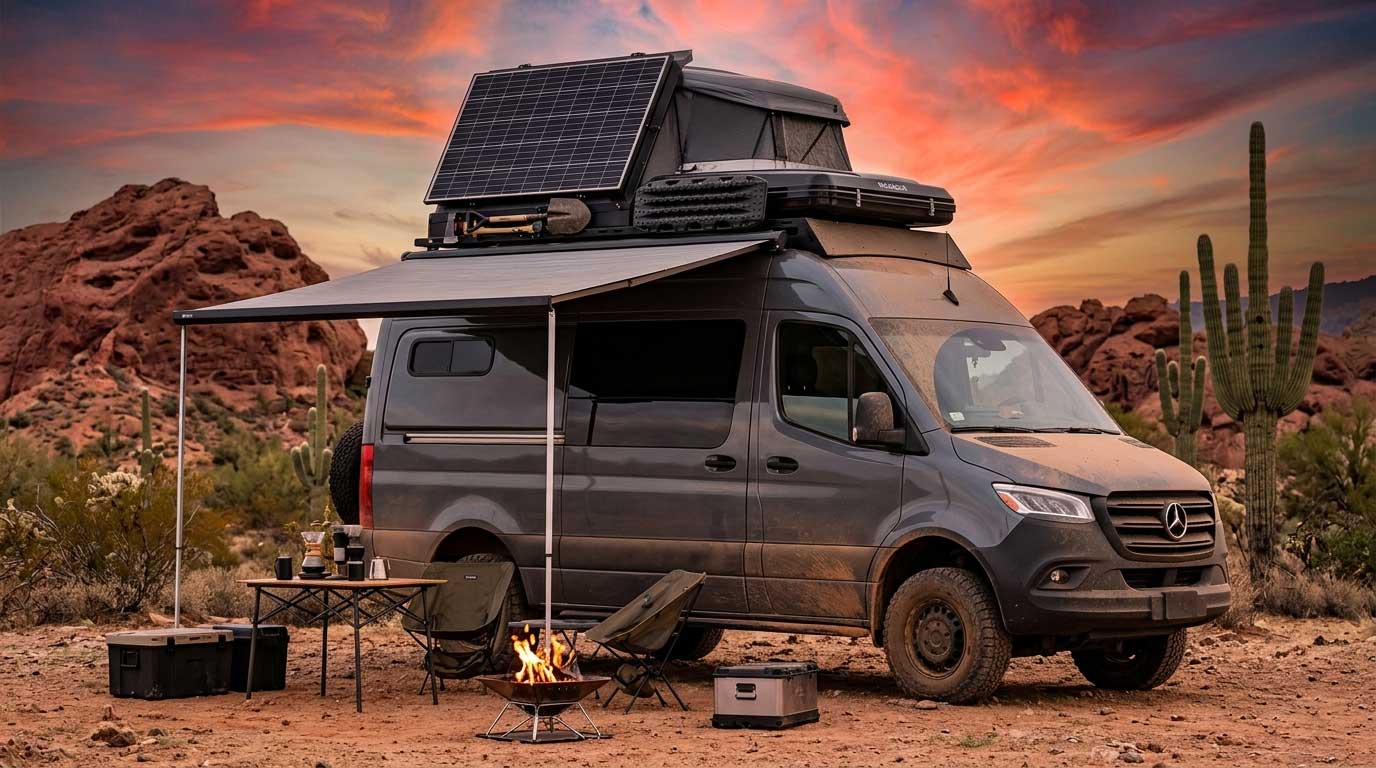
Then there was a compact expedition van parked near the canyon overlook.
Its flexible solar system sat nearly flush against the roof. Quiet. Low-profile. Barely noticeable unless sunlight reflected across the ETFE surface.
That van ran:
- A refrigerator
- Starlink internet
- Lighting
- Laptop charging
- Ventilation fans
Without starting a generator once during the three days we stayed nearby.
That experience shifted my perspective.
A good mobile solar system is not simply about maximum wattage. Long-term durability, roof weight, aerodynamic drag, vibration resistance, and heat management matter just as much once real travel begins.
Why 400 Watt Flexible Solar Panels Are Growing in Popularity
Mobile energy demands changed dramatically over the last decade.
Van life became mainstream.
Remote work increased off-grid travel.
Lithium battery prices dropped.
Portable solar technology improved significantly.
According to the International Energy Agency (IEA), solar photovoltaic deployment continues expanding rapidly as decentralized energy systems become more important worldwide.
Source: International Energy Agency
https://www.iea.org/reports/renewables-2024
At the same time, monocrystalline solar cells became more efficient and compact.
Modern 400 watt flexible solar panel systems now support:
- Large lithium battery banks
- Portable refrigerators
- Internet systems
- Camera equipment
- Cooking accessories
- Lighting systems
- Marine navigation electronics
Without requiring oversized rooftop racks.
That balance between usable output and reduced structural weight explains why larger flexible solar systems are becoming increasingly common among serious travelers.
How Much Power Does a 400 Watt Flexible Solar Panel Produce?
This is where real-world expectations matter more than advertising language.
A 400 watt flexible solar panel does not continuously output 400 watts all day long.
Actual production depends on:
- Sun exposure
- Roof angle
- Weather conditions
- Panel temperature
- Partial shading
- Charge controller quality
Under practical field conditions, most quality 400W flexible systems generate approximately:
- 1.6kWh to 2.8kWh daily
Assuming:
- 4–7 peak sunlight hours
- MPPT charging
- Efficient battery storage
- Minimal shading
The U.S. Department of Energy notes that photovoltaic systems experience measurable efficiency reductions under elevated temperatures and shading conditions.
Source: U.S. Department of Energy
https://www.energy.gov/eere/solar
That becomes obvious in desert environments.
Near Lake Havasu, I checked rooftop temperatures on a matte-black camper van during July heat. Surface temperatures exceeded 80°C before mid-afternoon.
The system still charged reliably.
But not nearly as efficiently as early morning.
Solar brochures rarely discuss that reality honestly.
What Can a 400 Watt Flexible Solar Panel Run?
| Device | Typical Daily Support |
|---|---|
| 12V refrigerator | Continuous operation |
| Starlink internet | Full daily support |
| LED lighting | Multiple nights |
| Laptop charging | Heavy daily use |
| Portable fans | Overnight operation |
| Camera batteries | Continuous charging |
For many off-grid travelers, a properly configured 400W flexible system eliminates the need for daily generator use entirely.
Not residential-scale electricity.
But enough for long-term mobile comfort.
Why Flexible Solar Panels Work Better on Moving Vehicles
Rigid solar panels dominate residential rooftops because houses remain stationary.
Vehicles do not.
Movement changes everything.
Roof Weight Becomes a Long-Term Structural Issue
Rigid solar systems become surprisingly heavy once aluminum frames, rails, and brackets are added.
Flexible systems weigh dramatically less.
That matters for:
- Fiberglass RV roofs
- Camper vans
- Sailboats
- Pop-top campers
- Lightweight expedition trailers
Especially after years of vibration.
I once inspected an RV roof outside Flagstaff where mounting hardware slowly created stress fractures around rooftop screw points after repeated highway travel.
The owner blamed sealant quality.
The actual problem was accumulated structural movement and weight.
Flexible systems reduce much of that strain by remaining low-profile and lightweight.
Low-Profile Solar Improves Highway Efficiency
This subject rarely gets honest attention online.
Raised aluminum rooftop racks create turbulence.
Flexible panels mounted nearly flush create:
- Less aerodynamic drag
- Reduced vibration
- Lower wind noise
- Cleaner rooflines
One Bright Solar customer tracked fuel consumption over roughly 10,000 travel miles after replacing raised rigid panels with low-profile flexible systems.
Fuel efficiency improved approximately 3–5%.
Not dramatic on a single trip.
Very noticeable over time.
At highway speeds, airflow quietly becomes expensive.
Understanding Modern Flexible Solar Systems Beyond Panel Wattage
Flexible Solar Panels 400W Are Changing Mobile Energy Design
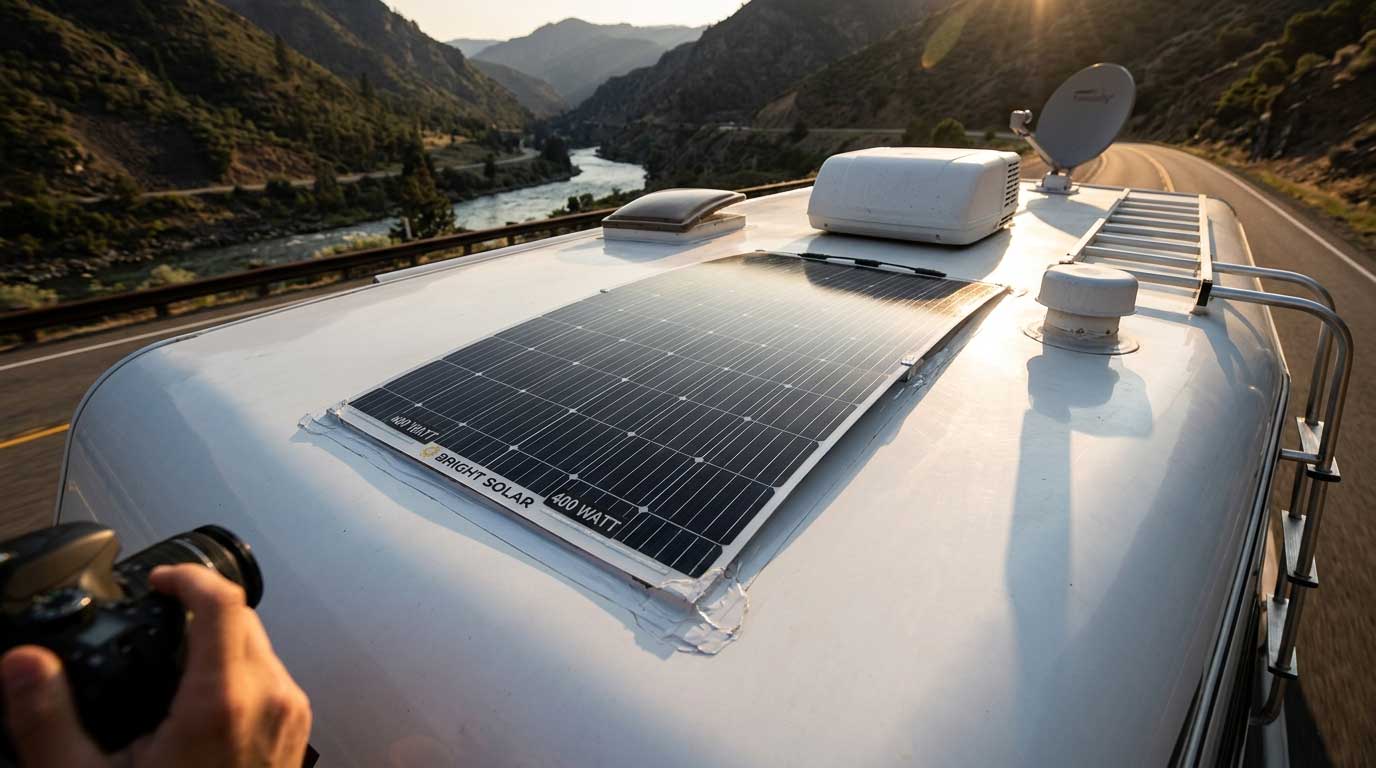
A few years ago, reaching 400 watts on a vehicle roof usually meant installing multiple rigid modules, aluminum rails, mounting brackets, and additional hardware. Today, flexible solar panels 400W configurations are becoming increasingly common among van builders, RV owners, and marine users looking for substantial energy production without excessive roof weight.
The interesting part is not the wattage itself.
It is how much usable power can now fit into a smaller, lower-profile installation footprint.
One Bright Solar customer running a remote photography vehicle managed to fit a complete 400W flexible array onto a roof layout that previously accommodated less than 250W of conventional equipment. Better use of space often matters just as much as total output.
Why Light Flexible Solar Panels Appeal to Long-Term Travelers
Weight rarely attracts attention until a vehicle is fully loaded.
Water tanks, batteries, camping equipment, tools, recovery gear, and personal belongings all add up quickly. That is one reason light flexible solar panels continue gaining popularity among mobile users.
Reducing rooftop weight can provide several practical benefits:
- lower center of gravity
- reduced structural stress
- easier installation
- improved roof load management
- simplified transport and handling
For expedition vehicles and compact camper conversions, every kilogram removed from the roof contributes to a more balanced system overall.
Flexible Rooftop Solar Panels for Limited Installation Space
Traditional solar installations often assume large, unobstructed mounting surfaces.
Real vehicles rarely offer that luxury.
Roof vents, air-conditioning units, antennas, storage boxes, and skylights compete for valuable space. In these situations, flexible rooftop solar panels allow installers to work around obstacles rather than redesigning the entire roof.
I have seen successful installations on vans where the available solar area looked unusable at first glance. Strategic placement of flexible modules around existing equipment transformed wasted roof space into productive energy generation.
That adaptability explains why flexible solar technology has become a preferred option for many custom vehicle builders.
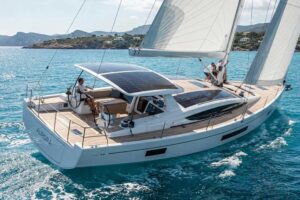
Flexible Roof Solar Panels for RVs, Boats, and Curved Surfaces
One area where flexible roof solar panels continue to outperform traditional alternatives is curved mounting surfaces.
Boat cabins, fiberglass RV roofs, pop-top campers, and aerodynamic vehicle designs rarely provide perfectly flat installation areas.
Instead of creating complex support structures, installers can often mount flexible panels directly onto the existing roof contour. The result is a cleaner appearance, lower wind resistance, and fewer external mounting components exposed to vibration and weather.
At Bright Solar, many customers choose flexible products not because they need maximum flexibility, but because they need practical compatibility with real-world roof designs.
Building a Reliable Flexible Solar Panel System
A panel alone does not create an energy solution.
A complete flexible solar panel system includes several critical components working together:
- solar modules
- MPPT charge controller
- battery storage
- wiring and protection devices
- monitoring equipment
- mounting materials
Some of the most reliable systems I have evaluated were not the largest. They were simply well balanced.
Proper cable sizing, quality connectors, and realistic power planning often have more impact on long-term performance than adding extra panel capacity.
Flexible Solar System Performance Depends on Integration
When discussing a flexible solar system, many buyers focus entirely on the modules while overlooking the supporting equipment.
In reality, overall performance depends on how the entire system functions together.
Battery capacity, charging efficiency, roof temperature, cable routing, and installation quality all influence real-world results.
One traveler I met in Utah had fewer solar watts than neighboring campers, yet consistently maintained higher battery reserves. The difference was not the panels. It was the system design.
That experience reinforced a lesson I continue seeing across Bright Solar projects:
A successful flexible solar installation is rarely about a single component. It is about how every part of the system works together once the journey begins.
Where Cheap Flexible Solar Panels Usually Fail
The weak points are surprisingly predictable.
And usually caused by aggressive cost-cutting.
1. Weak Surface Materials
Cheap PET coatings degrade faster under long-term UV exposure.
ETFE performs significantly better outdoors.
According to DuPont material testing, ETFE materials demonstrate stronger UV resistance and environmental durability than many conventional polymer surfaces.
Source: DuPont
https://www.dupont.com
That matters enormously in desert climates and marine environments.
2. Heat Buildup
Flexible panels mounted directly against dark roofs can trap significant heat.
Excessive temperatures accelerate:
- Adhesive fatigue
- Cell degradation
- Efficiency loss
- Surface warping
Small ventilation gaps often improve longevity noticeably.
Heat remains one of the biggest engineering challenges for flexible solar systems.
3. Waterproofing Failures
Many inexpensive systems fail at connectors before the cells themselves degrade.
A quality 400 watt flexible solar panel should include:
- IP67 or IP68 waterproof junction boxes
- UV-resistant wiring
- Waterproof MC4 connectors
- Tinned copper conductors
Marine environments expose weak electrical components very quickly.
Salt air destroys cheap hardware fast.
Best Uses for a 400 Watt Flexible Solar Panel
One of the biggest mistakes beginners make is oversizing systems unnecessarily.
Huge rooftop arrays are not always smarter.
Balanced systems often survive longer because they remain simpler.
Ideal Applications
| Application | Why 400W Works Well |
|---|---|
| Van life | Daily off-grid independence |
| RV travel | High-output lightweight charging |
| Sailboats | Curved mounting compatibility |
| Remote work setups | Reliable electronics support |
| Portable lithium systems | Fast battery replenishment |
One of the cleanest expedition van builds I saw used a compact 400W flexible setup paired with lithium batteries and an MPPT controller.
No oversized framework.
No industrial aluminum roof rack.
Just practical solar powering refrigeration, internet equipment, lighting, and camera systems during extended travel.
Simple systems often age more gracefully.
Choosing the Right 400 Watt Flexible Solar Panel
The important differences usually sit below the surface.
Look beyond advertised wattage.
Pay attention to:
- Cell efficiency
- ETFE coating quality
- Waterproofing
- UV resistance
- Cable durability
- Heat tolerance
At Bright Solar, flexible solar products are engineered specifically for:
- RV travel
- Marine installations
- Lightweight rooftop systems
- Long-distance vibration resistance
- Harsh outdoor conditions
Because laboratory testing alone does not reflect real-world travel.
Dust.
Salt air.
Crosswinds.
Tree debris.
Road shock.
Extreme summer heat.
Those conditions expose weak equipment surprisingly fast.
FAQ: 400 Watt Flexible Solar Panel
How much electricity does a 400 watt flexible solar panel produce daily?
Most 400 watt flexible solar panels generate approximately 1.6kWh to 2.8kWh daily depending on weather, sunlight exposure, and charging efficiency.
Can a 400 watt flexible solar panel charge lithium batteries?
Yes. A 400 watt flexible solar panel commonly charges lithium battery systems when paired with compatible MPPT charge controllers.
Are flexible solar panels waterproof?
High-quality flexible solar panels typically include waterproof junction boxes and ETFE weather-resistant surfaces suitable for outdoor environments.
Can flexible solar panels bend?
Yes. Flexible solar panels are designed to conform slightly to curved surfaces, making them ideal for RVs, boats, and camper vans.
How long does a 400 watt flexible solar panel last?
Premium flexible solar panels generally last between 5 and 15 years depending on environmental exposure, installation quality, and temperature conditions.
This section provides an in-depth look at:400 Watt Solar Panel
Final Thoughts
A 400 watt flexible solar panel is not about building oversized rooftop power stations.
It is about practical high-output mobile energy.
Lower roof weight.
Reduced wind resistance.
Simpler installation.
Reliable off-grid charging.
And after enough highway miles listening to aluminum rooftop brackets vibrate in crosswinds, quiet low-profile solar starts feeling like the smarter long-term solution.
Related recommendations
-

mounting flexible solar panels (Field Installation Guide from Bright Solar)
254mounting flexible solar panels explained with real RV roof installations, adhesive methods, airflow design, durability insights, and field-tested mounting practices.
View details -
Flexible RV Solar Panels: Complete Guide to Choosing, Installing, and Using Solar Power for RVs
236Discover flexible RV solar panels for campers and motorhomes. Learn benefits, installation, sizing, and how to choose reliable solar solutions for off-grid travel.
View details -
400W Flexible Solar Panels for RV, Marine & Off-Grid Systems
208400W flexible solar panels deliver lightweight, high-efficiency off-grid power for RVs, boats, cabins, and mobile solar systems. Explore expert insights from Bright Solar.
View details -
Marine Flexible Solar Panels: Lightweight Solar Power Solutions for Boats and Yachts
286Marine flexible solar panels provide lightweight solar power for boats, yachts, and offshore systems. Explore installation methods, durability, and real marine applications.
View details