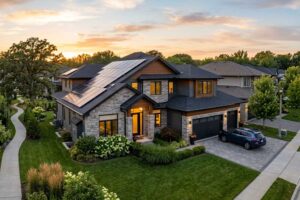
Best Solar Panel Setup for RV and Off-Grid Systems: Complete Guide
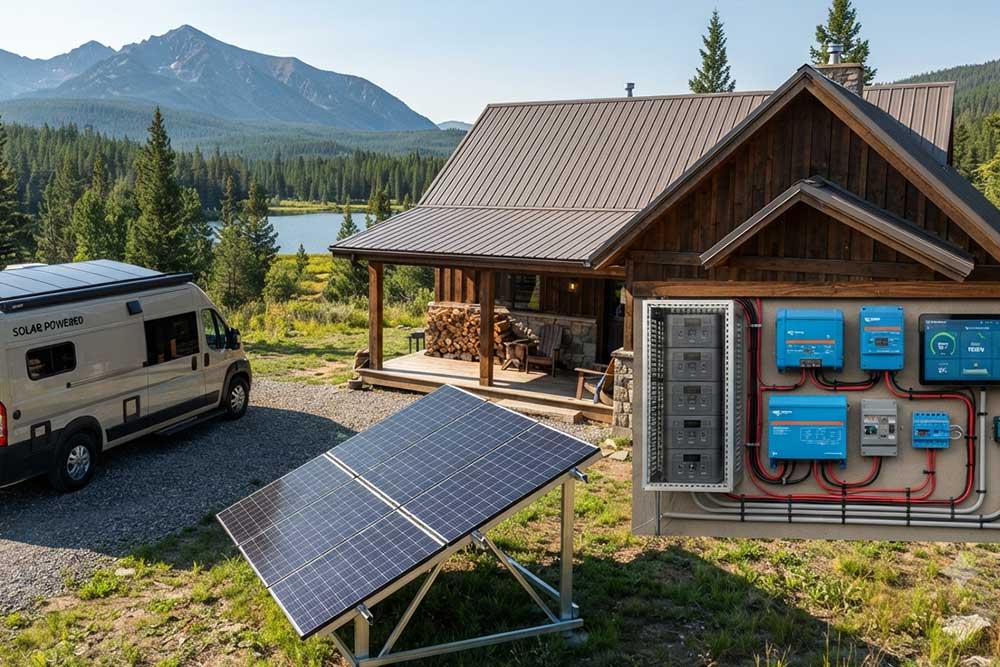
The best solar panel setup for RV and off-grid systems depends on energy requirements, battery capacity, solar panel configuration, and installation conditions. Most efficient systems combine properly sized solar panels, MPPT charge controllers, batteries, and inverters for reliable power generation.
RV and off-grid solar systems are becoming popular because they provide independent power for travel, remote living, and outdoor applications.
However, a successful installation requires more than simply adding solar panels.
A complete system must balance:
- Solar panel wattage
- Panel wiring method
- Battery storage
- Charge controller type
- Energy consumption
At Bright Solar, we design flexible solar solutions for mobile and off-grid applications where space, weight, and reliability are critical factors.
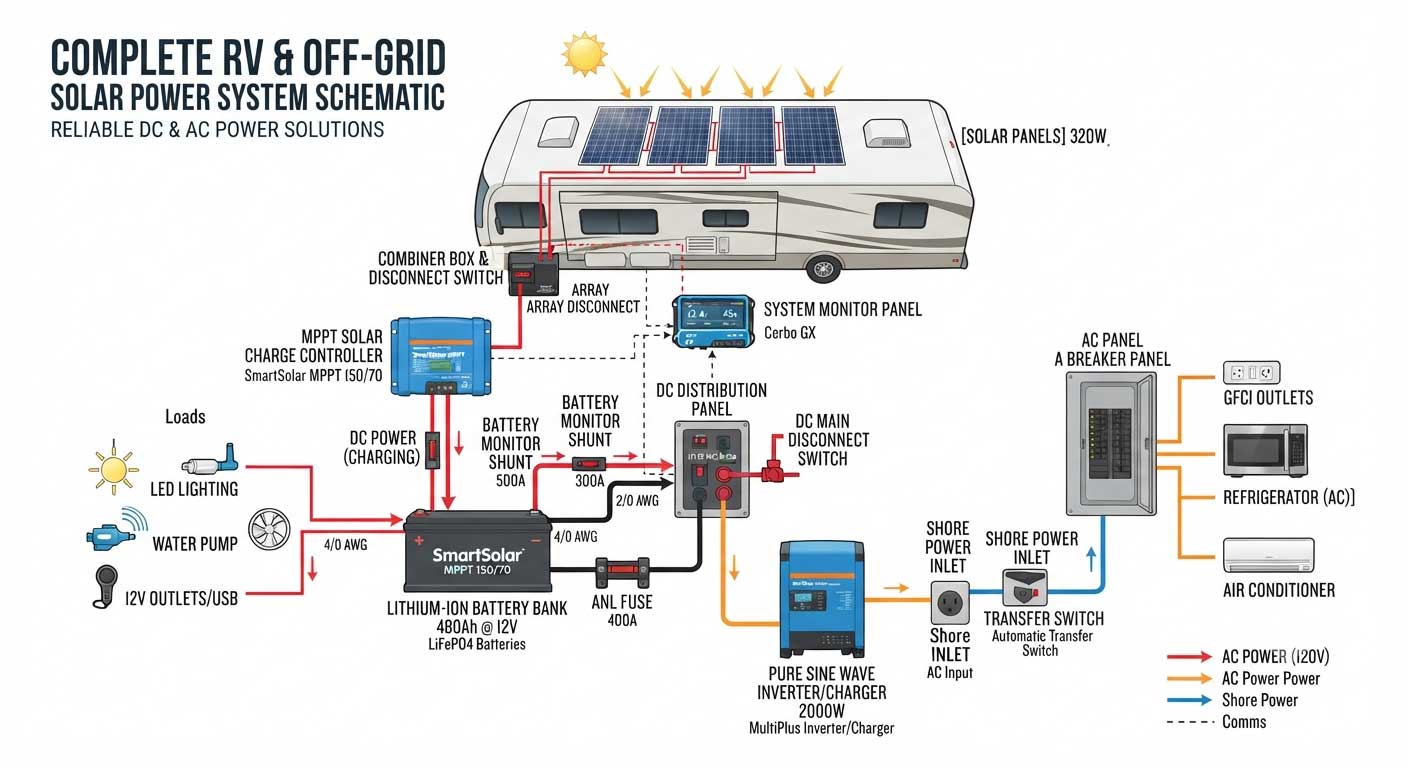
Understanding an RV and Off-Grid Solar System Setup
A complete solar power system usually includes five main components:
1. Solar Panels
Solar panels convert sunlight into DC electricity.
Common options:
- Rigid solar panels
- Flexible solar panels
- Portable solar panels
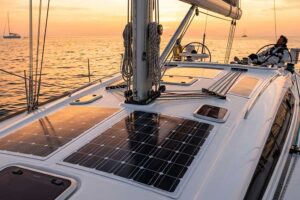
Flexible solar panels are especially popular for RV and marine applications because they are lightweight and can fit curved surfaces.Visit product page:Flexible Solar Panels
2. Charge Controller
The charge controller regulates energy from solar panels to batteries.
Main options:
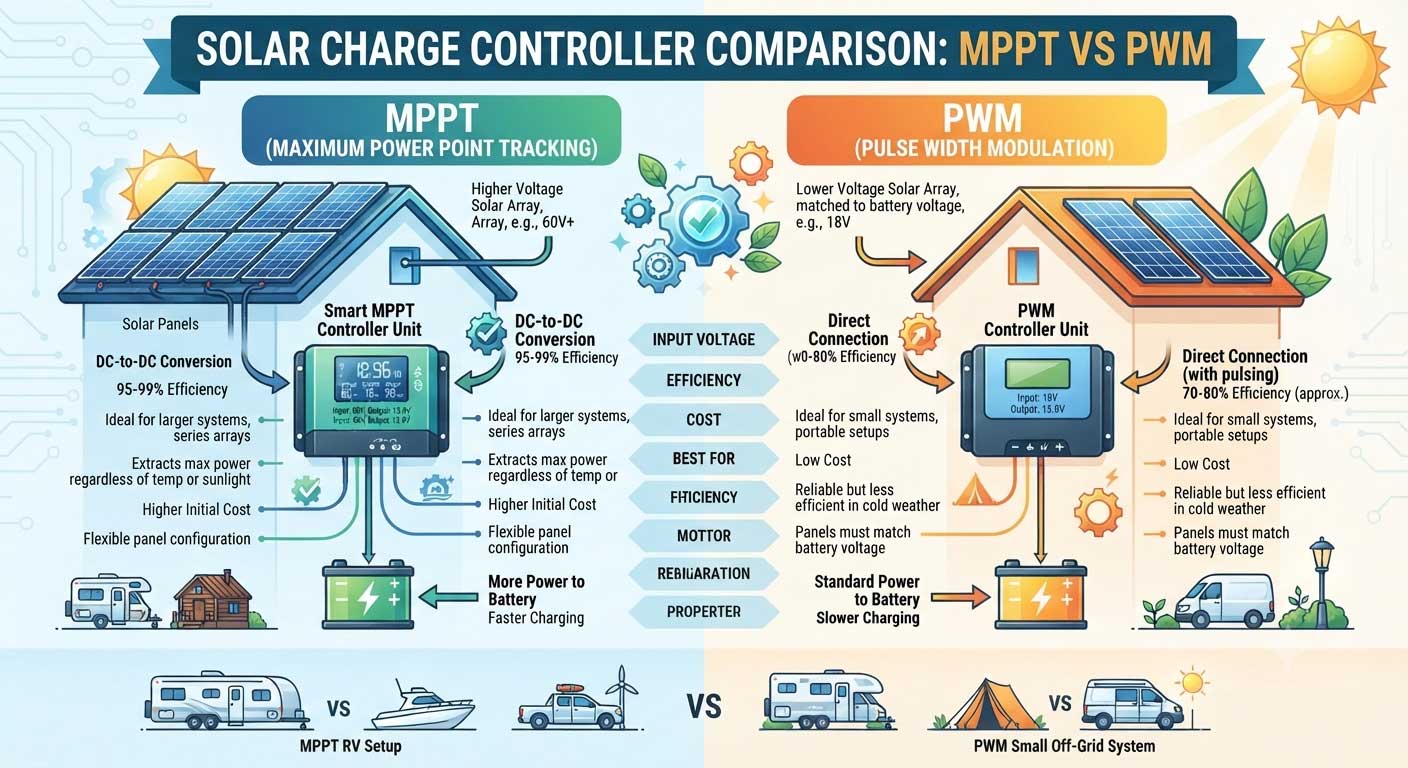
MPPT Controller
Advantages:
- Higher efficiency
- Supports higher PV voltage
- Works well with series solar panels
PWM Controller
Advantages:
- Lower cost
- Suitable for small systems
For most modern RV and off-grid systems, MPPT controllers provide better flexibility.
3. Battery Storage
Solar panels only generate power during sunlight hours.
Batteries store energy for:
- Night use
- Cloudy weather
- High-demand appliances
Common battery options:
- Lithium batteries
- AGM batteries
- Lead-acid batteries
Lithium batteries are increasingly used because of:
- Higher usable capacity
- Longer lifespan
- Lower weight
4. Inverter
An inverter converts DC electricity from batteries into AC power.
Used for appliances such as:
- Laptops
- Refrigerators
- Kitchen equipment
- Small tools
5. Monitoring System
A monitoring system helps track:
- Solar production
- Battery level
- Energy consumption
This helps optimize system performance.
Choosing the Right Solar Panels for RV and Off-Grid Systems
The best solar panels depend on installation space and energy needs.
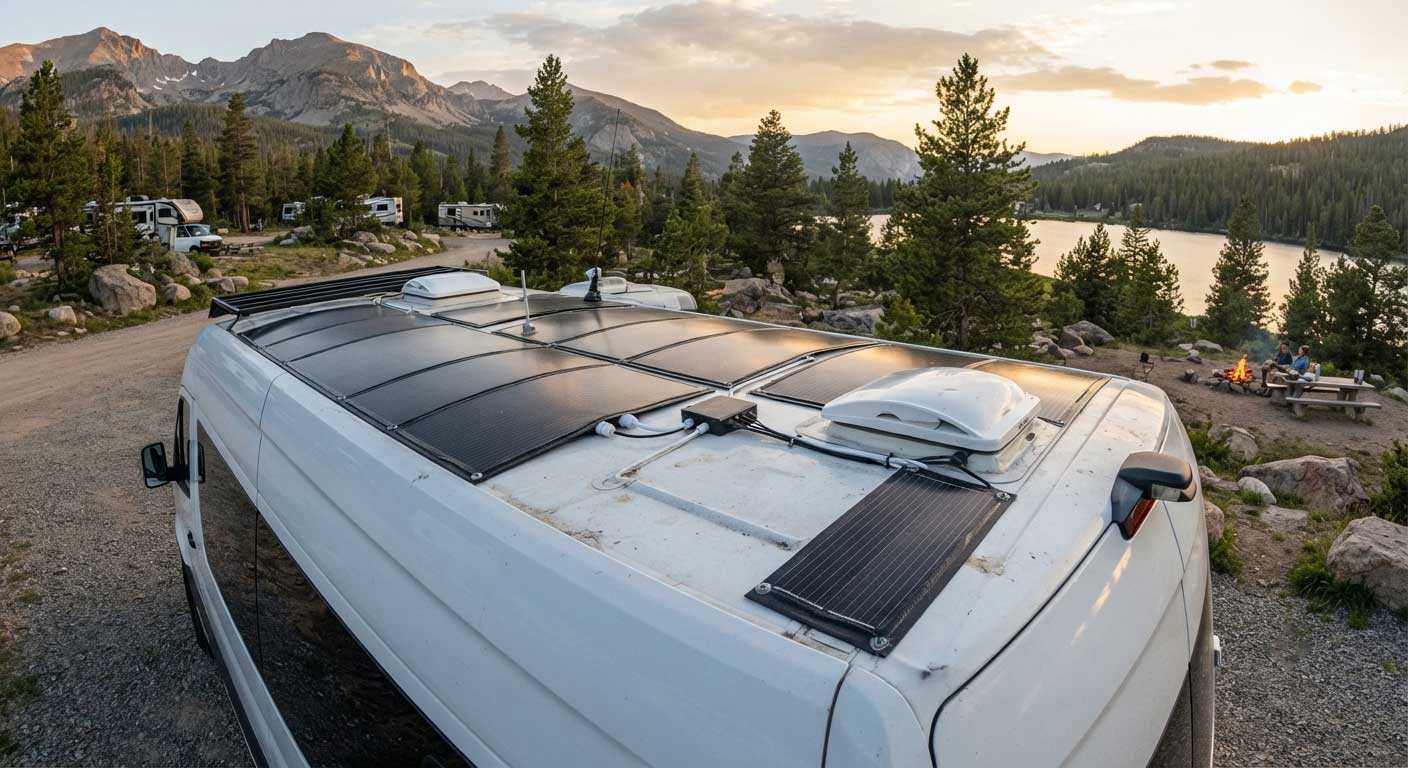
Flexible Solar Panels for RV Applications
Flexible solar panels are widely used in RV systems because they offer:
Lightweight Design
RV roofs have limited load capacity.
Flexible panels reduce additional weight compared with traditional rigid modules.
Easy Installation
Flexible panels can be mounted on:
- Curved RV roofs
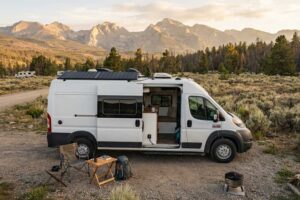
- Vans
- Boats
- Custom surfaces
Space Efficiency
RV roofs often contain obstacles:
- Air conditioners
- Roof vents
- Antennas
Flexible panels allow more installation flexibility.
Bright Solar flexible solar panels are designed for mobile applications where lightweight construction and adaptability are important.
Rigid Solar Panels for Off-Grid Systems
Rigid solar panels are commonly used for:
- Cabins
- Homes
- Ground-mounted systems
Advantages:
- Higher structural durability
- Larger system options
- Long-term outdoor performance
How to Size a Solar Panel System for an RV
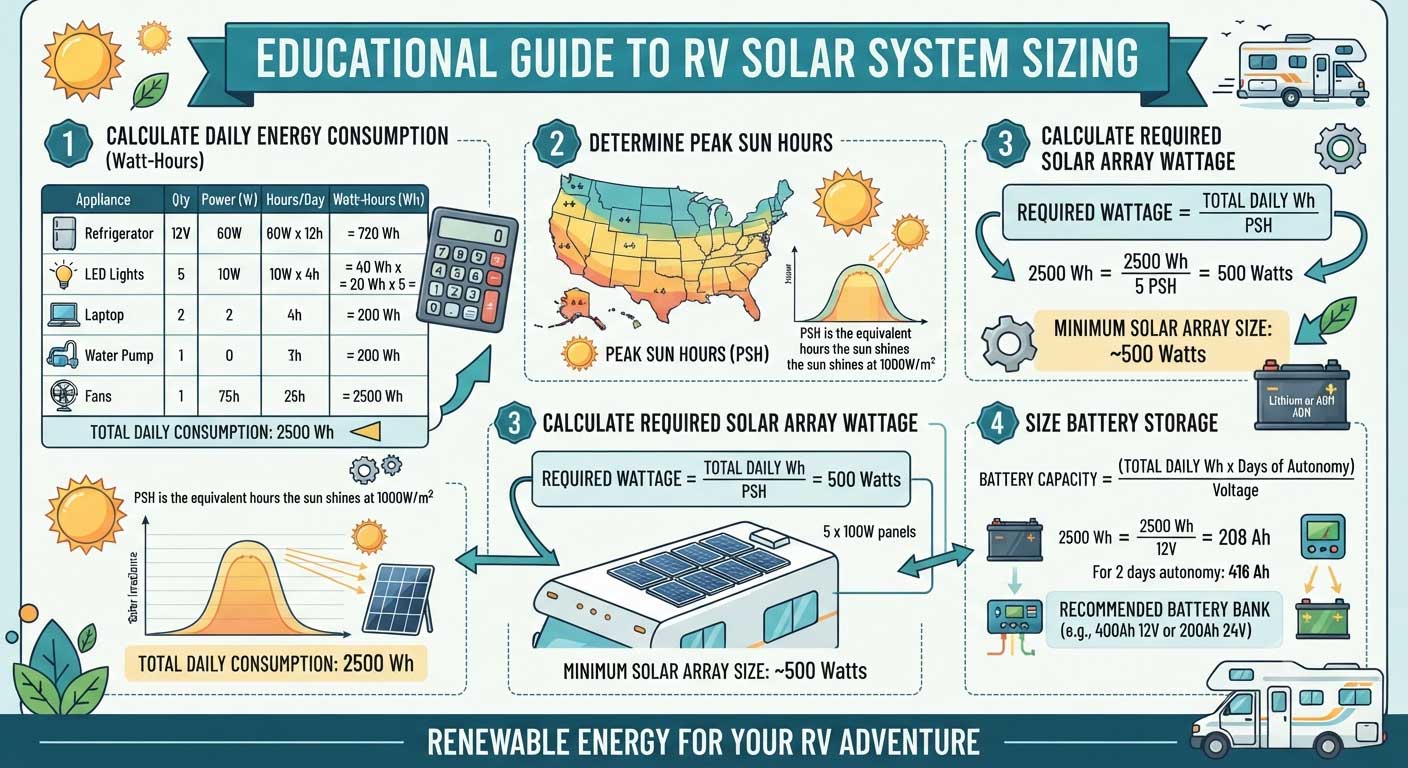
The correct solar size depends on daily energy consumption.
Basic calculation:
Daily Energy Usage (Wh)
÷
Peak Sun Hours
=
Required Solar Wattage
Example:
Daily usage:
2000Wh
Peak sunlight:
5 hours
Required solar:
2000 ÷ 5
=
400W
A practical system may require additional capacity to account for:
- Weather changes
- Energy losses
- Battery charging needs
Common RV Solar System Sizes
Small RV Setup
Typical:
100W–300W solar
Suitable for:
- Phones
- Lights
- Small electronics
Medium RV Setup
Typical:
400W–800W solar
Suitable for:
- Refrigerators
- Computers
- More daily appliances
Large RV Setup
Typical:
1000W+ solar
Suitable for:
- Air conditioning support
- High energy consumption
- Extended off-grid travel
Best Solar Panel Wiring Setup for RV Systems
The wiring method affects system voltage and performance.
Choosing the correct wiring method is one of the most important decisions in RV solar design. Learn the electrical differences between configurations in our guide about solar panels in parallel vs series.
Series Solar Panel Setup for RV
Series wiring:
Increases voltage
Keeps current similar
Example:
Two 200W panels:
Each:
20V
10A
Series:
Voltage:
40V
Current:
10A
Benefits:
- Lower cable losses
- Better MPPT performance
- Suitable for longer cable runs
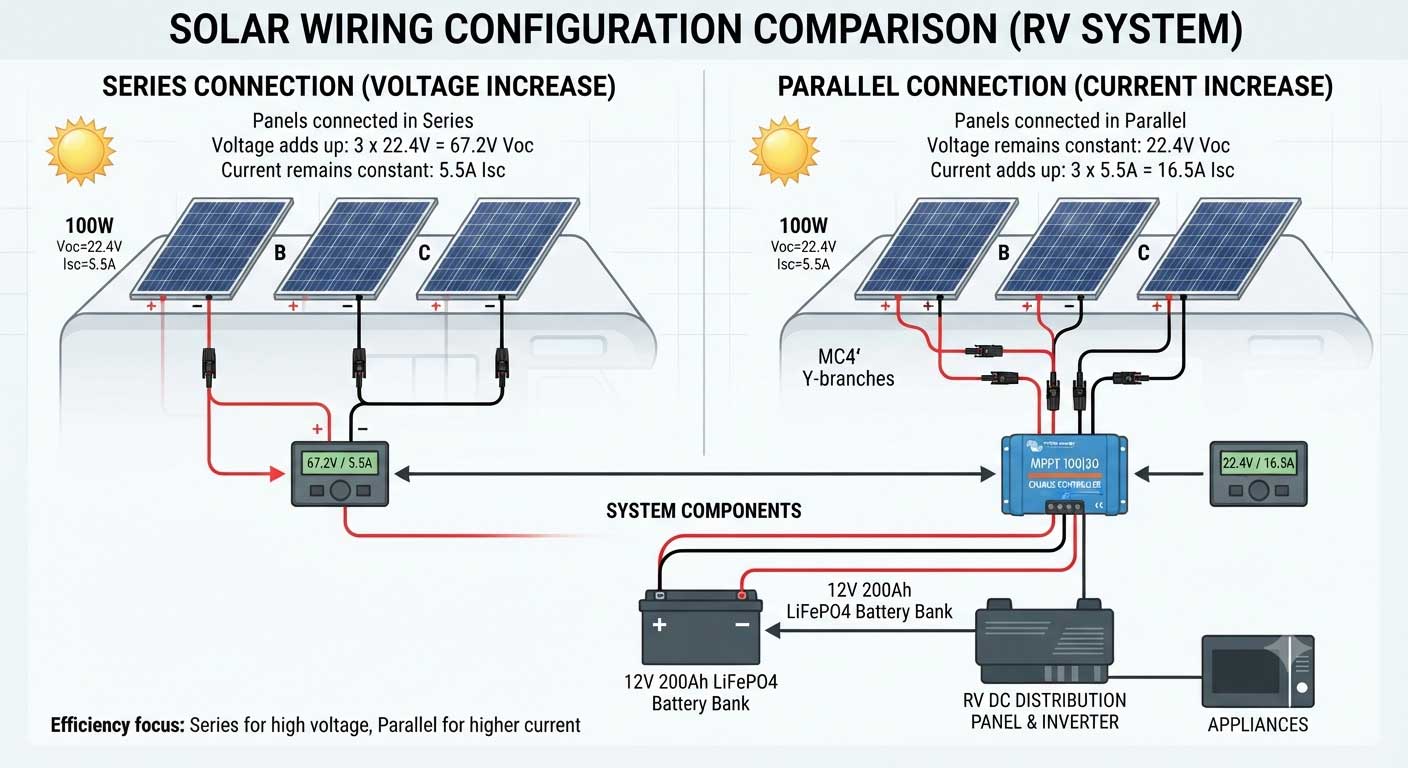
Parallel Solar Panel Setup for RV
Parallel wiring:
Keeps voltage the same
Increases current
Example:
Two 200W panels:
Each:
20V
10A
Parallel:
Voltage:
20V
Current:
20A
Benefits:
- Better performance in some shading situations
- Simple expansion
Series vs Parallel: Which Is Better for RV Solar?
There is no single best choice.
Series is often better when:
- Using MPPT controller
- Cable distance is longer
- Higher voltage input is preferred
Parallel may be better when:
- Partial shading is common
- Maintaining lower voltage is important
For a complete comparison, see:
solar panels in parallel vs series
Best Solar Panel Setup for Off-Grid Systems
Off-grid systems usually require higher reliability because there is no grid backup.
A typical setup includes:
Solar Array
↓
MPPT Charge Controller
↓
Battery Bank
↓
Inverter
↓
AC Loads
Solar Panel Configuration for Off-Grid Systems
Large off-grid systems often use:
Series Solar Strings
Advantages:
- Higher voltage
- Lower current
- Reduced cable losses
Multiple Parallel Strings
Advantages:
- Higher total power
- System expansion flexibility
Many larger systems use series-parallel configurations.
Choosing MPPT vs PWM for RV and Off-Grid Systems
Controller selection directly affects solar efficiency and panel configuration. Compare the advantages of each technology in our guide about MPPT vs PWM charge controller for solar panels.
For modern systems:
MPPT Recommended For:
- Large RV solar systems
- Off-grid cabins
- High-wattage solar arrays
Advantages:
- Higher efficiency
- Better voltage management
- More flexible wiring
PWM Suitable For:
- Small RV systems
- Basic charging needs
- Low-power applications
Battery Sizing for RV and Off-Grid Solar
Battery capacity depends on:
- Daily energy consumption
- Backup requirements
- Solar availability
Basic formula:
Battery Capacity (Wh)
=
Daily Energy Usage × Backup Days
Example:
Daily consumption:
2000Wh
Backup:
2 days
Required storage:
4000Wh
Actual system design should consider battery discharge limits and efficiency losses.
Common Mistakes When Building RV and Off-Grid Solar Systems
Mistake 1: Installing Too Few Solar Panels
A small array may not fully recharge batteries.
Mistake 2: Ignoring Roof Space
RV systems require careful panel placement.
Mistake 3: Choosing the Wrong Controller
Panel voltage must match controller limits.
Mistake 4: Undersizing Battery Capacity
Insufficient storage reduces system reliability.
Mistake 5: Using Incorrect Wiring
Wrong series or parallel configuration may cause:
- Voltage problems
- Energy losses
- Equipment issues
How Bright Solar Supports RV and Off-Grid Solar Applications
Bright Solar provides flexible solar panel solutions designed for:
RV Applications
Including:
- Camper vans
- Motorhomes
- Travel trailers
Marine Applications
Including:
- Boats
- Yachts
- Portable marine systems
Off-Grid Applications
Including:
- Remote cabins
- Outdoor power systems
- Custom solar projects
Bright Solar flexible solar panels combine lightweight design, durability, and installation flexibility for different renewable energy applications.
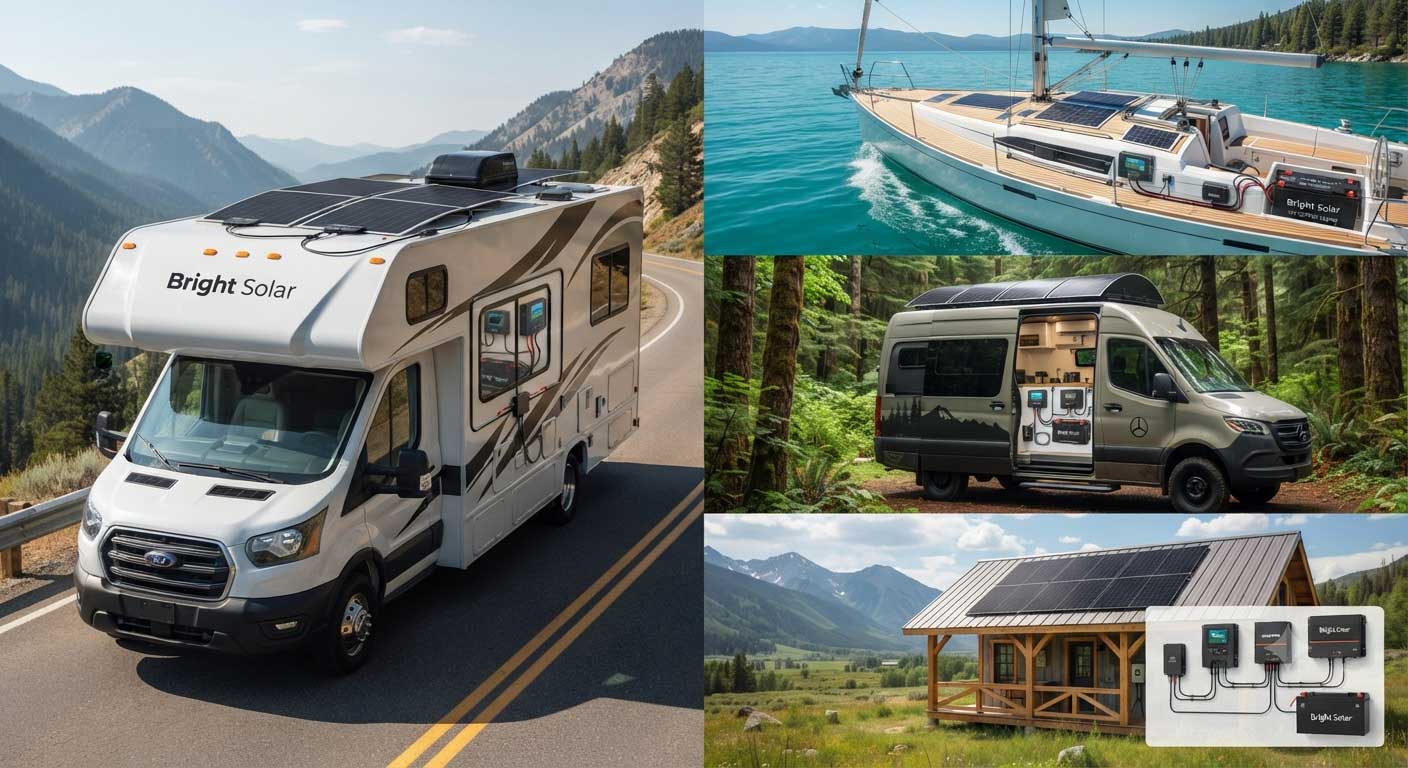
Best RV Solar Panel Setup Examples
The ideal RV solar setup depends on travel style, electrical demand, and available installation space.
A weekend camper may only need a small solar system, while full-time RV travelers often require higher capacity systems with battery storage and efficient power management.
Small RV Solar Setup (100W–300W)
A small RV solar system is suitable for basic electricity needs.
Typical components:
- 100W–300W solar panels
- 12V battery system
- PWM or small MPPT controller
- Small inverter
Suitable for:
- LED lighting
- Mobile phones
- Tablets
- Small electronics
Example setup:
Two 100W flexible solar panels:
Configuration:
Parallel
Output:
200W solar power
Benefits:
- Simple installation
- Lower cost
- Easy expansion
This setup works well for occasional camping and short trips.
Medium RV Solar Setup (400W–800W)
A medium-sized RV solar system provides more energy independence.
Typical components:
- 400W–800W solar panels
- MPPT charge controller
- Lithium battery bank
- 1000W–2000W inverter
Suitable for:
- Refrigerators
- Computers
- Fans
- Kitchen appliances
Example setup:
Four 200W flexible solar panels:
Total:
800W
Possible configuration:
Two panels in series
Two series strings in parallel
Output:
Higher voltage
Higher current
This series-parallel design balances efficiency and power capacity.
Large RV Solar Setup (1000W+)
Large RV systems are designed for extended off-grid travel.
Typical components:
- 1000W+ solar array
- High-capacity lithium batteries
- MPPT controllers
- Large inverter system
Suitable for:
- Air conditioning support
- Multiple appliances
- Long-term boondocking
A high-voltage solar configuration is often preferred because it reduces current and improves cable efficiency.
Best Off-Grid Solar System Configurations
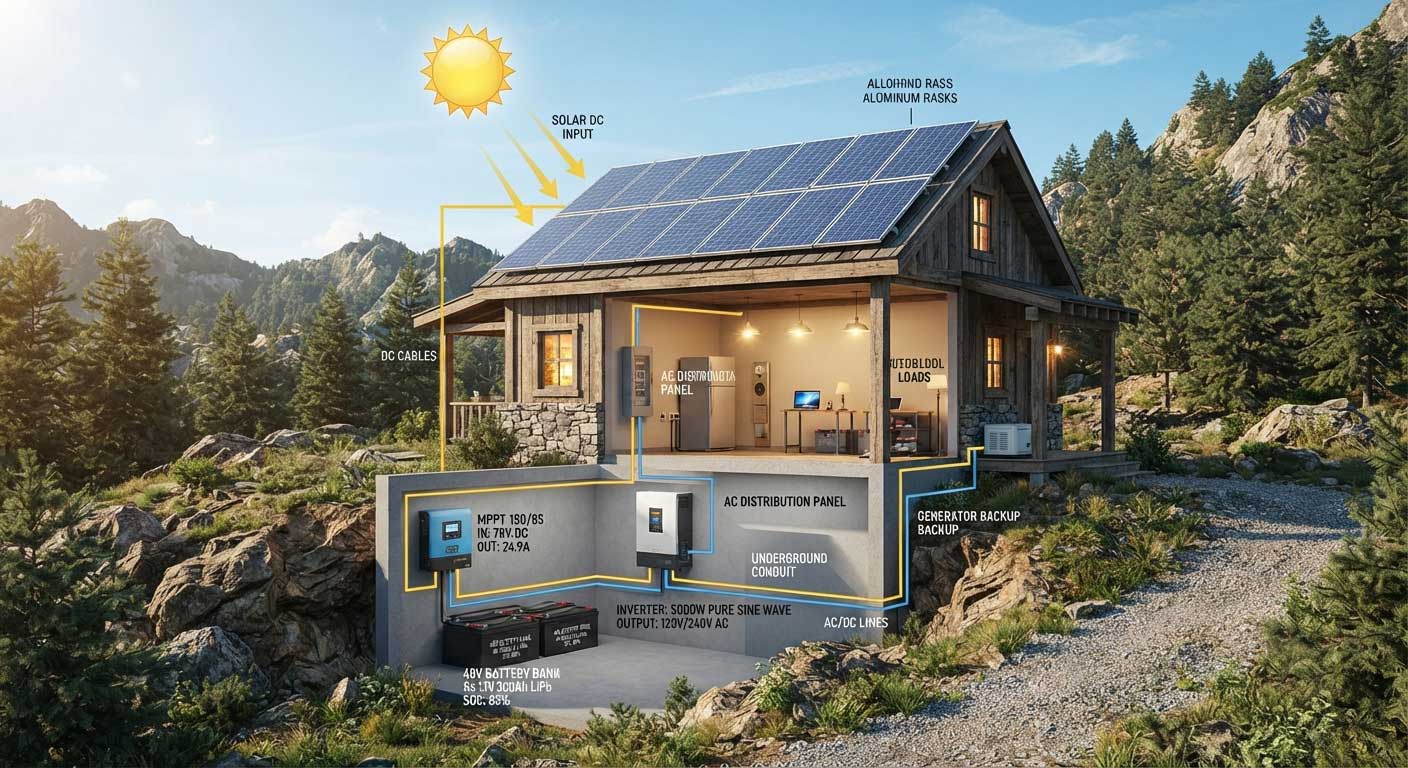
Off-grid systems require careful planning because solar power may be the only electricity source.
A reliable off-grid system usually includes:
Solar Panels
↓
MPPT Charge Controller
↓
Battery Storage
↓
Inverter
↓
Electrical Loads
Small Off-Grid Cabin Setup
Typical application:
- Remote cabins
- Small workshops
- Emergency backup
System example:
Solar:
500W–1000W
Battery:
2kWh–5kWh
Controller:
MPPT
Configuration:
Series solar panels
Advantages:
- Higher voltage
- Lower cable losses
- Better controller efficiency
Medium Off-Grid System Setup
Typical applications:
- Remote homes
- Agricultural buildings
- Outdoor facilities
System example:
Solar:
2kW–5kW
Battery:
5kWh–15kWh
Components:
- Multiple solar strings
- MPPT controller
- Battery storage
- Inverter
Series-parallel wiring is commonly used to achieve the required voltage and current.
Large Off-Grid Solar Setup
Large systems require professional electrical design.
Applications:
- Off-grid houses
- Commercial facilities
- Remote operations
Important considerations:
- Multiple MPPT inputs
- Battery management system
- Backup power
- Safety protection
Solar array design must consider:
- Maximum PV voltage
- Current capacity
- Temperature effects
How to Install and Connect RV Solar Panels
A proper installation improves safety and long-term performance.
Step 1: Calculate Energy Requirements
Before installation, determine:
- Daily electricity consumption
- Battery capacity
- Required solar wattage
Consider appliances such as:
- Refrigerator
- Lighting
- Water pump
- Electronics
Step 2: Choose Solar Panel Location
For RV installations:
Select areas with:
- Maximum sunlight exposure
- Minimal shading
- Strong mounting surface
Avoid locations blocked by:
- Roof vents
- Air conditioners
- Antennas
Step 3: Mount Solar Panels
Proper mounting is essential for flexible solar panels, especially on RV roofs and curved surfaces. See our complete flexible solar panel installation guide for installation methods and best practices.
Flexible solar panels are often installed using:
- Industrial adhesive
- Mounting tape
- Mechanical fasteners
Installation should ensure:
- Secure attachment
- Waterproof cable entry
- Proper cable protection
For detailed installation steps, see:
flexible solar panel installation guide
Step 4: Connect Solar Panels to Charge Controller
Correct controller wiring ensures safe charging and maximum system performance. Follow our complete guide on how to connect solar panels to charge controller for detailed installation steps.
The typical connection:
Solar Panels
↓
DC Disconnect
↓
Charge Controller
↓
Battery Bank
Important checks:
- Correct polarity
- Proper cable size
- Voltage compatibility
For detailed wiring instructions:
how to connect solar panels to charge controller
Step 5: Test System Performance
After installation, check:
- Solar voltage
- Charging current
- Battery status
- Controller operation
Monitoring helps identify installation problems early.
Series vs Parallel Setup Recommendations for RV and Off-Grid Systems
Choosing series or parallel depends on system requirements.
Choose Series When:
Using MPPT Controllers
MPPT controllers perform well with higher PV voltage.
Cable Distance Is Long
Higher voltage reduces current and cable losses.
Building Larger Systems
Large solar arrays often benefit from higher voltage designs.
Choose Parallel When:
Shading Is Common
Parallel systems allow panels to operate more independently.
Using Low Voltage Systems
Suitable for some 12V applications.
Simpler Expansion Is Needed
Adding additional panels can be easier in some small systems.
Recommended Configurations
| Application | Recommended Setup |
|---|---|
| Small RV | Parallel or small series system |
| Large RV | Series with MPPT |
| Marine solar | Flexible panels + MPPT |
| Small cabin | Series + MPPT |
| Large off-grid | Series-parallel + MPPT |
How to Improve Solar Performance in RV and Off-Grid Systems
A good installation can significantly improve energy production.
Optimize Panel Position
Whenever possible:
- Install panels facing maximum sunlight
- Avoid unnecessary shading
- Keep surfaces clean
Reduce Energy Loss
Improve efficiency by:
- Using proper cable size
- Keeping cable distance short
- Using quality connectors
Monitor Energy Usage
Track:
- Solar production
- Battery level
- Daily consumption
This helps adjust energy habits and improve system reliability.
Maintain Solar Panels Regularly
Maintenance includes:
- Cleaning dust and debris
- Checking connectors
- Inspecting cables
- Monitoring output changes
Flexible solar panels should be cleaned using non-abrasive methods to protect the surface coating.
FAQ About Best Solar Panel Setup for RV and Off-Grid Systems
What Is the Best Solar Panel Setup for an RV?
The best RV solar setup depends on energy requirements and available space.
Most modern RV systems use:
- Flexible solar panels
- MPPT controller
- Lithium battery
- Properly sized inverter
Larger RV systems often benefit from series solar configurations.
How Many Solar Panels Do I Need for an Off-Grid System?
The number depends on:
- Daily energy consumption
- Sunlight hours
- Battery size
- System efficiency
A small cabin may need a few panels, while a full off-grid home may require many more.
Are Flexible Solar Panels Good for RVs?
Yes.
Flexible solar panels are popular for RV applications because they are:
- Lightweight
- Easy to install
- Suitable for curved surfaces
They are especially useful where traditional rigid panels cannot fit.
Should RV Solar Panels Be Connected in Series or Parallel?
Both options can work.
Series is often preferred when:
- Using MPPT controller
- Longer cable runs are required
Parallel may be useful when:
- Shading conditions are common
- Lower voltage is preferred
Is MPPT Better Than PWM for RV Solar?
For most larger RV systems, MPPT provides better performance.
Benefits:
- Higher efficiency
- Better solar panel compatibility
- More flexible wiring
Small systems may still use PWM controllers.
Can Flexible Solar Panels Be Used for Off-Grid Systems?
Yes.
Flexible solar panels can be used in:
- Cabins
- Mobile systems
- Marine applications
The system should be designed according to:
- Voltage requirements
- Battery capacity
- Controller specifications
How Long Do RV Solar Systems Last?
System lifespan depends on component quality and maintenance.
Factors include:
- Solar panel durability
- Battery technology
- Controller quality
- Installation environment
Conclusion: Building the Best Solar Panel Setup for RV and Off-Grid Systems
The best solar panel setup for RV and off-grid systems is not simply the system with the most panels.
A reliable solar solution requires matching:
- Solar panel size
- Wiring configuration
- Charge controller
- Battery storage
- Energy requirements
For RV applications, flexible solar panels combined with MPPT controllers provide a lightweight and efficient solution.
For off-grid systems, higher-voltage solar arrays with proper battery storage help improve reliability and reduce energy losses.
Bright Solar designs flexible solar panel solutions for RV, marine, and off-grid applications, helping customers build efficient renewable energy systems for different environments.
Related recommendations
-

3kW Solar System for Homes, Cabins and Off-Grid Energy Solutions
188Discover how a 3kW solar system powers homes, cabins, and off-grid applications. Learn costs, output, batteries, and installation tips from Bright Solar.
View details -
200 Watt Flexible Solar Panels: Lightweight Power Solution for RV, Marine and Off-Grid Applications
134200 watt flexible solar panels deliver lightweight and powerful solar energy for RVs, boats, camping, and off-grid systems. Explore Bright Solar solutions today.
View details -
Flexible Solar Panels for Boats: A Smarter Way to Power Life on the Water
242Discover how flexible solar panels for boats deliver lightweight, reliable marine power for yachts, sailboats, and off-grid cruising with Bright Solar.
View details -
100 Watt Semi Flexible Solar Panel: Output, Uses and Installation Guide
181A 100 watt semi flexible solar panel is designed for compact systems such as RVs, vans, boats, and cabins where low weight, slim profile, and limited curvatu...
View details