100W vs 200W vs 300W Flexible Panel: Size, Weight, Output
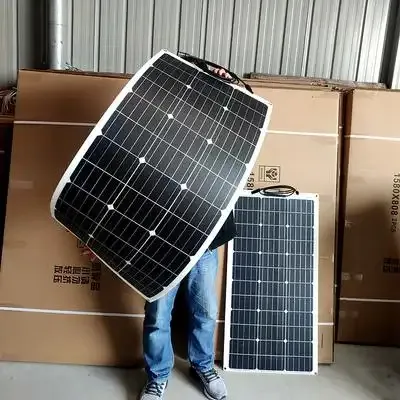
Shopping three wattages side by side is the fastest way to understand what actually changes when a flexible panel scales up. We build all three sizes on the same line, so the comparison below uses measured production data, not catalog estimates: the 100W measures 1,072 x 532 x 3.1 mm at 1.8 kg, the 200W measures 1,572 x 702 x 3.1 mm at 3.9 kg, and the 300W measures 1,745 x 870 x 3.1 mm at 5.5 kg. The rule: wattage scales the footprint almost linearly, but thickness stays at 3.1 mm across the whole range – which is why the biggest panel still rolls to a 30-degree curve.
The Three Panels, Measured, Not Estimated
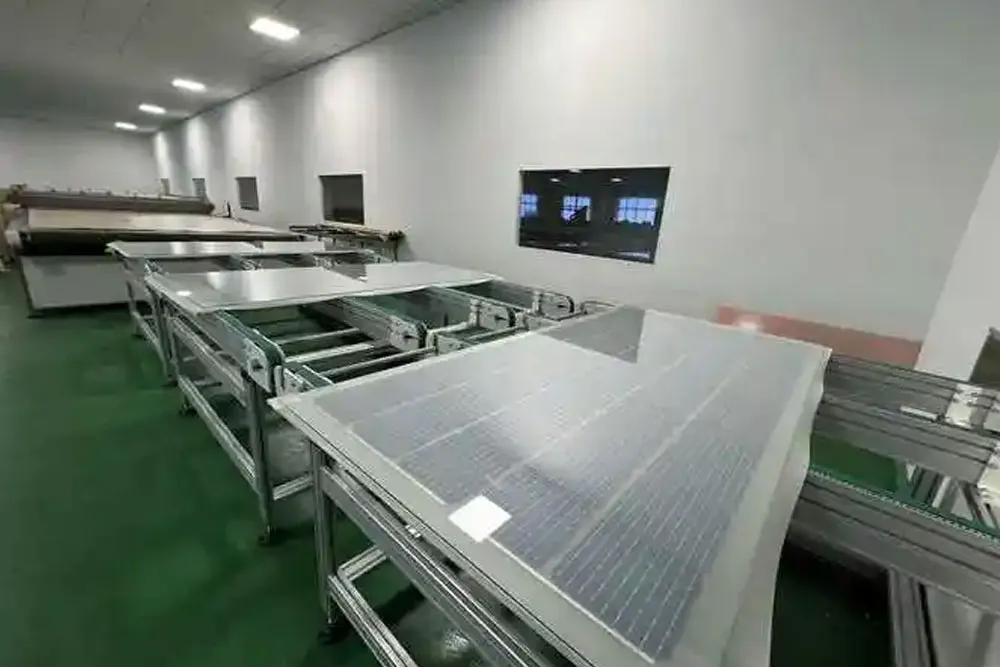
Every figure in this comparison comes from the finished-goods inspection bench, where each panel is weighed, measured and flash-tested before packing. The cell is the same 166 mm mono wafer across the range, with cells efficiency of 22.5 percent on the 100W and 200W builds and 24 percent on the 300W. Full construction detail lives on the product pages; the 200W sheet shows the DuPont ETFE front and S304 eyelets on the BS200-FT-M(E) product page.
| Model | Rated power | Vmp (Max working voltage) | Dimensions (mm) | Weight |
|---|---|---|---|---|
| BS100-FT-M(E) | 100W | 20.00V | 1072 x 532 x 3.1 | 1.8 kg |
| BS200-FT-M(E) | 200W | 18.00V | 1572 x 702 x 3.1 | 3.9 kg |
| BS300-FT | 300W | 28.00V | 1745 x 870 x 3.1 | 5.5 kg |
| Model | Cells efficiency | Warranty | Curve rating |
|---|---|---|---|
| BS100-FT-M(E) | 22.5% | 3 Years | 30% curve |
| BS200-FT-M(E) | 22.5% | 3 Years | 30% curve |
| BS300-FT | 24% | 3 Years | 30% curve |
Size and Roof Area: What Each Wattage Actually Covers
Multiply length by width and the three sizes cover 0.57, 1.10 and 1.52 square metres. On a typical camper van roof with roughly 6 square metres of usable flat area, a 200W plus a 100W occupies about 29 percent of it, while a single 300W takes 25 percent with only one module’s edge seal to maintain. The rule: larger panels give you more watts per centimetre of roof edge, because edge sealing – the most failure-prone zone of any flexible panel – scales with the perimeter, not the area.
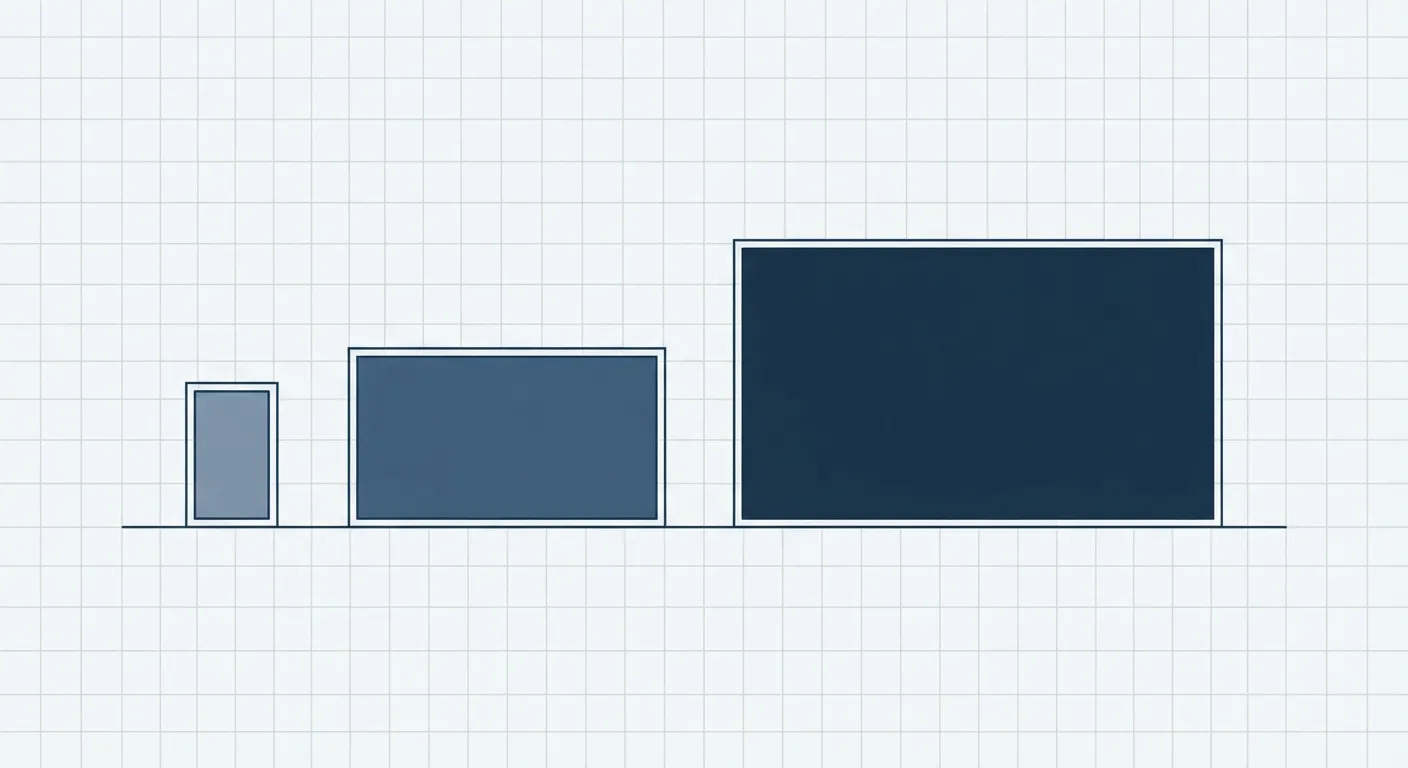
Where a 300W is too wide for the roof run, two 200W panels split the same wattage across two narrower footprints and clear roof fans and vents more easily. For larger roofs the line continues upward: the L Series model directory lists every model from 50W up to the 430W BS430-FT-M(E), all built on the same 3.1 mm laminate.

Weight and the Watts-per-Kilogram Trap
Weight is where flexible panels earn their name: 1.8, 3.9 and 5.5 kg translate to roughly 56, 51 and 55 watts per kilogram. Notice how little the ratio moves – unlike glass modules, where larger panels get heavier per watt, the ultra-thin laminate keeps power-to-weight almost flat across the range. The rule: plan by total roof load, not by panel count – four 100W panels (7.2 kg) and two 200W panels (7.8 kg) land within 600 grams of each other at the same wattage.
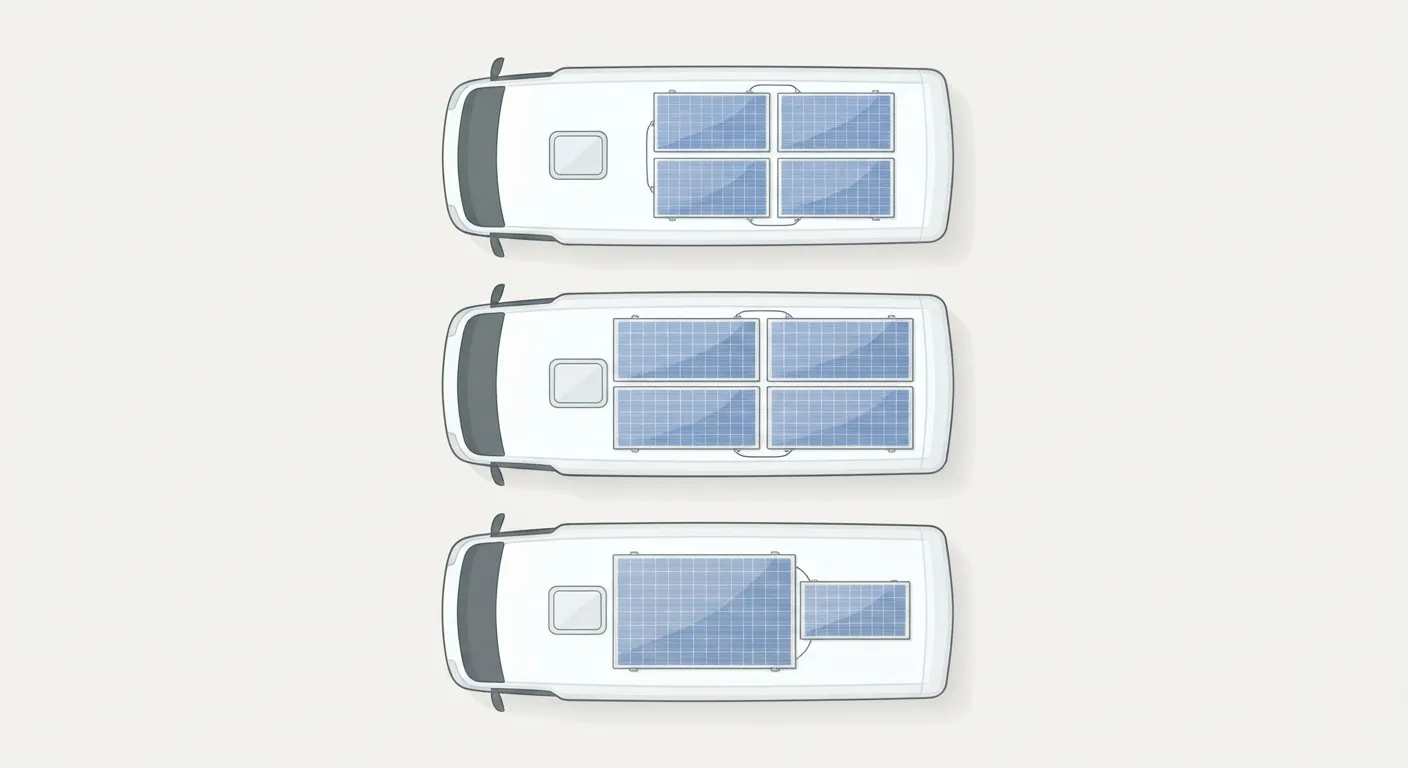
The real difference is the number of seams. Two 200W panels mean two edge-seal perimeters to inspect each season instead of four, and two adhesive pads to check instead of eight. Fewer, larger modules are the lower-maintenance choice wherever the roof surface stays flat enough for a 1.7-metre panel.
Voltage: Where the Three Sizes Diverge
Size is the boring part; voltage is where the engineering decision lives. The 100W runs at 20.00 V Vmp, the 200W at 18.00 V, and the 300W jumps to 28.00 V. The 100W and 200W sit in classic 12-volt territory and pair cleanly in parallel; the 300W’s 28 V working voltage is aimed at 24-volt banks, or at 12-volt systems through an MPPT controller that can down-convert efficiently. The rule: match panel voltage to the battery bank first and wattage second – a mismatched voltage wastes more energy than a mismatched wattage.
Because the currents differ more than the voltages suggest, cross-check the load math before you pick: the 200W chart is in How Many Amps Does a 200W Solar Panel Produce? (Chart), the 300W across 12/24/48-volt banks in How Many Amps Does a 300W Solar Panel Produce? (12/24/48V), and the 100W baseline in How Many Amps Does a 100 Watt Solar Panel Produce?.
Which Wattage Fits Which Build
| Build | Typical layout | Why it works | Weekender van (2 x 100Ah) |
|---|---|---|---|
| 2 x 100W | Small panels follow the curved roofline and clear the fan and vents | Full-time RV (600-800 Wh/day) | 2 x 200W |
| Half the seam count of four small panels, one size to spare-part | 24V boat or off-grid cabin | 1-2 x 300W | 28V Vmp feeds a 24V bank directly with fewer parallel strings |
| Large motorhome roof | 300W + 100W mix | The big panel carries the base load, the small one fills the leftover curve |
The 300W deserves one caution: at 1,745 mm long it needs a flat run, and a strongly curved deck should pick the 200W instead. Where weight matters more than anything – curved bimini frames, awnings, soft-top decks – the 100W at 1.8 kg is the only size that disappears into the profile.
FAQ
Can I mix 100W, 200W and 300W panels on one controller?
Yes, with a caveat: parallel strings want similar working voltages. A 100W (20.00 V) and a 200W (18.00 V) pair well on one MPPT input; adding a 300W (28.00 V) to the same string drags the pair down to the 300W’s curve. Put the 300W on its own MPPT channel or its own controller.
Is a 300W flexible panel harder to install than three smaller ones?
Usually easier: one panel means one adhesive layout, one cable pair and one edge seal to maintain, at 5.5 kg a two-minute two-hand lift. The constraint is the flat run – 1,745 mm of unbroken roof – not the handling.
Why is the 300W rated at 24 percent efficiency when the smaller sizes are 22.5 percent?
Cell sorting. The larger format is filled from the top bin of the 166 mm wafer stock, which lifts the finished module efficiency by about 1.5 points. Same cell family, tighter selection.
Do all three sizes carry the same warranty?
Yes – 3 Years across the range, backed by the same 16-step production flow and 11-point inspection. The warranty is voided by the same things at every size: punctures from rooftop traffic and adhesive applied over an unclean surface.
Conclusion: Measure the Roof First, Then Pick the Wattage
100W, 200W and 300W are not three products – they are one laminate at three footprints. Thickness stays at 3.1 mm, watts per kilogram stays near 55, and only the voltage really changes the system design: 20 V and 18 V for 12-volt banks, 28 V for 24-volt banks. The rule: measure your flat run and your battery bank voltage first, then let the wattage fill what is left. If the roof is an unusual curve, the custom solar panel process page shows how a between-sizes wattage gets built, and a 10-15 working-day sample settles the fit better than any spec table.
Related recommendations
-

800w flexible solar panel (Ultra High Power Off-Grid Energy System Guide from Bright Solar)
258800w flexible solar panel explained with real off grid field data, RV and marine case studies, installation insights, and system design performance analysis.
View details -
diy solar installation kits: What Actually Matters Before You Buy One
223Explore diy solar installation kits for RVs, cabins, boats, and homes. Learn real installation tips, wiring advice, costs, and mistakes to avoid.
View details -
Solar Panels for Cloudy Days Trailers: What You Need to Know
377Solar panels can still charge trailers on cloudy days, but output decreases with cloud cover. Proper sizing requires real weather data, daily energy use, roo...
View details -
Complete Solar Systems for Off Grid Living
376Design complete solar systems for off grid living with the right panels, batteries, inverter, and protection. Learn sizing, wiring, storage, and real-world system planning.
View details