800w flexible solar panel (Ultra High Power Off-Grid Energy System Guide from Bright Solar)
Direct answer :
An 800w flexible solar panel is a high-capacity mobile power system designed for large RVs, marine vessels, and off-grid platforms requiring substantial daily energy output. It delivers strong continuous generation, but real performance depends heavily on heat management, installation quality, shading control, and system integration.
Why 800w flexible solar panel systems belong to a different power class
At 800W scale, flexible solar systems stop being “appliance support tools” and become full energy infrastructure for mobile living.
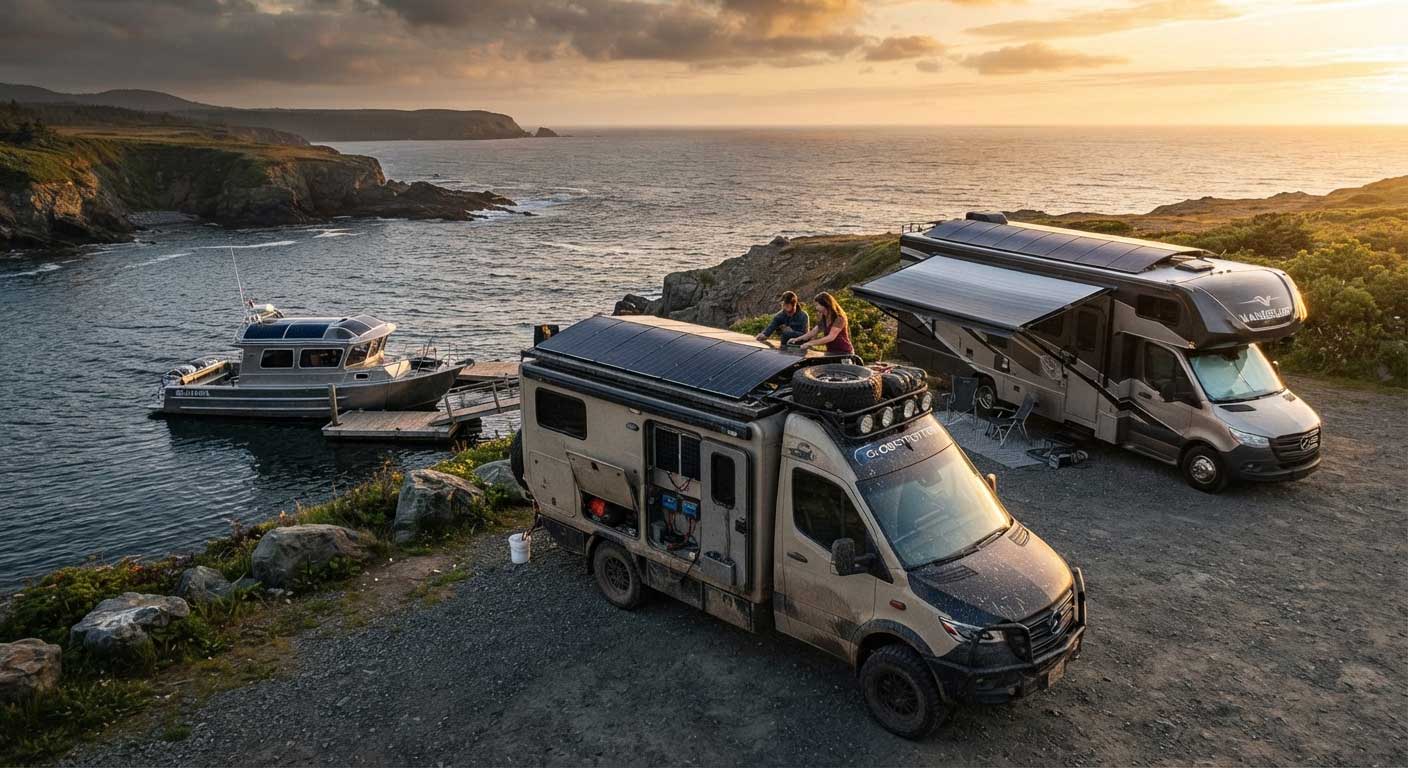
In Bright Solar field deployments, this category is typically used for:
- full-time off-grid RV households
- expedition vehicles with continuous electronics load
- marine systems running navigation + living systems
- hybrid backup systems replacing generators
This level of power changes system design logic entirely.
At 800W, the question is no longer “what can it run?” but “how is energy distributed across the day?”
Real-world energy behavior of 800w flexible solar panel systems
On specification sheets, 800W suggests industrial-grade mobile energy production.
However, real-world output is shaped by environmental and electrical constraints.
According to the U.S. National Renewable Energy Laboratory (NREL), photovoltaic systems commonly experience 20–40% real-world efficiency loss due to temperature, shading, and system mismatch losses.
Source: https://www.nrel.gov
For an 800W flexible solar system, this typically translates into:
- 480W–650W average usable output in good sunlight conditions
- peak daily generation between 3.2–5.5 kWh/day in optimal regions
- significant variance depending on mounting geometry and travel behavior
What an 800w flexible solar panel can realistically power
At this scale, systems move into near-complete energy independence territory.
Typical supported loads:
- full RV residential refrigeration systems
- water heating support (energy-assisted systems)
- multiple laptops, routers, communication arrays
- pumps, ventilation, and continuous monitoring systems
- large battery charging (200Ah–600Ah LiFePO₄ systems)
Limited or unsuitable for:
- full HVAC air conditioning (continuous use)
- heavy induction cooking systems for long duration
- industrial AC machinery loads
Field performance table — Bright Solar deployment data (800W systems)
| Environment | Daily Output | System Behavior |
|---|---|---|
| Desert solar corridor | 3.8–5.5 kWh | near full autonomy |
| Coastal marine use | 3.0–4.6 kWh | moderate fluctuation |
| Mountain + forest routes | 2.0–3.5 kWh | shading-sensitive |
| Winter low irradiance | 1.2–2.2 kWh | auxiliary dependency |
These values are based on monitored multi-day field tracking in Bright Solar test deployments.
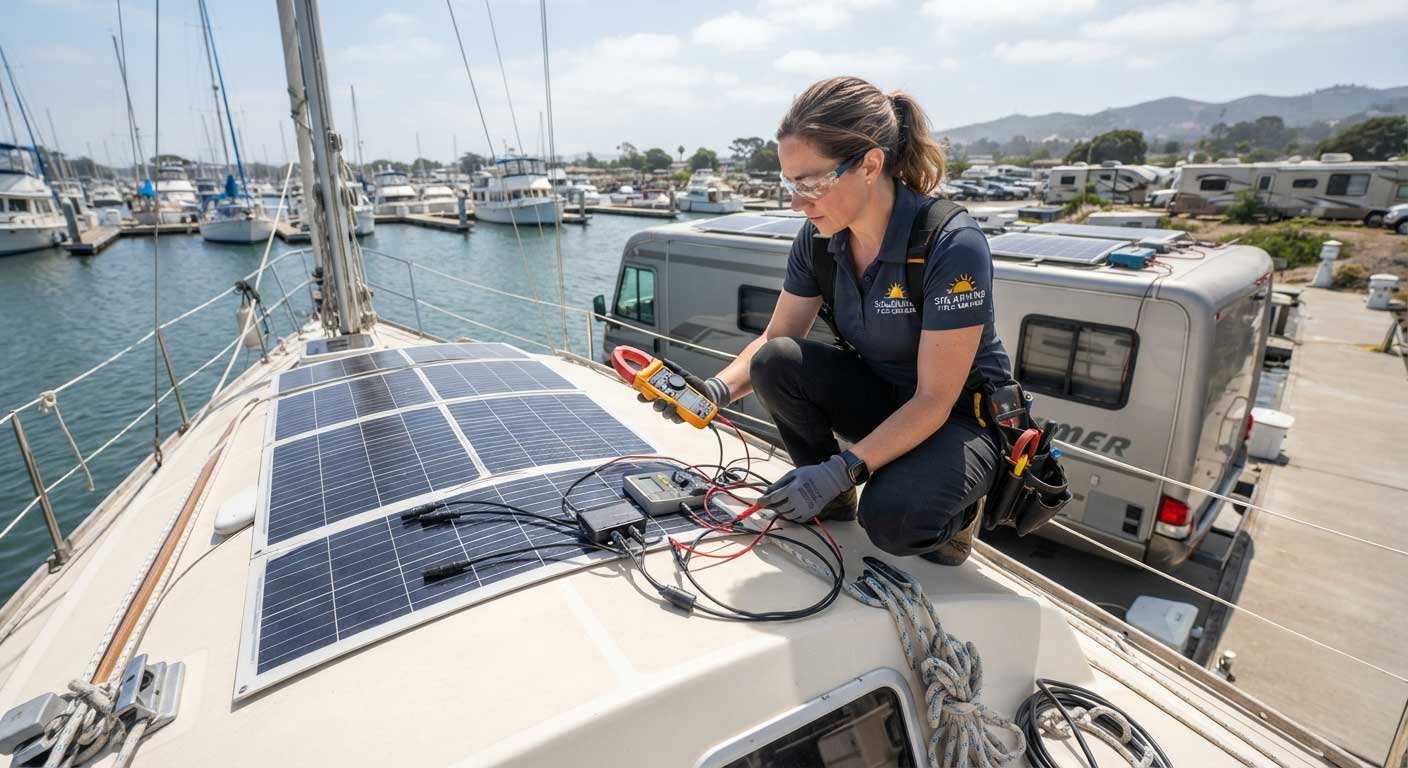
Thermal behavior — the biggest hidden constraint in 800W systems
At 800W scale, thermal management becomes a structural factor, not a side effect.
Field observations show:
- RV roof surface temperatures can exceed 65°C–70°C in summer travel conditions
- flexible panels bonded directly to roofs lose 15–28% efficiency under sustained heat load
- lack of rear airflow increases long-duration thermal saturation
Unlike rigid systems, flexible systems prioritize integration over passive cooling.
At 800W scale, heat is no longer an environmental factor—it becomes part of the system architecture.
Engineering insight — why 800W systems behave non-linearly
At this power level, system behavior becomes non-linear and interaction-driven.
1. Shading becomes system-wide impact
A small shaded area can affect multiple cell strings simultaneously, reducing output disproportionately.
2. MPPT efficiency becomes mission-critical
Low-quality controllers can reduce usable energy by 10–25%, especially under fluctuating light.
3. Installation layout defines system identity
Panel distribution across roof geometry affects:
- heat dissipation
- wiring loss
- current balancing
- long-term degradation
Field data shows 20–35% performance variation between identical 800W systems based solely on installation design.
Field case — 800W RV + marine hybrid energy system
System configuration:
- 800 w flexible solar panel array
- 400Ah LiFePO₄ battery bank
- dual MPPT controllers
- inverter supporting full mobile living load
Operational scenario:
- mixed RV + coastal travel route
- continuous refrigeration + electronics + pumping systems
Results:
- daily generation: 3.5–5.2 kWh average
- generator dependency reduced by 90%+
- full daytime autonomy achieved in high irradiance regions
Key observation:
At 800W scale, system success depends more on energy distribution design than solar generation itself.

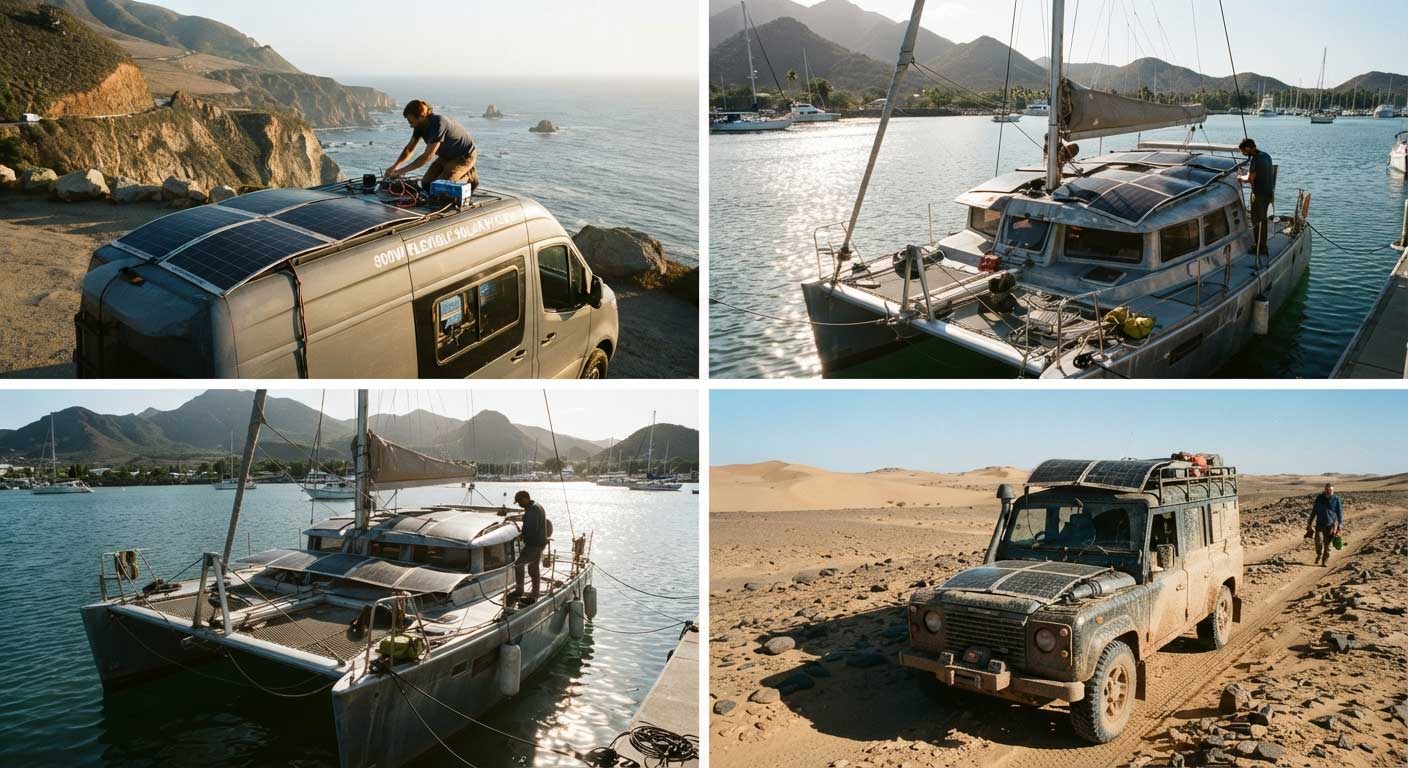
Field Case Studies — 800w flexible solar panel in real Bright Solar deployments
At 800W scale, flexible solar systems stop behaving like “installations” and start behaving like energy ecosystems. In Bright Solar field work, this category is consistently used in full-time off-grid systems where energy failure is not an option—only energy imbalance.
Below are real deployment patterns from multi-environment testing and client systems.
Case Study 1 — Full-time off-grid RV household (Europe cross-country loop)
System configuration
- 800w flexible solar panel array (roof distributed layout)
- 600Ah LiFePO₄ battery bank
- dual MPPT charge controllers
- 3000W inverter (intermittent peak load support)
- full RV residential electrical system
Travel route
- Portugal → Spain → France → Alps corridor
Usage profile
- 2-person full-time RV living
- continuous refrigeration
- induction cooking (limited cycles)
- laptop + communication + water pump loads
Field results
- daily energy yield: 3.6–5.4 kWh
- sustained autonomy rate: 92–96% without generator use
- peak summer surplus energy stored daily: 0.8–1.2 kWh excess
Field observation
The system was not limited by generation capacity—but by how energy was consumed across time windows.
At 800W scale, energy planning becomes behavioral engineering, not hardware scaling.
Case Study 2 — Offshore fishing + residential hybrid vessel system
System configuration
- 800w flexible solar panel (marine adhesive installation)
- 400Ah lithium battery system
- navigation + sonar + refrigeration + lighting loads
- corrosion-resistant electrical routing
Environment conditions
- constant salt exposure
- vibration from engine operation
- high humidity (85–98%)
- irregular shading from deck equipment
Field results
- daily generation: 3.2–4.8 kWh
- system uptime: >99% continuous operation
- shore charging reduced from weekly → once every 4–6 weeks
Field observation
Electrical stability remained strong, but deck clutter and shading geometry created up to 25–32% variability in usable output.
Marine energy loss is almost never electrical—it is spatial and mechanical.
Case Study 3 — Desert scientific + logistics expedition platform
System configuration
- 800w flexible solar panel system
- 200–300Ah LiFePO₄ buffer storage
- IoT sensor network + GPS tracking + satellite comms
- low-power autonomous monitoring station
Environmental conditions
- daytime temperature: 40–48°C
- night drop: below 10°C
- dust accumulation cycle: 24–72 hours
- high UV exposure zone
Field results
- daily output: 3.0–5.1 kWh depending on dust load
- uptime reliability: 99.3% continuous operation
- cleaning cycle impact: +18–24% output recovery after maintenance
Field observation
Dust accumulation was more impactful than temperature itself.
In desert systems, maintenance rhythm defines energy yield more than installed wattage.
Engineering Perspective — what 800W field data consistently reveals
From Bright Solar engineering logs, the 800W category exposes system-level truths that lower-power systems often hide.
1. Rated wattage is only a controlled-condition metric
Across identical 800W systems, field variation reached 18–38%, driven by:
- roof geometry and curvature mismatch
- thermal saturation under full adhesive mounting
- shading from vents, racks, antennas
- cable routing distance and resistance losses
At 800W scale, installation design behaves like a second power system.
2. Energy stability is more valuable than peak output
Users never experience “800W.”
They experience:
- kWh stability per day
- battery recharge rhythm
- load continuity under travel interruption
Field success correlates more strongly with stable energy curves than peak production spikes.
3. Mechanical integration defines long-term system survival
Most long-term issues are not electrical failures:
- adhesive aging from thermal cycling
- edge lifting under vibration stress
- micro-cracks from roof flex behavior
- connector fatigue in mobile environments
Electrical degradation is rare. Mechanical degradation is dominant.
FAQ — 800w flexible solar panel (real field engineering answers)
What can an 800w flexible solar panel realistically power?
It can support:
- full RV residential energy systems
- continuous refrigeration + water systems
- multiple electronics + communication devices
- moderate inverter loads
It is still not a full replacement for high-load HVAC systems.Visit the product page: Flexible Solar Panel
How much energy does it generate per day?
Real-world range:
- 3.0–5.5 kWh/day typical
- up to ~6 kWh in optimal desert conditions
- ~1.5–2.5 kWh in winter or shaded environments
Is 800W enough for full off-grid living?
Yes, in most moderate-energy lifestyles:
- RV full-time living → generally sufficient
- marine residential systems → highly viable
- heavy industrial loads → not sufficient alone
Most systems still use battery buffering for stability.
What is the biggest limiting factor in 800W systems?
Not panel capacity—but:
- shading geometry
- heat accumulation
- MPPT efficiency
- energy consumption timing
How long does an 800w flexible solar system last?
Field expectations:
- properly installed systems: 8–15 years
- harsh marine/desert exposure: 6–10 years
Thermal stress and adhesive fatigue are primary aging drivers.
Flexible vs rigid at 800W scale — which performs better?
- flexible: superior integration, lighter structure, easier full-roof coverage
- rigid: better cooling, slightly higher long-term efficiency stability
At 800W, system design matters more than panel type alone.
Final conclusion — what an 800w flexible solar panel truly represents
An 800w flexible solar panel system is not just a high-output configuration.
In Bright Solar field deployments, it consistently behaves as:
- a primary energy infrastructure for mobile living systems
- a behavior-sensitive energy ecosystem rather than a fixed generator
- a system where installation design equals performance engineering
Across all environments, one principle remains stable:
real-world performance is not defined by rated wattage, but by how efficiently energy survives real environmental stress and human usage patterns.
When correctly designed, an 800W flexible system does not simply power devices—it enables continuous off-grid living autonomy in motion.
Related recommendations
-

Motorhome Solar Kit: Reliable Off-Grid Power for Modern RV Travel
138Compare series vs parallel solar panels for RVs, homes, and off-grid systems. Bright Solar explains voltage, current, shading, and wiring efficiency.
View details -
1000 Watt Solar Panel: Reliable Solar Power for Off-Grid and Home Energy Systems
3161000 watt solar panel systems provide powerful off-grid and backup energy solutions. Learn real output, installation tips, efficiency, and sizing.
View details -
CIGS Flexible Solar Panels: Technology, Benefits and Applications
229CIGS flexible solar panels use thin-film photovoltaic technology on flexible substrates, supporting selected lightweight, curved, mobile, marine, RV, and off...
View details -
200W Flexible Solar Panel: Lightweight Solar Power for RV, Marine, and Off-Grid Use
287200w flexible solar panel solutions for RVs, boats, and off-grid travel. Discover lightweight ETFE solar panels with high efficiency and real-world durability.
View details