How many amps does 300 watt solar panel produce?
How many amps does 300 watt solar panel produce?
A 300 watt solar panel produces about 10–25 amps depending on its operating voltage. For a common 12V solar system, a 300W panel produces approximately 20–25 amps, while a 24V system produces around 10–13 amps.
At Bright Solar, I often calculate current output before designing RV, marine, and off-grid solar systems. Wattage alone does not tell the complete story. The same 300W panel can deliver different amp levels depending on voltage, sunlight conditions, temperature, and controller efficiency.
The basic relationship is simple:
Watts = Volts × Amps
Understanding this calculation helps users select the correct charge controller, battery size, and wiring system.
How do you calculate amps from a 300 watt solar panel?
The formula to calculate current is:
Amps = Watts ÷ Volts
For a 300W solar panel:
In a 12V system:
300W ÷ 12V = 25 amps
In a 24V system:
300W ÷ 24V = 12.5 amps
In a 48V system:
300W ÷ 48V = 6.25 amps
However, solar panels rarely operate at their maximum rated output all day.
Real-world output is affected by:
- Sunlight intensity
- Panel temperature
- Installation angle
- Solar controller efficiency
- Cable losses
A 300W panel rated at 25 amps may commonly produce 15–22 amps during normal daytime operation.
What is the typical amp output of a 300W solar panel?
Most 300W solar panels have electrical specifications similar to:
| Specification | Typical Value |
|---|---|
| Rated Power | 300W |
| Operating Voltage (Vmp) | 30–36V |
| Operating Current (Imp) | 8–10A |
| Open Circuit Voltage (Voc) | 36–45V |
| Short Circuit Current (Isc) | 9–11A |
Modern solar panels usually operate at higher voltages than traditional 12V batteries.
For example:
A 300W monocrystalline solar panel may have:
- Vmp: 32V
- Imp: 9.4A
Calculation:
32V × 9.4A = 300.8W
This means the panel physically produces around 9–10 amps at its operating voltage, but after a charge controller reduces the voltage for battery charging, the current increases.
This difference often confuses new solar users.
Why does a 300 watt solar panel not always produce 25 amps?
Many people assume:
300W panel = 25 amps
because:
300W ÷ 12V = 25A
However, this calculation only applies when the panel output is converted into a 12V battery charging system.
A solar panel itself usually operates at a higher voltage.
For example:
Solar panel output:
- 32V
- 9.4A
After MPPT charge controller:
Battery charging voltage:
- 14V
Current:
300W ÷ 14V ≈ 21.4A
The MPPT controller changes the voltage and current relationship while maintaining energy output.
According to National Renewable Energy Laboratory (NREL) Photovoltaic Research Program, photovoltaic system performance depends on module characteristics, operating conditions, and balance-of-system components.
How many amps does a 300W solar panel produce for battery charging?
For battery charging applications, the output depends on battery voltage.
Example:
12V battery system
A 300W solar panel:
300W ÷ 13.8V charging voltage
≈ 21.7 amps
24V battery system
300W ÷ 27.6V charging voltage
≈ 10.8 amps
48V battery system
300W ÷ 54V charging voltage
≈ 5.5 amps
Actual charging current changes throughout the day.
Morning:
- Lower sunlight
- Lower current output
Midday:
- Highest solar production
- Maximum charging current
Evening:
- Reduced output
During system design, I usually avoid sizing equipment exactly at the maximum rating. Leaving additional capacity improves reliability during hot weather and cloudy conditions.
What factors affect the amps produced by a 300 watt solar panel?
The rated amp output is measured under standard test conditions (STC).
Real installations are different.
Sunlight availability
More sunlight increases current production.
Factors include:
- Weather
- Season
- Location
- Shading
A panel receiving full direct sunlight will produce significantly more current than one partially covered by shadows.
Panel temperature
Solar panels lose efficiency as temperatures rise.
For rooftop installations, especially in hot climates, actual current and voltage can differ from laboratory ratings.
Solar controller type
The charge controller affects usable current.
Comparison:
| Controller Type | Performance |
|---|---|
| PWM Controller | Lower efficiency |
| MPPT Controller | Higher energy conversion |
MPPT controllers are commonly preferred for larger solar panels because they can extract more available power.
Can a 300 watt solar panel run a 12V system?
Yes, a 300W solar panel can work with a 12V system when paired with the correct charge controller and battery.
Typical setup:
| Component | Example |
|---|---|
| Solar Panel | 300W |
| Battery | 12V lithium battery |
| Charge Controller | 30A MPPT controller |
| Inverter | 500W–1000W |
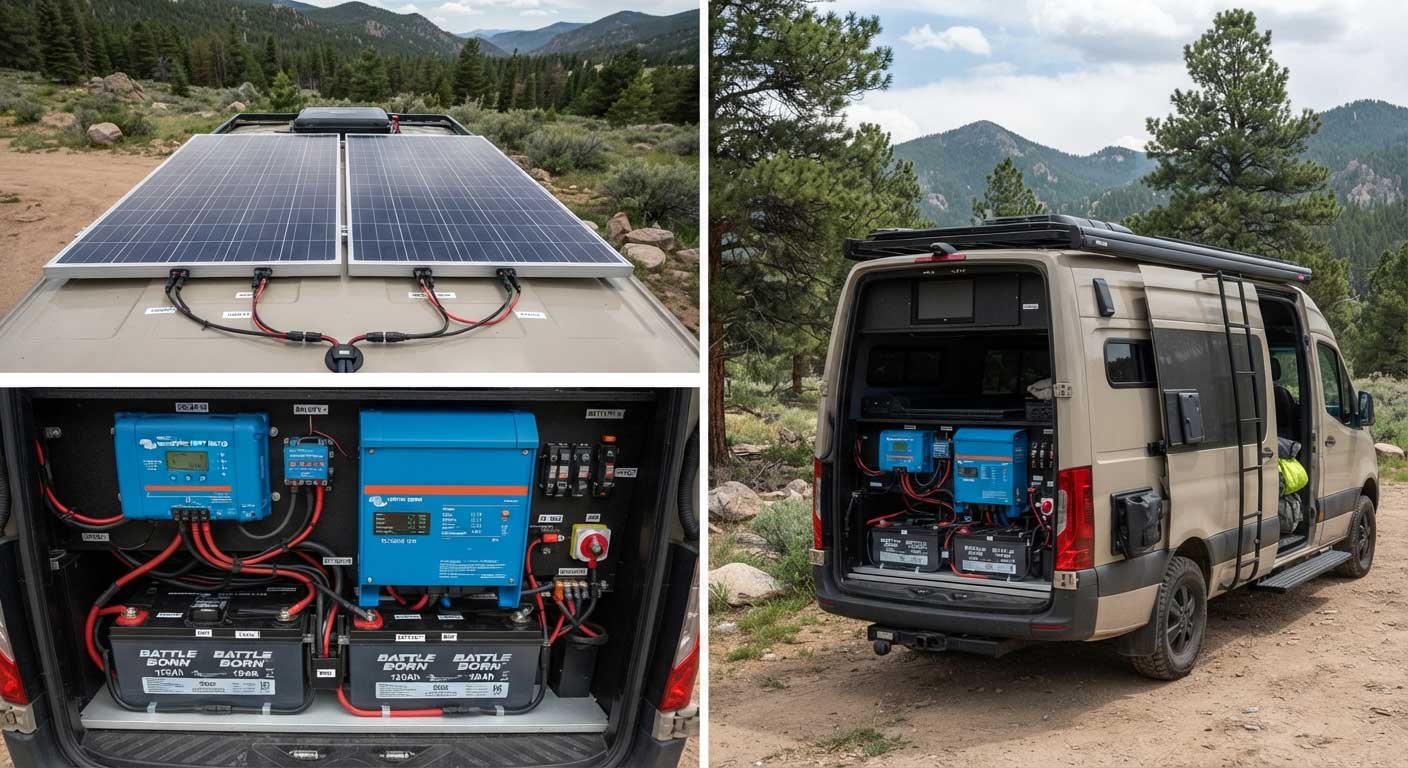
A 300W panel is commonly used for:
- RV solar systems
- Camper vans
- Marine applications
- Small off-grid cabins
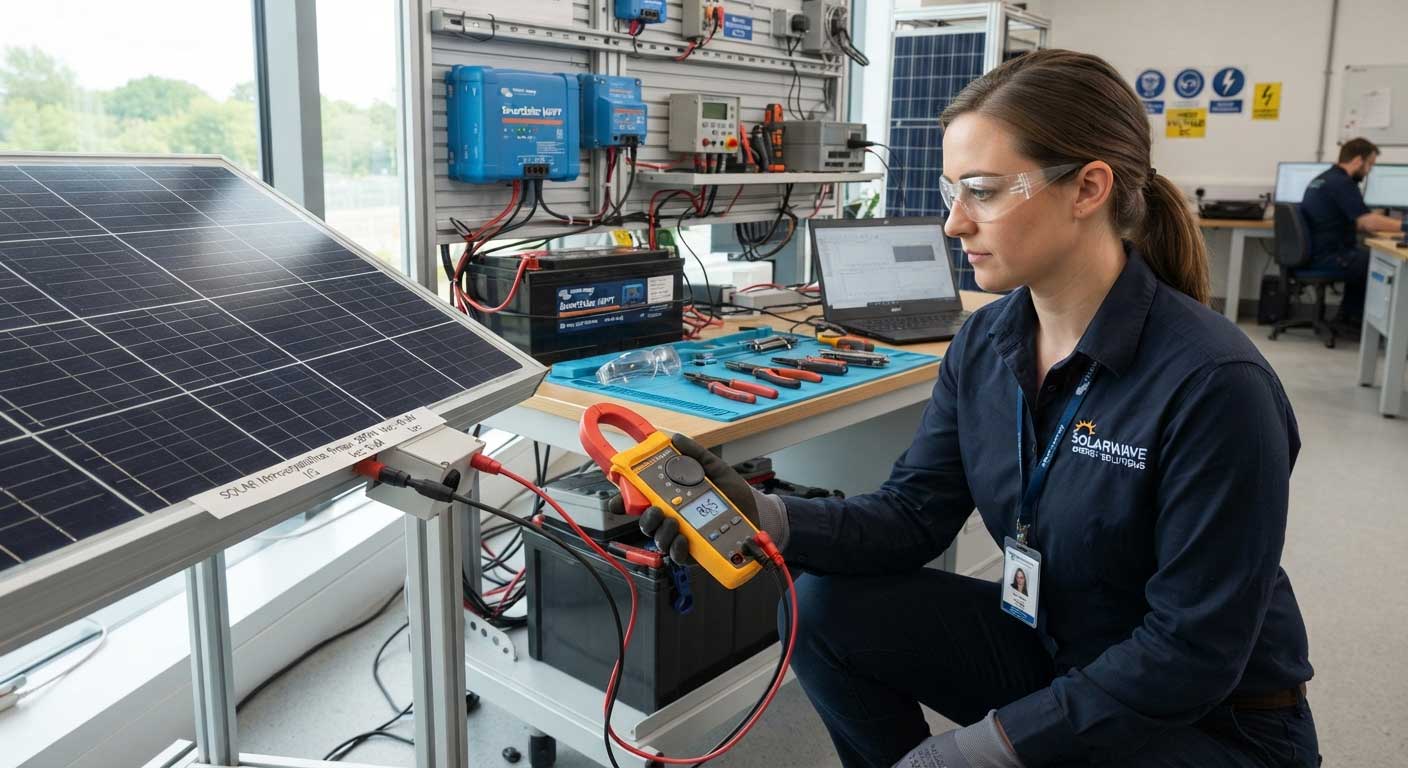
For mobile systems, current calculation is especially important because battery charging speed depends directly on available amps.
What size charge controller is needed for a 300W solar panel?
The charge controller size depends on system voltage.
For a 12V battery:
300W ÷ 12V = 25A
A 30A MPPT charge controller is commonly recommended.
For a 24V battery:
300W ÷ 24V = 12.5A
A 15A–20A controller may be suitable.
However, installers often choose slightly larger controllers to allow future expansion.
A properly sized controller helps prevent:
- Overcharging
- Energy loss
- System overheating
How does a 300 watt solar panel compare to other solar panel amp outputs?
Solar panel wattage directly affects potential current output, but voltage determines the actual amp level.
Comparison:
| Solar Panel Power | Typical Operating Current |
|---|---|
| 100W Solar Panel | 3–6 amps |
| 200W Solar Panel | 6–10 amps |
| 300W Solar Panel | 8–10 amps |
| 400W Solar Panel | 10–13 amps |
| 500W Solar Panel | 12–15 amps |
A higher wattage panel does not always produce dramatically higher amps because modern panels often operate at higher voltages.
For example:
A 300W panel may produce:
- Around 9A at 33V
A 500W panel may produce:
- Around 13A at 38V
The key difference is total power output, not only current.
How many amps does a 300 watt solar panel produce in winter?
A 300W solar panel can produce fewer amps during winter because solar conditions change.
Factors affecting winter output:
- Shorter daylight hours
- Lower sun angle
- Snow coverage
- Cloudy weather
However, colder temperatures can sometimes improve panel voltage performance.
Example:
Summer day:
- Solar output: 250–300W
- Current: 18–22A charging a 12V battery
Winter cloudy day:
- Solar output: 100–180W
- Current: 7–13A charging a 12V battery
The actual result depends heavily on location.
A properly designed system should consider seasonal changes instead of only using peak summer performance.
Can two 300 watt solar panels produce more amps?
Yes. Connecting two 300W solar panels increases available power to 600W, but the amp output depends on how they are connected.
Parallel connection
Current increases while voltage remains similar.
Example:
One panel:
- 32V
- 9.5A
Two panels in parallel:
- 32V
- 19A
Common advantages:
- Higher charging current
- Suitable for battery systems
Series connection
Voltage increases while current remains similar.
Example:
One panel:
- 32V
- 9.5A
Two panels in series:
- 64V
- 9.5A
Common advantages:
- Lower cable losses
- Better for longer cable distances
The correct connection depends on the inverter, charge controller, and battery voltage.
How many batteries can a 300 watt solar panel charge?
A 300W solar panel can charge different battery sizes depending on daily sunlight and energy usage.
Example with a 12V lithium battery:
Energy production:
300W × 5 peak sun hours
≈ 1500Wh/day
Battery capacity:
| Battery Size | Charging Capability |
|---|---|
| 50Ah 12V battery | Easy charging |
| 100Ah 12V battery | Common application |
| 200Ah 12V battery | Requires longer charging time |
A 300W panel is commonly paired with:
- 100Ah lithium batteries
- 200Ah battery banks
- Small off-grid energy storage systems
Battery charging speed depends on:
- Battery chemistry
- Depth of discharge
- Solar conditions
- Controller efficiency
How many amps does a 300 watt flexible solar panel produce?
A flexible 300W solar panel produces similar electrical output to a rigid 300W panel.
Typical specifications:
| Flexible 300W Panel | Value |
|---|---|
| Operating Voltage | 30–36V |
| Operating Current | 8–10A |
| Weight | Lower than rigid panels |
The main difference is construction.
Flexible panels are designed for applications where traditional rigid modules are difficult to install.
Common uses:
- RV curved roofs
- Boats
- Tiny homes
- Portable systems
Bright Solar flexible solar panels are designed for lightweight installations where reducing weight and improving mounting flexibility are priorities.Visit the product page: Flexible Solar Panels
FAQ About how many amps does 300 watt solar panel produce?
How many amps does a 300 watt solar panel produce?
A 300W solar panel typically produces around 8–10 amps at its operating voltage. When charging a 12V battery, output may increase to approximately 20–25 amps after voltage conversion.
How many amps does a 300W solar panel produce at 12 volts?
A 300W panel connected to a 12V battery system can produce around 20–25 amps under ideal conditions.
Can a 300W solar panel charge a 12V battery?
Yes. A 300W solar panel can charge a 12V battery using a suitable MPPT charge controller.
What size MPPT controller do I need for a 300 watt solar panel?
For a 12V system, a 30A MPPT controller is commonly recommended. For a 24V system, a smaller controller may be sufficient.
Does a 300W solar panel always produce 300 watts?
No. The rated 300W output is measured under standard test conditions. Actual production changes with sunlight, temperature, and installation conditions.
How many amps does a 300W solar panel produce on a cloudy day?
On cloudy days, output can drop significantly. A 300W panel may produce only 20–60% of its rated power depending on weather conditions.
Are higher watt solar panels better because they produce more amps?
Not always. Higher wattage panels produce more total energy, but system voltage, efficiency, installation space, and application requirements also matter.
Final Thoughts: How many amps does a 300 watt solar panel produce?
The answer to how many amps does 300 watt solar panel produce depends on voltage, system design, and operating conditions. A typical 300W solar panel produces around 8–10 amps at its rated operating voltage, while a 12V battery charging system may receive approximately 20–25 amps after conversion.
From my experience working with Bright Solar systems, understanding amps is essential when selecting charge controllers, batteries, and wiring. A correctly calculated solar system performs better, avoids unnecessary losses, and provides more reliable energy.
Whether used for RVs, marine applications, or off-grid homes, a 300W solar panel can provide practical power when matched with the right electrical design.
Related recommendations
-

How Much Solar Panel Can Produce Energy?
189How much solar panel can produce energy? Learn how solar panel wattage, sunlight hours, efficiency, and location determine daily and annual electricity generation with Bright Solar.
View details -
How To Set Up Solar Panel System At Home Off Grid?
107How to set up solar panel system at home off grid? Learn off-grid solar design, battery sizing, installation steps, and expert tips from Bright Solar.
View details -
Can Solar Panels Store Energy?
89No. Solar panels generate electricity but do not store it. A separate battery system can store surplus solar energy for later use.
View details -
How Many Volts Should a 100 Watt Solar Panel Produce?
233How many volts should a 100 watt solar panel produce? Learn normal voltage ranges, open circuit voltage, operating voltage, and solar testing insights.
View details