
Solar Panel Voltage vs Current Explained: Understanding Volts, Amps, and Power
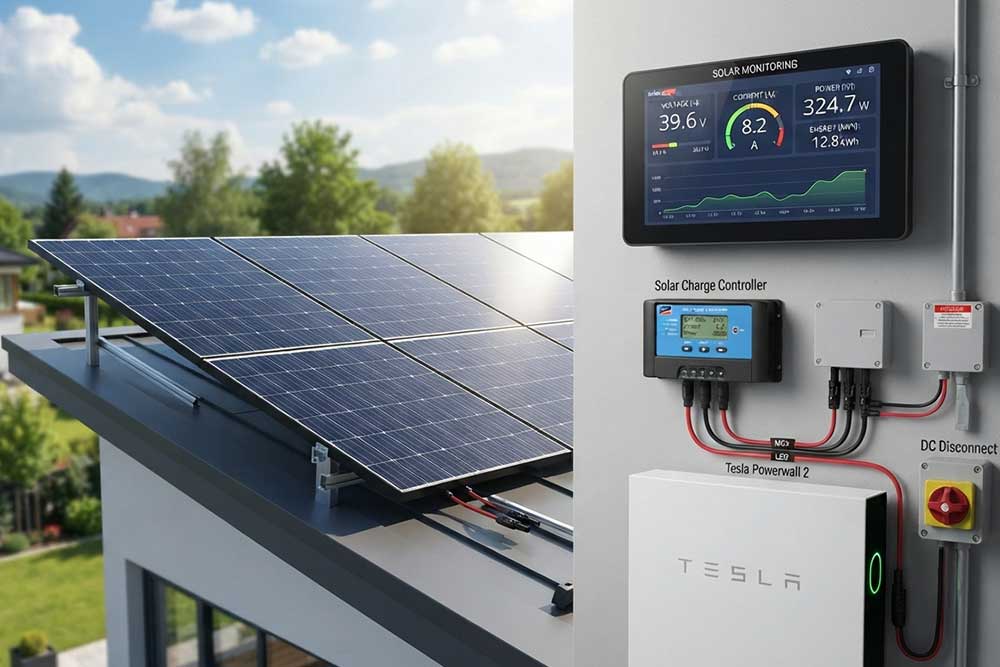
Solar panel voltage vs current explained means understanding the difference between electrical pressure (voltage) and electrical flow (current). Voltage determines how much electrical force a solar panel produces, while current represents the amount of electricity flowing. Together, voltage and current determine total solar power output.
Solar panels generate electricity by converting sunlight into DC power, but the performance of a solar system depends on more than just wattage.
Understanding the relationship between voltage, current, and power helps you choose the right:
- Solar panel configuration
- Charge controller
- Battery system
- Wiring method
At Bright Solar, we often see customers compare solar panels only by wattage while overlooking voltage and current ratings. For reliable system design, these electrical values must work together.
What Is Solar Panel Voltage?
Solar panel voltage represents the electrical pressure produced by a photovoltaic module.
It determines how strongly electricity can move through a solar system.
The main voltage values shown on solar panel specifications include:
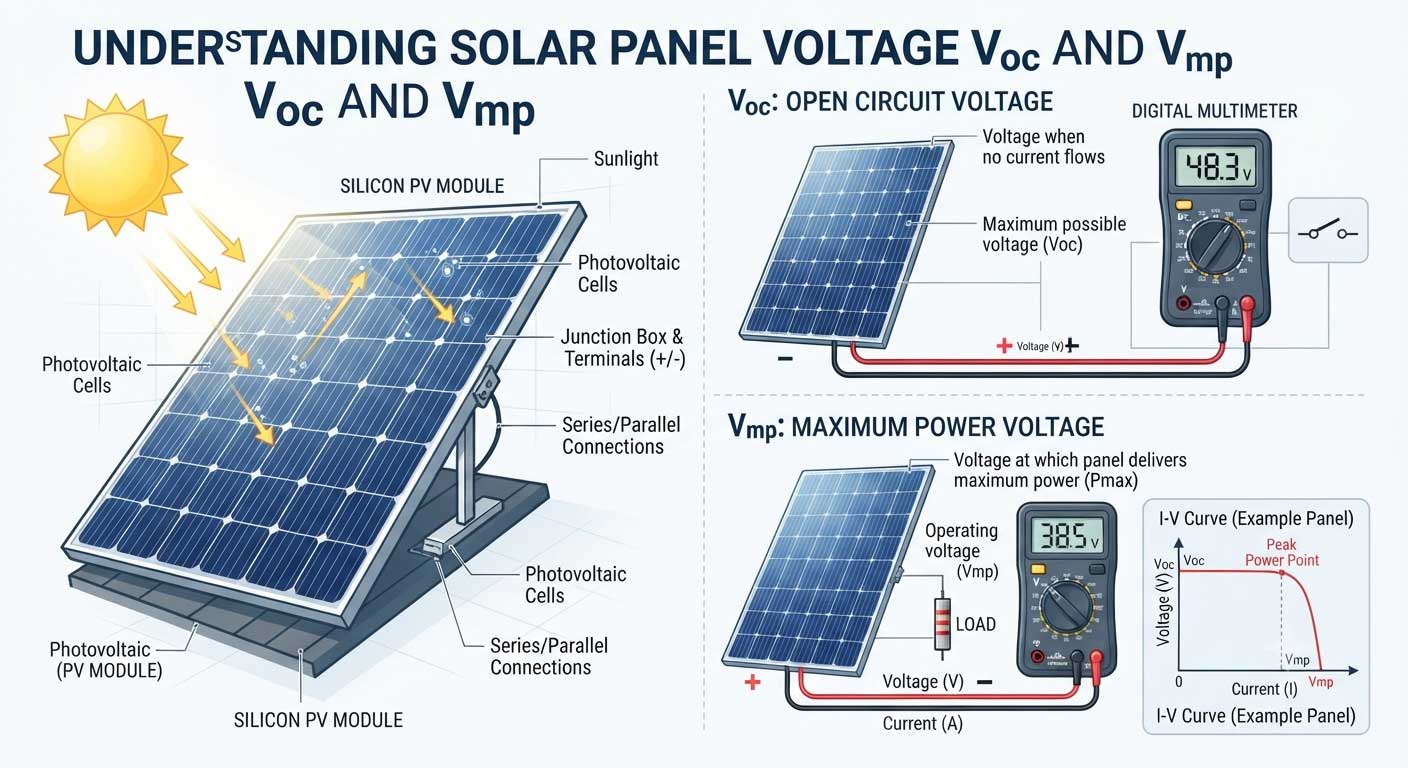
Open Circuit Voltage (Voc)
Voc is the maximum voltage a solar panel produces when it is not connected to a load.
Characteristics:
- Highest possible panel voltage
- Used for system safety calculations
- Important when designing series connections
Example:
A solar panel:
Voc:
40V
Three panels connected in series:
40V × 3 = 120V
The total string voltage increases.
Maximum Power Voltage (Vmp)
Vmp is the voltage when the solar panel operates at its maximum power output.
It is usually lower than Voc.
Example:
Solar panel specifications:
Voc:
40V
Vmp:
32V
The panel normally operates around:
32V
during energy production.
What Is Solar Panel Current?
Solar panel current represents the amount of electrical flow produced by the panel.
Current is measured in:
Amps (A)
Common current values include:
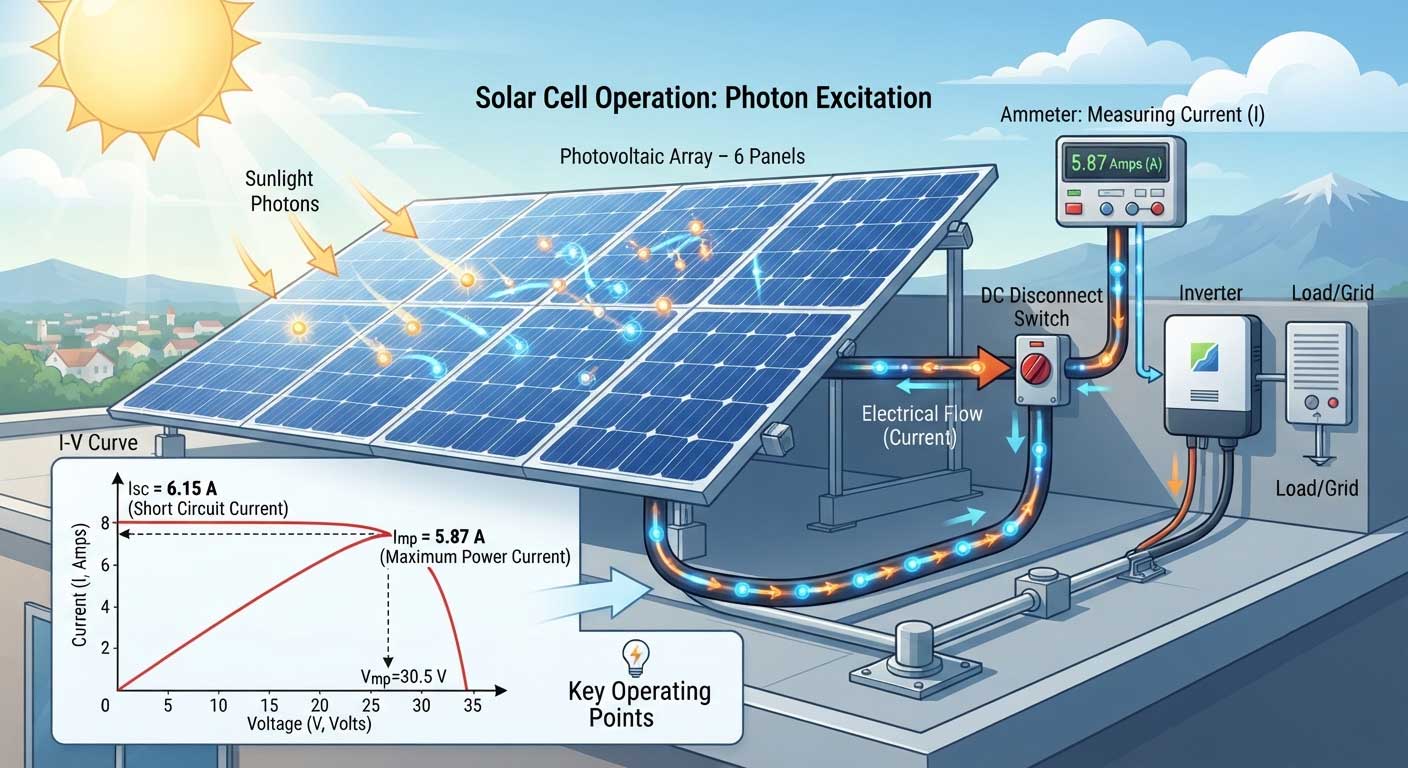
Short Circuit Current (Isc)
Isc is the maximum current produced when the panel terminals are shorted.
It is used for:
- Safety calculations
- Fuse sizing
- System protection
Maximum Power Current (Imp)
Imp represents the current when the solar panel produces maximum power.
Example:
Solar panel:
Vmp:
32V
Imp:
10A
Power:
32V × 10A
=
320W
This is the operating current used for power calculations.
Relationship Between Voltage, Current, and Wattage
Solar power output depends on the relationship between voltage and current.
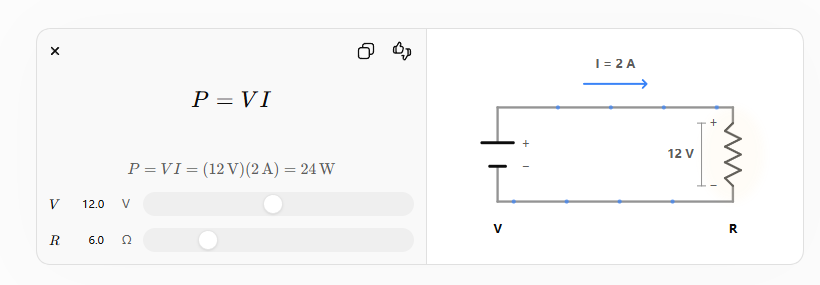
The basic formula is:
Power (W) = Voltage (V) × Current (A)
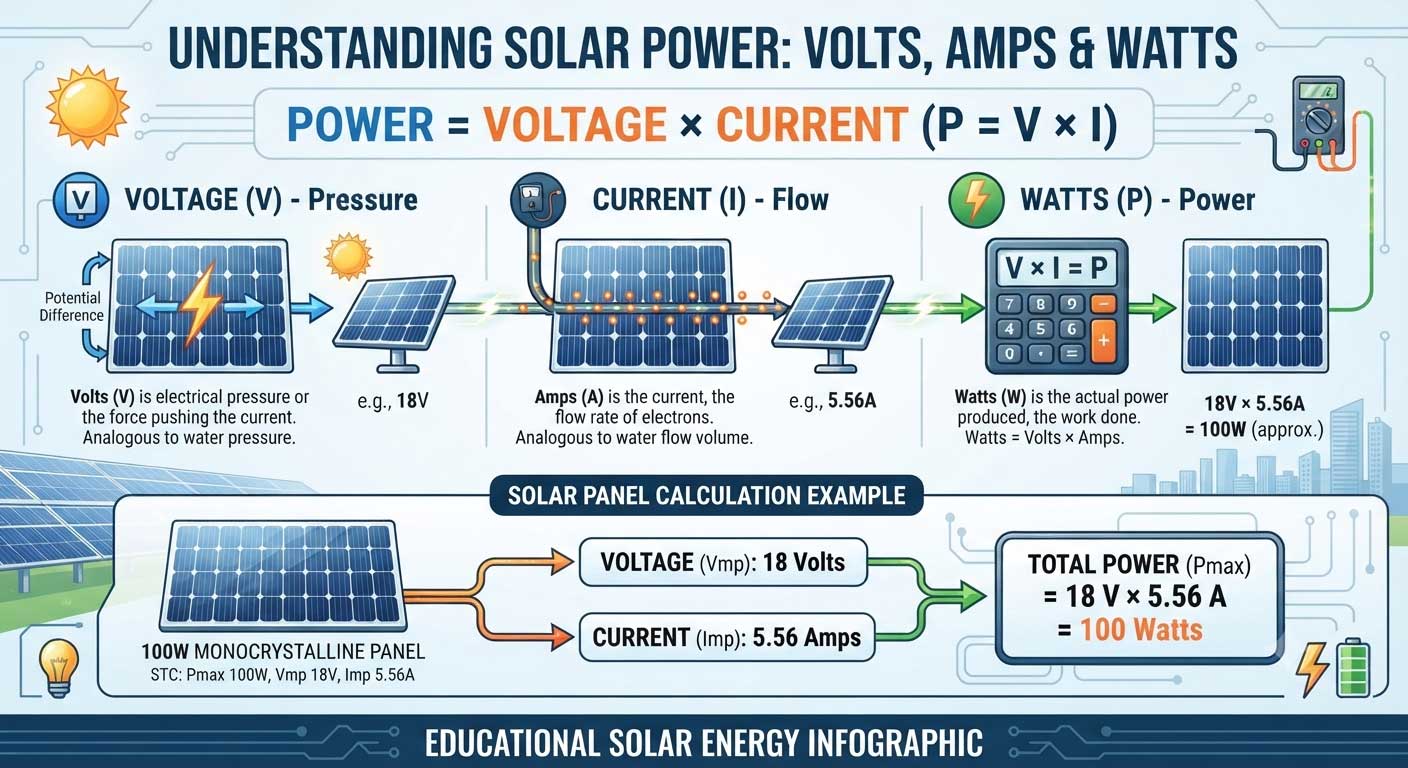
Example:
Solar panel:
Voltage:
30V
Current:
10A
Power:
30V × 10A
=
300W
This means increasing either voltage or current can increase total power output.
However, how voltage and current change depends on how solar panels are connected.
Solar Panels in Series: Voltage Increases
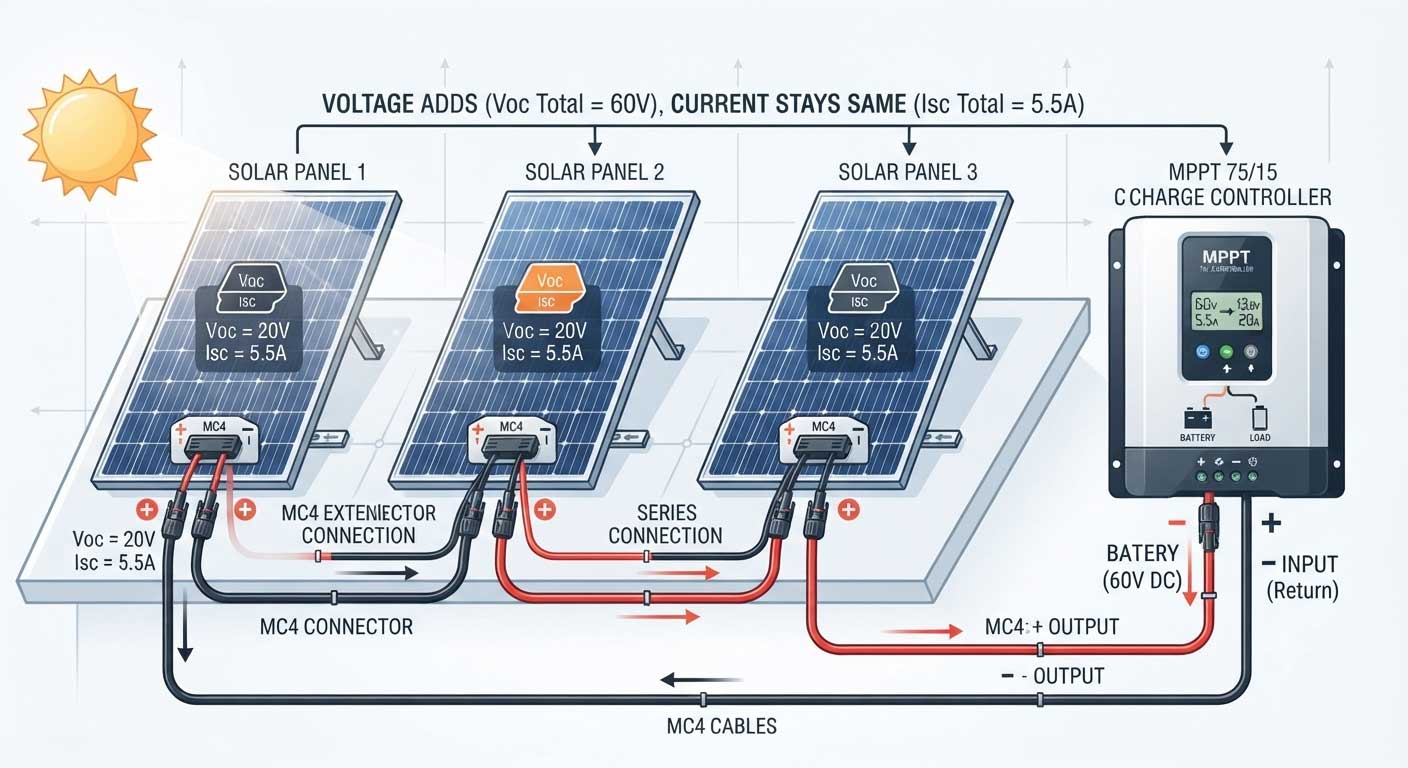
When solar panels are connected in series:
- Voltage increases
- Current stays the same
Example:
One panel:
30V
10A
Three panels in series:
Voltage:
30V × 3
=
90V
Current:
10A
Total power:
90V × 10A
=
900W
Series wiring is commonly used with MPPT charge controllers because higher voltage allows efficient energy transfer over longer cable distances.
Solar Panels in Parallel: Current Increases
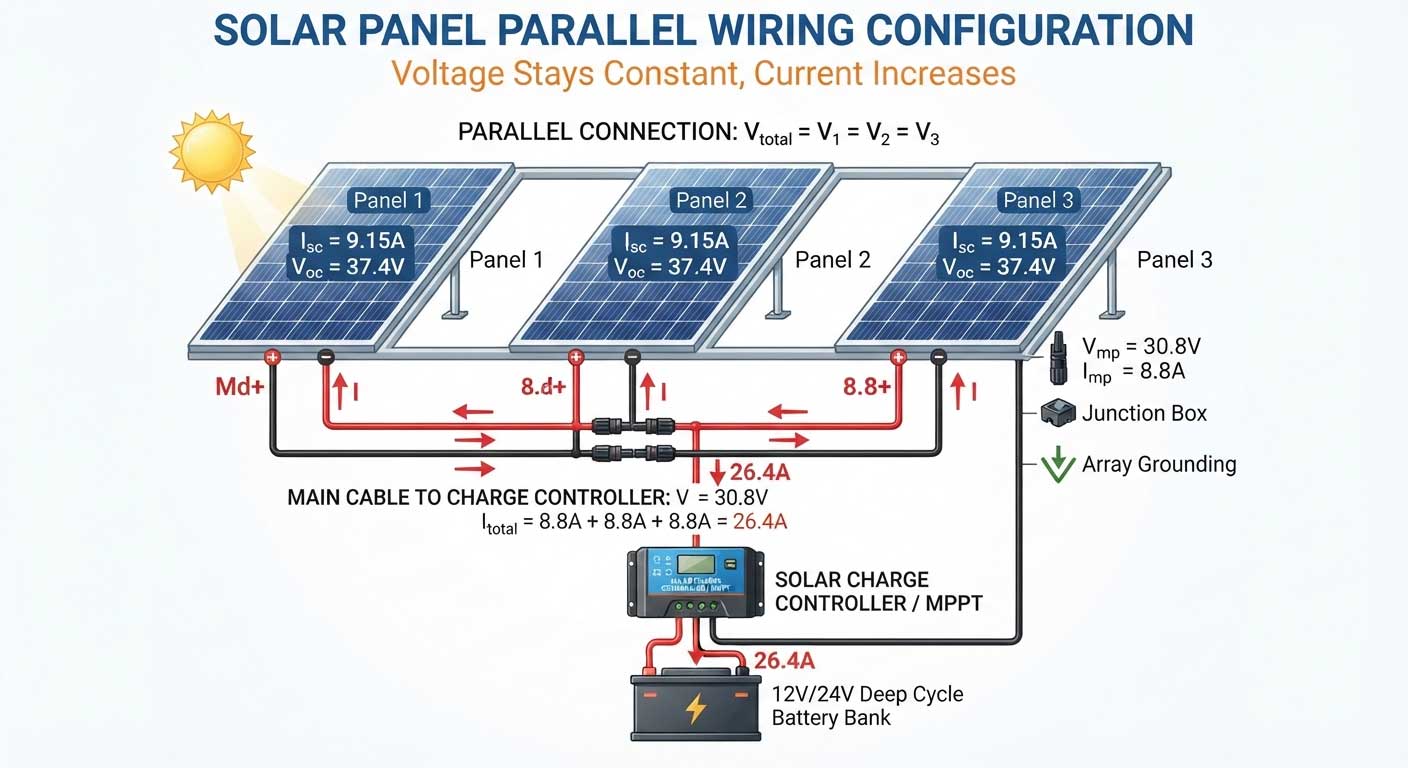
When solar panels are connected in parallel:
- Voltage stays the same
- Current increases
Example:
One panel:
30V
10A
Three panels in parallel:
Voltage:
30V
Current:
10A × 3
=
30A
Total power:
30V × 30A
=
900W
Parallel wiring is often used when maintaining the same system voltage is important.
Common applications:
- RV solar systems
- Small off-grid systems
- Portable solar setups
Voltage vs Current: Key Differences in Solar Panels
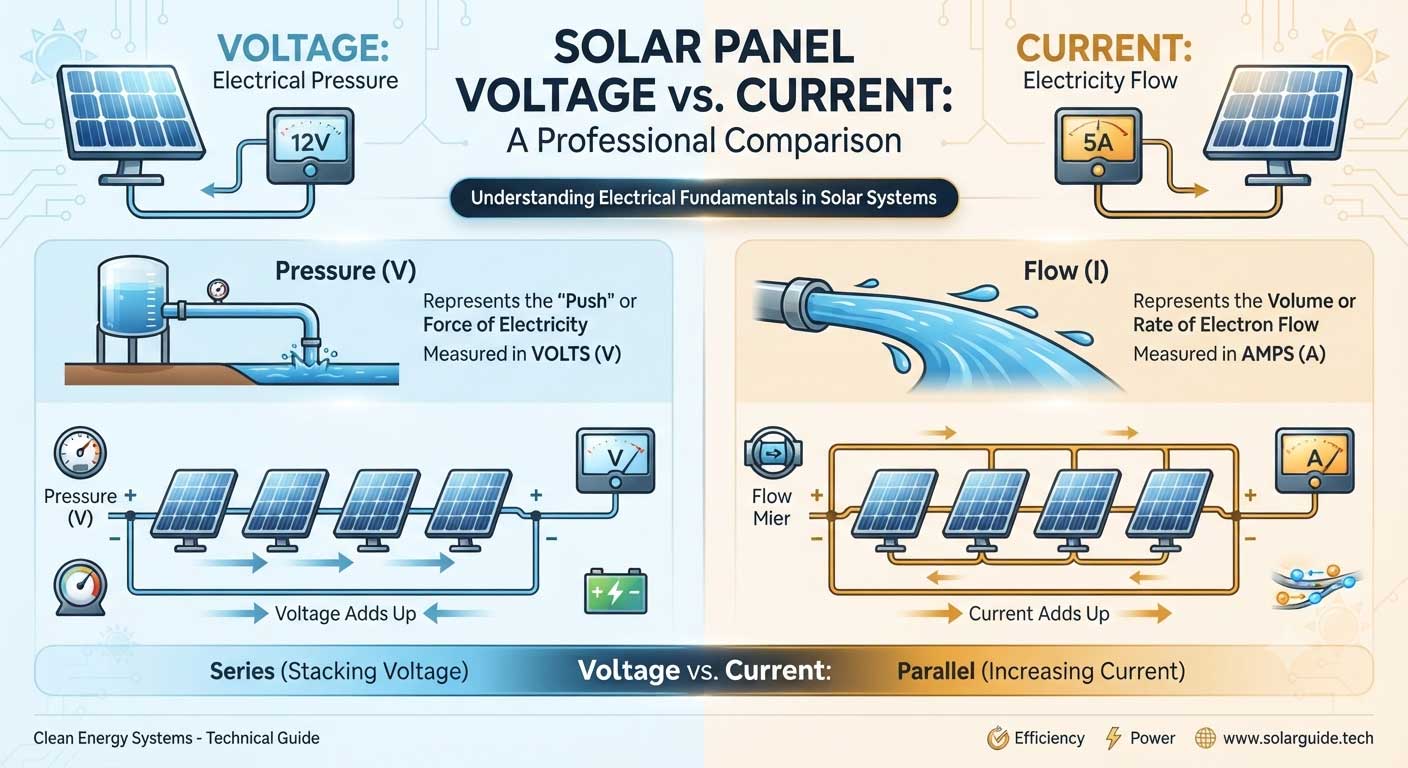
| Feature | Voltage | Current |
|---|---|---|
| Measurement | Volts (V) | Amps (A) |
| Meaning | Electrical pressure | Electricity flow |
| Increased by | Series connection | Parallel connection |
| Main concern | Equipment voltage limits | Cable size and current capacity |
| Affects | System voltage | Wire requirements |
Understanding this difference is essential when designing solar panel wiring.
Why Higher Voltage Solar Systems Are More Efficient
Higher voltage systems can reduce current requirements.
Electrical losses are affected by current:
Power Loss = Current² × Resistance
This means reducing current can reduce energy loss in cables.
For example:
A 1000W solar system:
Low voltage:
20V
50A
Higher voltage:
100V
10A
The higher-voltage system uses less current, which can reduce cable losses.
This is why many larger solar systems use:
- Series-connected panels
- MPPT controllers
- Higher DC voltage designs
How Voltage and Current Affect Solar Charge Controllers
Solar charge controllers have limits for:
- Maximum PV voltage
- Maximum charging current
Choosing the wrong combination can cause:
- Controller shutdown
- Reduced efficiency
- Equipment damage
MPPT Controllers and Voltage
MPPT controllers can accept higher solar input voltage.
They convert excess voltage into additional charging current.
Advantages:
- Better energy harvesting
- More flexible panel configurations
- Suitable for series solar panels
PWM Controllers and Voltage
PWM controllers generally require solar panel voltage to closely match battery voltage.
They are commonly used in:
- Small solar systems
- Basic battery charging applications
For larger systems, MPPT controllers usually provide more design flexibility.
How to Read Solar Panel Voltage and Current Specifications
A typical solar panel datasheet includes:
Maximum Power (Pmax)
The rated power output.
Example:
400W
Voltage at Maximum Power (Vmp)
Operating voltage.
Example:
35V
Current at Maximum Power (Imp)
Operating current.
Example:
11.4A
Open Circuit Voltage (Voc)
Maximum voltage.
Example:
42V
Short Circuit Current (Isc)
Maximum current.
Example:
12A
Common Mistakes When Comparing Solar Panel Voltage vs Current
Mistake 1: Looking Only at Wattage
Two solar panels can have the same wattage but different:
- Voltage
- Current
This affects system compatibility.
Mistake 2: Ignoring Voltage Limits
Adding too many panels in series may exceed:
- Inverter limits
- Charge controller limits
Mistake 3: Ignoring Current Capacity
Parallel systems increase current.
This requires:
- Larger cables
- Proper protection
Mistake 4: Confusing Voc With Operating Voltage
Voc is used for maximum voltage calculations.
Vmp represents normal operating conditions.
Both values have different purposes.
How Bright Solar Uses Voltage and Current Design
Bright Solar designs flexible solar panel solutions based on real installation requirements.
Different applications require different electrical configurations:
RV Solar Systems
Focus on:
- Limited space
- Lightweight installation
- Battery compatibility
Marine Solar Systems
Focus on:
- Flexible mounting
- Weather resistance
- Reliable output
Off-Grid Systems
Focus on:
- Higher energy demand
- Efficient wiring
- Long-distance transmission
Correct voltage and current matching helps flexible solar panels deliver stable performance in different environments.

How to Calculate Solar Panel Voltage and Current
Calculating solar panel voltage and current helps determine whether panels, charge controllers, batteries, and inverters will work together correctly.
The calculation depends on how solar panels are connected.
Calculating Voltage in Series Connections
For solar panels connected in series:
Total Voltage = Panel Voltage × Number of Panels
When designing a larger solar array, the maximum number of panels in one series string must be calculated carefully. See our guide on how many solar panels can be connected in series for detailed voltage calculations.
Example:
One solar panel:
- Vmp: 35V
- Imp: 10A
Four panels connected in series:
Voltage:
35V × 4
=
140V
Current:
10A
Total power:
140V × 10A
=
1400W
The current remains unchanged, but system voltage increases.
Calculating Current in Parallel Connections
For solar panels connected in parallel:
Total Current = Panel Current × Number of Panels
Example:
One solar panel:
- Vmp: 35V
- Imp: 10A
Four panels connected in parallel:
Voltage:
35V
Current:
10A × 4
=
40A
Total power:
35V × 40A
=
1400W
The voltage remains unchanged, but current increases.
Calculating Power From Solar Panel Voltage and Current
Solar panel power is calculated using:
Power (W) = Voltage (V) × Current (A)
Example:
A solar panel produces:
Voltage:
40V
Current:
10A
Output:
40V × 10A
=
400W
This calculation helps users compare solar panels with different voltage and current ratings.
Voltage vs Current in Series and Parallel Wiring
The biggest difference between series and parallel solar wiring is how voltage and current change.
Understanding voltage and current changes is the foundation of choosing the correct wiring method. Learn more about the advantages and limitations of each configuration in our guide on solar panels in parallel vs series.
Series Connection
When solar panels are connected in series:
Voltage:
Increases
Current:
Remains the same
Example:
Two 400W panels:
Each panel:
40V
10A
Series:
Voltage:
80V
Current:
10A
Power:
800W
Parallel Connection
When solar panels are connected in parallel:
Voltage:
Remains the same
Current:
Increases
Example:
Two 400W panels:
Each panel:
40V
10A
Parallel:
Voltage:
40V
Current:
20A
Power:
800W
Series-Parallel Solar Panel Connection
Many larger solar systems use a combination of series and parallel wiring.
This configuration provides both:
- Higher voltage
- Higher current
Example:
Four solar panels:
Two panels connected in series:
Voltage:
80V
Current:
10A
Two series strings connected in parallel:
Final output:
Voltage:
80V
Current:
20A
Power:
1600W
Series-parallel configurations are common in:
- Residential solar systems
- Commercial installations
- Large off-grid projects
How to Choose the Right Solar Panel Configuration
Choosing between increasing voltage or increasing current depends on the complete system design.
Choose Series Wiring When:
You Need Longer Cable Distance
Higher voltage reduces current.
Lower current helps reduce cable losses.
Common applications:
- Ground-mounted solar arrays
- Remote cabins
- Large RV systems
You Use an MPPT Charge Controller
MPPT controllers are designed to work efficiently with higher PV voltage input.
Choosing the right controller technology can significantly affect solar system efficiency. Compare MPPT and PWM options in our guide about MPPT vs PWM charge controller for solar panels.
Benefits:
- Better energy conversion
- More flexible solar array design
You Need Higher System Voltage
Large systems often use higher voltage solar arrays to improve efficiency.
Choose Parallel Wiring When:
You Need Better Shade Performance
With parallel connections, each solar panel operates more independently.
If one panel receives less sunlight, other panels may continue producing power.
You Have Low Voltage Battery Systems
Parallel wiring is common in:
- 12V systems
- Small portable solar systems
You Want Simpler Expansion
Adding panels in parallel can be easier for some small solar systems because voltage remains unchanged.
Solar Panel Voltage vs Current for RV Solar Systems
RV solar systems require careful balance between:
- Roof space
- Battery capacity
- Controller type
- Energy usage
For modern RV systems, series wiring is often combined with MPPT controllers because it allows higher voltage from limited roof space.
Example:
Three flexible solar panels:
Each panel:
200W
Series connection:
Total power:
600W
Higher PV voltage:
Allows efficient charging through longer cable runs.
However, RV owners should consider shading from:
- Air conditioners
- Roof vents
- Antennas
In some cases, parallel or series-parallel configurations may perform better.
Bright Solar flexible solar panels are designed for mobile applications where weight and installation space are important factors.Learn more about “Flexible Solar Panel Installation Guide“
Solar Panel Voltage vs Current for Off-Grid Systems
Off-grid systems often require customized voltage and current design.
Important considerations include:
- Battery voltage
- Daily energy consumption
- Solar availability
- Cable distance
Common battery systems:
12V:
Small systems
24V:
Medium systems
48V:
Large systems
Higher-voltage solar arrays are often preferred for larger off-grid installations because they reduce current requirements.
How Solar Panel Voltage and Current Affect Cable Selection
Cable sizing depends mainly on current.
After calculating solar panel voltage and current, the next step is connecting the array correctly to the controller. Follow our guide on how to connect solar panels to charge controller for complete wiring instructions.
Higher current requires:
- Larger cable diameter
- Better connectors
- More attention to voltage drop
For example:
Two systems:
System A:
20V
50A
System B:
100V
10A
Both produce:
1000W
However, System B carries lower current, which can reduce cable losses.
How Bright Solar Designs Solar Panel Electrical Systems
Bright Solar focuses on flexible solar panel solutions designed for different installation conditions.
When selecting solar panel configurations, engineers consider:
Electrical Compatibility
Matching:
- Voltage
- Current
- Controller input
- Battery requirements
Installation Environment
Including:
- RV roofs
- Marine surfaces
- Curved structures
- Off-grid locations
System Efficiency
The right combination of voltage and current helps maximize:
- Energy output
- System reliability
- Long-term performance
FAQ About Solar Panel Voltage vs Current Explained
What Is More Important: Solar Panel Voltage or Current?
Both are important.
Voltage determines whether the solar panel can match the system requirements, while current determines how much electrical flow is available.
The final power output depends on both values.
Do Solar Panels Produce More Voltage or More Current in Bright Sunlight?
Both voltage and current increase with stronger sunlight, but current usually changes more significantly.
Solar panel output also depends on:
- Temperature
- Panel design
- Electrical load
Does Connecting Solar Panels in Series Increase Watts?
Series wiring does not directly increase watts.
It increases voltage while keeping current the same.
The total wattage increases because total voltage increases.
Does Connecting Solar Panels in Parallel Increase Watts?
Parallel wiring increases current while keeping voltage the same.
The total wattage increases because total current increases.
Should I Increase Solar Panel Voltage or Current?
It depends on the system.
Increase voltage when:
- Cable distance is long
- Using MPPT controller
- Building larger systems
Increase current when:
- Maintaining battery voltage is important
- Using small systems
- Panels have shading differences
What Voltage Should a 400W Solar Panel Produce?
A typical 400W solar panel may operate around:
- 30V–40V Vmp range
depending on the panel design.
The exact value should always be checked from the manufacturer datasheet.
Why Do Solar Panels Have Different Voltage and Current Ratings?
Different solar panels use different:
- Cell technologies
- Cell arrangements
- Sizes
- Electrical designs
A higher-wattage panel does not always mean higher voltage.
Conclusion: Understanding Solar Panel Voltage vs Current Improves System Design
Understanding solar panel voltage vs current explained helps users make better decisions when designing solar power systems.
Voltage affects:
- System compatibility
- Series connections
- Cable efficiency
Current affects:
- Cable size
- Parallel connections
- Protection requirements
Series wiring increases voltage, while parallel wiring increases current. Choosing the correct configuration depends on the charge controller, battery system, installation environment, and energy requirements.
Bright Solar recommends evaluating complete system specifications instead of selecting solar panels only by wattage.
By balancing voltage, current, and power output, solar installers can build safer, more efficient, and more reliable photovoltaic systems.
Related recommendations
-

73 MW Photovoltaic Project in California Now Online in Tulare County
277he 73 MW photovoltaic project in California, known as the Luciana solar project in Tulare County, has entered commercial operation. Built near Ducor, CA, it supplies clean power for over 20,000 homes, supports local jobs, and advances California’s...
View details -
300w flexible solar panel for RV, Marine and Off-Grid Solar Applications
210Explore 300w flexible solar panel technology from Bright Solar for RV, marine, and off-grid applications. Learn output, installation methods, materials, and real project experience.
View details -
Flexible vs Rigid Solar Panels: Which Solar Panel Is Better for Your Application?
170Flexible vs rigid solar panels explained with real installation experience. Compare efficiency, durability, weight, cost, and applications to choose the right solar solution.
View details -
Cigs thin film flexible solar panel for Lightweight and Flexible Solar Applications
220Explore cigs thin film flexible solar panel technology from Bright Solar. Learn efficiency, lightweight design, applications, manufacturing insights, and real-world solar performance.
View details