400w Solar Panel Size: Dimensions, Power Output, and Installation Guide
400w solar panel size usually ranges from about 65 × 39 inches to 82 × 40 inches depending on the module design, cell technology, and manufacturer. The exact dimensions affect roof layout, transportation, mounting, and overall solar system planning.
When customers ask about a 400W solar panel, the first question is often not about efficiency or price. It is usually much more practical:
“Will it physically fit where I want to install it?”
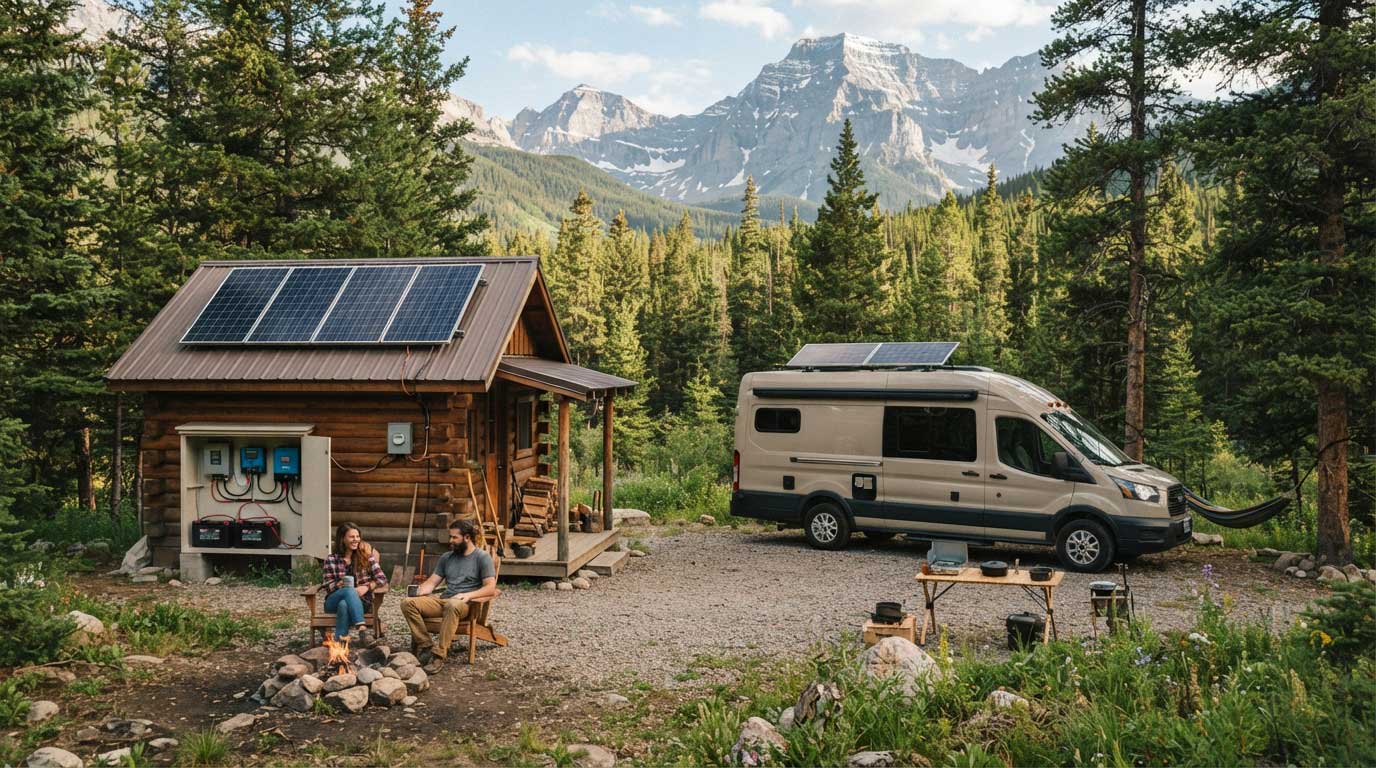
At Bright Solar, we have reviewed many solar applications where available space was the limiting factor. A camper roof with an air conditioner in the middle, a commercial rooftop with limited mounting zones, or an off-grid cabin with uneven roof sections all require accurate panel sizing before selecting equipment.
A 400W panel sounds like a simple number, but the physical size behind that number determines whether a system design is realistic.
A larger panel may reduce the number of modules needed, but a smaller panel format may provide better installation flexibility.
The right choice depends on:
- Available installation area
- Mounting structure
- Weight limitations
- Electrical configuration
- Application environment
What Is the Standard 400w Solar Panel Size?
The physical size of a 400W solar panels is not identical across all manufacturers.
Most modern 400W photovoltaic modules use larger-format monocrystalline cells and typically fall within these approximate ranges:
| Panel Type | Typical Size Range | Approximate Area |
|---|---|---|
| Residential 400W panel | 65–72 inches × 39–45 inches | 17–22 sq. ft. |
| Large-format 400W panel | 75–82 inches × 40–44 inches | 21–25 sq. ft. |
| Flexible 400W panel | Depends on design | Application-specific |
Many conventional 400W rigid solar panels measure close to:
79 inches × 40 inches × 1.4 inches
However, dimensions vary because manufacturers use different:
- Cell layouts
- Frame designs
- Glass thickness
- Junction box locations
- Module technologies
For professional solar planning, the product datasheet should always be checked before installation.
The watt rating tells you electrical output under standard test conditions. It does not tell you whether the panel will fit your roof.
Why 400w Solar Panel Dimensions Matter
A solar panel is not installed in an empty space.
Real installation environments create limitations.
For example, an RV roof may include:
- Air conditioning units
- Roof vents
- Skylights
- Antennas
- Satellite systems
- Storage racks
A residential roof may include:
- Chimneys
- Roof edges
- Skylights
- Structural limitations
A commercial project may involve:
- Mounting rails
- Wind load requirements
- Maintenance pathways
The physical size of a 400W solar panel determines:
- How many panels fit in a given area
- How mounting rails are arranged
- Cable distances
- Installation labor requirements
- Future maintenance accessibility
A mistake we often see during project discussions is selecting panels based only on wattage.
For example:
A customer may think:
“Four 400W panels give me 1,600W, so I just need enough roof space.”
But the actual roof may only allow three panels because of shading or equipment placement.
A realistic design always starts with measurements.
400w Solar Panel Size Compared With Other Panel Wattages
Solar panel sizes have increased significantly over recent years.
Older modules often produced:
- 100W
- 150W
- 200W
Modern modules commonly produce:
- 350W
- 400W
- 450W
- 500W+
Higher wattage does not always mean a physically smaller panel.
The increase mainly comes from:
- Larger solar cells
- Improved cell efficiency
- Better module design
Comparison example:
| Solar Panel Rating | Typical Application | Approximate Quantity Needed for 1.6kW |
|---|---|---|
| 100W panel | Small RV, portable systems | 16 panels |
| 200W panel | Small off-grid systems | 8 panels |
| 400W panel | RV, home, commercial | 4 panels |
| 500W panel | Large installations | 3–4 panels |
A 400W panel provides a practical balance between power output and manageable installation size.
How Much Space Does a 400w Solar Panel Need?
The actual installation area must include more than the panel dimensions.
Installers need additional space for:
- Mounting hardware
- Cable routing
- Panel spacing
- Maintenance access
- Roof movement
For example:
A panel measuring approximately 80 × 40 inches may require slightly more than 22 square feet of usable roof area after installation considerations.
A common planning mistake is measuring only the flat roof surface.
The usable area may be smaller after considering:
- Shade patterns
- Roof edges
- Obstructions
- Safe working space
At Bright Solar, our approach is to create a layout drawing before finalizing panel selection.
This simple step often prevents installation changes later.Learn more about the Flexible Solar Panel Installation Guide
400w Solar Panel Size for RV Applications
RV owners are one of the largest groups interested in 400W solar panels because mobile power systems require careful space management.
An RV roof has limited available area.
A typical travel trailer roof may need to fit:
- Solar panels
- Air conditioner
- Vent fans
- Roof accessories
- Antennas
A 400W solar panel can be attractive because fewer panels are required compared with lower-wattage modules.
Example:
Instead of installing:
Four 100W panels
An RV owner may use:
One 400W panel
or
Two 200W panels
depending on roof layout.
However, a single large panel is not always the best solution.
Reasons include:
- Difficult replacement if damaged
- Limited placement flexibility
- Shading impact
- Transportation challenges
For RV and mobile applications, flexible solar panels can provide another option because they can reduce weight and adapt to certain installation surfaces.
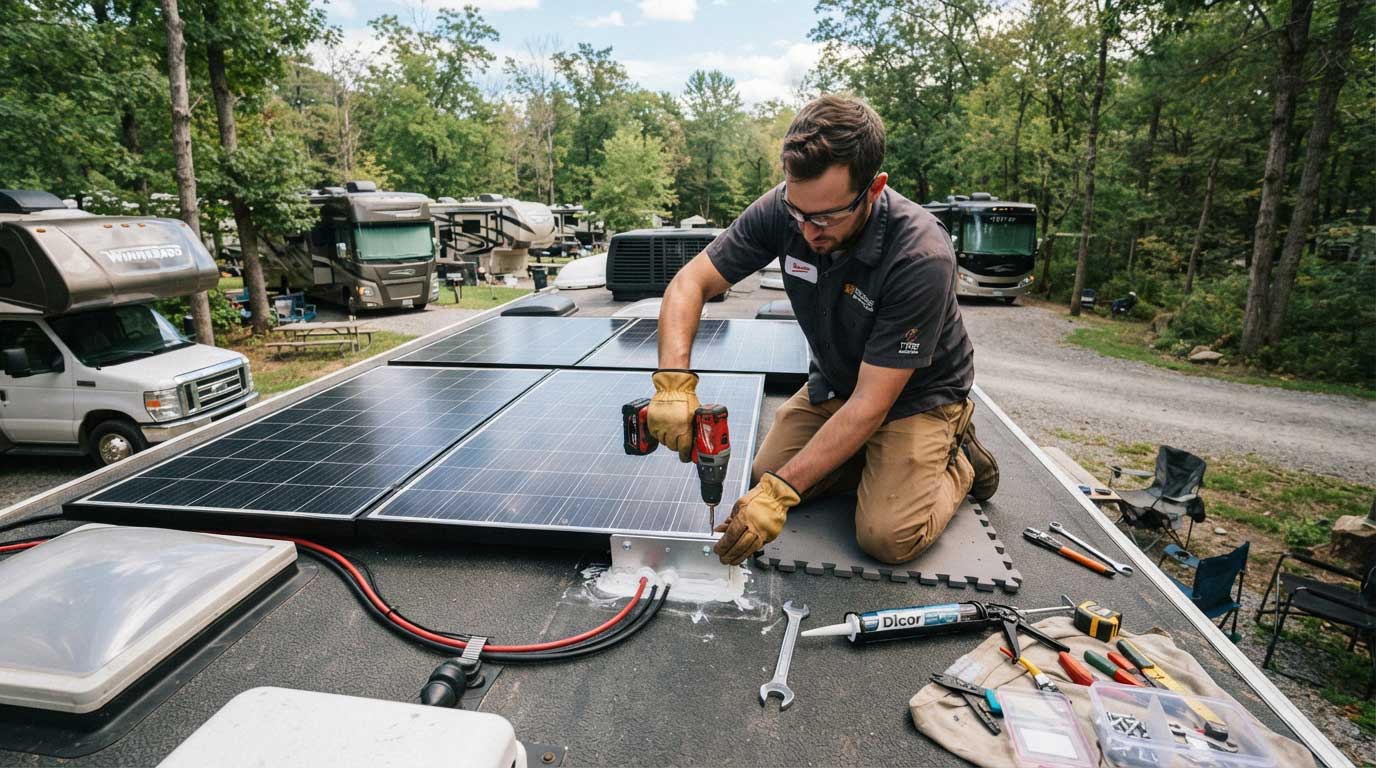
400W Solar Panel RV Installation Example
A practical RV project involved a customer upgrading from a small 200W system.
The original setup could power:
- LED lighting
- Phone charging
- Small electronics
The owner wanted more energy for:
- Laptop charging
- Camera equipment
- Internet equipment
- Longer off-grid stays
The roof measurement showed enough space for:
- One large 400W panel
However, the air conditioner created afternoon shading.
Instead of maximizing panel size, the layout was adjusted.
The final design used a different placement strategy to improve daily solar exposure.
The result was a better-performing system without increasing roof coverage.
This example demonstrates an important point:
Solar design is not only about adding watts. It is about using available space intelligently.
How Much Power Does a 400w Solar Panel Produce?
A 400W solar panel does not produce 400W continuously throughout the day.
The rated power is measured under Standard Test Conditions (STC), which typically include:
- 1,000W/m² solar irradiance
- 25°C cell temperature
- Standard testing conditions
Actual energy production depends on:
- Location
- Weather
- Sun angle
- Panel temperature
- Shading
- System losses
The National Renewable Energy Laboratory (NREL) explains that photovoltaic system output changes depending on environmental conditions and system design factors.
Source:
https://www.nrel.gov/
A simple estimation:
Daily Energy = Panel Wattage × Peak Sun Hours × System Efficiency
Example:
400W panel
× 5 peak sun hours
× 80% efficiency
≈ 1,600Wh/day
Actual production may be higher or lower.
A 400W panel installed in Arizona will not perform the same as one installed in northern Europe during winter.
Choosing Between Rigid and Flexible 400w Solar Panels
The physical size of a 400W solar panel is closely related to the panel type.
Rigid 400W Solar Panels
Advantages:
- High durability
- Strong mechanical structure
- Better airflow underneath
- Suitable for fixed installations
Common applications:
- Residential roofs
- Commercial buildings
- Large RVs
Flexible 400W Solar Panels
Advantages:
- Lower weight
- Reduced profile
- Easier installation on certain surfaces
Common applications:
- RVs
- Boats
- Mobile systems
- Off-grid equipment
Flexible panels require careful installation because heat management and mounting methods influence long-term performance.
A flexible panel is not simply a rigid panel that can bend anywhere.
The product specifications still matter:
- Maximum bending radius
- Operating temperature
- Mounting surface
- Electrical ratings
How to Install a 400w Solar Panel: Size, Mounting, and Wiring Considerations
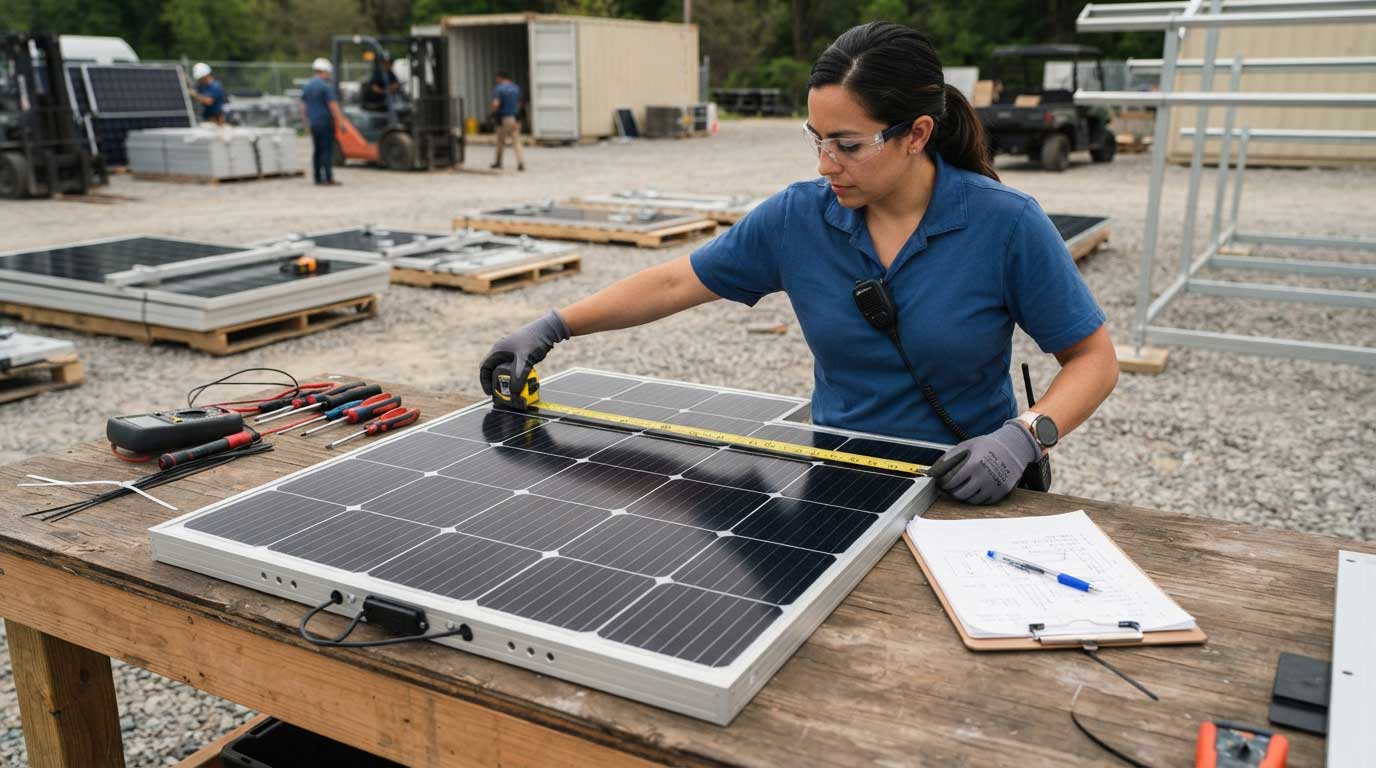
Installing a 400W solar panel requires more than attaching the module to a roof or mounting surface. The panel dimensions influence every installation decision, from bracket placement to cable routing.
A professional installation normally follows these steps:
- Evaluate the installation surface
- Confirm panel dimensions and clearance
- Design the electrical layout
- Install mounting hardware
- Connect the charge controller and battery system
- Test system performance
The physical size of a 400W solar panel affects each stage.
A large-format module may provide excellent power density, but installers must consider transportation, handling, and access during installation.
For example, a residential installer may easily move a 400W panel onto a roof with two people. However, on a compact RV roof or marine application, the same panel size may create handling challenges.
The installation environment changes the best solution.
400w Solar Panel Mounting Requirements
The mounting method depends on where the panel will be installed.
Residential Roof Installation
A typical residential installation requires:
- Roof attachment points
- Mounting rails
- Flashing protection
- Wind-load considerations
- Proper spacing
The roof structure must support the additional load.
RV Roof Installation
RV installations have different requirements:
- Lower weight preference
- Limited roof area
- Vibration resistance
- Waterproof sealing
The panel size must work with existing RV equipment.
A common RV roof mistake is placing panels too close to:
- Air conditioners
- Roof vents
- Edge areas
This can create shading or maintenance issues.
Off-Grid Ground Installation
Ground-mounted systems provide more flexibility because space is usually less restricted.
Benefits include:
- Easier maintenance
- Adjustable positioning
- Simpler cleaning
- Better access
However, they require:
- Mounting structures
- Ground preparation
- Wind resistance planning
400w Solar Panel Voltage and Electrical Planning
The size of a solar panel is only one part of system design.
Electrical specifications are equally important.
A typical 400W solar panel may include:
| Parameter | Typical Range |
|---|---|
| Rated Power | 400W |
| Voltage at Maximum Power (Vmp) | Around 30–42V |
| Current at Maximum Power (Imp) | Around 9–14A |
| Open Circuit Voltage (Voc) | Around 35–50V |
Exact values depend on the manufacturer and cell technology.
Before installation, always check:
- Charge controller maximum voltage
- Battery system voltage
- Wiring requirements
- Temperature effects
Cold temperatures can increase solar panel voltage, which is why professional system design considers the maximum possible Voc rather than only normal operating conditions.
How Many 400w Solar Panels Do You Need?
The number of 400W panels depends on energy demand.
Examples:
Small Off-Grid Cabin
Energy needs:
- LED lights
- Small refrigerator
- Electronics
Possible system:
- 2 × 400W panels
Total capacity:
800W
RV Full-Time Travel Setup
Energy needs:
- Refrigerator
- Laptop
- Internet equipment
- Battery charging
- Small appliances
Possible system:
- 2–4 × 400W panels
Total capacity:
800W–1,600W
Residential Backup System
Energy needs:
- Household appliances
- Battery storage
- Emergency power
Possible system:
- Multiple 400W modules
The correct quantity depends on:
- Daily electricity consumption
- Battery capacity
- Local sunlight conditions
- Backup requirements
400w Solar Panel Size and Efficiency: What Matters More?
Many buyers compare panels only by wattage.
However, efficiency and physical dimensions work together.
A panel with higher efficiency can generate more power from limited space.
For example:
Two panels may both produce 400W:
Panel A:
- Larger physical size
- Lower efficiency
Panel B:
- Smaller physical size
- Higher efficiency
If roof space is limited, Panel B may be the better choice.
This is especially important for:
- RV roofs
- Boats
- Tiny homes
- Mobile solar systems
At Bright Solar, we often see customers initially focus on maximum wattage. After reviewing their installation area, the priority usually changes to finding the best balance between:
- Power output
- Dimensions
- Weight
- Installation flexibility
Common Mistakes When Choosing a 400w Solar Panel Size
Even experienced buyers can make mistakes when selecting solar panels.
The most common issues include:
Mistake 1: Ignoring Actual Dimensions
A product listing may highlight:
“400W output”
but not emphasize:
- Length
- Width
- Weight
- Mounting requirements
Always check the complete specification sheet.
Mistake 2: Filling the Roof Without Considering Shade
More panels do not always mean more energy.
A partially shaded panel can reduce system performance.
Roof layout matters.
Mistake 3: Matching Panels Without Checking the Controller
A solar controller must handle:
- Maximum PV voltage
- Maximum charging current
Incorrect matching can reduce reliability.
Mistake 4: Forgetting Transportation and Installation Handling
Large panels require:
- Proper lifting
- Safe storage
- Protection during transport
This matters especially for mobile applications.
Real Bright Solar Insight: Why Panel Dimensions Influence System Performance
After working with flexible and rigid solar applications, one pattern appears repeatedly:
The best solar system is not always the one with the highest rated wattage.
A project may fail because:
- Panels cannot fit around rooftop equipment
- Wiring becomes unnecessarily long
- Maintenance access disappears
- The mounting method creates problems
One RV customer originally planned a large 400W installation based only on available roof area.
After reviewing the layout, the design team discovered that afternoon shading from the roof air conditioner would reduce production.
The final solution changed the panel arrangement rather than simply adding more capacity.
The result was a cleaner installation with better real-world performance.
This type of adjustment is common in practical solar engineering.
Specifications provide the starting point.
Installation conditions determine the final result.
FAQ About 400w Solar Panel Size
What are the dimensions of a 400w solar panel?
Most 400W solar panels are approximately 65–82 inches long and 39–44 inches wide. Exact dimensions vary by manufacturer, cell technology, and module design.
How much roof space does a 400W solar panel need?
A typical 400W panel requires around 17–25 square feet of physical area. Additional space may be needed for mounting hardware, wiring, and maintenance access.
Can a 400W solar panel be used on an RV?
Yes. A 400W solar panel can be used for RV applications if the roof space, weight capacity, battery system, and charge controller are suitable.
How much electricity does a 400W solar panel produce per day?
A 400W panel may produce roughly 1–2kWh per day under favorable sunlight conditions, depending on location, weather, orientation, and system losses.
Is one 400W solar panel better than multiple smaller panels?
Not always. One large panel can simplify installation, but multiple smaller panels may provide better layout flexibility and easier replacement.
Are flexible 400W solar panels available?
Flexible 400W solar panels are available for certain applications, especially where weight reduction and installation flexibility are important. Product specifications should always be reviewed before installation.
What battery size works with a 400W solar panel?
Battery size depends on energy usage. A 400W solar system may work with different battery capacities depending on whether it powers basic electronics, RV appliances, or larger off-grid loads.
Conclusion
Choosing the correct 400w solar panel size requires more than checking the watt rating. The physical dimensions, installation space, electrical specifications, and application environment all influence whether the system will perform effectively.
For RVs, homes, and off-grid projects, the best solar solution balances power output with practical installation conditions.
Bright Solar focuses on helping customers select solar panels based on real application requirements, not only product numbers. A properly sized 400W solar panel system can provide reliable renewable energy when the design matches the environment.
Related recommendations
-

300 Watt Solar Panels for RV, Marine and Off-Grid Power Systems
262Discover how 300 watt solar panels power RVs, boats, cabins, and off-grid systems. Learn real performance, battery charging, and installation tips from Bright Solar.
View details -
Solar Panels for Tiny House: Complete Guide to Off-Grid Energy Solutions
252Solar panels for tiny house provide clean, reliable power. Learn system sizing, costs, installation tips, batteries, and flexible solar solutions from Bright Solar.
View details -
mounting flexible solar panels (Field Installation Guide from Bright Solar)
252mounting flexible solar panels explained with real RV roof installations, adhesive methods, airflow design, durability insights, and field-tested mounting practices.
View details -
Folding Portable Solar Panels: Uses, Setup and Buying Guide
97Folding portable solar panels provide mobile solar power for camping, RVs, emergency backup, outdoor work, and portable power stations.
View details