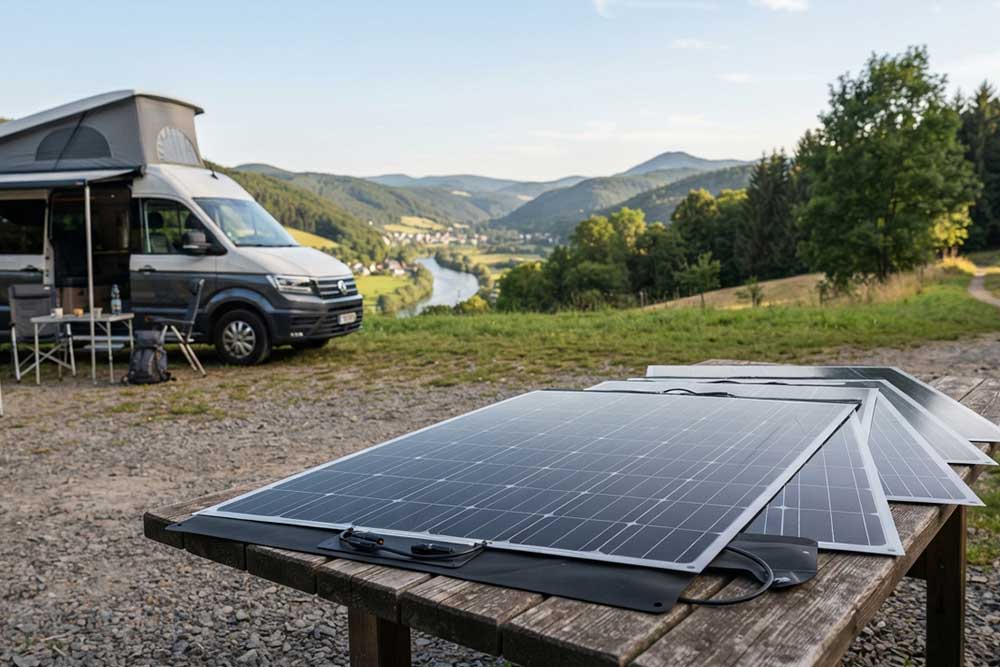
300 w solar panels: Output, Sizing and Installation Guide
300 w solar panels deliver a rated 300 watts of DC power under Standard Test Conditions, but their actual daily energy production depends on sunlight, temperature, shading, orientation, system losses, and installation conditions. For practical planning, a 300W panel commonly serves small off-grid, RV, marine, and backup-power applications rather than an entire household.
That distinction matters.
I have worked through solar sizing from the module side rather than treating the wattage printed on the label as the amount of electricity a customer will see at the battery every day. The number on the nameplate is a laboratory reference point. Real installations are messier: a hot roof, a little afternoon shade, a long cable run, and an inefficient charging setup can all change the result.
The National Renewable Energy Laboratory (NREL) uses PVWatts to estimate PV energy production based on location, system size, module type, array configuration, losses, tilt, azimuth, and other inputs. That is a much better starting point than multiplying panel wattage by 24 hours.
What Are 300 w Solar Panels?
A 300W solar panel is a photovoltaic module with a 300-watt nominal DC power rating. In other words, under specified test conditions, the module can produce up to approximately 300 watts of electrical power.
The rating itself does not mean the panel continuously produces 300W from sunrise to sunset.
PV module ratings are measured under Standard Test Conditions. The U.S. Department of Energy identifies STC as 1,000 W/m² irradiance and a 25°C cell temperature. Actual sunlight intensity and module temperature are usually different outdoors.
NREL’s PVWatts documentation similarly uses 1,000 W/m² and 25°C as reference conditions. Its modeling accounts for temperature effects rather than assuming a module operates at its nameplate rating throughout the day.
Typical electrical characteristics
Exact specifications vary by manufacturer and cell architecture, so the datasheet should always be checked before designing a system.
| Specification | Typical planning value |
|---|---|
| Rated power | 300W |
| Nominal voltage | Usually 12V or 24V system application |
| Vmp | Commonly around 30–35V for many crystalline-silicon modules |
| Voc | Commonly around 37–42V |
| Technology | Monocrystalline or other PV technologies |
| Application | RV, marine, cabins, backup, small off-grid systems |
| Output type | DC |
| Controller | MPPT or PWM depending on system design |
The important point is that 300W describes power, not energy.
Power is measured in watts. Energy is measured in watt-hours or kilowatt-hours.
A 300W panel operating at an effective 5 peak-sun-hour equivalent would theoretically provide:
300W × 5h = 1,500Wh/day = 1.5kWh/day
But that is a simplified energy estimate. Temperature, shading, wiring, dirt, controller losses, battery charging losses, and inverter losses can reduce usable energy.
How Much Power Does a 300 Watt Solar Panel Produce?
A 300W module can produce 300W at its rated operating point under STC, while actual instantaneous output will move up and down throughout the day.
This is one of the easiest places to overestimate a solar installation.
At 9:00 a.m., the panel may be producing only a fraction of its rated power. Around solar noon under favorable conditions, output can approach the rated level. On a hot afternoon, production may fall again.
The DOE specifically notes that PV cells generally perform better at lower temperatures because higher temperatures reduce voltage and therefore affect power output.
A simple planning table looks like this:
| Equivalent peak sun hours | Theoretical daily energy from one 300W panel |
|---|---|
| 3 hours | 0.90 kWh |
| 4 hours | 1.20 kWh |
| 5 hours | 1.50 kWh |
| 6 hours | 1.80 kWh |
| 7 hours | 2.10 kWh |
These figures are theoretical, not guaranteed production.
For a real project, I would use a location-specific PV model instead. NREL’s PVWatts calculator can estimate monthly and annual production and allows the user to enter system size, array type, tilt, azimuth, and system losses.
Why the actual number is lower
Several losses can accumulate:
- High module temperature
- Partial shading
- Dust and soiling
- Poor orientation
- Cable resistance
- Connector losses
- MPPT/controller losses
- Inverter conversion losses
- Battery charging losses
- Snow or temporary obstruction
- Module aging
NREL’s PVWatts system-loss model explicitly includes categories such as soiling, shading, snow, mismatch, wiring, connections, degradation, and availability.
That is why I would never size a battery system from the 300W label alone.
300 Watt Solar Panel Size and Weight
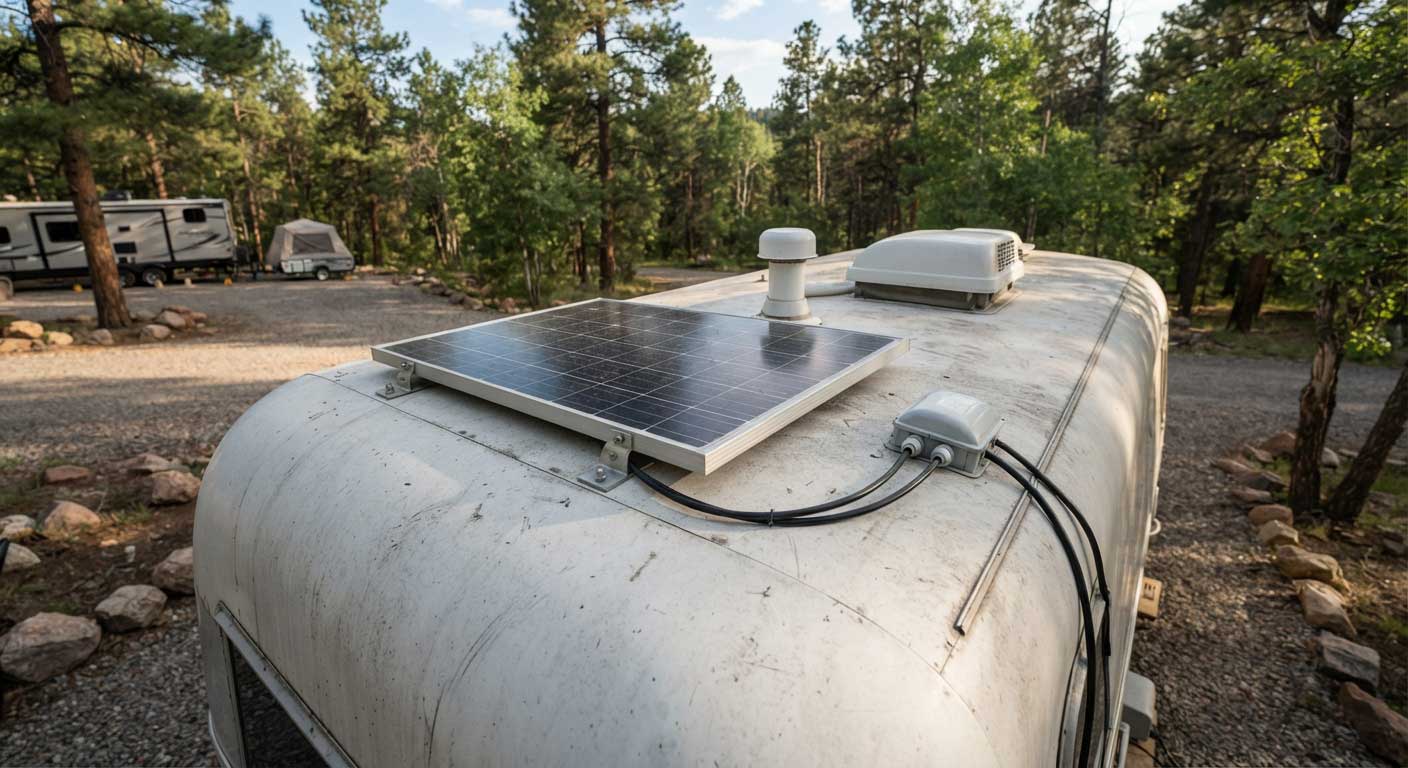
The physical dimensions of a 300W solar panel depend heavily on the cell format, efficiency, frame construction, and whether the panel is rigid or flexible.
A conventional rigid 300W module can be substantially larger and heavier than a flexible module designed for an RV or marine roof.
This is where “more watts” does not automatically mean “better.”
For an RV roof, I look at four measurements together:
- Available roof length
- Available roof width
- Panel weight
- Cable-entry location
A panel might have enough electrical capacity but physically conflict with an air conditioner, skylight, roof vent, antenna, or satellite equipment.
Rigid vs. flexible 300W panels
| Feature | Rigid 300W panel | Flexible 300W panel |
|---|---|---|
| Structure | Framed/glass construction | Lightweight flexible construction |
| Weight | Generally higher | Generally lower |
| Mounting | Rails/brackets commonly used | Adhesive or specialized mounting |
| Curved surfaces | Limited | Better suited |
| RV use | Excellent when roof structure allows | Useful where weight/profile matter |
| Maintenance | Straightforward | Installation quality is particularly important |
For flexible solar applications, the mounting surface becomes part of the engineering decision. Heat dissipation, bonding, cable routing, and surface preparation deserve more attention than they usually receive in generic solar articles.
IEC 61215-1:2021 includes testing requirements for terrestrial PV module design qualification and type approval, while the 2021 series also introduced specific testing methods for flexible modules, including bending tests.
How Many 300W Solar Panels Do You Need?
The answer depends on your daily energy consumption rather than simply the size of your battery.
Start with:
Required PV capacity ≈ Daily energy consumption ÷ Peak sun hours ÷ system efficiency
For example, assume an off-grid trailer uses:
- Refrigerator: 600Wh/day
- Lighting: 120Wh/day
- Ventilation fan: 150Wh/day
- Phones/laptops: 150Wh/day
Total:
1,020Wh/day
Assume five peak sun hours and an illustrative overall system factor of 80%:
1,020 ÷ 5 ÷ 0.80 = 255W
A single 300W panel would technically cover that modeled daily requirement, but I would not design the system with zero margin.
A 300–400W array would be a more comfortable starting point for this example, depending on location, season, battery requirements, and whether the refrigerator operates continuously.
This is also why a 300W panel is attractive for small mobile systems. It is large enough to make a meaningful difference without immediately turning an RV roof into a full solar farm.
300 Watt Solar Panel for RV and Off-Grid Systems
A 300 watt solar panel is particularly practical when the electrical load is moderate and roof space is limited.
Typical applications include:
- Travel trailers
- Camper vans
- Small cabins
- Marine systems
- Remote monitoring equipment
- Garden buildings
- Small backup systems
- Off-grid lighting
- Battery charging
For an RV, I would first calculate the daily Wh requirement and then check whether the roof can physically accommodate the required PV capacity.
A refrigerator is usually the load that changes the calculation.
A laptop may draw a few tens of watts while operating. A compressor refrigerator may have a much higher starting demand but cycle rather than run continuously. A 12V water pump may draw substantial instantaneous power but operate for only a few minutes each day.
The daily energy profile matters more than any single appliance’s wattage.
300W Solar Panel and Battery Sizing
A 300W solar array does not automatically require a particular battery size.
Battery sizing should be based on:
Daily energy consumption × desired autonomy ÷ allowable depth of discharge
For example, if the load is approximately 1,000Wh/day and the system needs roughly one day of storage, the battery capacity needs to be evaluated around that energy requirement, not simply matched to “300W.”
For a 12V battery system:
1,000Wh ÷ 12V ≈ 83Ah
That is only a basic energy conversion. Real battery design must account for battery chemistry, usable capacity, discharge limits, inverter losses, temperature, and charging efficiency.
For many mobile solar systems, LiFePO₄ batteries are attractive because their usable energy can be substantially higher than a similarly rated lead-acid battery. But the battery’s charging specifications must match the selected controller.
Choosing a Charge Controller for 300W Solar Panels
For a 300W array, the controller should be selected according to:
- PV maximum voltage
- PV maximum current
- Battery voltage
- Panel configuration
- Cold-weather Voc
- Controller efficiency
- Future expansion
A common mistake is calculating only:
300W ÷ 12V = 25A
That number can be useful for rough sizing, but it is not enough for final controller selection.
If the array is connected to a 12V battery through an MPPT controller, the controller converts the higher PV voltage into a lower battery charging voltage while managing the operating point of the panels.
The PV input voltage and current limits must be checked against the actual module datasheet.
When panels are connected in series, voltage rises while current remains approximately that of the string. In parallel, current increases while voltage remains approximately the same.
That distinction becomes important when the system grows beyond one 300W module.
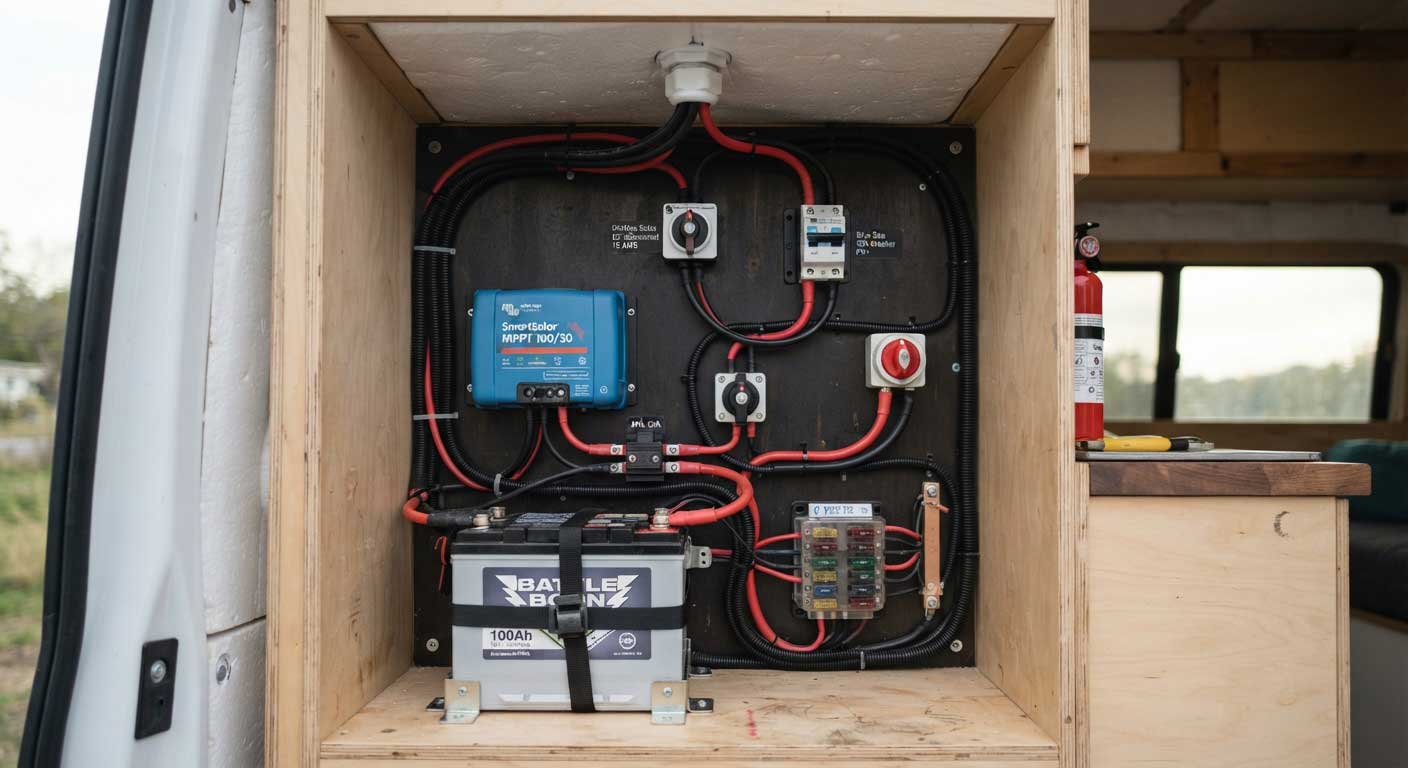
How to Install 300W Solar Panels
The installation process should start with the roof, not the panel.
Step 1: Measure the installation area
Mark vents, air conditioners, skylights, antennas, roof edges, and maintenance access areas.
A cardboard template the same size as the module is surprisingly useful here. Put it on the roof before drilling or bonding anything.
Step 2: Check shading
Watch the roof at different times of day.
A tree that looks harmless at 10 a.m. can cast a narrow shadow across the panel at 3 p.m. That partial shadow can have a much larger effect than people expect, depending on the module layout and bypass-diode configuration.
Step 3: Plan cable routing
Keep the PV cable route short and protected.
Avoid sharp bends, hot exhaust components, moving parts, and areas where water can accumulate.
Step 4: Select the electrical configuration
For multiple 300W panels, choose series, parallel, or series-parallel wiring based on the controller’s voltage/current window and the battery voltage.
Step 5: Verify cold-weather Voc
This step is frequently overlooked.
Open-circuit voltage increases as module temperature falls. The maximum string voltage must remain below the controller’s rated PV input voltage under the coldest expected conditions.
Step 6: Install protection and disconnects
Use appropriately rated fuses, breakers, disconnects, connectors, and cable according to the system design and applicable electrical requirements.
Step 7: Commission the system
Before connecting the battery and PV array together, verify:
- Polarity
- Open-circuit PV voltage
- Battery voltage
- Controller configuration
- Grounding where required
- Connector engagement
- Cable security
Then monitor actual production.
The first few days of operating data are often more useful than another hour spent staring at the panel’s nameplate.
300W Solar Panel Performance: What Actually Matters
A useful way to evaluate a system is to compare modeled production with measured production.
The U.S. Department of Energy’s Federal Energy Management Program describes performance ratio as actual production divided by modeled production, while availability measures how much time the system is operational and capable of producing power.
That approach is useful for commercial systems, but it also works conceptually for an RV.
Suppose a location model suggests that a 300W panel should produce a certain amount of monthly energy. If actual output is consistently much lower under comparable weather conditions, investigate:
- Shade
- Soiling
- Connector resistance
- Cable losses
- Incorrect controller settings
- Battery limitations
- Module temperature
- Damaged cells
- Partial obstruction
Don’t immediately replace the panel.
I have seen system problems that looked like “bad solar panels” turn out to be wiring, charging limits, or installation issues.
A Practical 300W Solar Panel Case Study
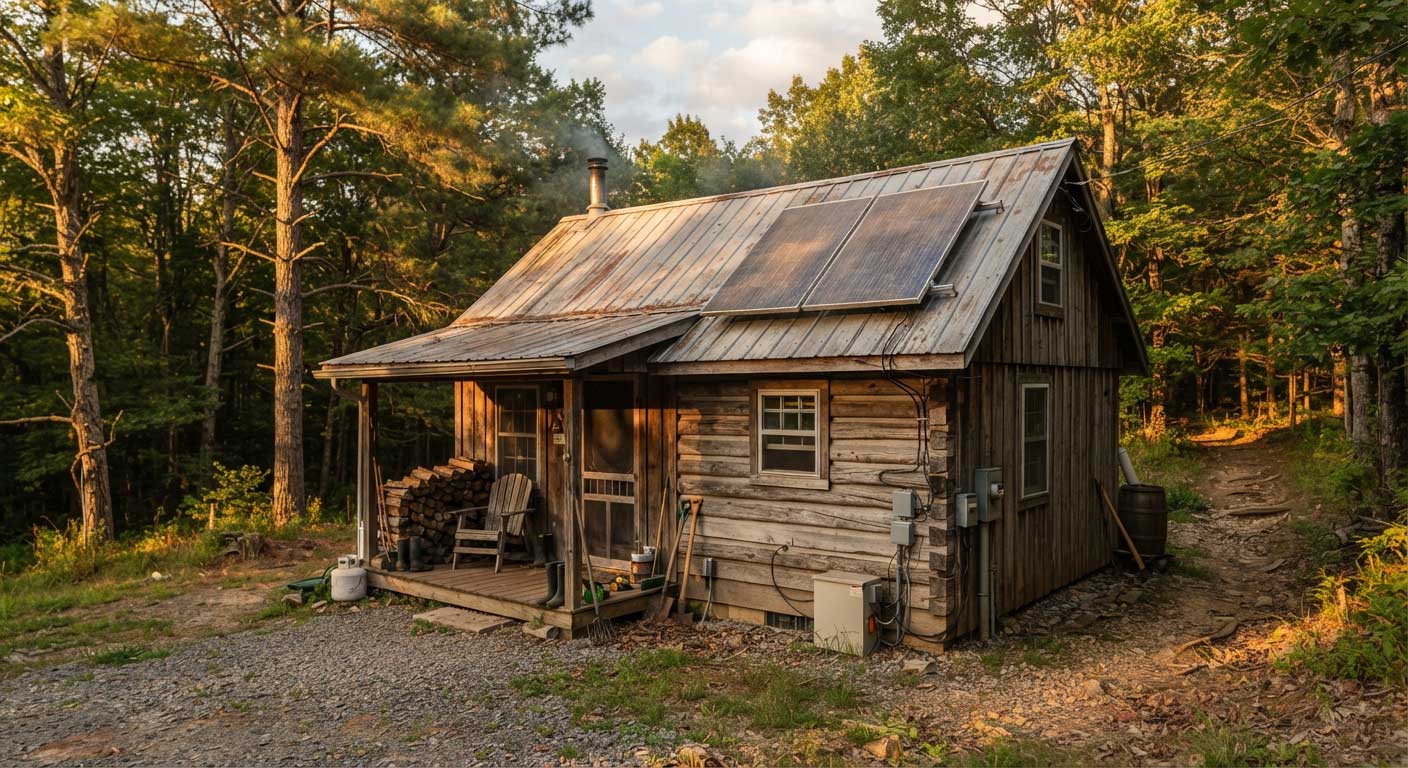
Consider a hypothetical travel trailer in the western United States.
The owner has one 300W panel, a 12V 200Ah LiFePO₄ battery, an MPPT controller, a compressor refrigerator, LED lighting, USB charging, and a ventilation fan.
Daily consumption averages about 900–1,100Wh depending on weather and refrigerator operation.
With approximately five equivalent peak-sun hours, the theoretical energy from the panel is:
300W × 5h = 1,500Wh/day
After practical system losses, usable energy may be meaningfully lower.
On clear summer days, the system can cover a large portion of daytime consumption while replenishing the battery. During several cloudy days, however, the same 300W panel may not provide enough energy to maintain the battery indefinitely.
The owner eventually adds another panel.
The interesting part is not that the second panel “doubles everything.” It increases available PV capacity, but the battery, controller, wiring, roof space, and energy demand all have to accept that additional power.
That is the real engineering constraint.
Are 300W Solar Panels Still a Good Choice?
Yes—especially when system size, roof area, weight, or budget makes a smaller array more practical.
However, 300W should not be treated as a universal “best” panel size.
Modern PV modules can offer considerably higher nameplate power, while smaller modules can still be easier to handle and install. The right choice depends on the available installation area and the required total system capacity.
For an RV roof with limited space, a lightweight flexible 300W module can make sense.
For a large residential rooftop, using many 300W modules may require more individual modules and more mounting work than a higher-wattage module.
For an off-grid cabin, the decision comes down to the load profile, available solar resource, battery capacity, and expansion plan.
NREL’s solar tools emphasize site-specific modeling because energy yield depends on environmental and system conditions rather than module nameplate capacity alone.
FAQ About 300W Solar Panels
How much electricity does a 300 watt solar panel produce per day?
A 300W panel produces 300W under STC, but daily energy varies by sunlight and system conditions. At five equivalent peak-sun hours, the theoretical output is about 1.5kWh/day before practical losses.
Can one 300W solar panel power a house?
A single 300W panel is generally not enough to power a typical whole house. It can contribute useful energy, but residential systems normally require substantially more PV capacity based on household electricity consumption.
Is a 300W solar panel good for an RV?
Yes. A 300W panel can be a practical RV solar solution for moderate loads such as refrigeration, lighting, fans, electronics, and battery charging, provided the daily energy demand and solar resource are compatible.
What battery do I need for a 300W solar panel?
There is no single required battery size. Battery capacity should be calculated from daily energy consumption, desired backup duration, battery chemistry, allowable depth of discharge, and inverter/controller losses.
Can I connect two 300W solar panels together?
Yes. Two 300W panels provide a nominal 600W array, but the series or parallel configuration must be compatible with the charge controller’s maximum PV voltage and current.
Are flexible 300W solar panels suitable for RV roofs?
They can be. Flexible modules are useful when low weight or a low-profile installation is important. Installation method, heat management, roof material, bending limits, and module specifications should be checked before installation. IEC 61215:2021 includes testing provisions for flexible PV modules.
How long do 300W solar panels last?
Service life depends on module construction, environment, installation, and operating conditions. IEC states that qualification testing demonstrates the ability to withstand defined environmental stresses but should not be interpreted as a quantitative prediction of lifetime.
Bright Solar’s Approach to 300W Solar Panel Selection
For Bright Solar, the useful question is not simply “How many watts is the panel?”
It is:
Where will the panel be installed, what load will it support, how much roof area is available, and what does the complete electrical system need to do?
That changes the recommendation.
A 300W flexible panel on an RV roof has a different engineering brief from a 300W panel used on a fixed off-grid cabin. The module may carry the same wattage rating, but the mechanical installation, thermal environment, wiring, battery, controller, and operating pattern are completely different.
The best starting point is therefore the complete system rather than the module label.
For project sizing, use a location-specific production model such as NREL PVWatts, then verify the module’s electrical specifications, controller limits, battery requirements, cable sizing, and installation conditions. NREL describes PVWatts as a tool for estimating grid-connected PV energy production worldwide, while noting that real performance depends on system and environmental assumptions.
Author
Author: Bright Solar Technical Content Team
Editorial focus: Flexible and portable photovoltaic systems, PV module selection, RV and off-grid solar applications, solar wiring, and practical system sizing.
The technical approach in this article is based on PV system design principles, manufacturer-level module considerations, and published guidance from NREL, the U.S. Department of Energy, and IEC. NREL’s PVWatts platform is specifically designed to estimate PV energy production using location and system parameters, while DOE distinguishes laboratory efficiency and rated performance from real-world energy yield.
Related recommendations
-

Lightweight Solar Panels: The Smart Choice for Mobile and Off-Grid Power
260Discover how lightweight solar panels reduce roof load, simplify installation, and improve mobile solar performance for RVs, boats, and off-grid systems.
View details -
Cost of Flexible Solar Panels: Prices, Factors and Buying Guide
191The cost of flexible solar panels varies by power, technology, materials, dimensions, customization, quantity, and installation requirements.
View details -
Bifacial Flexible Solar Panel: Design, Performance, and Applications
198A bifacial flexible solar panel generates power from both sides when rear-side light is available. Its value depends on clearance, reflectivity, curvature, t...
View details -
1000w Flexible Solar Panel: Output, Sizing and Installation Guide
270A 1000W flexible solar panel system suits larger RVs, boats, vans, cabins, and off-grid systems. Actual energy output depends on sunlight, temperature, shadi...
View details